
Askar 111F Flat-Field Refractor
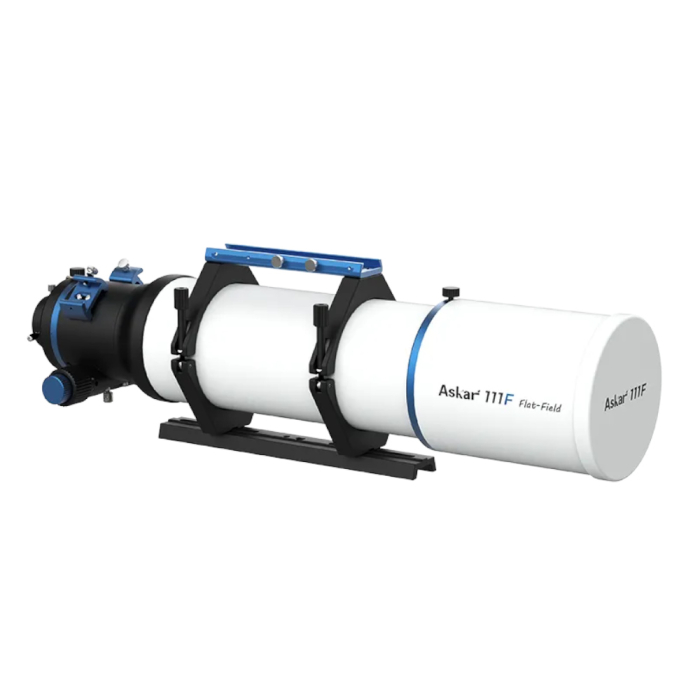

Askar 111F Flat-Field Refractor
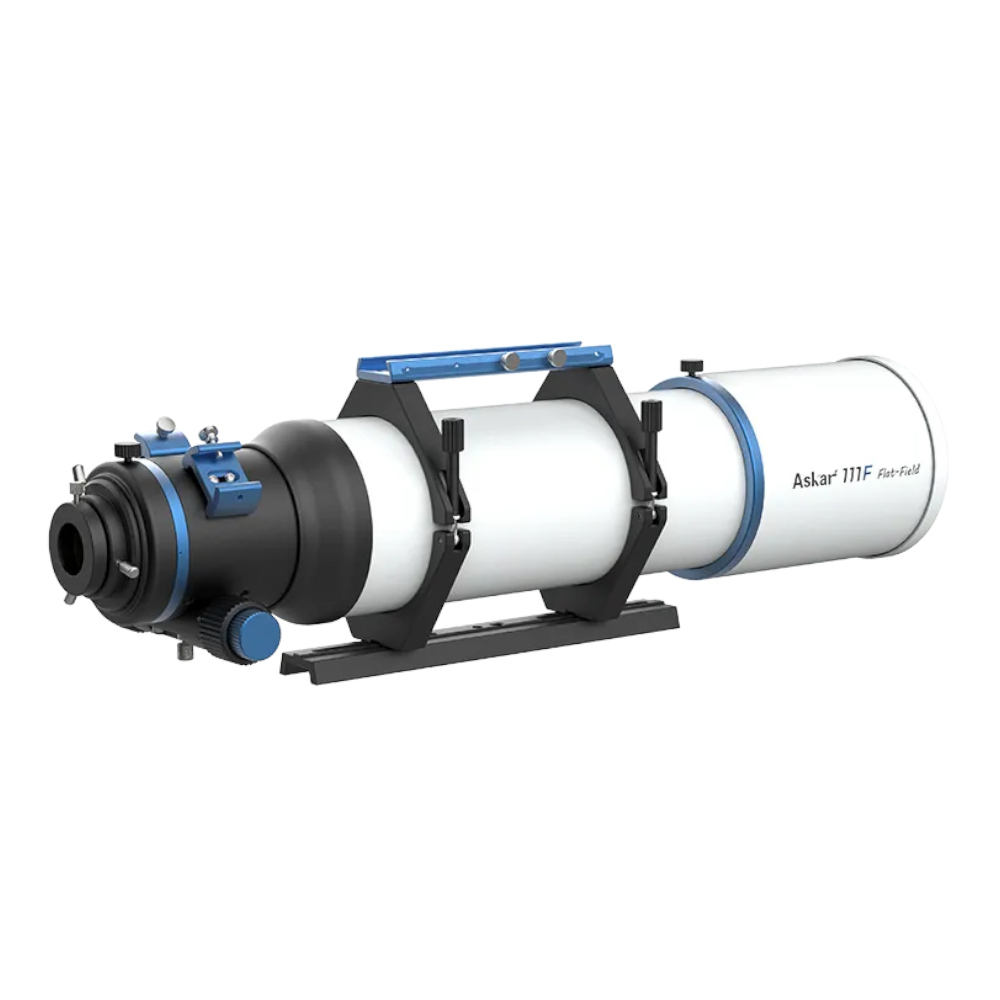
Access big refractor aperture with ease! This entry in Askar's F-Series brings the internally flattened, sharp performance, and incredible value to the large refractor space. More reach, more resolving power, and great results without the complexity are yours, with the Askar 111F Flat-Field Refractor!
Big elements and internal correction meet in this refractor, giving you great light gathering power in an incredibly accessible way. The Askar 111F Flat-Field Refractor sports an 111 mm aperture, and a f/6.9 focal ratio, providing a versatile 766 mm focal length. This medium reach makes the 111F a well-rounded option, framing a variety of targets through its quadruplet APO optics. This optical design, featuring an ED element, internally corrects, meaning no extra correctors or meticulous backspacing is required to realize incredible images. The sharp performance of these optics are backed up by robust 3" rack & pinion focuser, ensuring you can confidently carry even heavy imaging trains and accepting electronic focusing solutions. Bundling this effective foundation with imaging and visual adapters in the box, as well as plenty of mount points for accessories, Askar truly gives you an outstanding value with the 111F telescope!
Askar 111F Flat-Field Refractor At a Glance
|
|
|
|
|
|
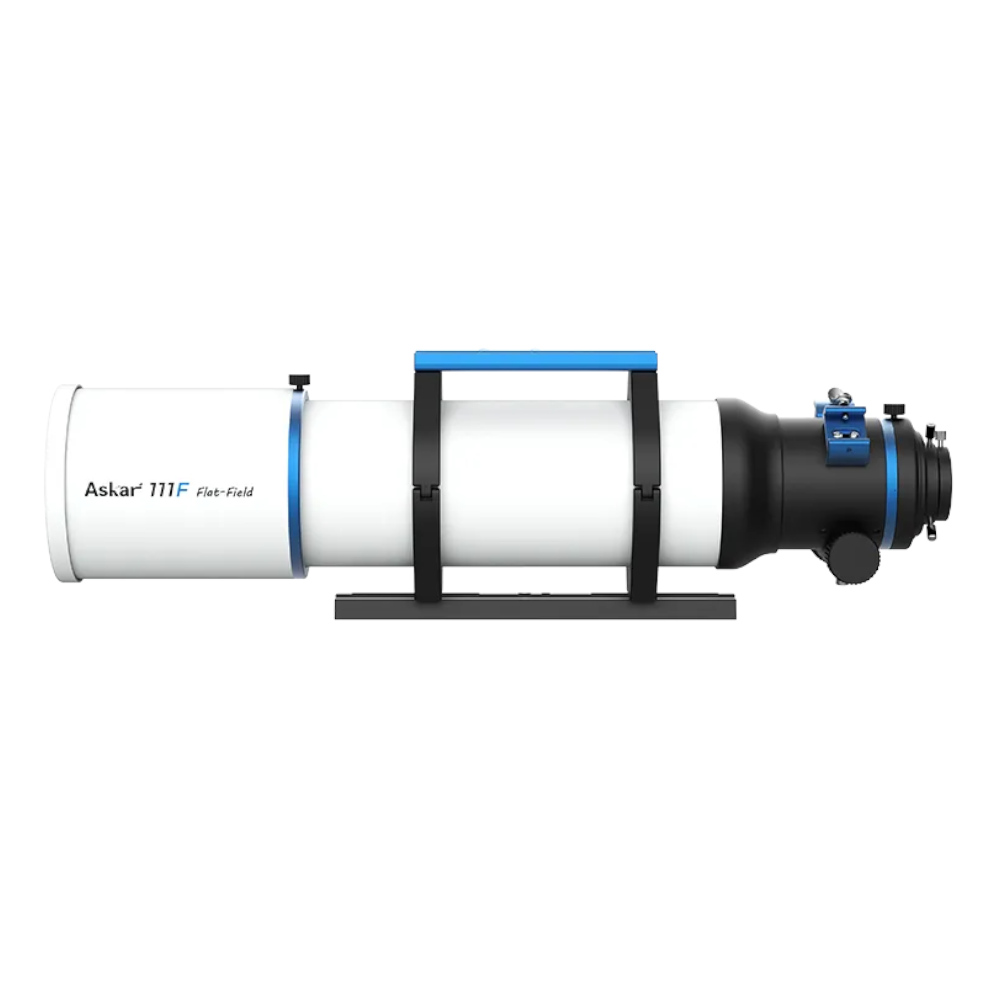
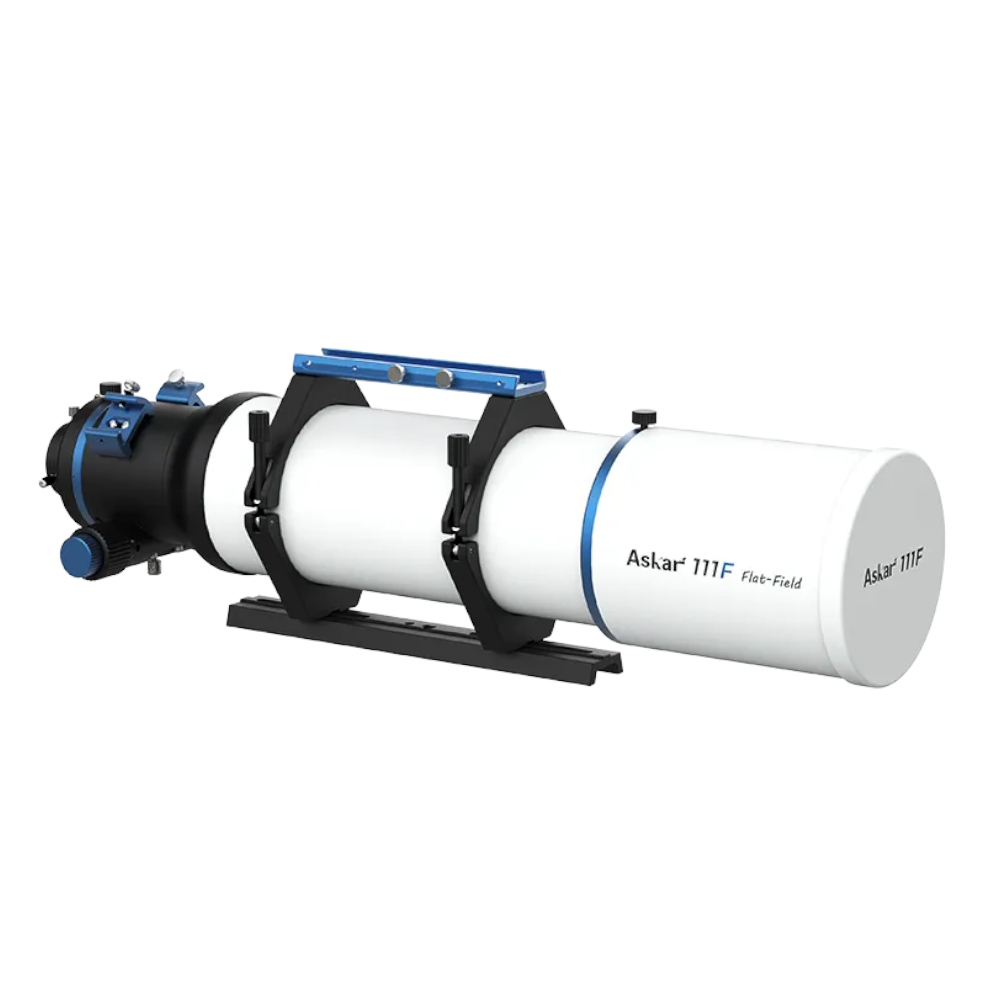
Learn More About the Askar 111F!
From optics, to hardware, to included accessories, Askar has tailored the 111F to be an excellent and accessible telescope for your astronomy explorations! To learn more, read on below!
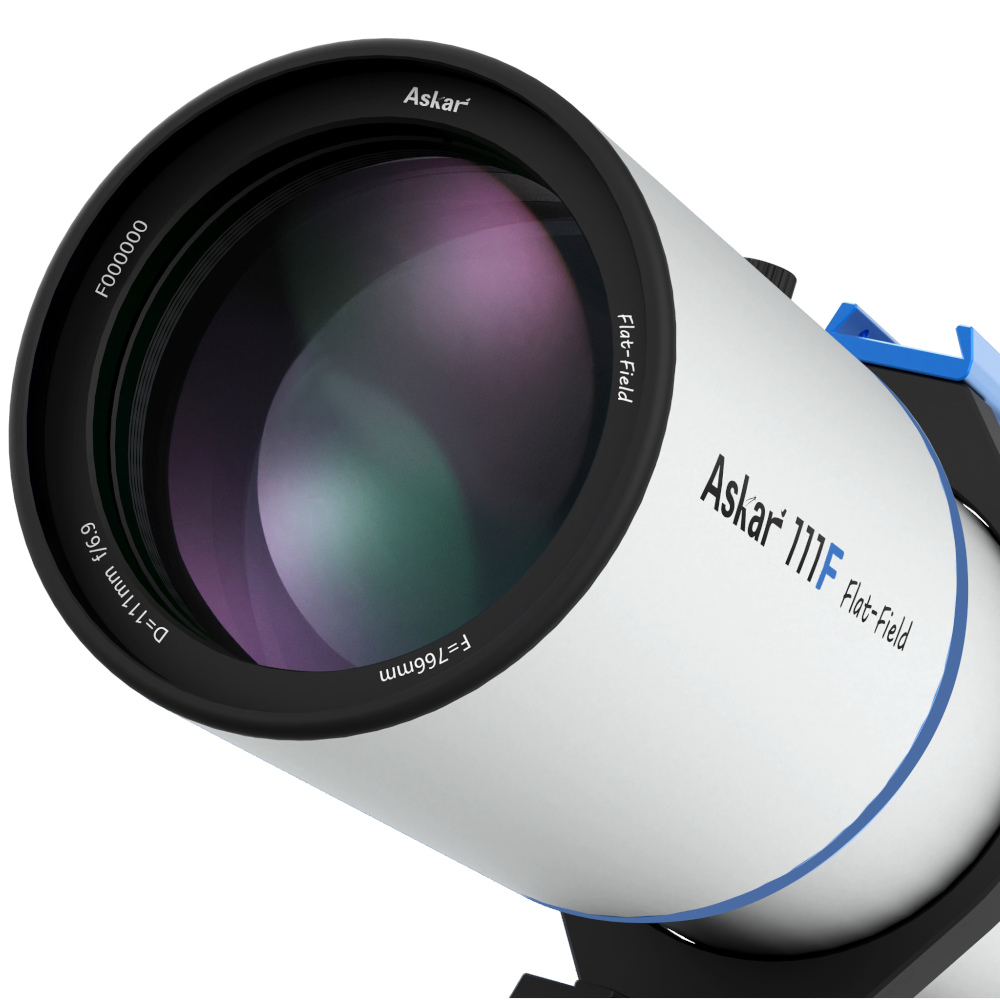
111 mm f/6.9 Quad APO Optics
The Askar 111F Flat-Field
Refractor features a large 111 mm aperture f/6.9 design, providing 766 mm of
focal length. This intermediate magnification perfectly encapsulates a wide
range of targets, such as the Pleiades, Triangulum Galaxy, or Heart Nebula.
The quadruplet optics provides a flat-field 44 mm image without the need for
any additional flatteners or reducers, allowing you to capture this
telescope's sparkling images with cameras up to full-frame in size without
meticulous spacing! This four element design, featuring an ED element,
provides not just distortion-free views, but also well color-corrected and
sharp images for rich contrast and fine detail.
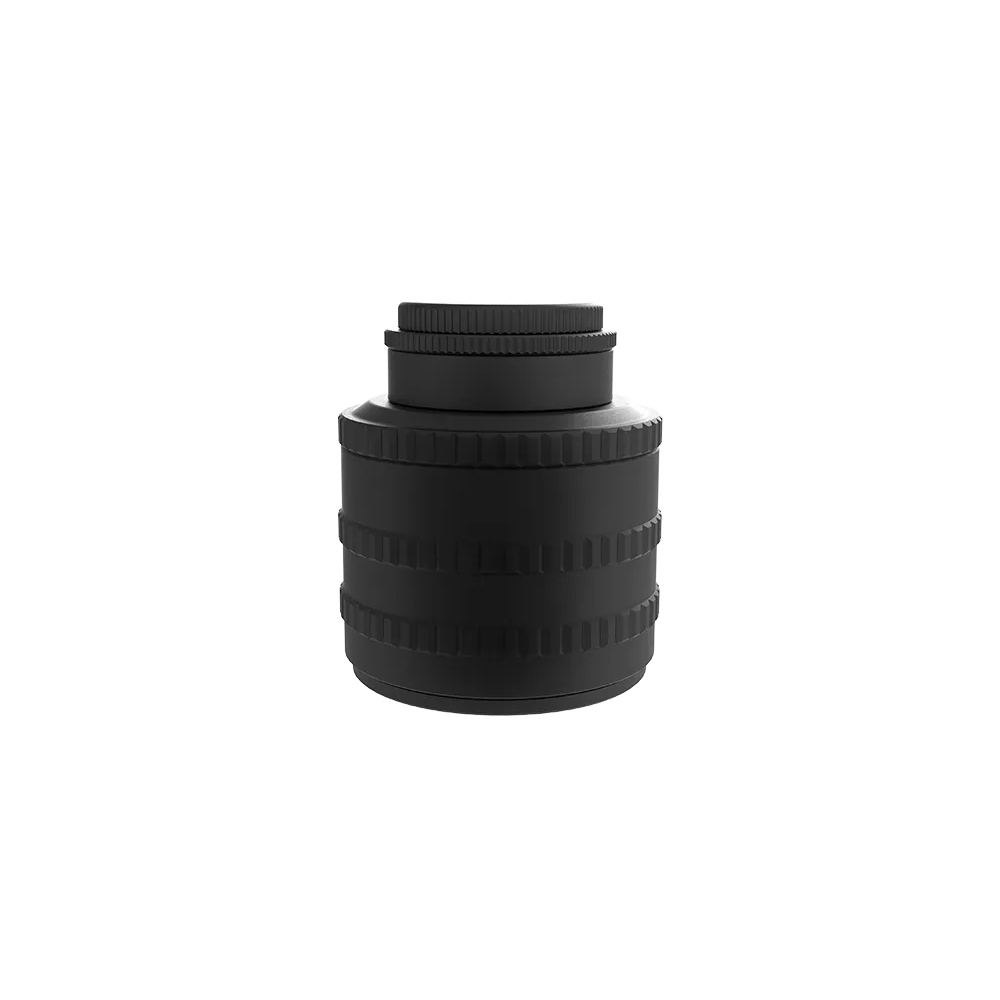
Photographic and Visual Adapters Included
The Askar
111F accommodates both observers out of the box! Pre-installed on the 111F
is an 1.25" adapter, which can be used with a user supplied diagonal for
observations, or the nosepiece of a camera for a simple, yet effective,
imaging train. If you want to build a more complex imaging train or thread
your camera in place, remove the 1.25" adapter and attach the stack of
photographic adapters. This terminates in the common M48 by default, with
M54 and M78 available for larger accessories and cameras by simply removing
rings from the stack.
3" Rack & Pinion, EAF-Ready Focuser
To support
even the most demanding builds, the Askar 111F Flat-Field Refractor comes
equipped with a large 3" focuser. This is outfitted with a dual-speed, rack
and pinion mechanism, giving you both precision and robust equipment holding
strength. This focuser also comes ready for most bracket-style electronic
auto-focusers, allowing you to add your favorite EAF and unlock micro-step
precision and automated convenience!
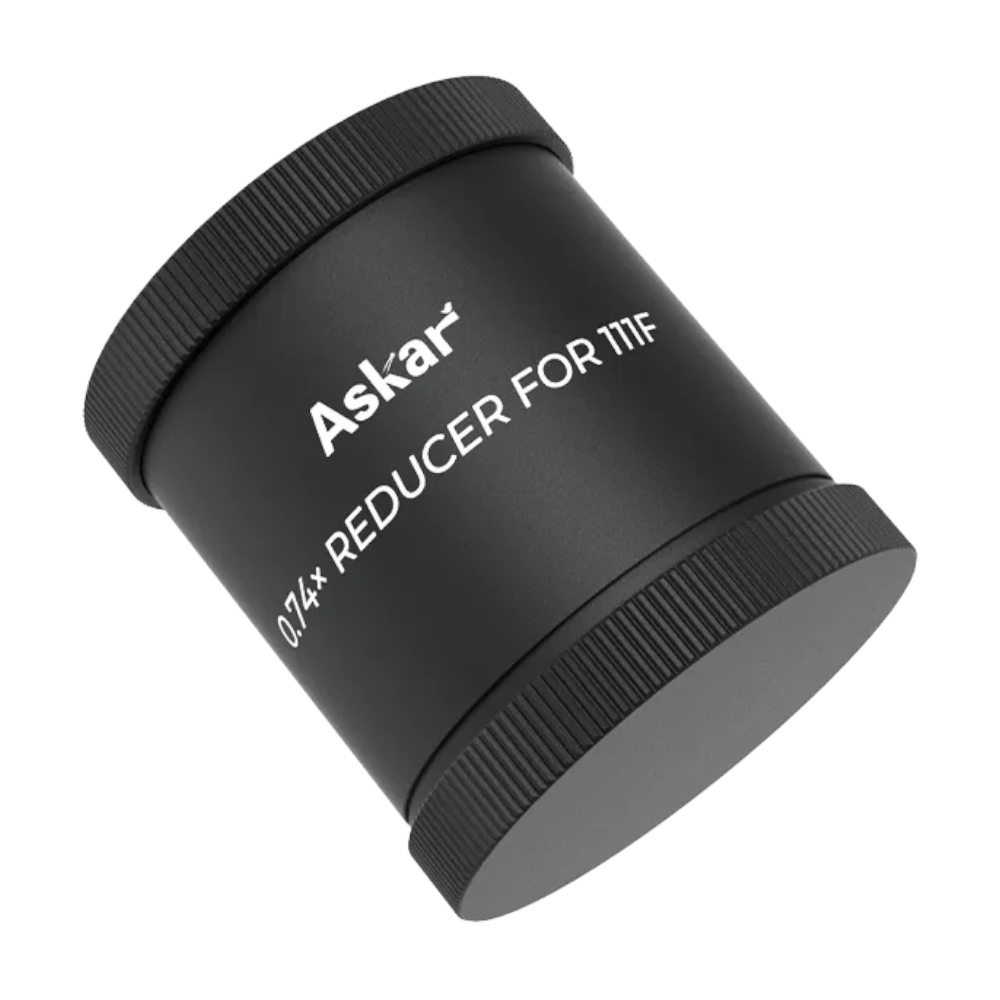
0.74X Dedicated Reducer (Sold Separately)
Looking to
push the 111F's optics? Askar has you covered, with a
dedicated 0.74x Reducer for 111F! This brings the 111F's focal ratio down to a fast f/5.1, collecting the
same amount of information as the stock f/6.9 in less time. The faster focal
ratio also provides a wider field of view, bringing the focal length to a
medium-wide reach of 567 mm. The triplet design maintains the 111F's
full-frame coverage rating and provides excellent correction, for a boost in
speed that still provides incredible results.
Please Note: Adding the reducer to the Askar 111F will remove the
forgiving backfocus functionality. Backfocus with the reducer installed is
the industry standard 55 mm.
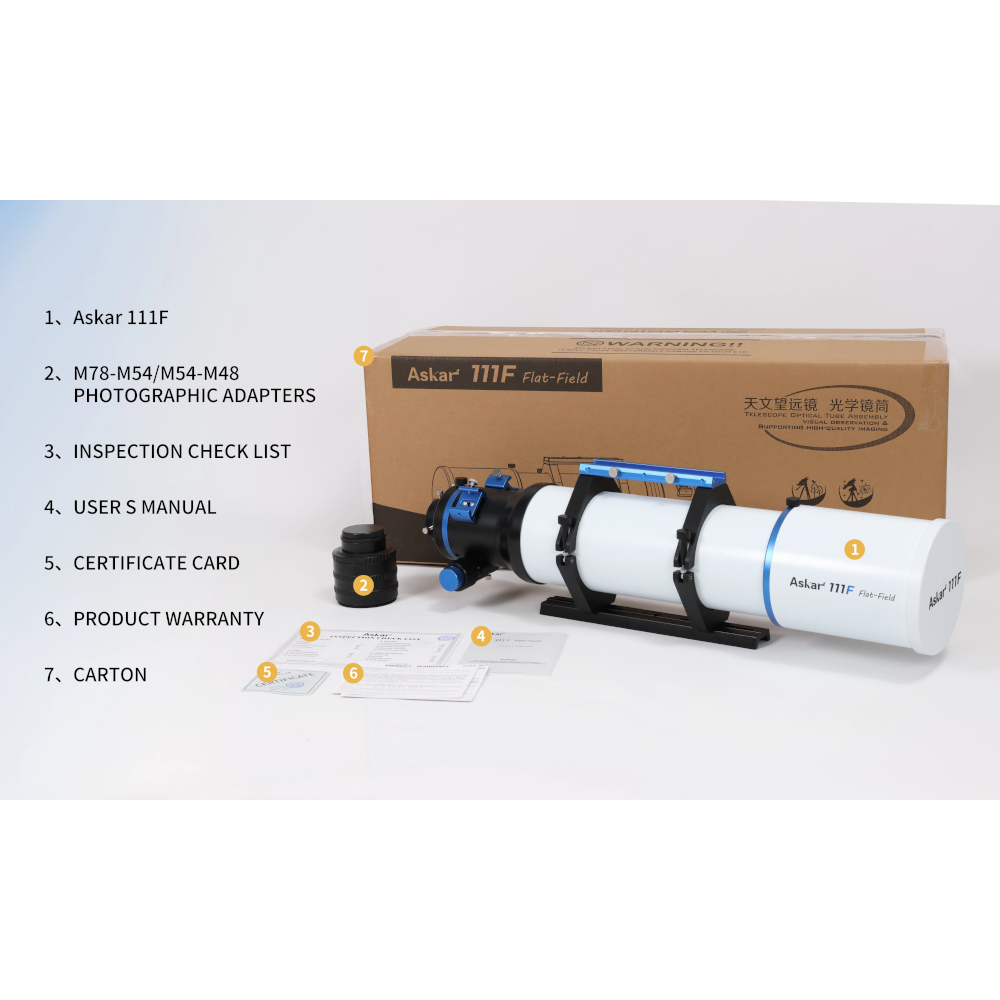
What's in the Box?
Included with the Askar 111F is a
suite of hardware and accessories to get your rig off the ground on day one!
For mounting your telescope, a set of rings and 300 mm V-style dovetail bar
are included. For a convenient carry solution and accessory mounting, a top
handle complete with a full-length Synta-dovetail slot has also been
included. For even more accessory mounting solutions, two finder shoes come
with the scope. To connect your camera and imaging equipment, the Askar 111F
Flat-Field Refractor also comes with an 1.25" visual connection and a stack
of photographic adapters.
Frequently Asked Questions
Why not pick a reflector for a large aperture telescope?
Reflector telescope designs lend themselves well to scaling, leading to
a wide variety of options covering a large range of needs and price points.
However, these require periodic re-alignment (a process called collimation),
especially after transport, and can introduce additional balance concerns with
designs like the Newtonian which places observing/imaging equipment off to one
side. Refractors on the other hand generally do not need adjustment by the
user and have most of the mass on-axis, making them great for users looking
for a 'set up and go' type of system.
What is backfocus? Why would someone want a system that doesn't require
it?
A simple imaging setup consists of a telescope, which can be a
refractor or reflector, and a corrective element that 'fixes' the distortions
from the optics so that stars will be sharp and round from corner to corner.
The area that this corrected image covers is known as the image circle, which
then informs how big of a camera sensor one can use. However, this corrected
image circle is projected a very specific distance away from the corrective
optic. Being on either side of this distance will result in sub-optimal
correction and performance. This specific distance is what is being referred
to by backfocus. Some optical designs however, factor the correction into the
internal design, and in doing so relax the very particular spacing
requirement. There is still a distance that things come to best correction,
however you now have the focuser range to move your build to that point,
instead of having to manually set it with spacers.
What is the benefit of more complex refractor designs?
To correct for the color fringing inherent to glass elements, multiple
elements are needed. At minimum, two elements can do a good job of correcting
for distortions, however three elements are needed to fully correct for red,
green, and blue. Additional elements can then be used to correct for
distortions, either internally or in the form of a separate corrective
field-flattener. Glass type plays a part in this as well, which is where
'extra low dispersion'(ED) and 'super low dispersion' (SD) glass come in,
pushing the performance of an optical design with their superior properties.
Astronomy Hub: Your one-stop-shop for Astronomy Knowledge!
Our Gear Experts have compiled a wealth of information to help expand your astronomy knowledge! Below you’ll find links to articles, videos and "how-to" guides. Just one more reason that our Astronomy Hub is a one-stop-shop for all your astronomy and astrophotography needs!
| Achieving Perfect Focus with a Bahtinov Mask |
| Autoguiding |
| Telescope Mount Buying Guide |