In this episode of What's in the Sky this Month, Teagan reviews some of the beautiful celestial objects you can see in the month of July 2026!
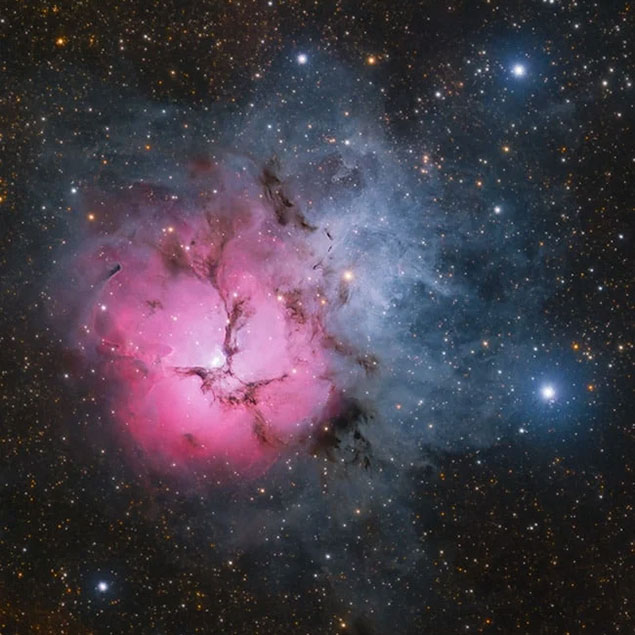
Image credit: Trevor Jones (AstroBackyard)
Messier 20 - The Trifid Nebula
Located in Sagittarius, the Trifid Nebula is one of the most rewarding deep-sky targets of the summer sky. It blends three nebula types in a single view - red emission regions, soft blue reflection zones, and dark dust lanes - that divide the nebula into its familiar “trifid” pattern. The Trifid sits in a rich region of the Milky Way and is easily located just north of Messier 8, the Lagoon Nebula, with the pair visible in the same wide field at low magnification.
Binoculars will show a soft patch of light, but a small telescope or smart scope quickly reveals its structure. Even short smart scope exposures begin to show color, with the red emission region developing first and the blue reflection nebula appearing after a few minutes of stacking. Telescopically, the best views come at low to medium power (50-120x), with better results coming under steady transparency rather than high magnification.
OUR NEAREST NEIGHBORS
Mercury begins the month very low over the west-northwestern horizon and may be glimpsed during the first few evenings very shortly after sunset (binoculars will help). It reaches inferior conjunction on the 12th before reappearing in the dawn sky late in the month, climbing higher toward the east-northeast as July ends. Jupiter lingers in the golden twilight until about the 10th and reaches conjunction with the Sun on the 29th. Venus continues to dominate the same twilight sky, pairing beautifully with Regulus from the 4th to the 13th and drawing closest on the 9th, when only a degree separates them. The crescent Moon joins the scene on the 16th, appearing close to Regulus. Saturn and Neptune rise after midnight in Pisces, with the last quarter Moon close by on the 7th. Meanwhile, Mars and Uranus share the same binocular field of view until the 13th, drawing just 0.1° apart on the 4th. Their low altitude and Uranus’s faint light make it a tough catch, but it may be worth trying at about 90 minutes before sunrise. Mars then slides past Aldebaran from the 8th to the 17th, with a crescent Moon nearby on the 11th. Lastly, the Moon turns new in Cancer on the 14th, then waxes to a Full Buck Moon in Capricornus on the 29th.
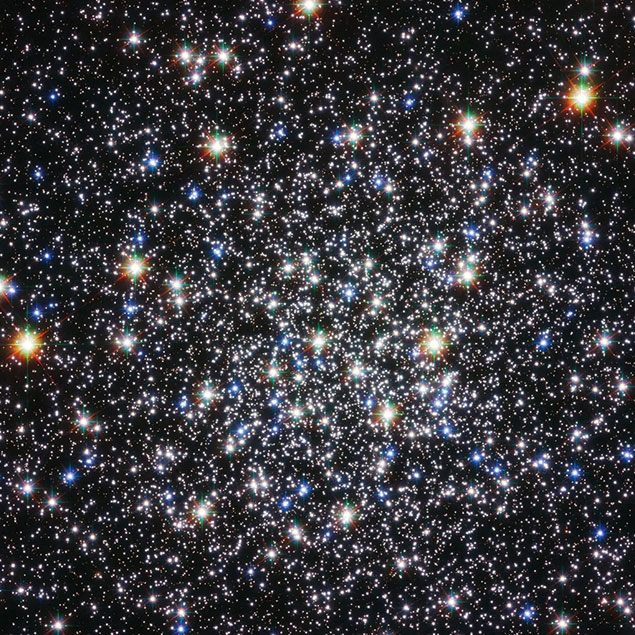
Image credit: ESA/Hubble & NASA
Messier 12
This loose globular cluster is visible in binoculars from dark locations and begins to resolve in small telescopes. Moderate magnification (80-120x) shows its loose, grainy outer region, while smart scopes reveal deeper star density with short stacks. Look for its noticeably asymmetric shape, especially to the southwest - an unusual feature for a globular cluster.
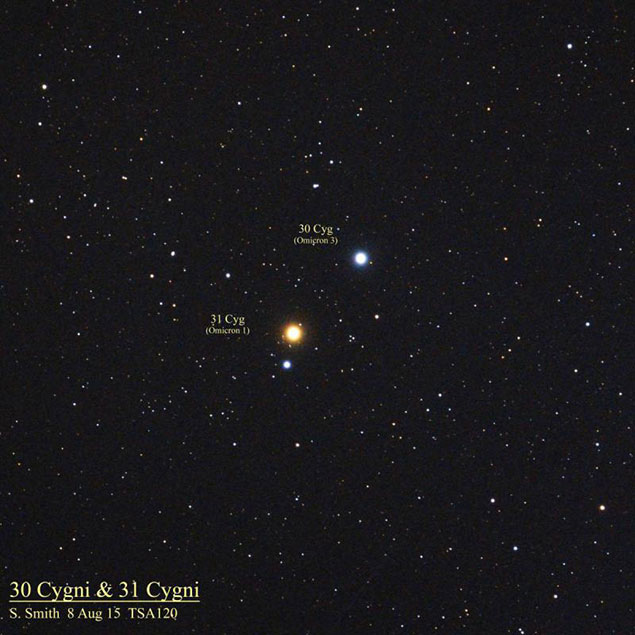
Image credit: S. Smith (CloudyNights)
Omicron Cygni
A colorful and underrated double star, Omicron Cygni is an easy summer target for small telescopes and binoculars. Located roughly midway between Deneb and Sadr and best viewed at low magnification (40 - 60x), the brighter star shows a warm orange tint while the fainter companion contrasts in blue-white.
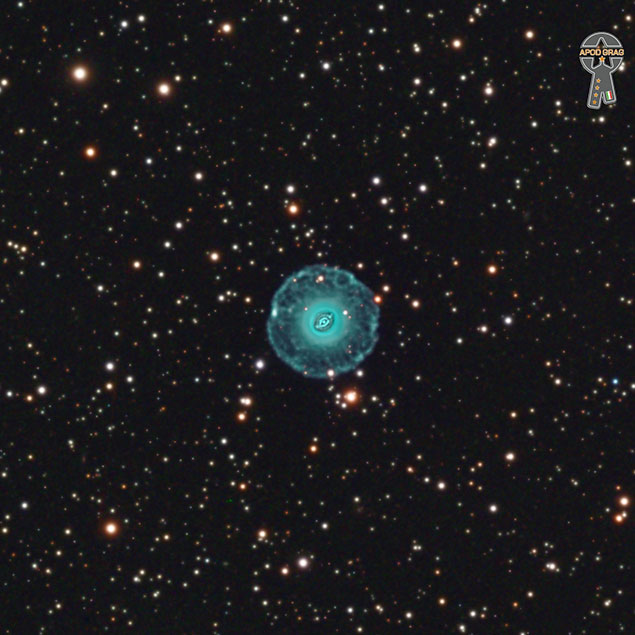
Image credit: Peter Goodhew
NGC 6826 - The Blinking Planetary
This compact planetary is famous for its “blinking” effect - stare directly at it, and the bright central star overwhelms the eye, but look with averted vision and the nebula reappears. Moderate to high magnification (120-180x) helps, and careful observers may detect a faint outer halo under steady skies.
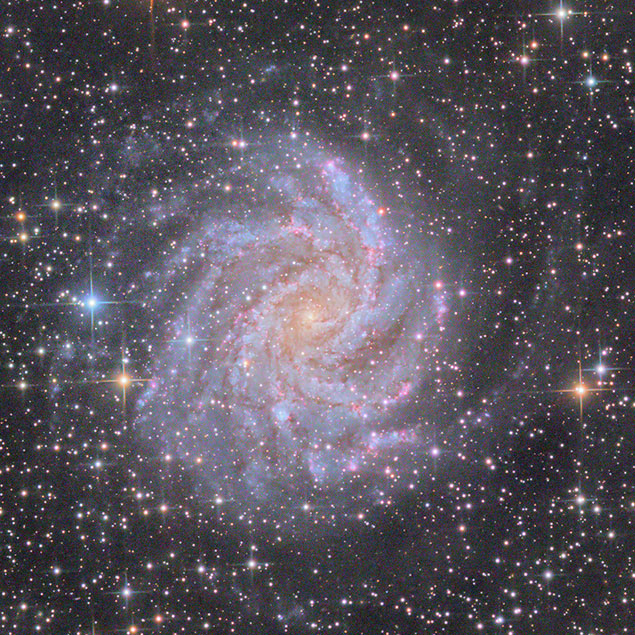
Image credit: Andreigusan
NGC 6946 - The Fireworks Galaxy
This face-on spiral galaxy in Cepheus lies behind a dense field of Milky Way stars, which reduces contrast and makes it a challenging visual target. Use low power (50-80x), and patient averted vision to tease out its faint spiral structure. Smart telescopes benefit from longer exposures to reveal reddish star-forming regions.
LOOKING BACK
On July 19th 1917, American astronomer George Willis Ritchey was photographing a faint spiral galaxy in Cepheus when he noticed something extraordinary - a new star flaring into view where none had appeared before. He had captured a supernova in NGC 6946, a galaxy so active it would later be nicknamed the Fireworks Galaxy for producing more stellar explosions than any other known galaxy in the sky. Though invisible to the naked eye, this quiet patch of sky has hosted violent endings of massive stars, reminding us that even in seemingly still constellations, the universe is always rewriting itself.