#-Element (i.e. 2-element, 3-element, etc.)
When a refractor is described as having a 2-element, 3-element, 4-element, etc. optical design, that dictates the number of lenses within the refracting telescope. The number of elements also dictates how that refractor is classified: 2-element refractors are doublets, 3-element refractors are triplets, 4-element refractors are quadruplets, and so on.
1.25"/2" diameter
Typically these are used to describe eyepieces, referring to the outside diameter of the barrel that is inserted into the focuser or diagonal for visual astronomy. However as some astrophotography setups do use/ reuse some of the same connections, this is seen in some astrophotography accessories - most notably nosepieces
Aperture
Aperture is the diameter of a telescope's primary mirror or lens listed in millimeters or inches. The bigger the aperture of a telescope, the more light it will gather, allowing the observer to see more detail on celestial objects and ascertain finer details that a telescope of lesser aperture may not see.
Arc Minute
An arc minute is a unit of measurement that denotes the angular size of an object within our night sky. There are 60 arc minutes within a degree of the night sky, and 60 arc seconds within an arc minute. For instance, the Moon is 31 arc minutes in apparent size, and therefore approximately 0.5 degrees.
Arc Second
An arc second is a unit of measurement that denotes the angular size of an object within our night sky. There are 60 arc seconds within an arc minute, and 60 arc minutes within a degree. For instance, the Moon has an apparent size of 1860 arc seconds, 31 arc minutes, and about 1/2 a degree.
Auto-Focus
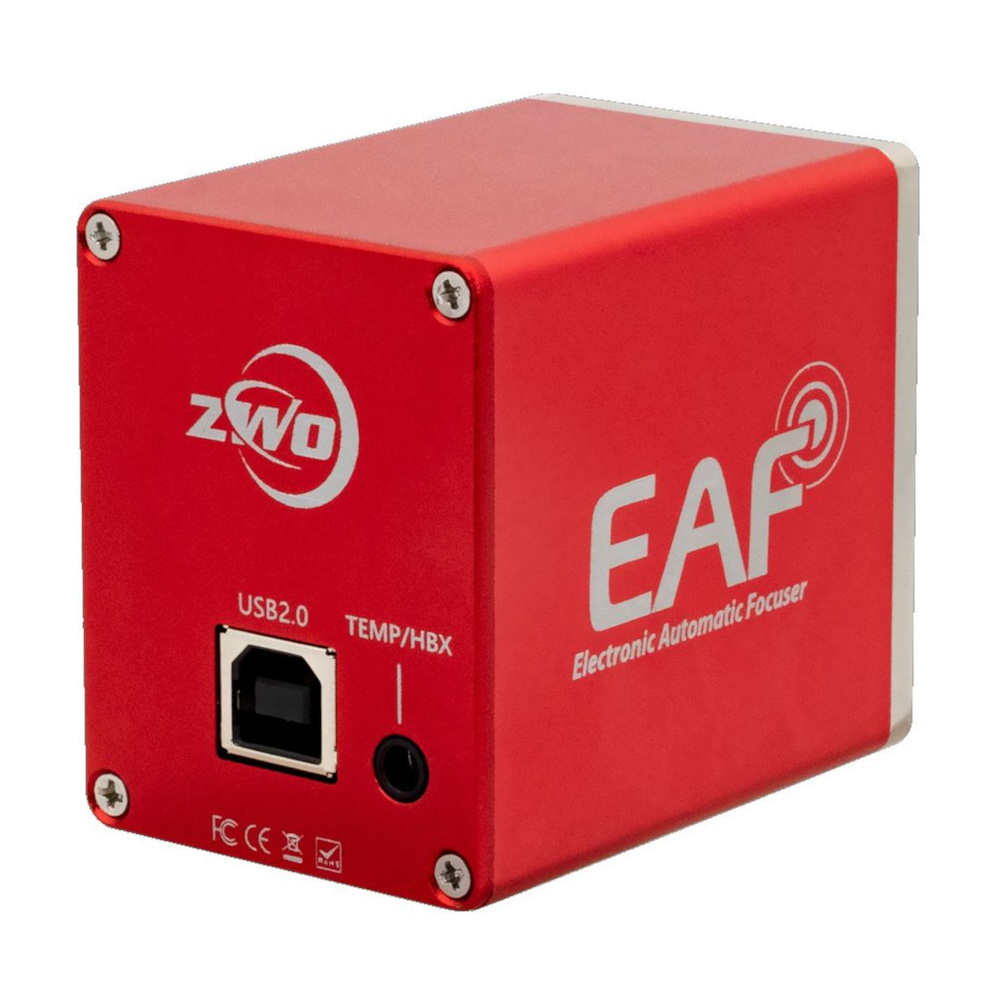
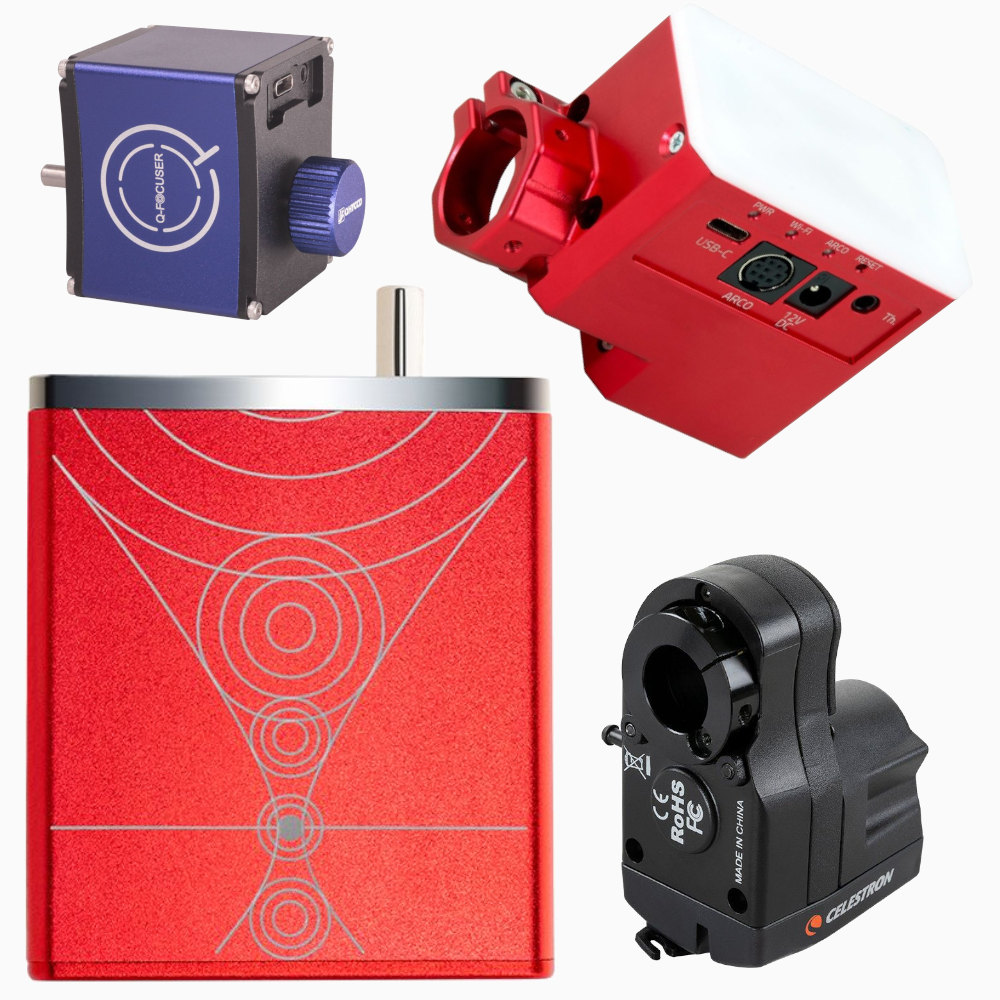
Automatic focusing utilizes software to shift the focus of a telescope in and out to determine the precise focal point of the optics. It does this by reading the star size at each focus point, creating a graph of this data, then finds the minimum star size; bringing the optics into sharp focus.
Autoguiding
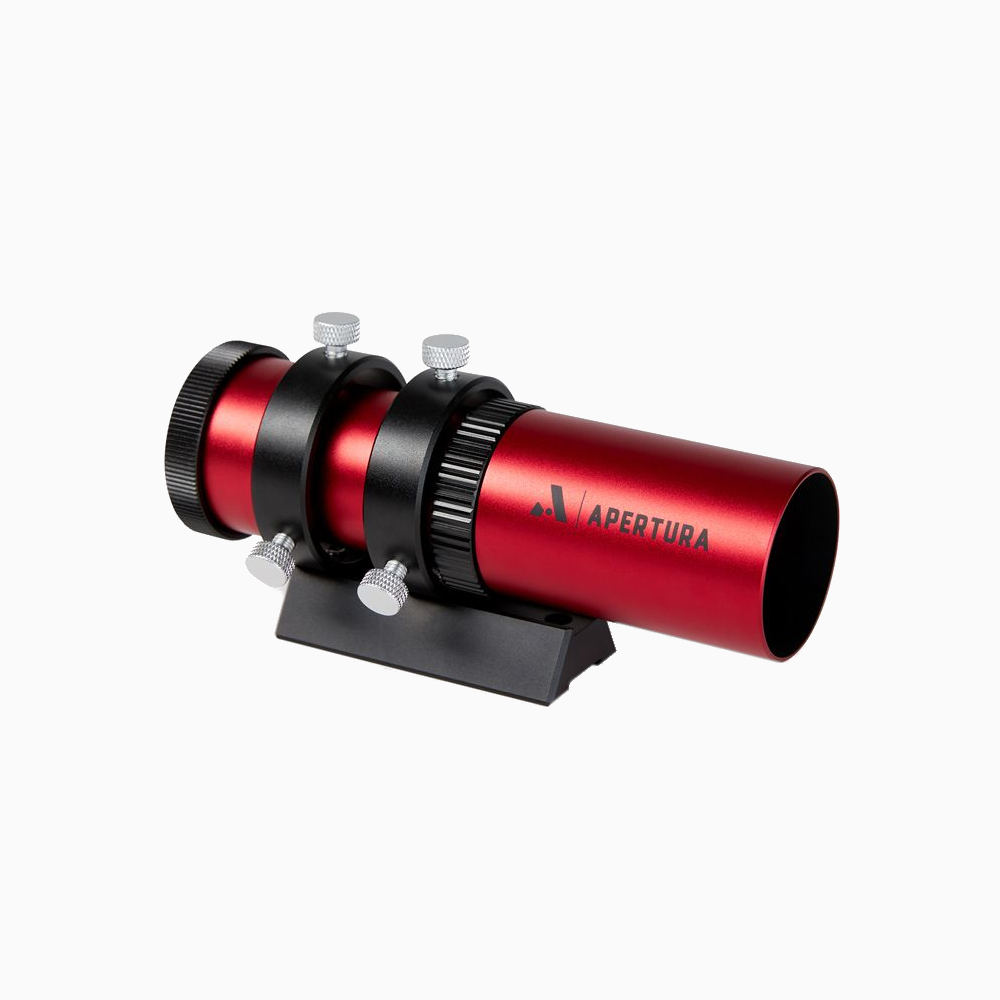
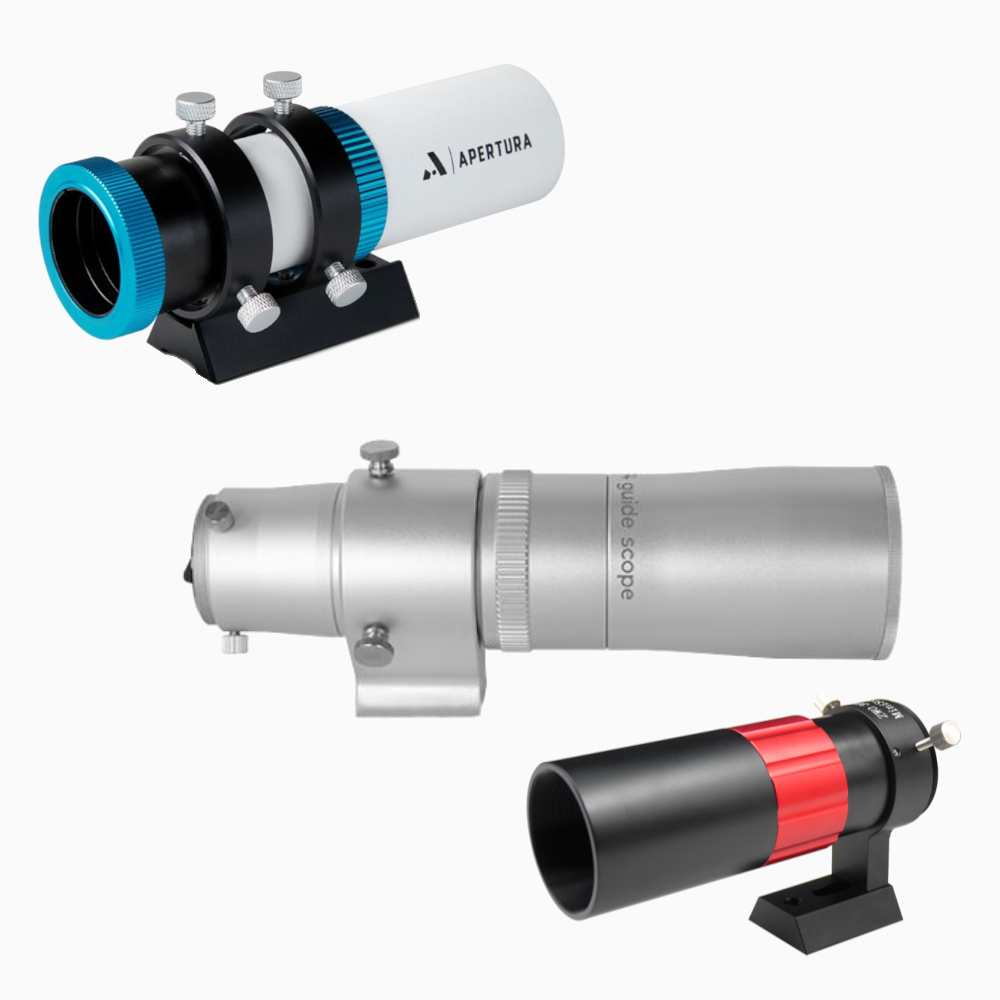
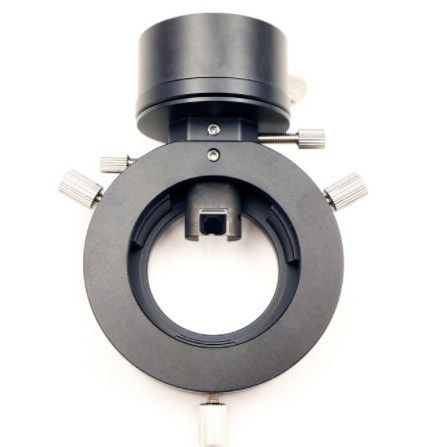
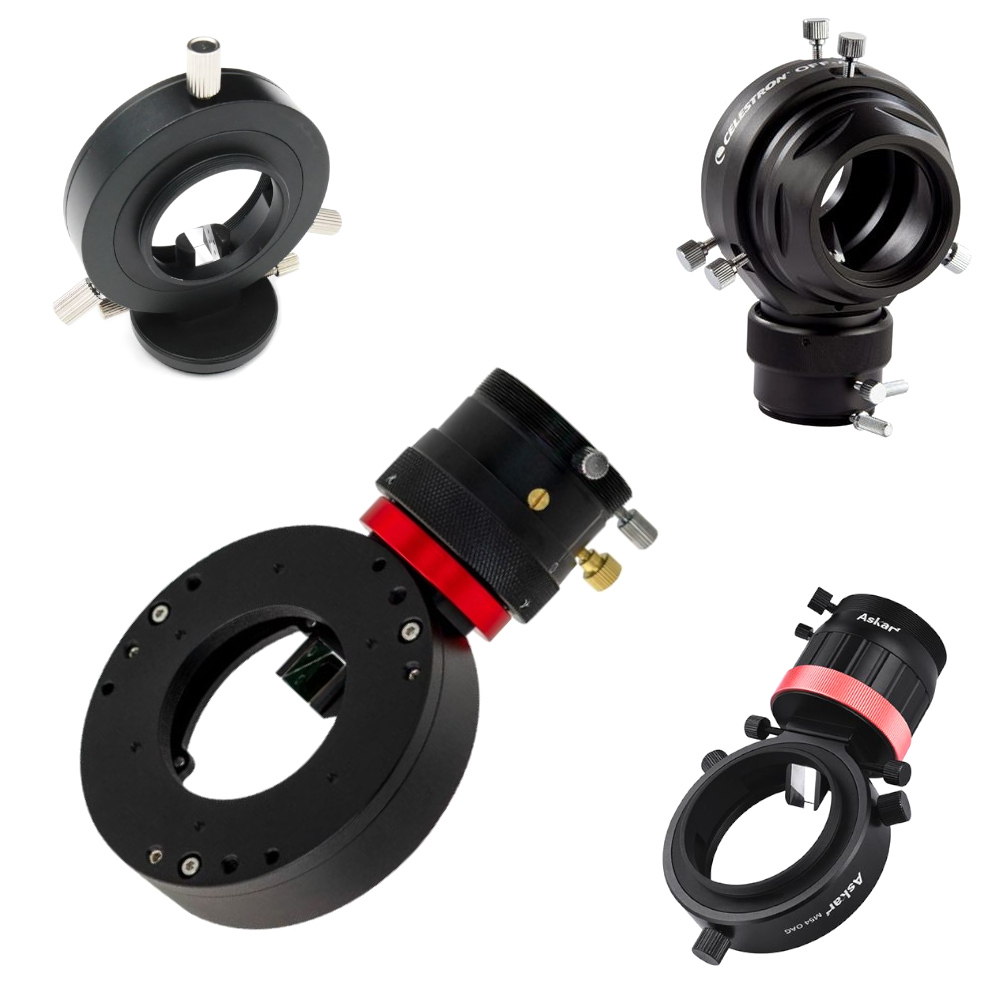
Autoguiding is a process which utilizes a smaller telescope, referred to as a guide scope, and an additional camera sensor, known as a guide camera, to assist your mount in its tracking precision. Alternatively, this can be achieved using an Off-Axis Guider (OAG), which is fitted within your primary imaging train. An OAG uses the light captured by your telescope and sends it to your guide camera via an internal prism. So, how does autoguiding actually work? Your guide camera will take a constant series of short exposures (typically 1-3 seconds each) that will then be analyzed by software. After the software selects the best guide star(s) to guide upon, the goal is to keep these stars as steady as possible from frame to frame. If there is a discrepancy in the positioning of the stars, the guiding software will communicate with the mount to make small adjustments to fix these tracking errors. While it may not be necessary for short exposure astrophotography such as planetary, lunar, or solar, autoguiding is highly beneficial for long exposure astrophotography.
Backfocus / Backfocal Distance / Backspacing
All optical systems have a point at which an in-focus image is formed, and for astrophotography it is at this location that the camera sensor should be placed. When the telescope is used without corrective elements, this is done easily with the focuser mechanism; and so long as an image can be brought into focus, optimal optical performance will be achieved. However with corrective elements, oftentimes there is a certain distance that the camera sensor needs to be placed away from the rear of the corrector for optimal performance. This will be listed as the backspacing or backfocal distance for the corrective element.
Bahtinov Mask
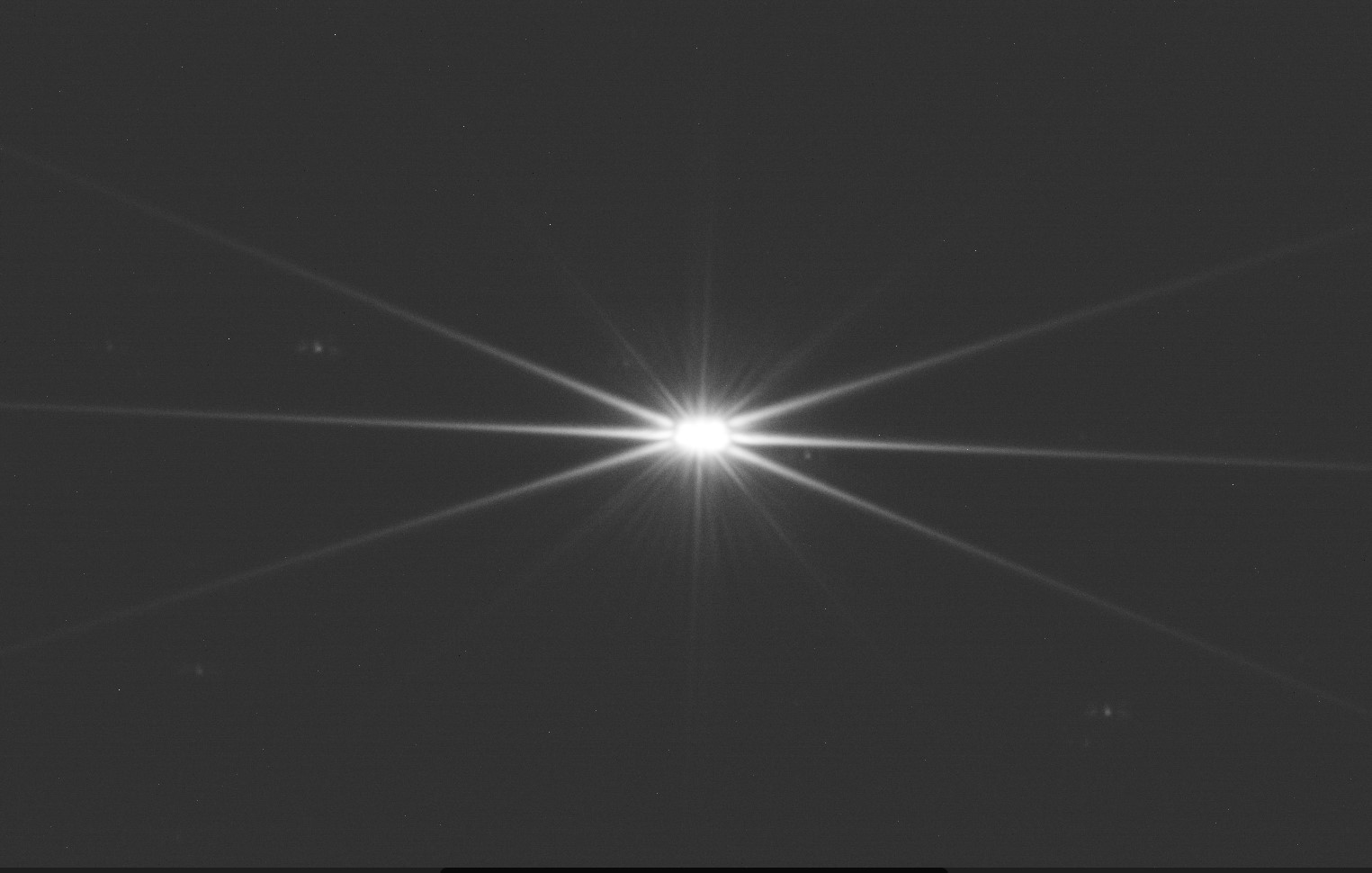
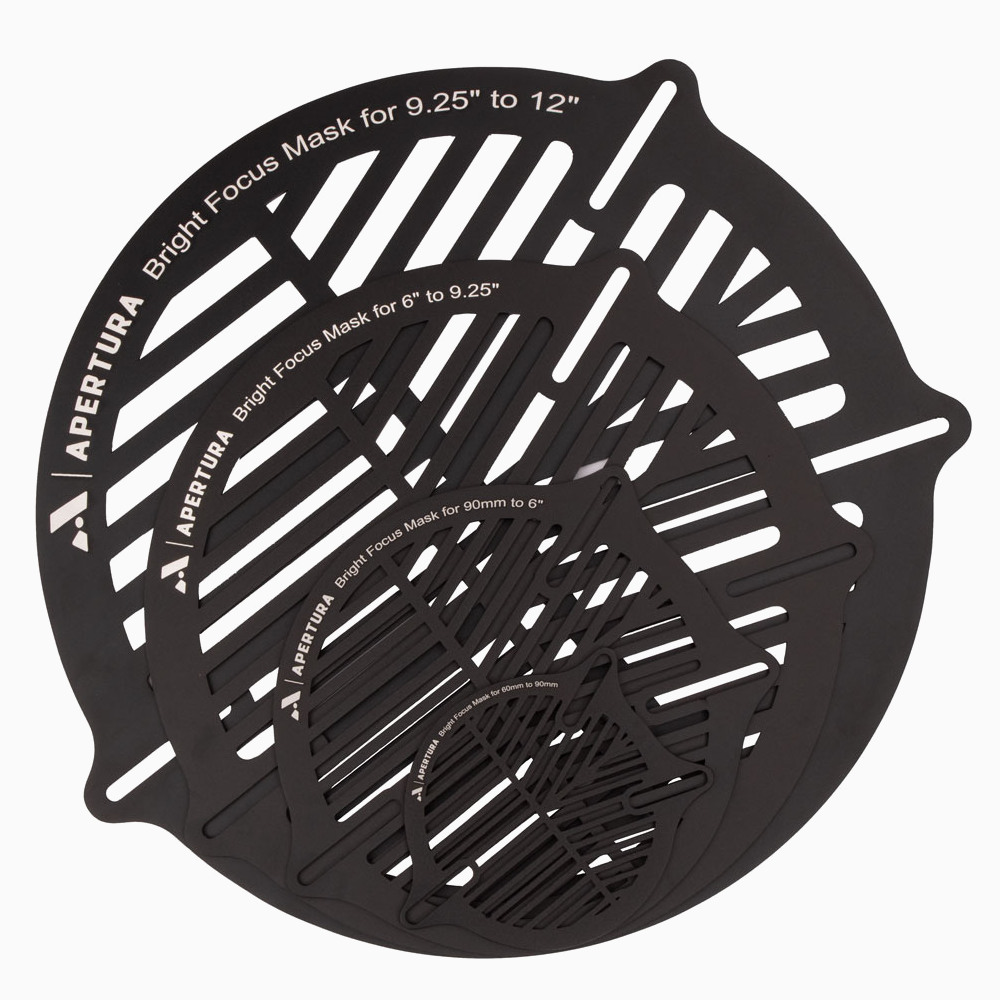
A Bahtinov mask is a tool that aids the user in finding optimal focus and was created by Russian astrophotographer Pavel Bahtinov in 2005. This type of focusing aid creates 3 diffraction spikes over a bright star within the field of view. While adjusting the focus knob, the point in which the three lines intersect perfectly over the star result in perfect focus. This tool is widely used by astrophotographers worldwide and creates an effortless focusing routine.
Camera Rotator
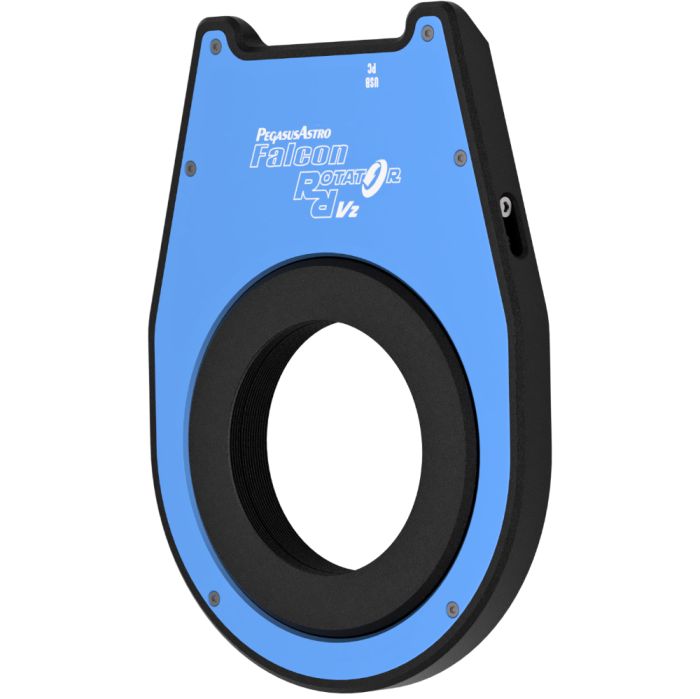
A camera rotator is fitted onto the back of the telescope and allows the user to rotate their imaging equipment to find the desired photographic angle. These devices can either come manually operated or electronically operated. Electronic camera rotators are extremely beneficial for creating mosaics of the night sky, as they help you achieve precise camera orientation.
Chromatic Aberration
Different wavelengths of light travel at different speeds based on the medium it occupies. When white light is exposed to glass such in a telescope or lens, blue light, red light, and green light slow at varying rates. This change of speed causes each wavelength to focus at different points along the focal plane, resulting in color fringing seen within the images taken.
Collimation
Collimation is the process in which the optical elements of a telescope are aligned to deliver the best performance possible. In refracting optical systems, lens collimation is performed by the manufacturer at the time of assembly. In contrast, reflecting telescopes contain mirrors that are often bumped out of alignment. As a result, these types of telescopes require periodic collimation from the user to ensure peak clarity and sharpness. Various tools are available for collimation, such as laser collimation, Cheshire eyepieces, and collimation caps, just to name a few.
Coma
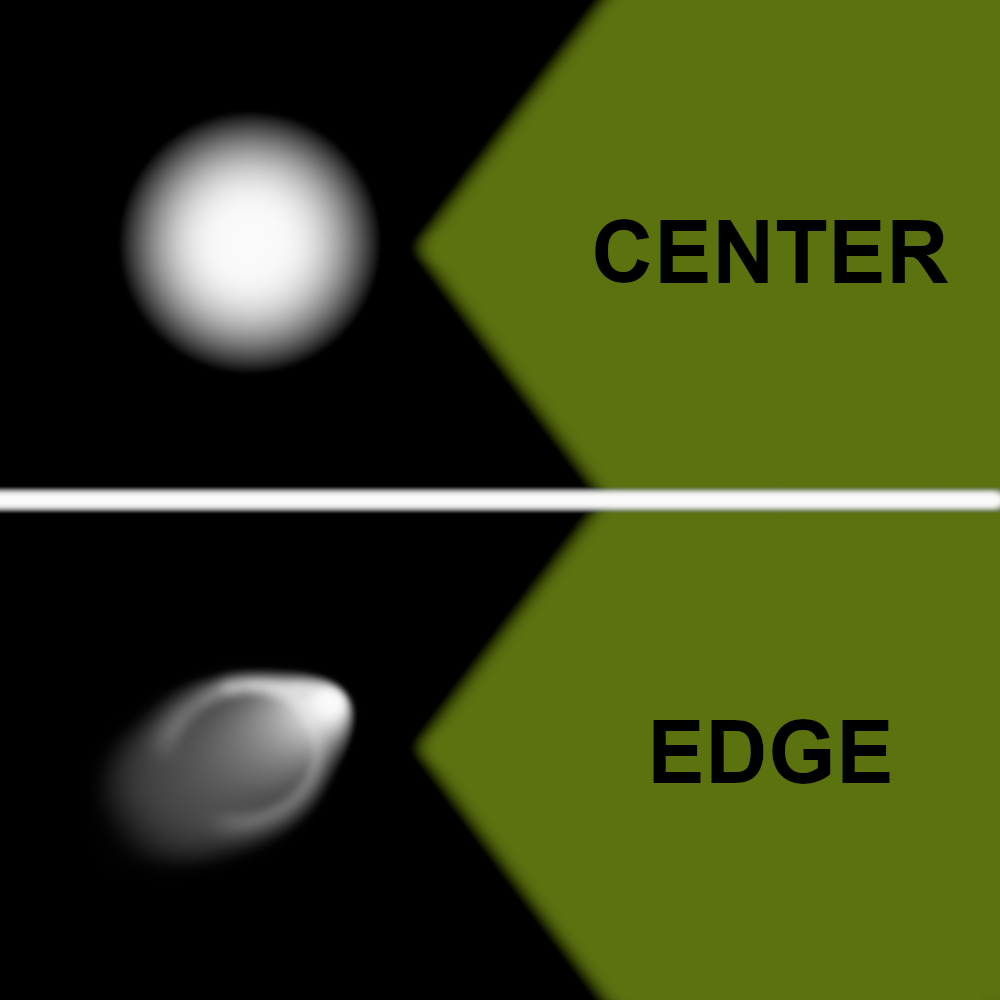
Coma is the comet-like appearance of stars near the edges of the frame. This occurs when light entering the optics focuses at different points around the corners of the image, causing an overlap of unfocused stars that present itself in a trailing manner.
Coma Corrector
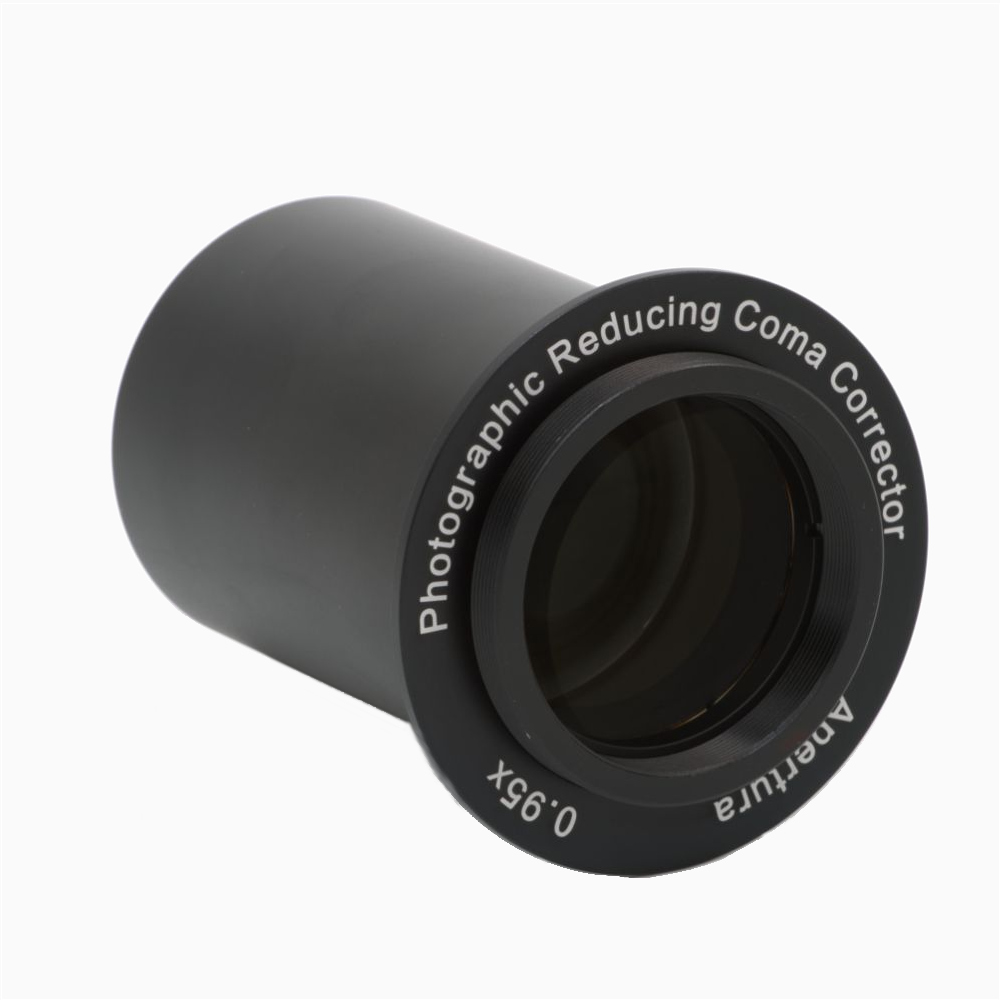
To remedy comatic aberration, the comet-like appearance of the stars around the edges of the frame, the addition of a coma corrector is necessary. These optical accessories fit inside of your telescope’s focuser and correct the incoming light, delivering crisp stars across the entire field of view.
Corrective Element
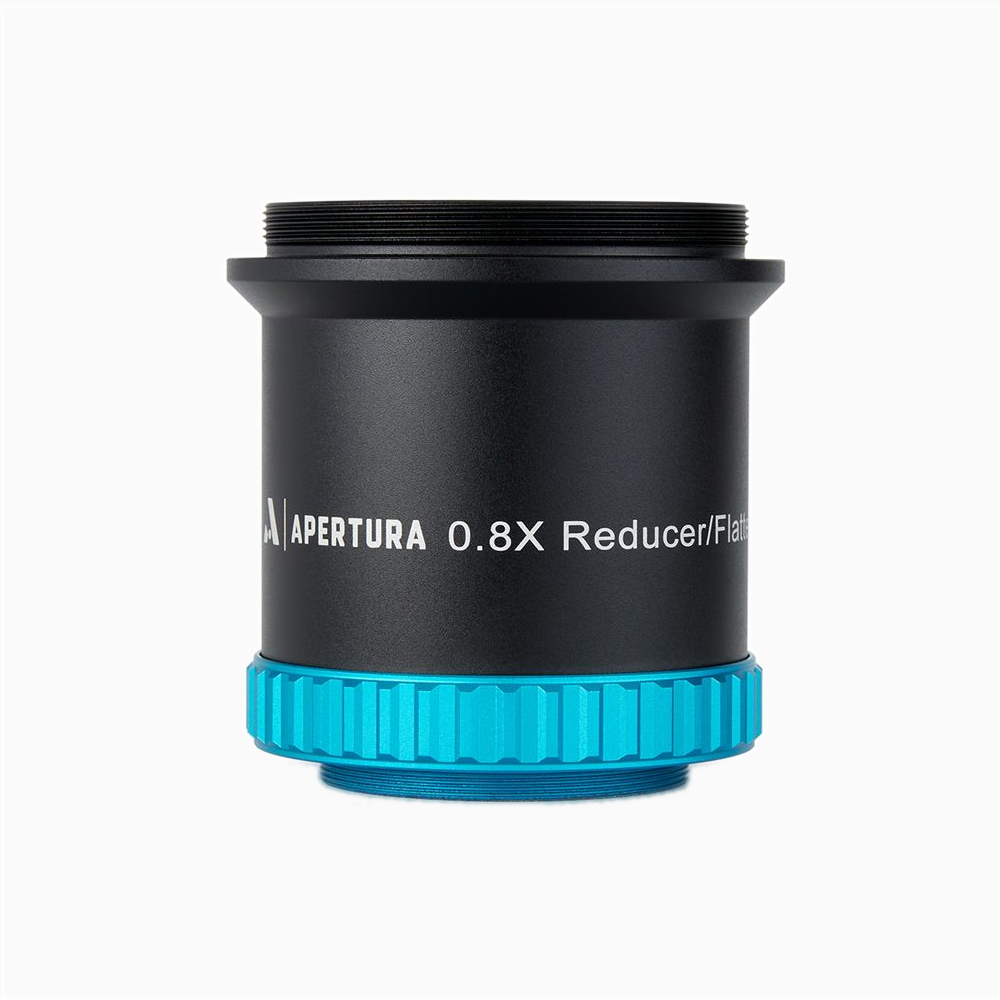
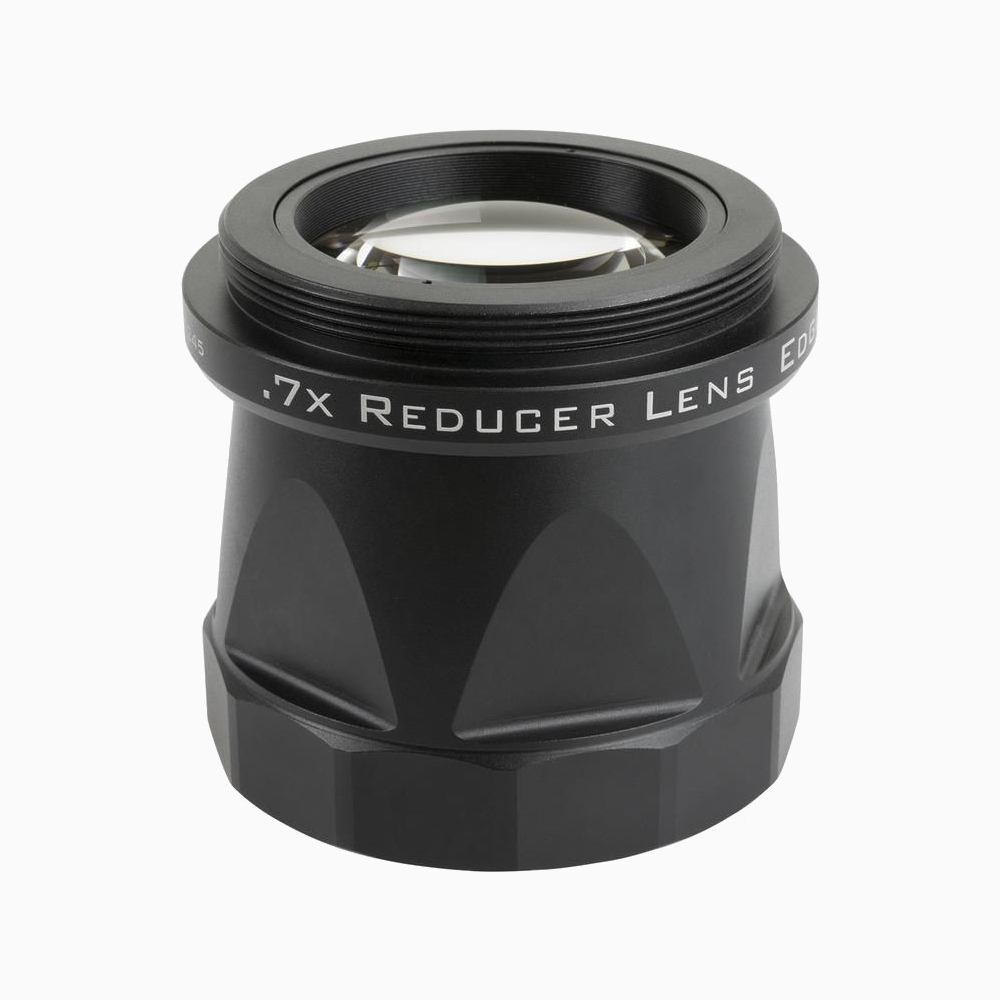
This refers to an optical accessory such as a field flattener, coma corrector, or reducer. These improve some facet of a telescope’s performance, such as optical distortions that might otherwise appear on the edge of the frame; or augments it, for example by providing a wider field of view.
Dedicated Astronomy Camera
These cameras don’t look like what one traditionally thinks of when imaging a camera; instead taking the form of cylinders or pucks, with no physical controls, displays, or viewfinders to speak of. These require a computer or WiFi control device to take images, with more advanced models additionally requiring external power. What they give in return for all of these concessions is granular control over the sensor settings, increased sensitivity to wavelengths that more traditional cameras filter out, options for deBayered sensors (true monochrome), designs that easily connect with astronomy equipment, and in some cases cooling for increased performance.
Dew Heater
Dew heaters are a low wattage dew prevention tool. It utilizes an electrical heater to warm up a lens to prevent the accumulation of moisture.
Dew Strip
This is an accessory that is used to redirect the light passing through the telescope in a different direction. This is done to provide a more comfortable viewing angle for telescopes designs that would otherwise place the eyepiece in an awkward place for viewing. This is not a concern for imaging, and only serves to provide an extra surface to lose some light from; consequently the diagonal is typically removed even in very basic imaging setups.
Dovetail Plate / Dovetail Bar
A dovetail is a mounting plate that attaches to the bottom of your telescope. This allows the telescope to be mounted to a telescope mount via the dovetail saddle. Dovetails can come in many different designs, though are most often found in Vixen or Losmandy styles.
Drawtube / Focuser Tube
On reflectors such as a Newtonian & RCs, as well as on most all refractors, there is a section that can move in and out of the main body of the telescope. It is here that visual observing or astrophotography equipment is connected, so that they can then be moved to focus on the object in view. This moving section is known as the focuser tube or drawtube.
DSLR / Mirrorless Camera
What one may consider a “regular” camera; used for everyday photography and feature an interchangeable (removable) lens system. Popular brands from this category that also enjoy wide support in the astrophotography hobby are Sony, Canon, and Nikon.
EQ Wedge
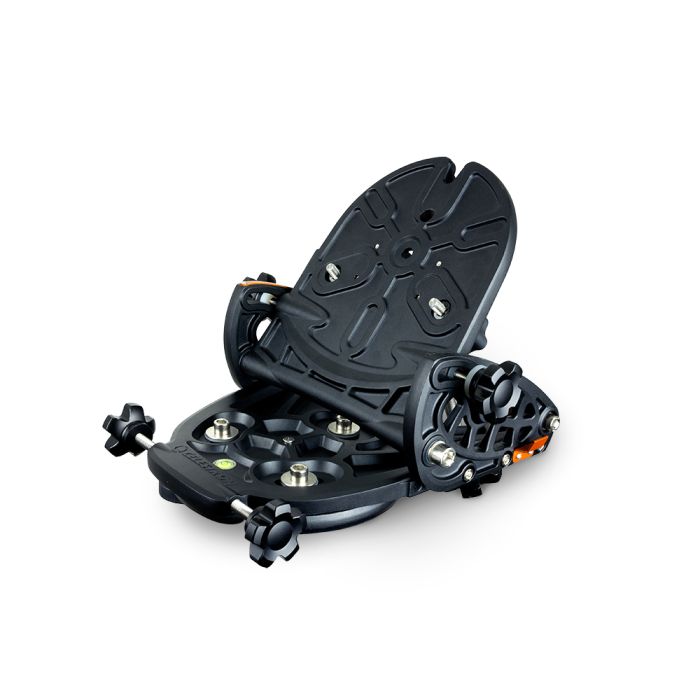
An EQ wedge is an accessory that allows astrophotography to be conducted with an alt-azimuth mount, specifically the Celestron fork-arm mounts. These additions introduce a polar axis to these mounts, allowing alignment with the celestial pole. In doing so, the issue of field rotation is eliminated, and the resulting images are sharp and distortion-free.
Exposure Time
Exposure time is the amount of time the camera sensor is allowed to collect light. In general, the longer the exposure time, the more light collected, and the brighter the image will become. This should be selected with caution though, as an exposure time that's too long can oversaturate the pixels and blow out the image, resulting in a loss of signal. Determining the correct exposure time is highly dependent on the aperture of the optics as well as the gain settings used. A larger aperture will produce a brighter image than that of a smaller aperture with the same exposure time. In a similar fashion, an image with a higher gain setting will be brighter than a lower gain setting image with equal exposure time. Finding the perfect balance between the aperture, gain, and exposure time will maximize image quality.
Field Curvature
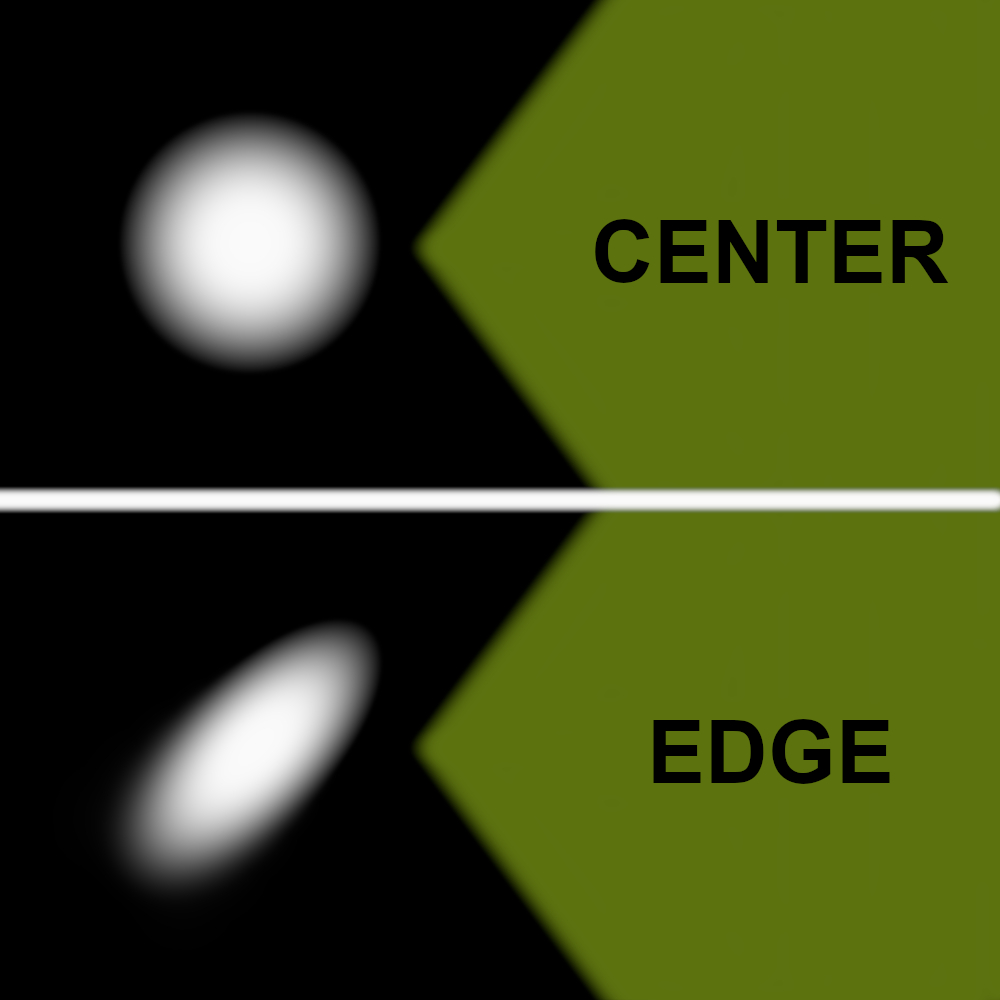
Field curvature is an optical aberration that presents elongated stars along the corners of the frame. This is due to the geometric difference between a flat camera chip and a curved optical plane, causing the center of the image to be sharp and in focus while the outer edges are increasingly distorted.
Field of View (FOV)
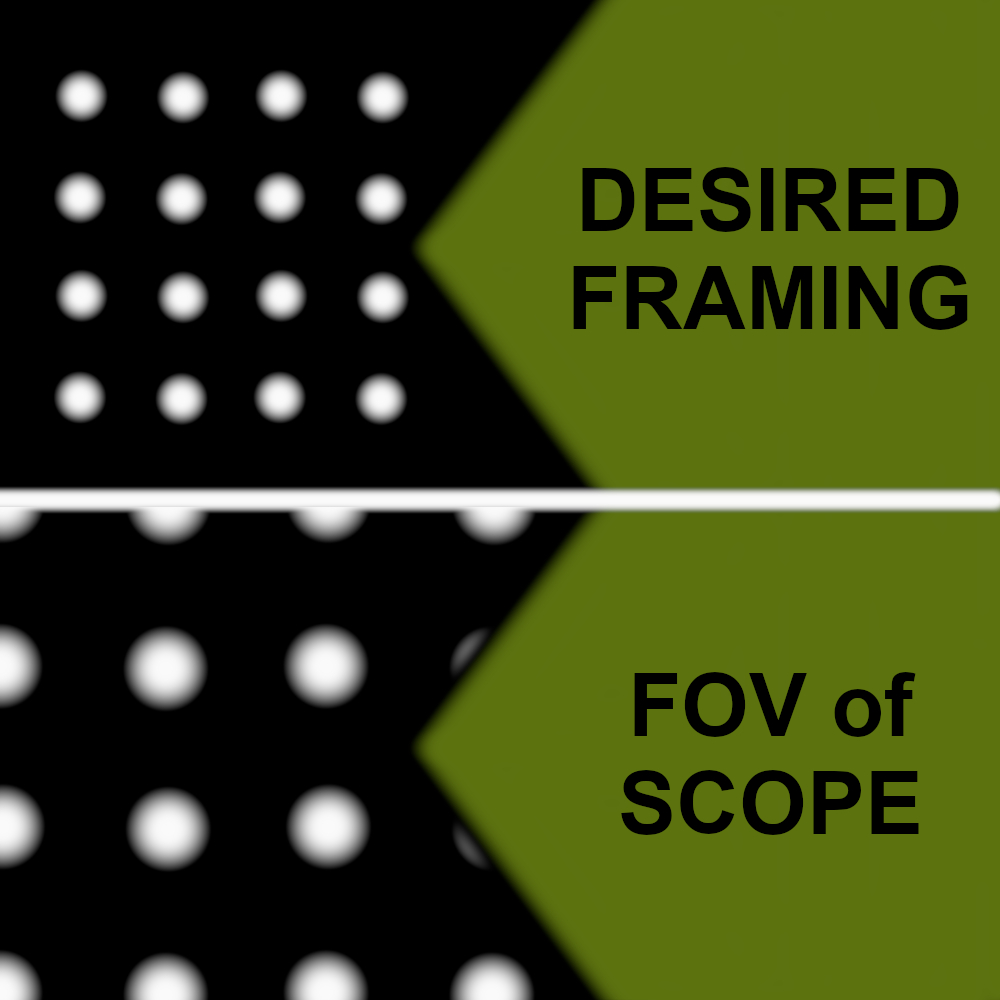
In simple terms, your field of view is the amount of sky that is witnessed by your telescope/camera combination, or telescope/eyepiece combination. This measurement is calculated in angular degrees. To calculate how much of the sky you can image with your astrophotography rig, take the width of your camera chip, multiply it by 57.3, then divide that product by the focal length of your optics. If you want to determine how much of the sky you can view through your eyepiece, take the apparent field of view of your eyepiece (provided by the manufacturer), then divide it by the quotient of your telescope’s focal length & the focal length of your eyepiece.
Filter
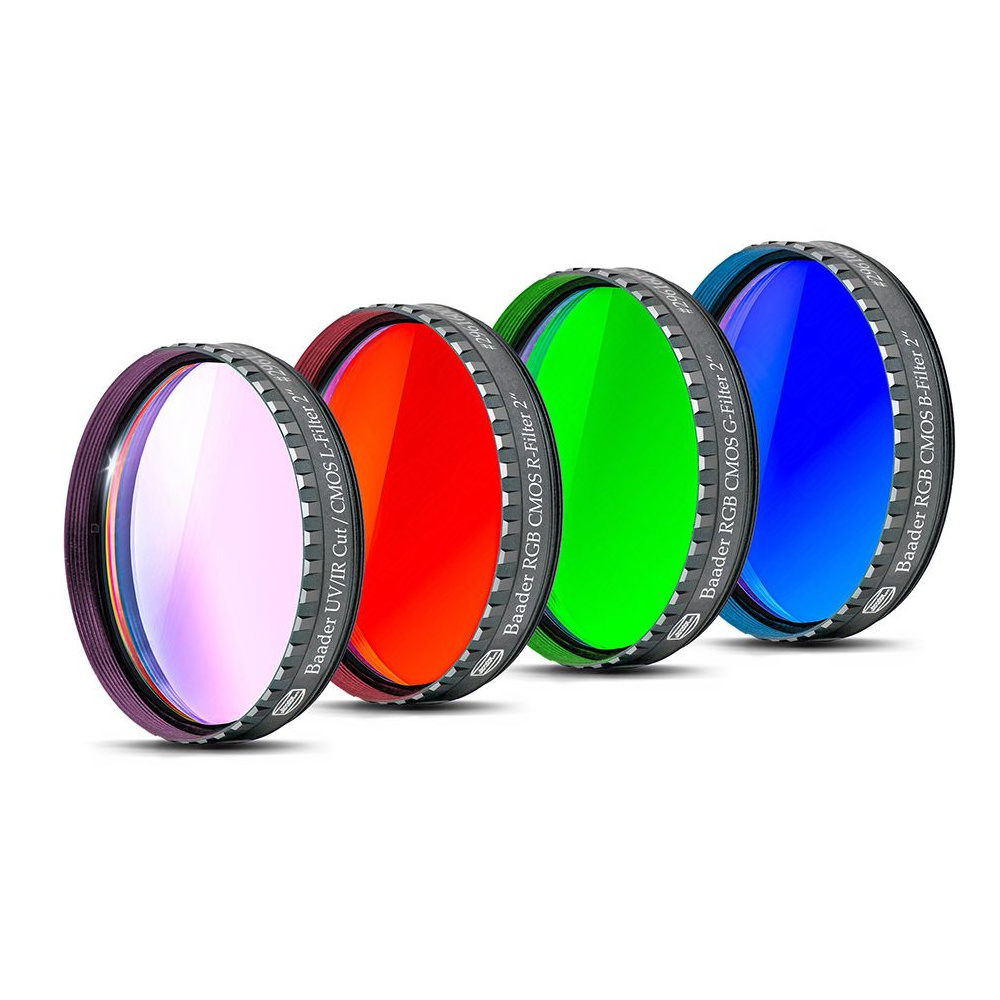
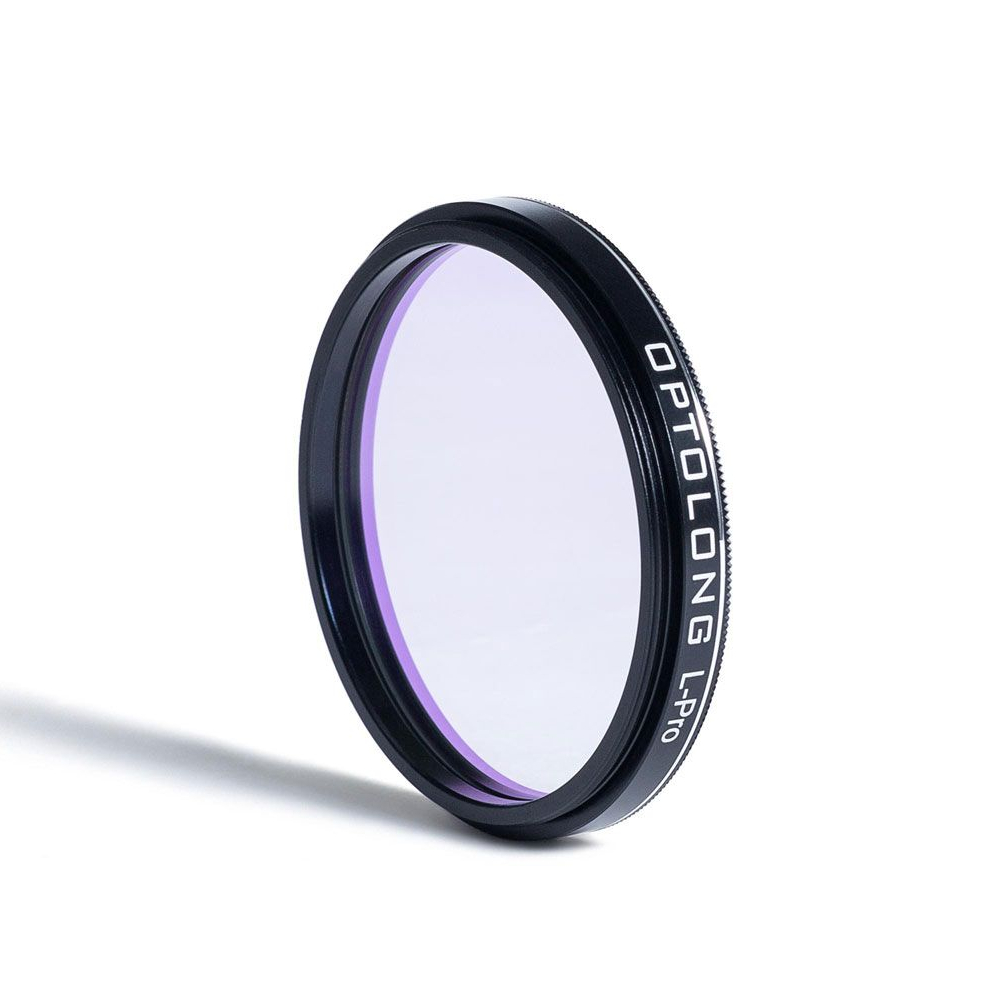
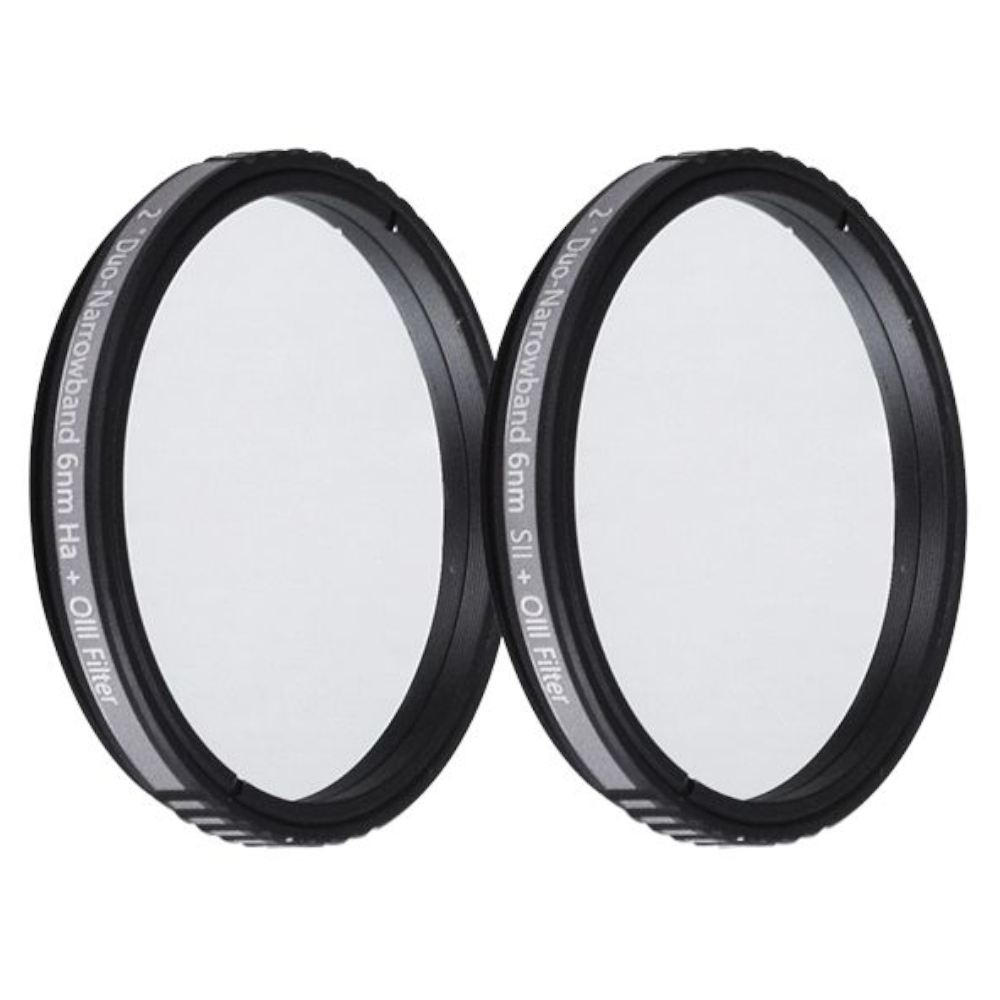
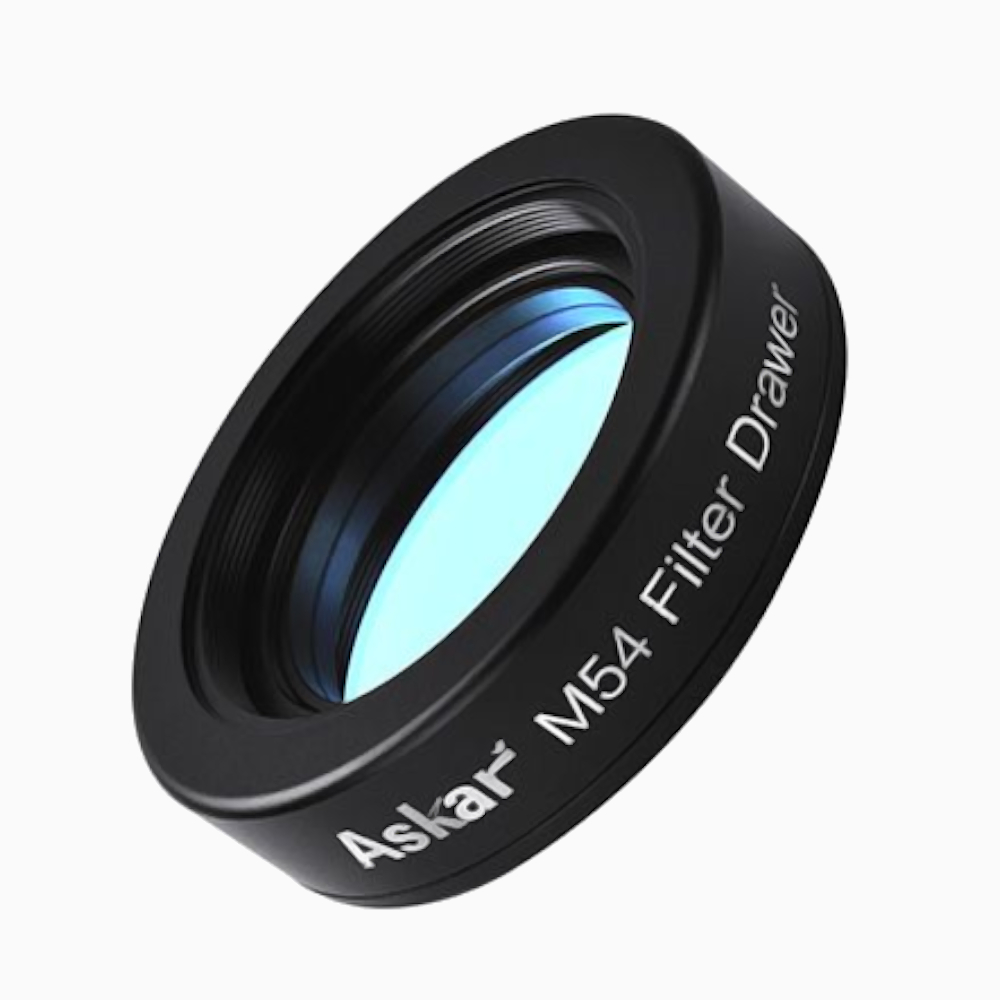
A filter is an accessory that is inserted within the imaging train. These accessories allow only select wavelengths through to the camera sensor. For instance, a blue filter will only allow the camera sensor to collect blue light, while all other light is blocked out. There are a wide variety of filters, from light pollution filters to narrowband filters. The combination of data from filters is a great way to create images that highlight certain wavelengths from celestial objects.
Filter Wheel
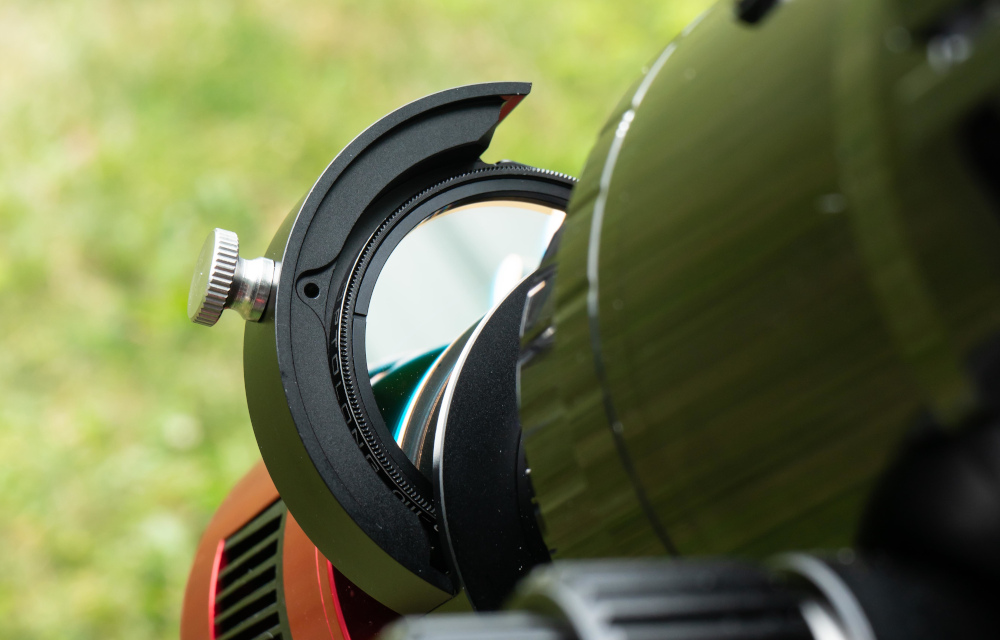
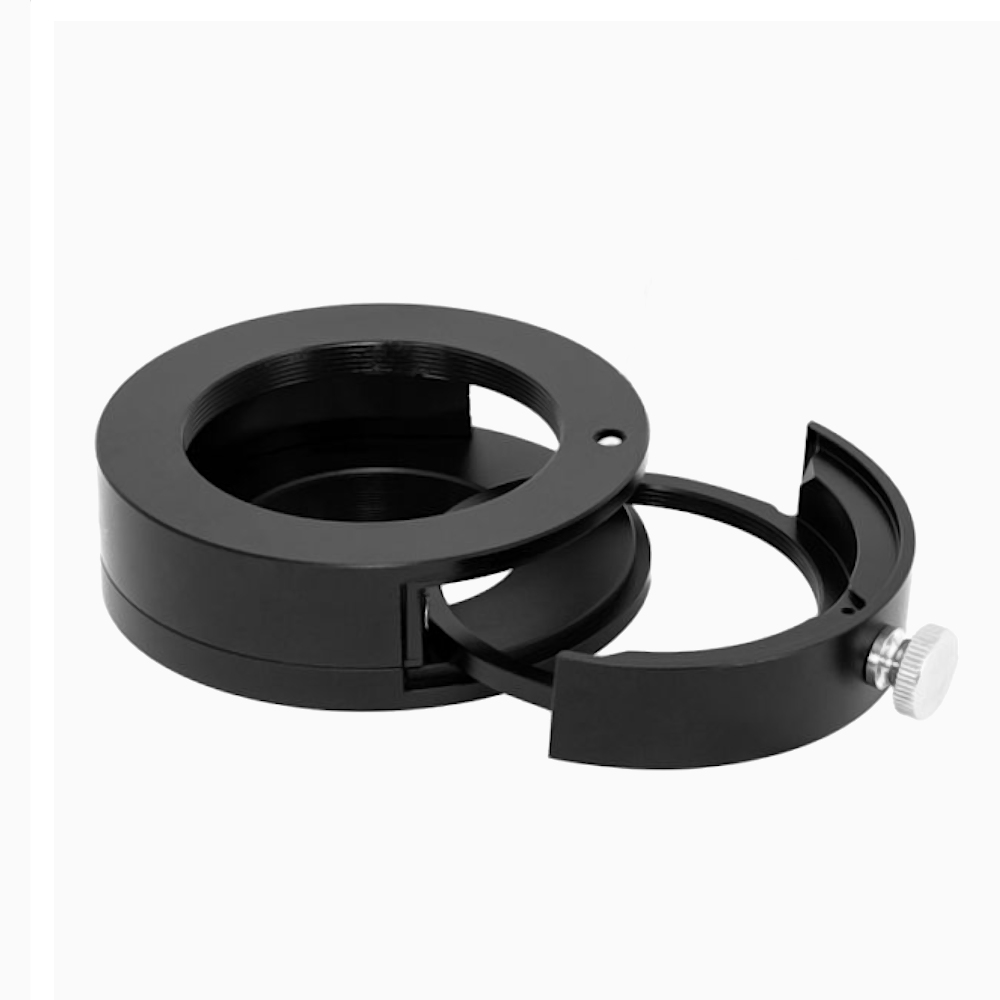
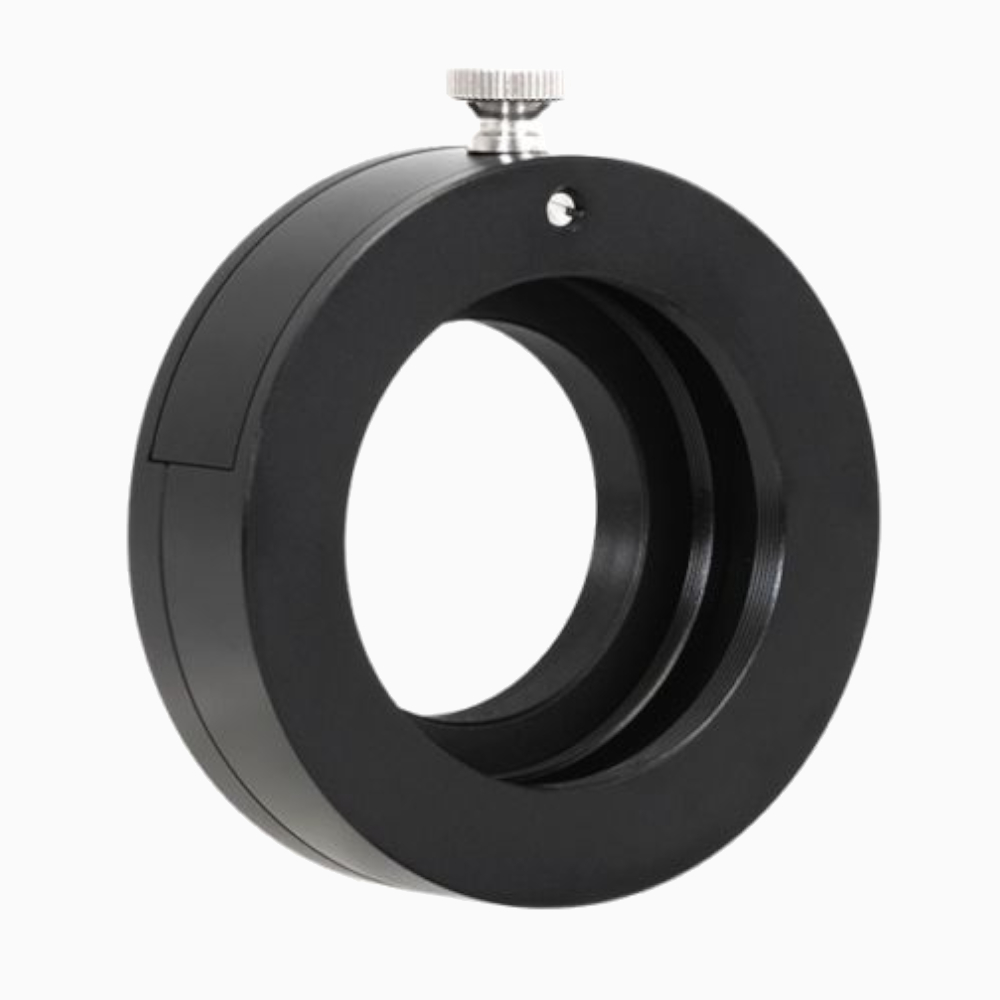
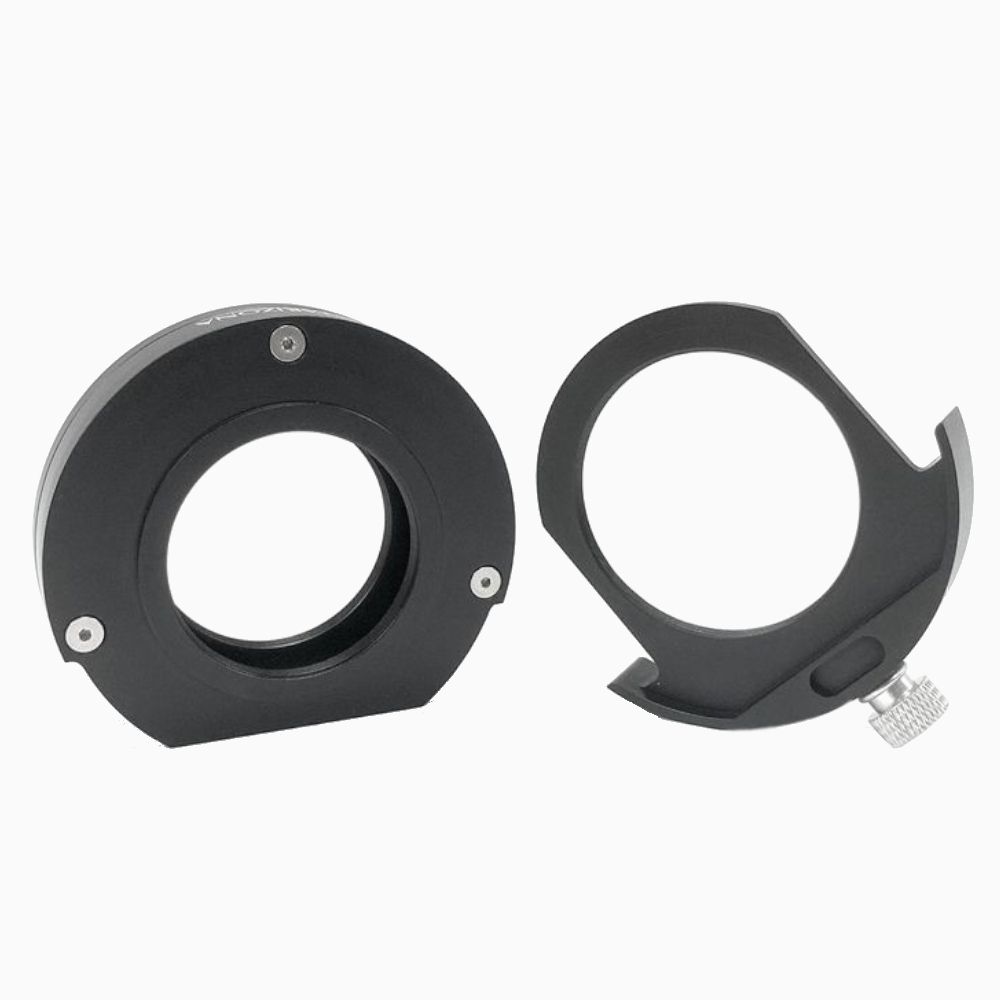
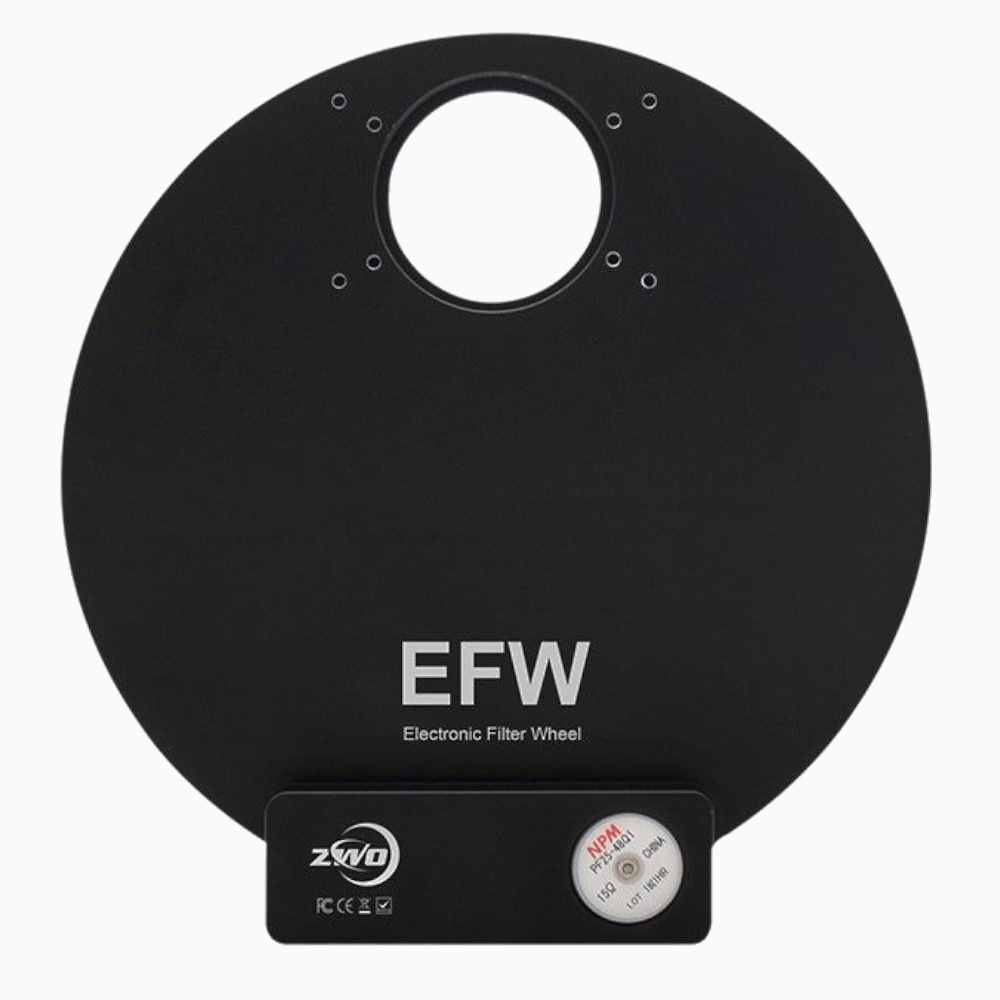
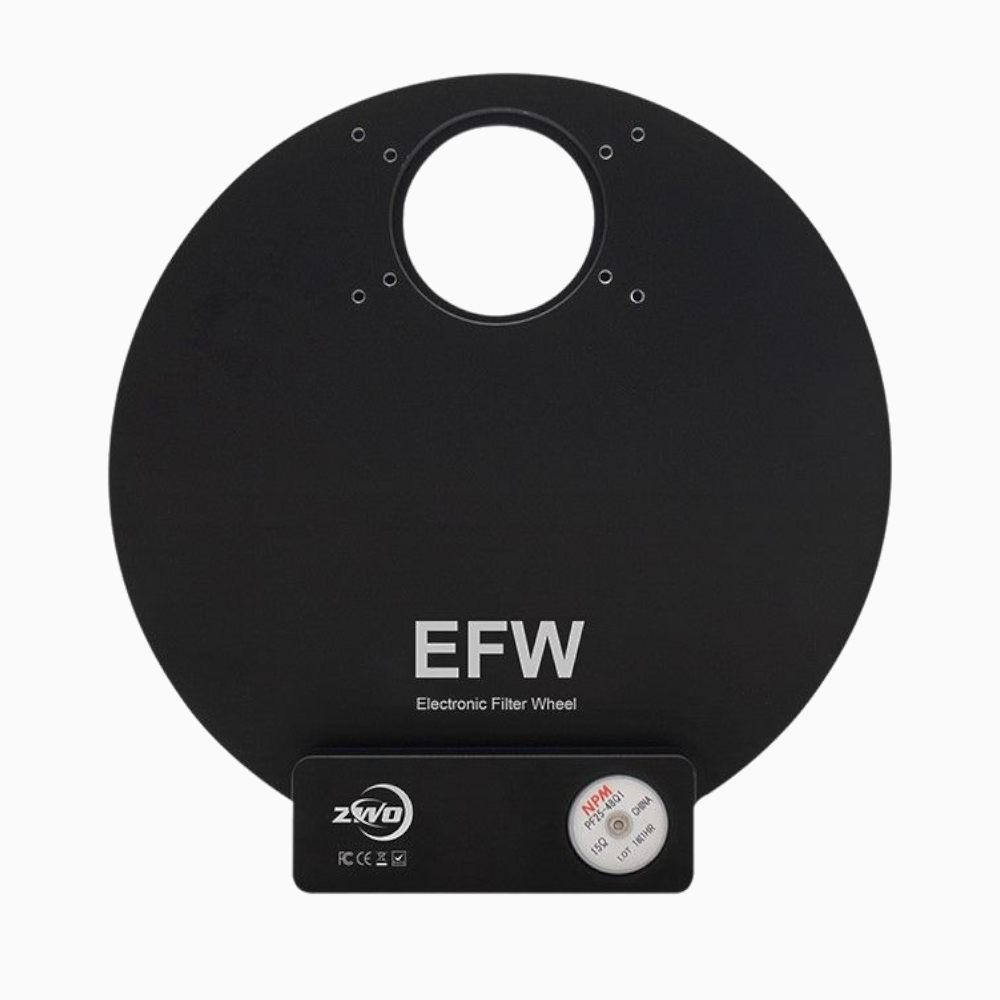
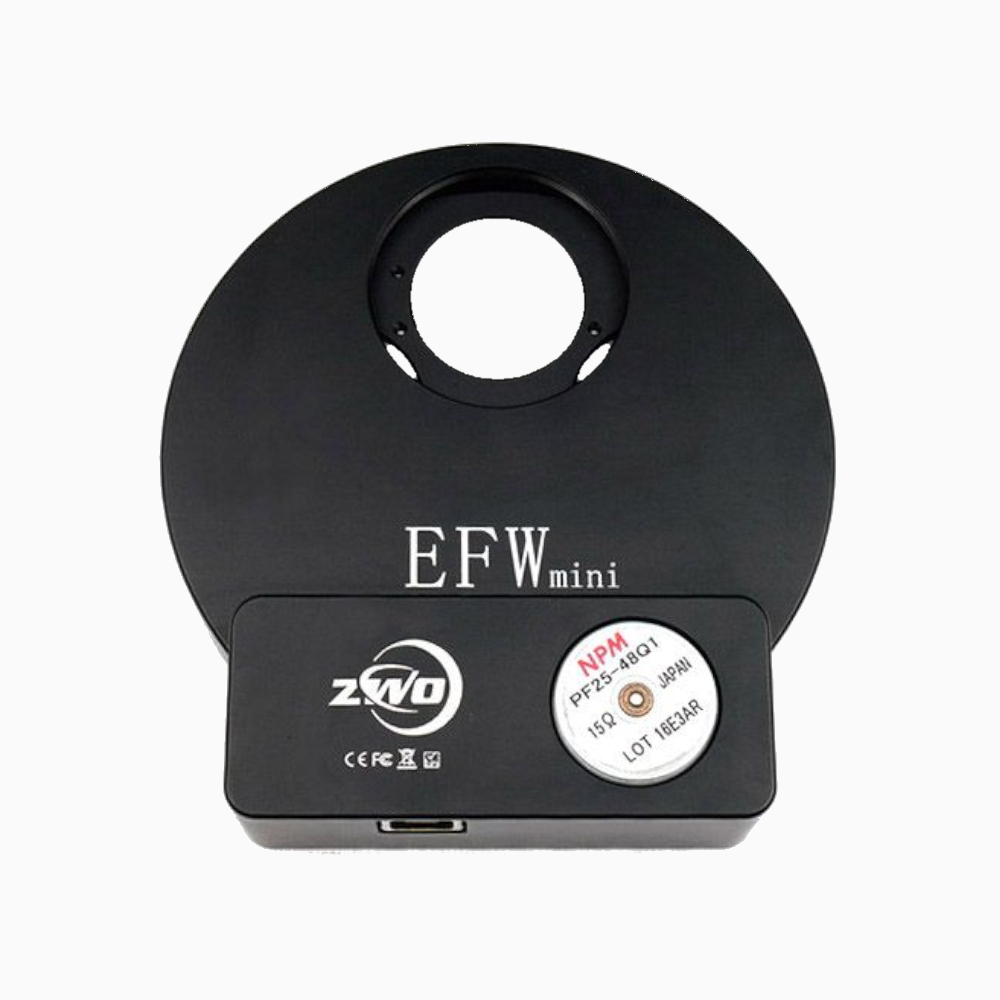
A filter wheel is a device that holds a number of filters. These accessories are great for easily swapping between filters, such as red, green, and blue filters for a streamlined imaging session. Filter wheels can hold either 1.25”, 2”, mounted, or unmounted filters based on the model. They also can be operated manually or electronically.
Finder Scope
A finder scope fits on top of the main telescope and is used to help you find and center objects in your eyepiece. A finder can be as simple as a red dot finder or it can be a high quality small telescope in its own right.
Focal Length
The focal length is the distance, usually measured in millimeters, between the primary mirror or lens and the point at which the image comes to focus. Generally, classic refractors have a longer focal length, Newtonian reflectors tend to have a focal length that is shorter, and Schmidt-Cassegrain fall somewhere in the middle.
Focal Ratio
The focal ratio is calculated by dividing the aperture (mm) of the primary mirror or lens into the focal length. Example: 2500 mm divided by 254 mm (10") equals an f/ratio of 9.84, which is usually rounded off, in this case to f/10. The focal ratio signifies how quickly a telescope gathers light and tells us something about the telescope's field of view, how long exposures will take during astrophotography sessions, and how much magnification the eyepiece will produce for that telescope.
Focuser Knob
This component allows the end user to adjust focus. On refractors and some reflectors this is done by moving the visual observing or imaging equipment; other optical designs like SCTs move the optical elements. Typically there are three focusing knobs to accomplish this - one coarse, and then a dual speed set of two that provide coarse and fine focusing - however SCTs will often just have one that provides fine focus only.
GPS
Originally invented by the U.S. Department of Defense, this technology became fully functional in the United States in 1995. This radio navigation system utilizes satellites to provide the precise global position of GPS enabled devices. Out of the 31 GPS satellites orbiting Earth today, GPS receivers only need information from 4 GPS satellites to determine accurate location. Cell phones, computers, and endless other devices act as GPS receivers. GPS is helpful in astronomy and astrophotography by providing the imaging software with the correct time, date, and location, helping create a detailed image of what the sky should look like based on this information.
Guide Camera
A guide camera has the important job of assisting your mount with its tracking capabilities. It does this by capturing constant frames of the night sky, usually 1-3 seconds each, that are then sent to autoguiding software. The software analyzes the field of view, selects guide stars and determines their center of mass, then compares each incoming frame to this calculated center of mass. If any discrepancies are found between the captured frames, the software will then communicate with the mount to fix these errors.
Hydrogen-Alpha (Ha, H-a, H-alpha, Hα, H-α)
In very simplified terms, when atoms change energy levels, specific wavelengths of light can be emitted. Hydrogen has one of these wavelengths (or more specifically, spectral lines) around 656.46 nm, in the form of H-alpha. This is close to red and can be observed in nebulae - or more importantly for the subject at hand, in stars such as our Sun. When being written, H-alpha is commonly shortened to simply Ha in the astronomy community.
Image Capture Software
Astrophotography image capture software are specialized pieces of software designed to operate your astrophotography equipment. There are plenty of options available, though some of the most popular ones are N.I.N.A, Astro Photography Tool, Sequence Generator Pro, and SharpCap, just to name a few. These applications have been designed to provide seamless imaging sessions, allowing extensive opportunities such as target selection, target framing, plate solving, autoguiding, image acquisition, camera cooling, automation, and plenty more.
Imaging Train
Your imaging train is your telescope, camera, and any other accessories that are fixed between them, such as filters, filter wheels, off-axis guiders, focal reducers, etc.
Incoming Light
The term incoming light refers to the photons emitted by the celestial object being imaged. These photons are collected by your telescope and camera, then converted into signal.
Light Pollution
Light pollution is the brightening of the atmosphere due to lights from streetlamps, other forms of artificial light, and even the Moon. As light enters the atmosphere, it washes out the night sky, making it very difficult to observe the stars, nebulae, and planets. In order to combat light pollution in astrophotography, special filters have been developed to cut through excess light and enhance images. These filters are known as City Light Suppression filters, commonly referred to as CLS filters.
Mounted Filter
Mounted filters are filters that are encased within a metal rim. This rim is usually fitted with threads to attach it to other devices within an imaging train, such as a filter wheel or an eyepiece.
Native Backfocus / Flange Distance
These terms are used to describe the distance from the camera’s connection point to its sensor.This is important for back spacing calculations, to account for spacing the camera will be “adding” on its own. Each term is used to describe the same concept with two different systems, with Native Backfoucs being used with dedicated astro cameras and flange distance used with DSLR/ mirrorless cameras; however this rarely comes into play with DSLR/ mirrorless cameras as the T-Rings produced for these systems add the requisite amount of space to for a 55 mm backfocus system.
Neutral Density (ND) Filter
A neutral density filter, commonly shortened to ND filter, is a filter most common in the world of traditional photography though some smart telescopes do have ND options available. These filters cut the amount of light that reaches the imaging sensor, which for smart telescopes can be helpful in daytime scenarios where over-exposure can’t be tamed with gain and exposure time alone. It’s important to note that these filters do not block enough light to image the Sun, for which a dedicated solar filter is needed. The exception to this is the ND filters from DwarfLab for the DWARF II telescope, in which both included ND filters must be equipped to avoid damage to the device.
Newtonian Telescope
A Newtonian telescope (sometimes colloquially called just a ‘Newt’) is a reflector telescope with a fairly simple, yet effective, optical design. Using just a basic parabolic-shaped primary mirror and an even more basic flat secondary mirror, this optical design is one of the most cost effective reflector designs; and yet it still offers compelling performance. Coma is an aberration inherent to the Newtonian optical design, which is why coma correctors are commonly used when imaging with these telescopes. Compared to most newer reflector designs, Newtonians do not utilize a folded mirror system, meaning they are physically longer than SCTs, RCs, or Mak-Cass. This also means that light does not exit out the back of the scope, but the side. This is a comfortable location for observing, but a bit less ideal for imaging equipment.
Nosepiece
An adapter that allows cameras to be installed in place of visual observing equipment such as diagonals or eyepieces. These adapters feature threading for a T-Ring or camera on one side, and an 1.25” or 2” barrel on the other.
Off-axis Guider (OAG)
As opposed to using a guide scope, off-axis guiders are fitted into the main imaging train itself, and utilizes the incoming light from the primary telescope for guiding. It achieves this via an internal prism that sends light into the guide camera. When using traditional guide scopes, these scopes can alter in position slightly through the night of imaging, causing the issue of differential flexure. But utilizing the main imaging rig’s incoming light, off-axis guiders eliminate this issue.
Optical Tube Assembly (OTA)
The acronym OTA stands for Optical Tube Assembly. An OTA is simply the telescope portion of a telescope/mount/tripod package. Some telescope users prefer to buy the OTA separately so they can create a custom astrophotography set-up or use a mount they already own.
Polar Alignment
Polar alignment is the process of aligning a telescope mount’s polar axis with the Earth’s axis of rotation. By having these two axes parallel to one another, precise counteraction of the Earth’s rotation can then be achieved. While a typical process of equatorial mounts that have three inherent axes of rotation, a similar effect can also be achieved by utilizing an equatorial wedge with two-axis alt-azimuth mounts.
Polar Scope
Polar scopes are small telescopes that assist with aligning a mount’s polar axis with the Earth’s axis of rotation. They are found within your mount, and are fitted with an internal reticle that shows Polaris’s position in reference to the true celestial North Pole, and Sigma Octantis’s position in reference to the true celestial South Pole. Through alignment of these pole stars within the polar scope, the mount will then be accurately polar aligned.
Rack & Pinion Focuser
Rack & Pinion focusers utilize a gear-oriented system to bring the telescope into focus. When the focusing knob is turned, the gears of the Pinion mechanism mesh with those of the Rack mechanism to move the eyepiece or imaging equipment into the focal point of the optics. By using gears, this type of focusing design is less likely to suffer from slippage as other focusers are prone to, and are one of the most commonly used in today’s most popular telescopes.
Reflector Telescope / Reflecting Telescope
A reflector is a telescope design in which mirrors are used to gather and focus light. Reflector telescopes are commonly called Newtonian Reflectors, or simply a Newtonian in deference to their inventor, Sir Isaac Newton.
Resolution / Resolving Power
In terms of camera sensors, the resolution is the number of pixels each image contains. It will typically be listed either in a width-by-height format, such as 1920x1080, or as the total number of pixels (given in megapixels). More resolution is generally better as it provides more detail, the ability to zoom in or crop an image more before pixelation becomes visible, or the ability to present or print the picture larger. As a frame of reference, a typical Full HD TV or monitor is 1920x1080 (2.1 MP) with 4K screens coming in at 3840x2160 (8.3 MP).
SHO Filter Set
A SHO filter set is a set of filters that includes an SII filter, a H-alpha filter, and an OIII filter. These filters isolate these wavelengths, in which the data is then combined in post processing software to create a SHO image, mapping SII to red, H-alpha to green, and OIII to blue. This palette is also referred to as the Hubble Palette.
Software
Software consists of programs and date used by a computer to complete certain tasks.
Solar Filter
A filter that blocks the majority of incoming light from the Sun, only allowing a small amount through. These block much more light than sunglasses, tinted glass, or neutral density filters. The superior light blocking ability of solar filters allow for direct viewing or imaging of the Sun and solar eclipses through magnified optics. Without these filters it is not safe for people or camera sensors to directly observe the Sun.
Spacer
These are fairly simple components, designed to add spacing to an imaging system. While there are some sizes that have become common due to corrective element backspacing, dedicated astronomy camera native backfocus, and popular accessory thicknesses coalescing around certain spacing distances, there are still plenty of unique sizes and thickness available for unique builds/ equipment.
Stacking
A method used to bring out what would otherwise be faint or invisible detail and contrast in an astrophotography image. When imaging a target, the longer an exposure is, generally the more faint detail will become visible. However as exposure time becomes longer several complications emerge - motion blur due to compounding small deviations or errors in tracking, increased sensor noise and glow, and overexposure of the bright areas of an image. Stacking mitigates these issues by combining a number of shorter exposure images, commonly called sub exposures, sub frames, or simply “subs”, into one image that effectively has a longer exposure time. The stacking process can further improve the resulting image with the use of calibration frames that help identify and compensate for visual artifacts introduced by the optics or sensor itself.
T-Adapter
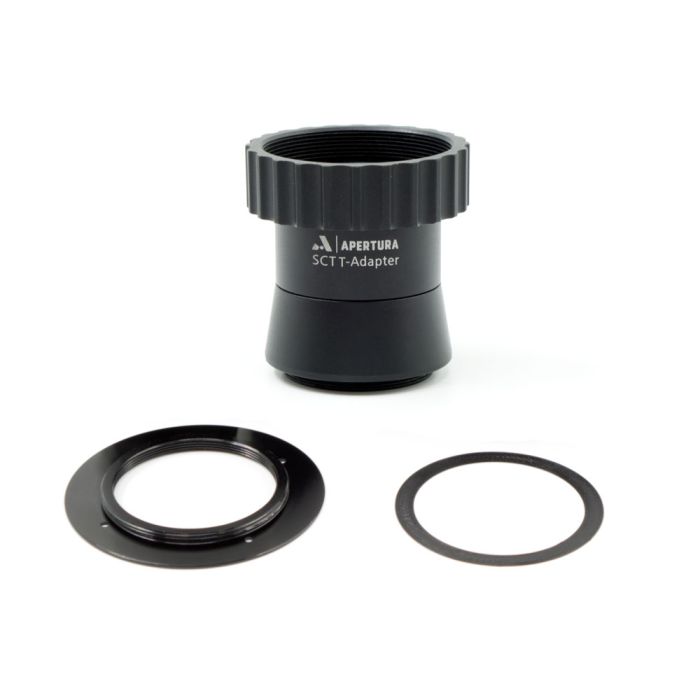
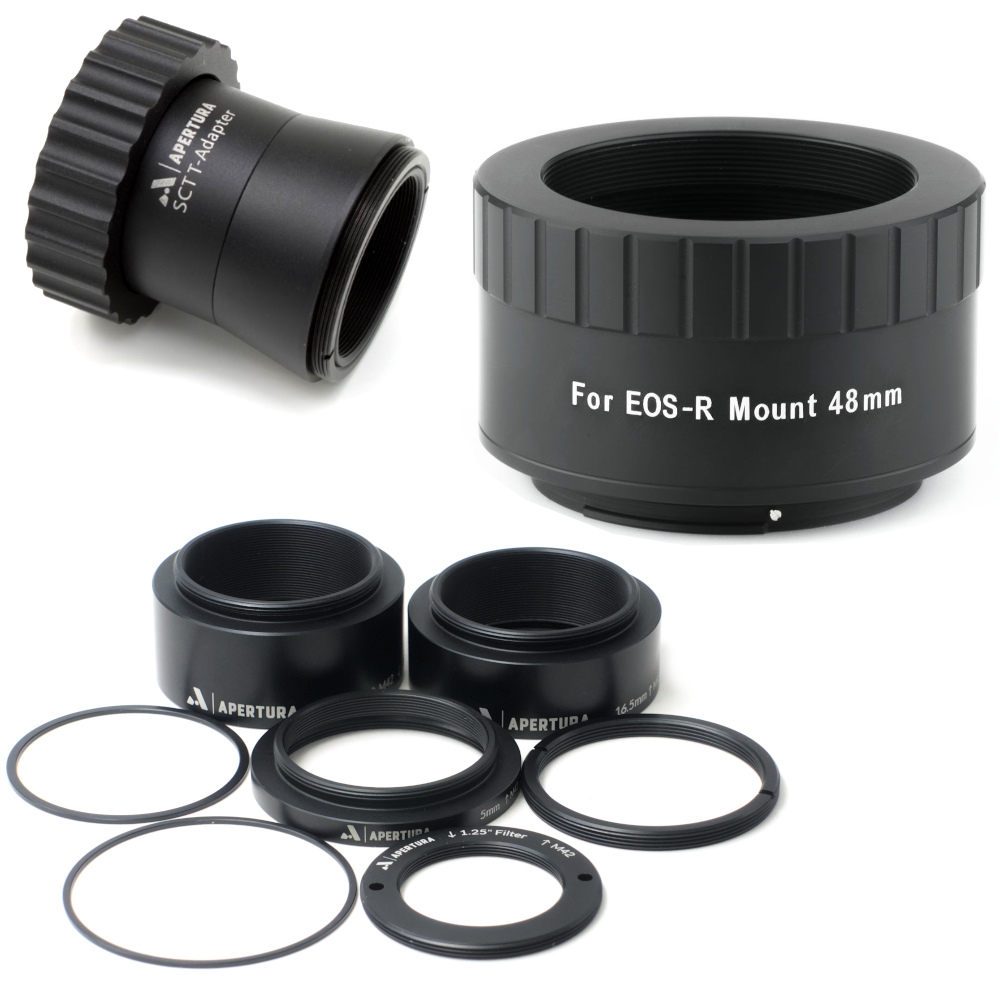
Typically this is used to describe an accessory for SCT telescopes, which is threaded to the back of the OTA or reducer (replacing the visual back). These spacers add enough space to the imaging train such that only the industry standard 55 mm of backspacing remains. For information on the adapter that connects directly to a DSLR/ mirrorless camera, see T-Ring.
T-Ring
A T-Ring is an accessory that is used to connect a DSLR/ mirrorless camera to threaded connections. These have a camera lens mount on one side, and a female/ internally threaded connection on the other in either M48 or M42. Most (but not all) T-Rings will set the camera at 55 mm of backspacing, making connections easy.
T2/ T2 Thread
Connections listed as T2/ T2 thread/ T2 thread diameter are referencing a M42x0.75 standard. This shorthand originates from the days when astrophotography was done with film and remains popular to this day, though referring to this type of connection simply as M42 is becoming more prevalent. It is noteworthy that at this point in time that there is no consensus on what thread pitch should be used for M42 (or M48) threads, though most are close to the 0.75 mm specification. As a result, while most all T2 thread size/ M42 components will thread together, on occasion you may encounter components with these labels that do not work together.
USB
Universal Serial Bus or USB is a protocol for data transmission, and is by far and away the most common way astronomy equipment will communicate with a PC in a wired capacity. There are a number of USB connectors, such as USB-A (the rectangular port you’re likely familiar with), USB-B, USB-C, and micro USB; as well as a number of different revisions (2.0, 3.0, 3.1, etc.) that have brought more speed, power, and reliability to the protocol.
UV-IR
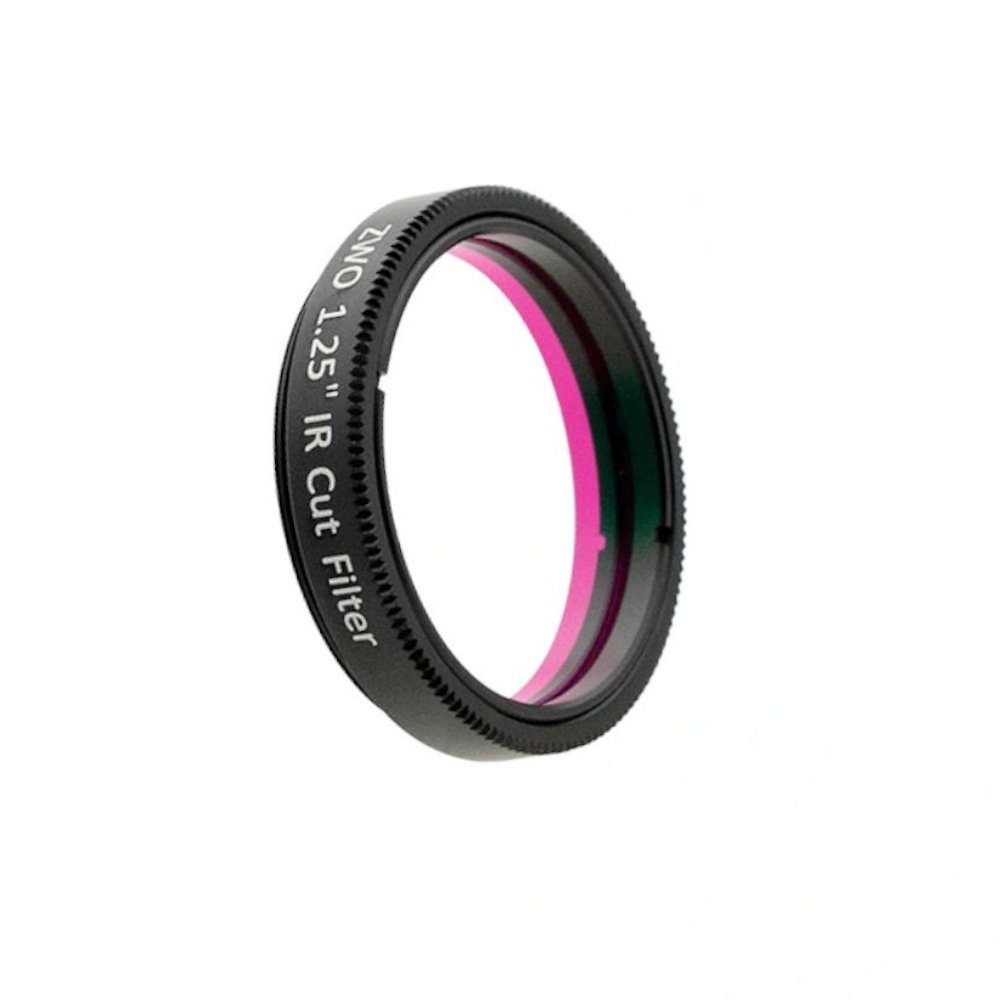
A UV/IR filter is one that blocks out unwanted ultraviolet and infrared light from entering the sensor. This filter helps improve the sharpness within the image, keeping the stars tight and increasing detail.
Vignetting
Vignetting is seen as the darkening of the corners of the frame within an image. This happens when the camera sensor is not exposed to enough light, resulting in a shadow effect along the borders of the image. This issue presents itself for a number of reasons, though most commonly occurs when using incompatible sensor sizes and image circles, and using too small of filters for the imaging assembly.
WiFi (Wi-Fi)
Wi-Fi, sometimes shortened to just WiFi or wifi, is a protocol for wireless communication. Primarily it is used to transmit and receive data between a device (such as a smartphone, computer, smart TV, and an ever increasing number of other household devices) and a router or wireless access point that is connected to the internet. Communication with the internet is not the only function the Wi-Fi protocol is useful for, and indeed many of the aforementioned devices can communicate with each other locally using this protocol and the router as an intermediary. Increasingly this protocol has been used for more direct communication between two devices (like a smartphone and a smart telescope), with one creating its own access point or broadcast that both devices then send and receive data on. While this does have the disadvantage of disconnecting a device’s connection to the internet, it has become necessary to transfer large amounts of data quickly that otherwise exceed what Bluetooth can accommodate.