
Astronomik MaxFR H-alpha 6 nm CCD Round Mounted 31 mm Filter
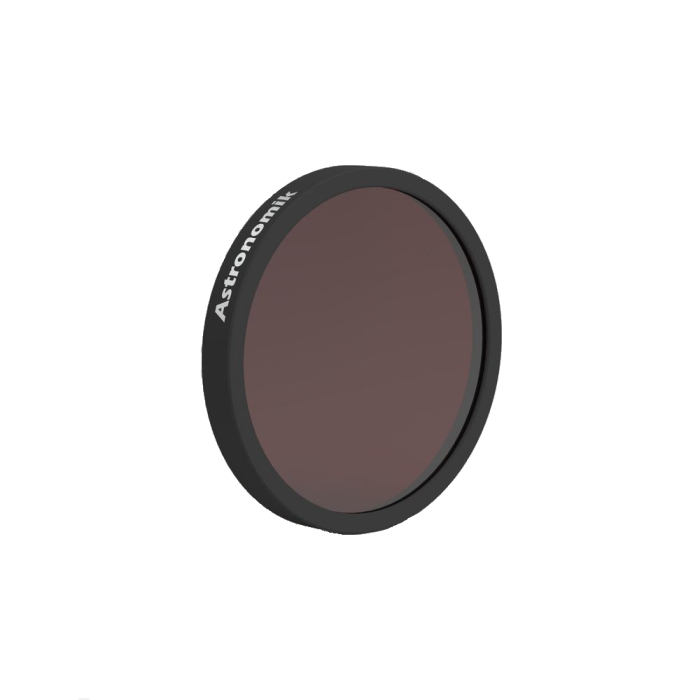

Astronomik MaxFR H-Alpha 6 nm CCD Filter - 31 mm Round
For narrowband astrophotography under light-polluted skies, this MaxFR H-alpha 6 nm 31 mm Round Filter from Astronomik is an excellent choice! With this powerful narrowband filter, you'll be able to cut through pollution and zero in on the delicate details of hydrogen rich emission nebulae!
Please note: this filter must NEVER be used for solar observing or imaging! Doing so will cause permanent damage to your eyes.
This Astronomik MaxFR H-alpha 6 nm CCD Filter - 31 mm Round (8h00f4) features a protective ring and is compatible with optical systems with focal ratios down to f/2.2. This filter is made to Astronomik's exacting standards and is guaranteed to provide 90% transmission or more at the H-alpha emission line (656nm). The exact transmission ratings may vary between each filter, and the specific T-Max will be listed on the filter case.
H-alpha 6 nm CCD Filter At a Glance
|
|
|
|
|
Unlock the Night Sky!
Cut through light pollution and capture the faint details of hydrogen rich deep sky objects! Learn more about this powerful H-alpha filter below.
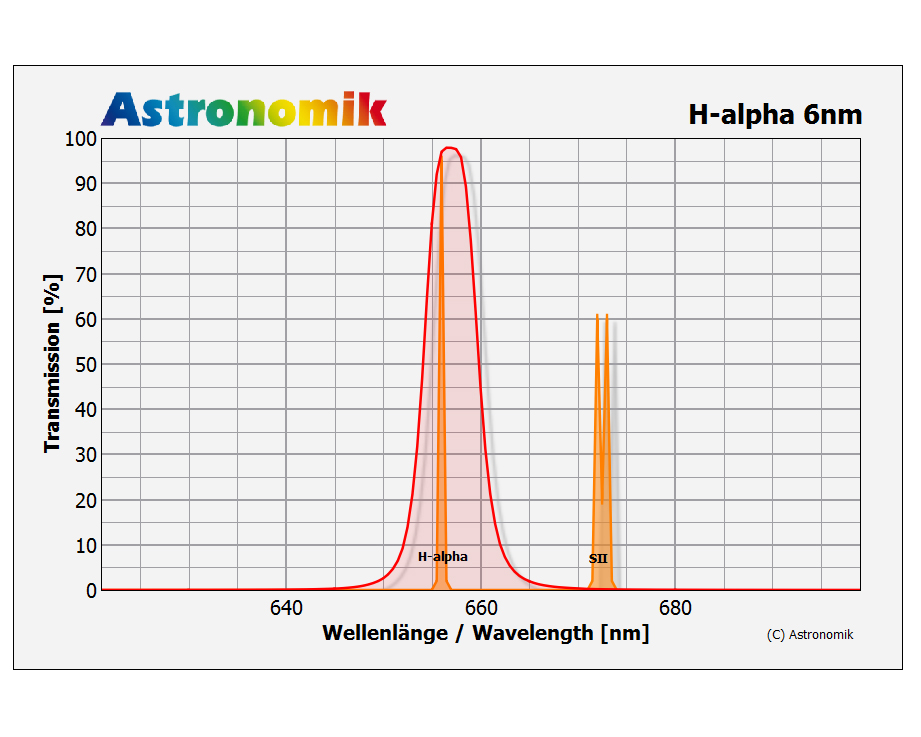
6 nm H-alpha Narrowband Filter with MaxFR Coatings
This Astronomik H-alpha filter has a FWHM of 6 nm, allowing you to cut through light pollution while still capturing the rich details of hydrogen emission nebula. This filter is designed to work with a broad range of imaging devices and is especially beneficial for use with cameras that have moderate to high dark current output, or cameras with an integrated or dual guiding sensor, as it provides more guiding stars. Thanks to the high optical quality of the Astronomik MaxFR substrate, this filter ensures maximum performance across the entire frame. Every Astronomik filter undergoes a rigorous quality control process and is tested using a PerkinElmer Spectrophotometer to ensure it the meets specifications listed on the filter box.
Frequently Asked Questions
What is the difference between Astronomik’s MFR and MaxFR coatings?
Astronomik’s standard MFR coatings are designed to work with most optical systems; however, performance is significantly reduced when used with fast optical systems (f/3-4 or lower). Filters with MaxFR coatings will work with faster optical systems, ranging from f/6-f/1.7. Compatibility varies between filter type and bandpass (FWHM). Please refer to the product description for precise compatibility information.
What is the difference between Astronomik’s 4 nm, 6 nm and 12 nm filters?
Astronomik's 4 nm and 6 nm narrowband filters are designed for imaging faint objects in star-crowded regions of the milky way. They are also recommended for use in heavily light polluted areas, and with cameras that have a very low dark current. The 12 nm narrowband filters are designed for imaging emission targets under dark skies, and for use with sensors that have a moderate to high dark current. They also provide better performance for cameras with integrated or dual guiding sensor, as they provide more guiding stars.
What is the difference between H-alpha, OIII, and SII filters?
H-alpha filters are ideal for imaging all hydrogen rich red-glowing emission nebulae. OIII (Oxygen III) filters capture greenish and blueish structures that are often present in planetary nebulae, star-forming regions, and supernovae. SII (Sulfur II) filters allow you to capture faint yellow and gold structures present in some emission targets, adding more detail to your final image. When used together, these filters enable you to create false-color emission line images similar to those produced by the Hubble Space Telescope.
Astronomy Hub: Your one-stop-shop for Astrophotography Knowledge!
Our Gear Experts have compiled a wealth of information to help expand your astrophotography knowledge! Below you'll find links to articles, videos and "how-to" guides. Just one more reason that our Astronomy Hub is a one-stop-shop for all your astronomy and astrophotography needs!
| Best Filters for Astrophotography |
| How to Read a Filter Transmission Chart and Choose a Filter |
| Top Astrophotography Cameras of 2026 |