Orion 0.8x Reducer For Orion EON 115mm Refractor
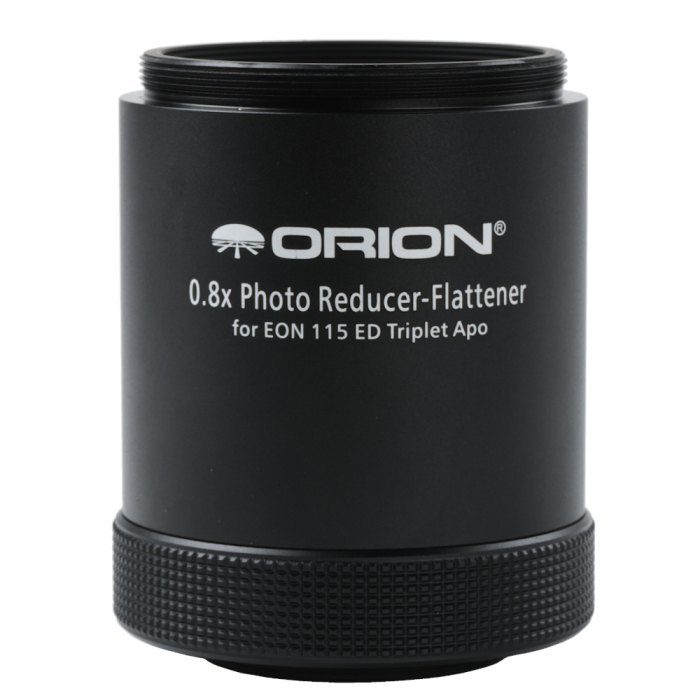

Pair the 0.8x Reducer with Your Orion EON 115 mm Refractor
Want to use your Orion EON 115 mm refractor for astrophotography? The Orion 0.8x reducer/field flattener for EON 115 refractor is your solution! This Orion focal reducer is designed to utilize a standard 55 mm back focus; that’s generally a DSLR camera and M48 T-ring or a cooled astronomy camera using the factory included spacers.
Orion EON 115 mm Reducer At a Glance
|
|
|
|
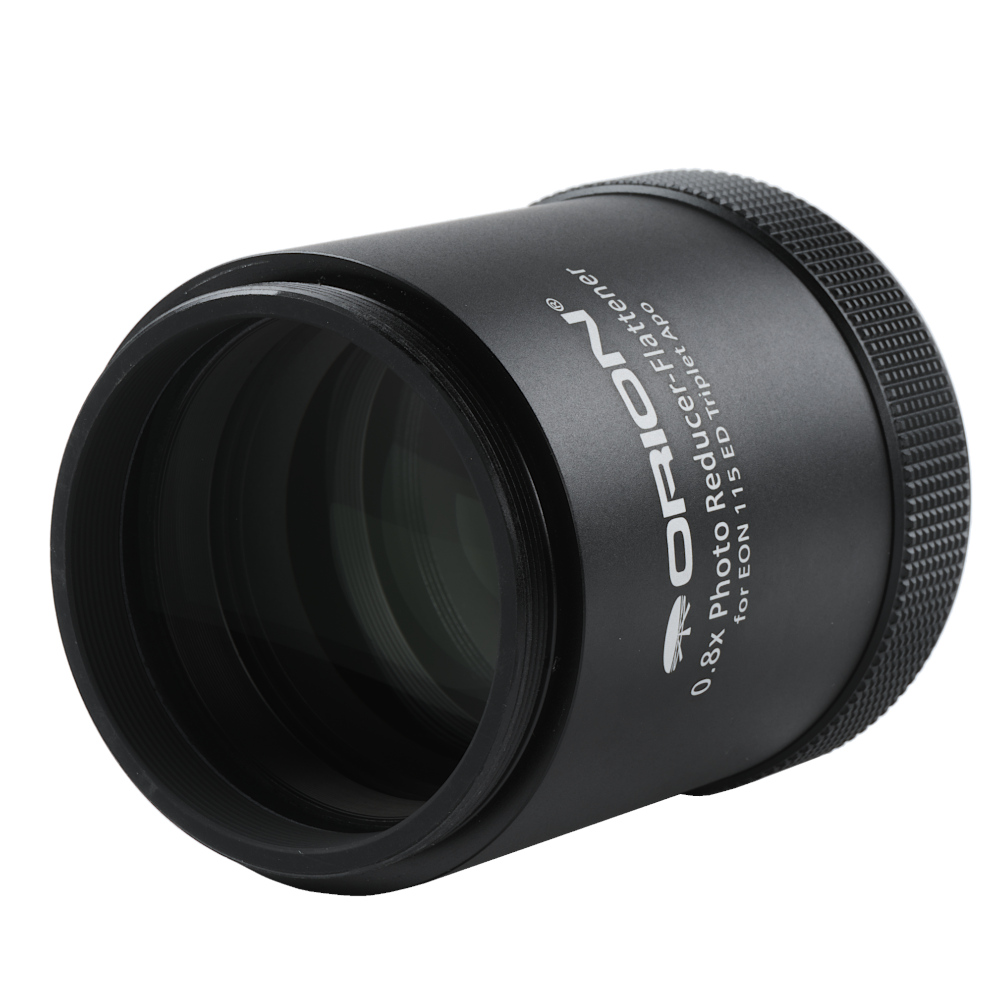
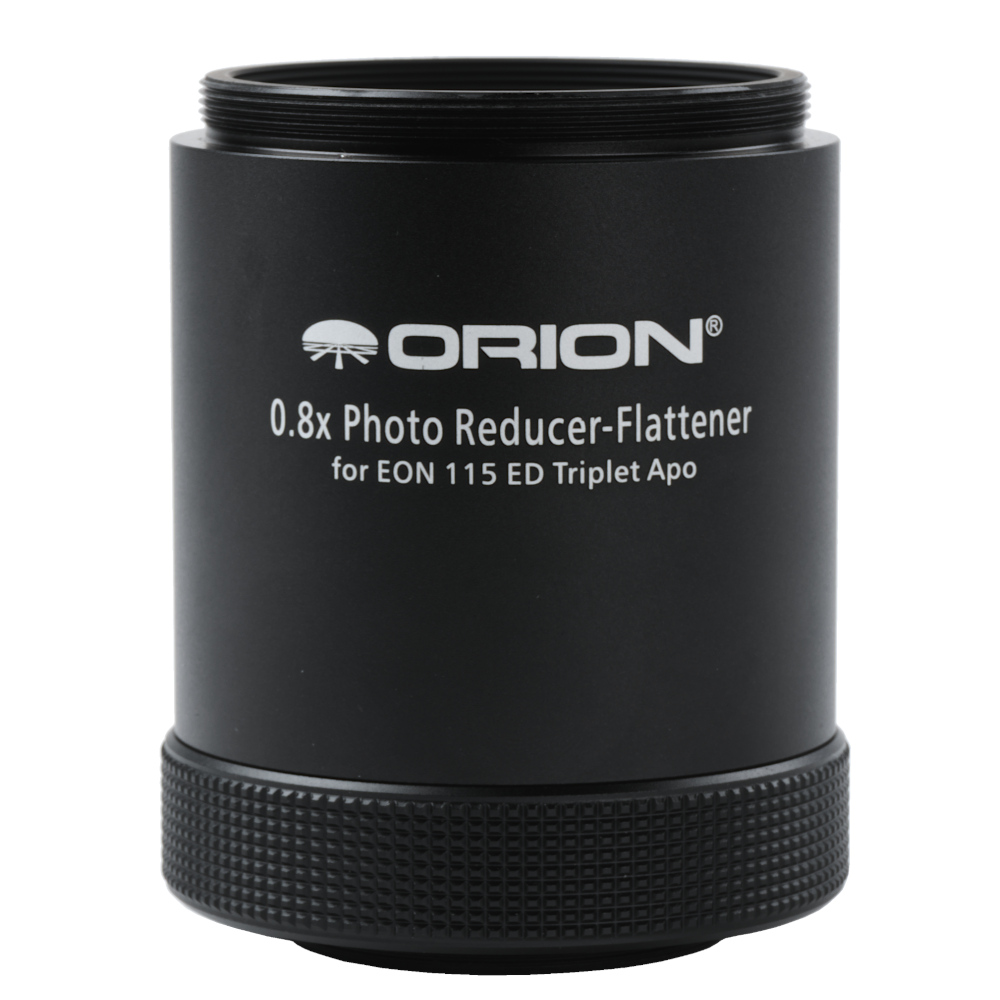
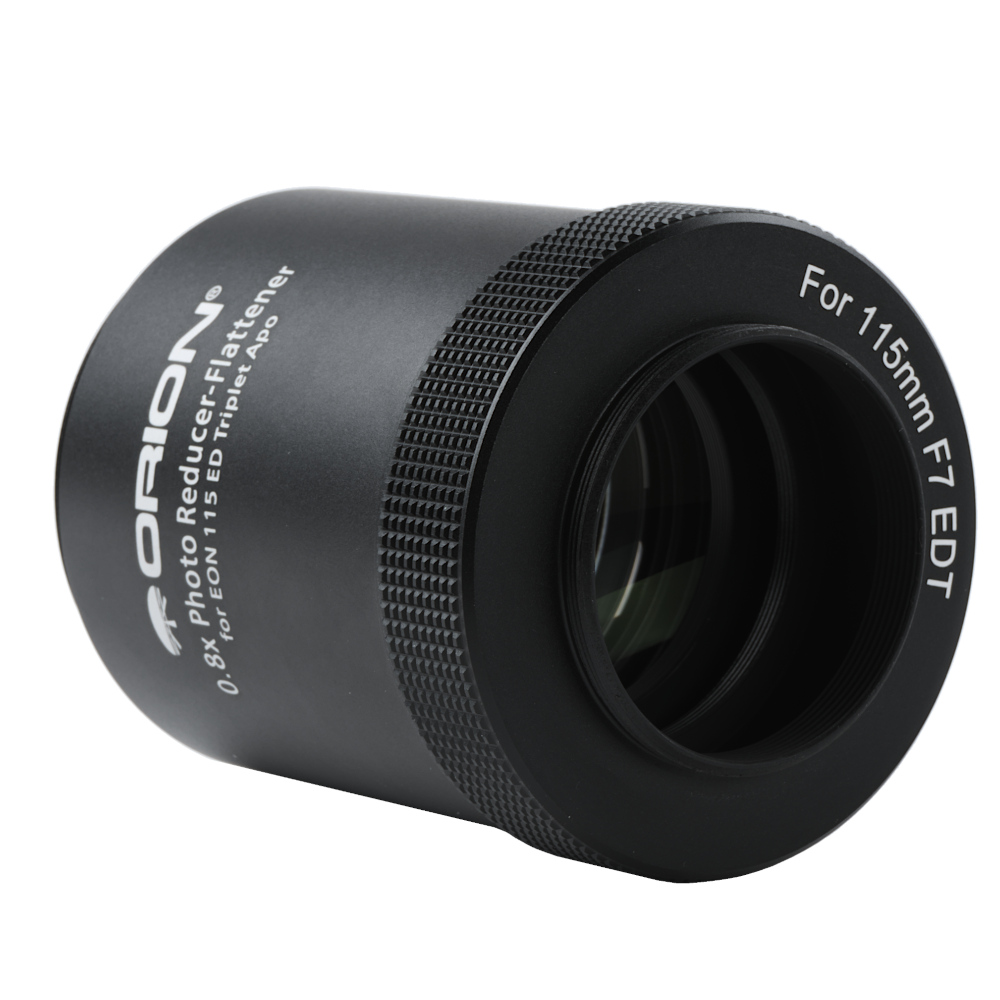
Use Your Orion EON 115 mm Doublet for Astrophotography!
Designed specifically for the Orion EON 115 mm Doublet refractor, the 0.8x reducer is the next step to elevating your Orion EON 115 mm refractor's performance and stepping into the world of astrophotography. Read more about this Orion 0.8x reducer below.
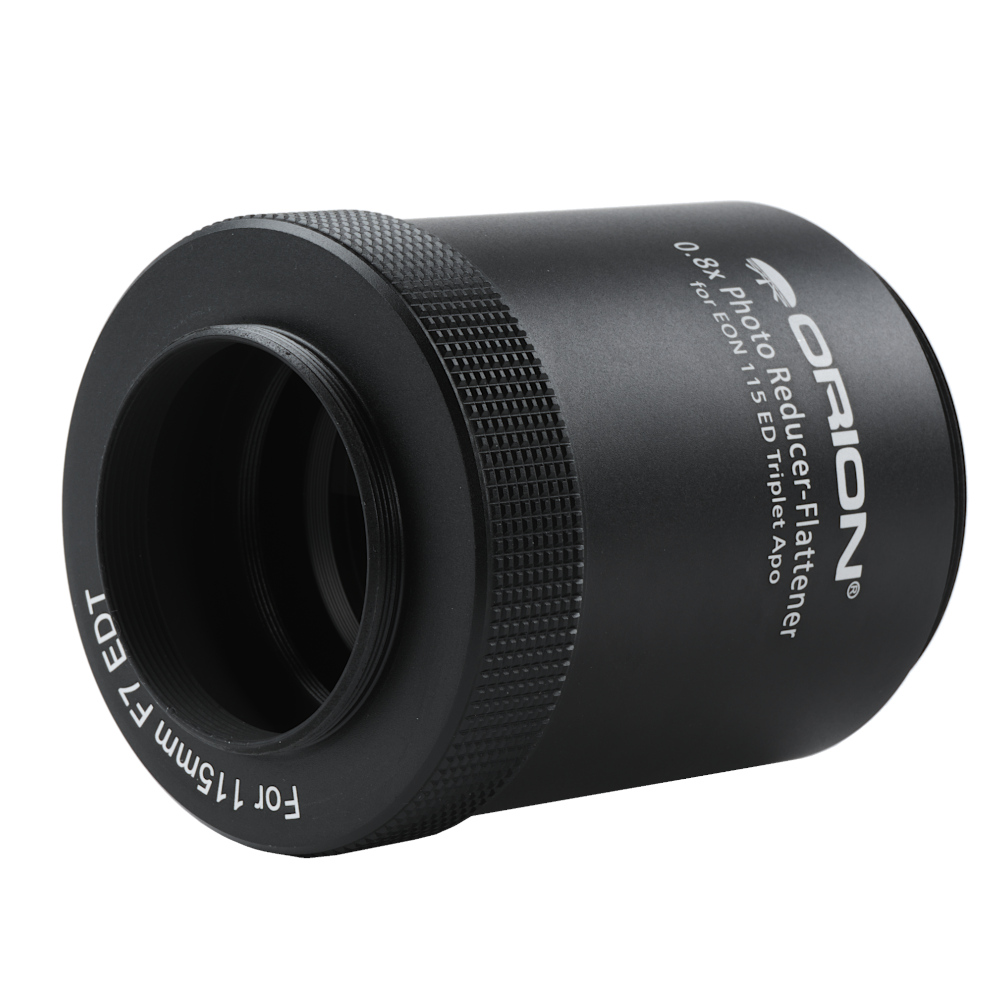
High-Quality Performance
The Orion Reducer for the EON 115 mm ED refractor utilizes a 3 element optical design, fully multi-coated lenses, and an image circle of 43.2 mm. The body of the reducer is equipped with M48x0.75 threads for camera connections and also includes threads for 2" filters.
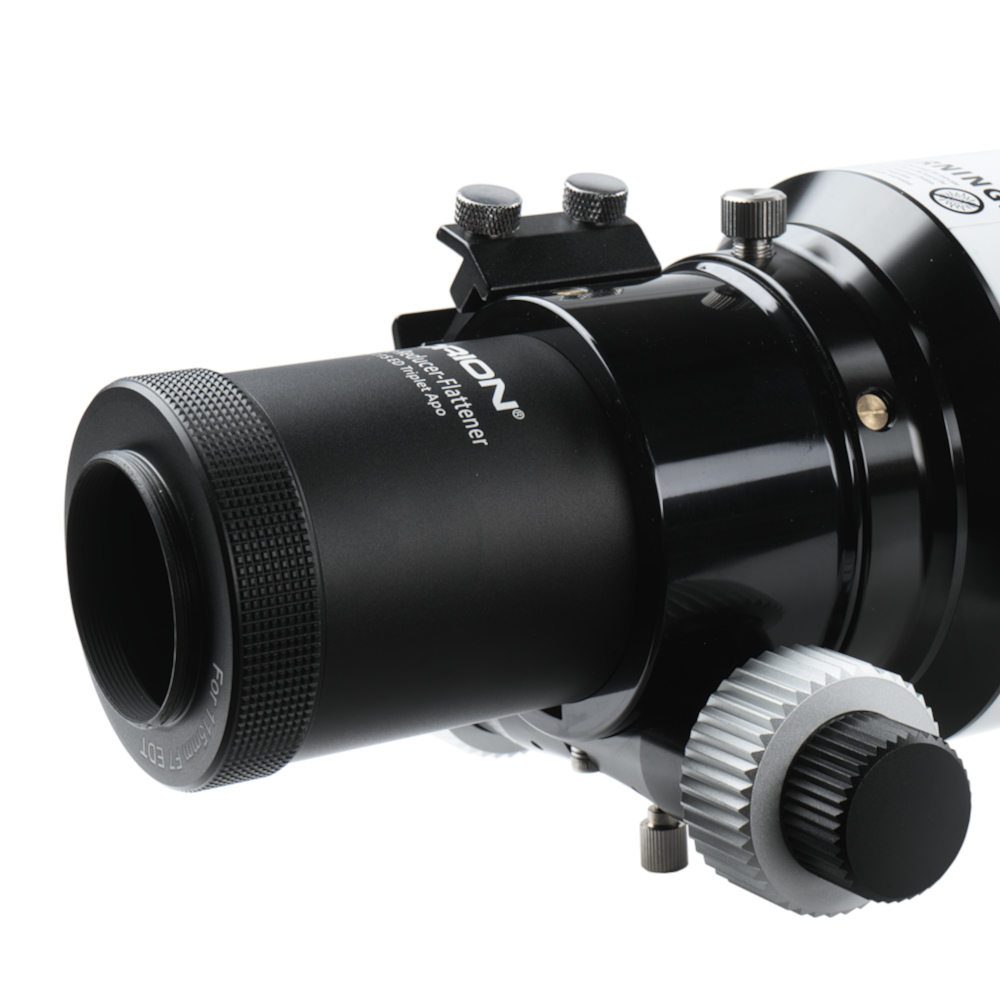
How to Connect Your Reducer
To attach the focal reducer to the Orion EON 115 mm refractor, use a 2 mm hex key to loosen the three small set screws that surround the mounting flange of the 2” accessory holder. Then, unthread the entire 2” eyepiece clamp assembly from the focuser’s draw tube. Next, thread the focal reducer into the telescope’s draw tube.
Frequently Asked Questions
What is a focal reducer?
A focal reducer is an optical accessory placed between a camera/eyepiece and the lens of a telescope. It works to reducer the focal length of the telescope, ultimately providing a wider field of view.
How does a focal reducer work?
A focal reducer is typically made up of a two-element or more optical design, one concave lens and one convex lens. This design forces the light cone to steeply converge, effectively shortening the focal length of the telescope to which it's attached.
What is a reduction factor?
A reduction factor is the term used to describe how much a focal reducer shortens the focal length of a telescope. For example, if the reducer the focal length by 0.75x, then that is the reduction factor.
Can I use a field flattener with a focal reducer?
Many focal reducers can also operate as field flatteners. However, they are not the same, and it is not always true that a focal reducer will also function as field flattener. Make sure to check the focal reducer product description and manual to see if it can serve this dual purpose. It is not advised to use both individual accessories in conjunction with each other.
Does a focal reducer affect focal length?
Yes, a focal reducer affects the focal length of the telescope to which it is attached. This accessory is designed to shorten the overall focal length of the telescope to provide a wider field of view.
How do I figure out the new focal length with a reducer?
You can calculate the new focal length of the telescope using the following formula: Original Focal Length * Reduction Factor = New Focal Length. You can also find the new focal ratio with a similar equation: Original Focal * Reduction Factor = New Focal Ratio. For example, if you have a 80 mm aperture telescope with an f/7.5 focal ratio and a 600 mm focal length and a 0.8x focal reducer, you would do the following calculations: 600*0.8=480 and 7.5*0.8=6. So, your new focal length is 480 mm and the new focal ratio is f/6.
How does a focal reducer impact back focus?
Focal reducers are generally designed to provide their best image a set distance away from the optic. This is the key backfocus consideration to check when pairing a focal reducer with your telescope, which typically will be 55 mm.