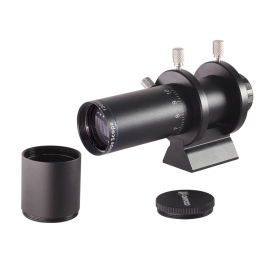
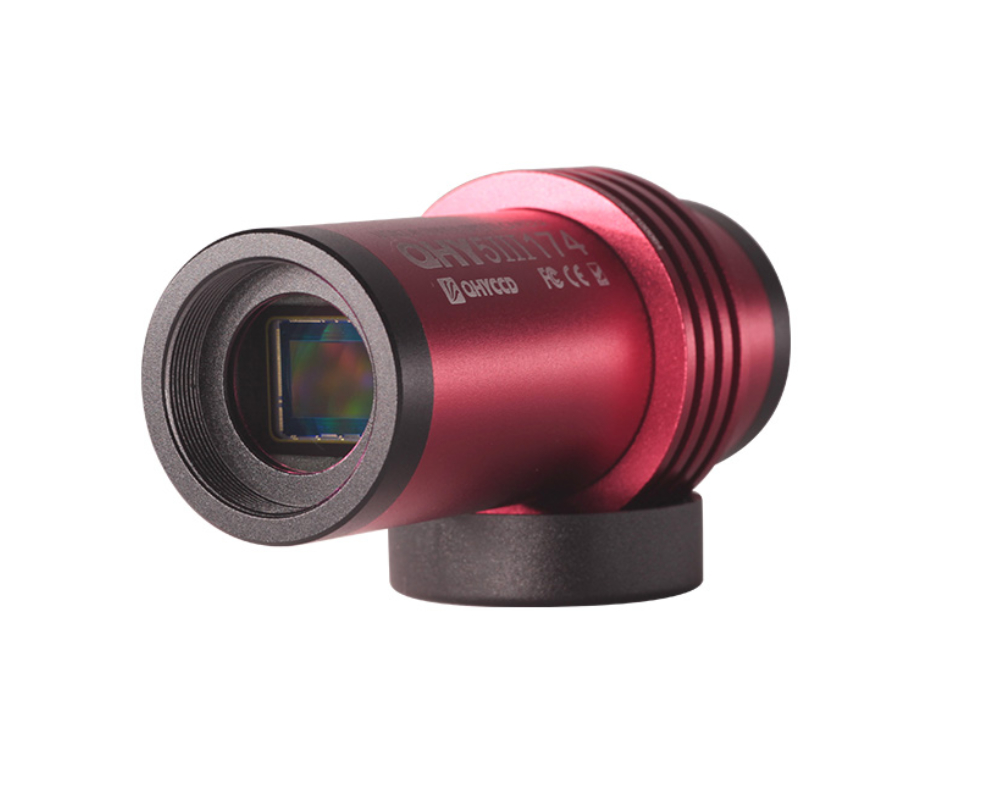
QHY QHY5III174 USB 3.0 Monochrome CMOS Imaging Camera


The QHY5III174 Monochrome Astronomy Camera, A Multifaceted Powerhouse!
In search of a stellar camera for planetary photography? The QHY5III174M is the perfect option! This power-packed solar system imager provides excellent resolution on our neighboring planets, the Moon, and our Sun (with proper solar equipment). You can also utilize its impressive specs for guiding purposes as well, ensuring tack-sharp stars for your deep-sky imaging rig. Versatile and built to perform, the QHY QHY5III174 monochrome camera is a must have!
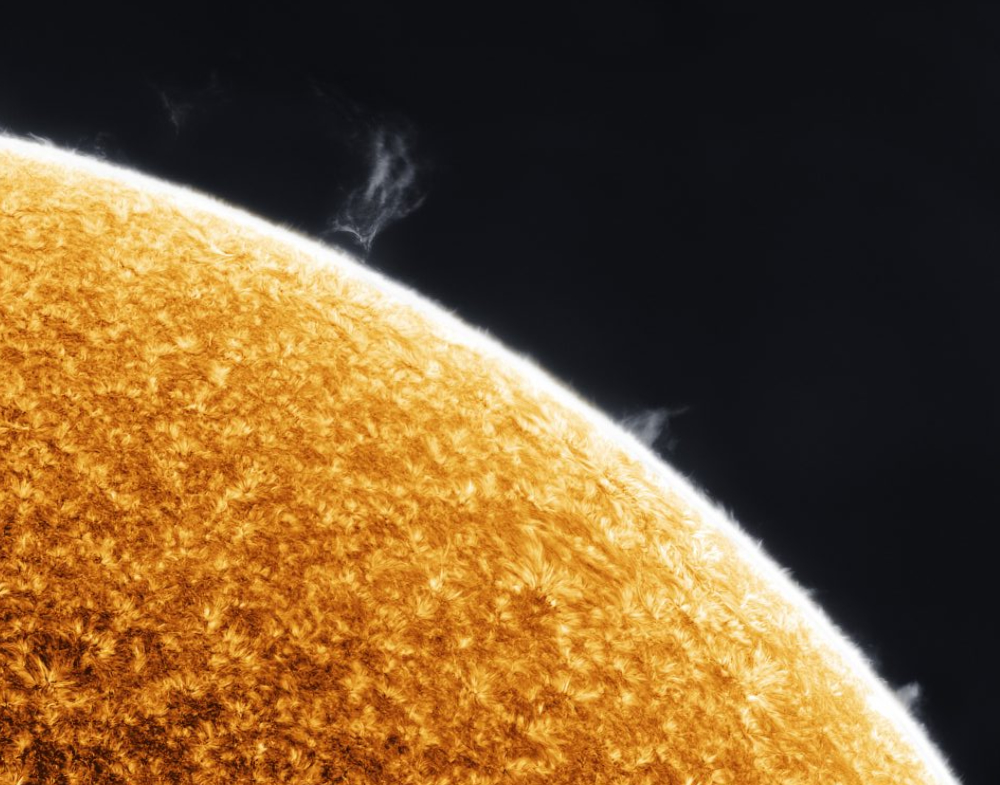
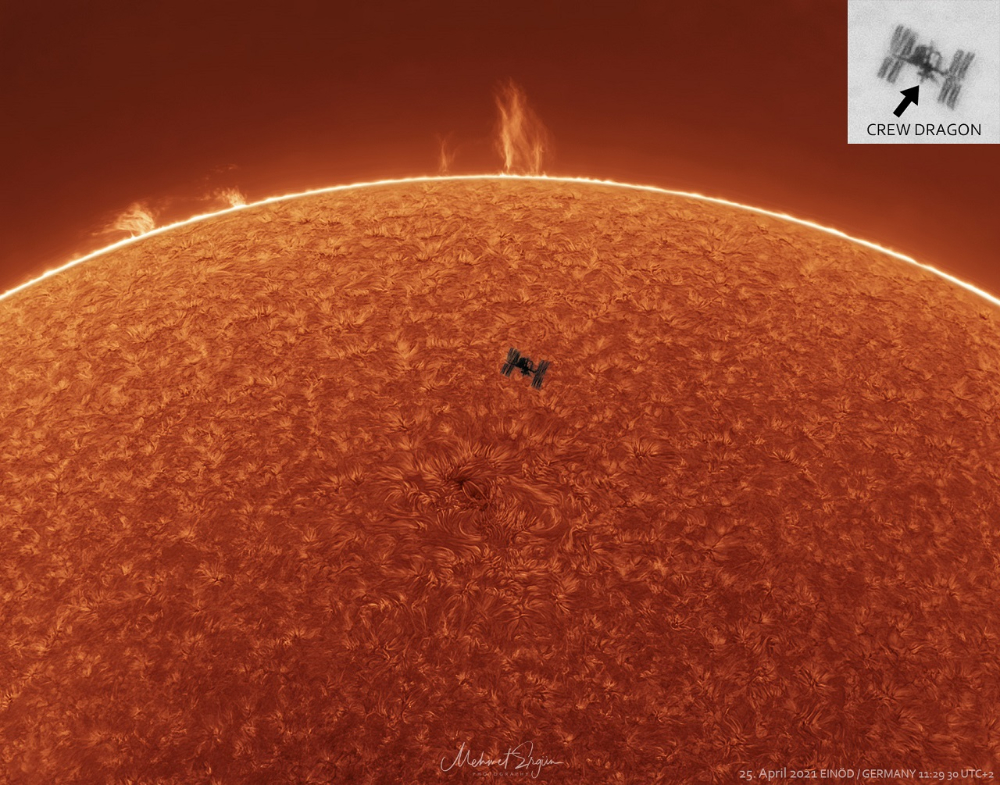
This powerful camera is equipped with the Sony IMX174 Exmor monochrome CMOS sensor, providing 2.35 MP of resolution within a 1936 x 1216 pixel array. The global shutter of this sensor works to keep your frames as clean as possible, and built-in amp-glow control ensures peak clarity! Enjoy collecting striking detail on the mountains of our Moon, clearly resolve the cloud bands of Jupiter, and be awestruck by the ever changing surface of our Sun. Please do not image the Sun without proper solar equipment installed. Easily integrate your QHY5III174 with a host of imaging rigs thanks to its 1.25” eyepiece design. This 1.25” frame is also highly beneficial for off-axis guiders with its shortest possible backfocus! Furthermore, the QHY5III174 uses the LEMO style connector for the guide port, as LEMO connectors are known for being exceptionally tough and highly dependable. However you choose to utilize the QHY QHY5III174M, you’re set up for success!
With the Sony IMX174 CMOS Sensor, the QHY5III462M Features Next-Level Performance
The QHY5III174M Planetary Guiding Camera is a great camera for those eager to capture next-level images of our solar system. Its premium Sony Exmore sensor and polished construction from QHY make for a high quality imaging system. Read on as we take a deeper look at this camera’s sensor, its terminals, and its key inclusions!
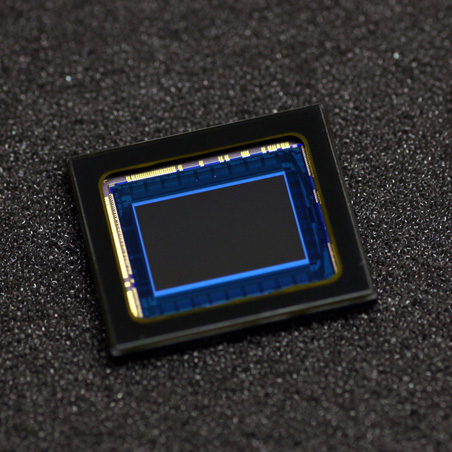
Sony Exmore IMX174
Blending fast frame rates and imaging performance similar to that offered by a CCD sensor, the Sony Pregius™ global shutter (GS) imaging technology takes GS CMOS imaging to a new level. A higher quantum efficiency gives way to enhanced detail resolution, while the reduced dark noise enables higher gains to be used without reduction in image quality. This global shutter is also ideal for ridding of pixelization due to poor seeing conditions or while imaging at high frame rates. Thanks to QHY, you can expect clean, crystal-clear frames packed with detail!
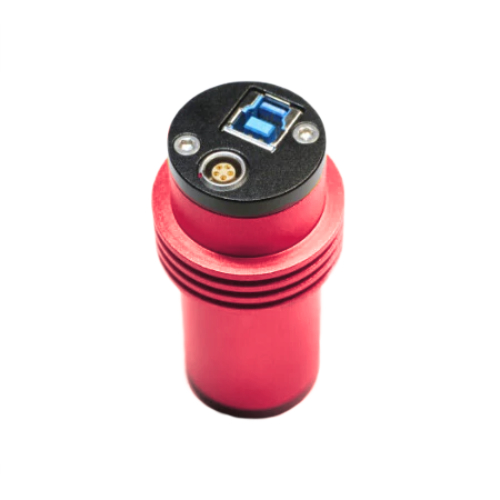
Power & Ports
On the body of this QHY5III174M camera, you’ll find two ports: a USB3.0 Type B port, and a LEMO guide port. Connection to your computer via the USB interface offers fast, reliable data transmission, a must for imaging at high frame rates. This port also supplies stable power, with a 2 m long USB cable included for use right out of the box! For direct connection to your mount as a high performance guide camera, QHY also includes a guiding cable for your convenience.
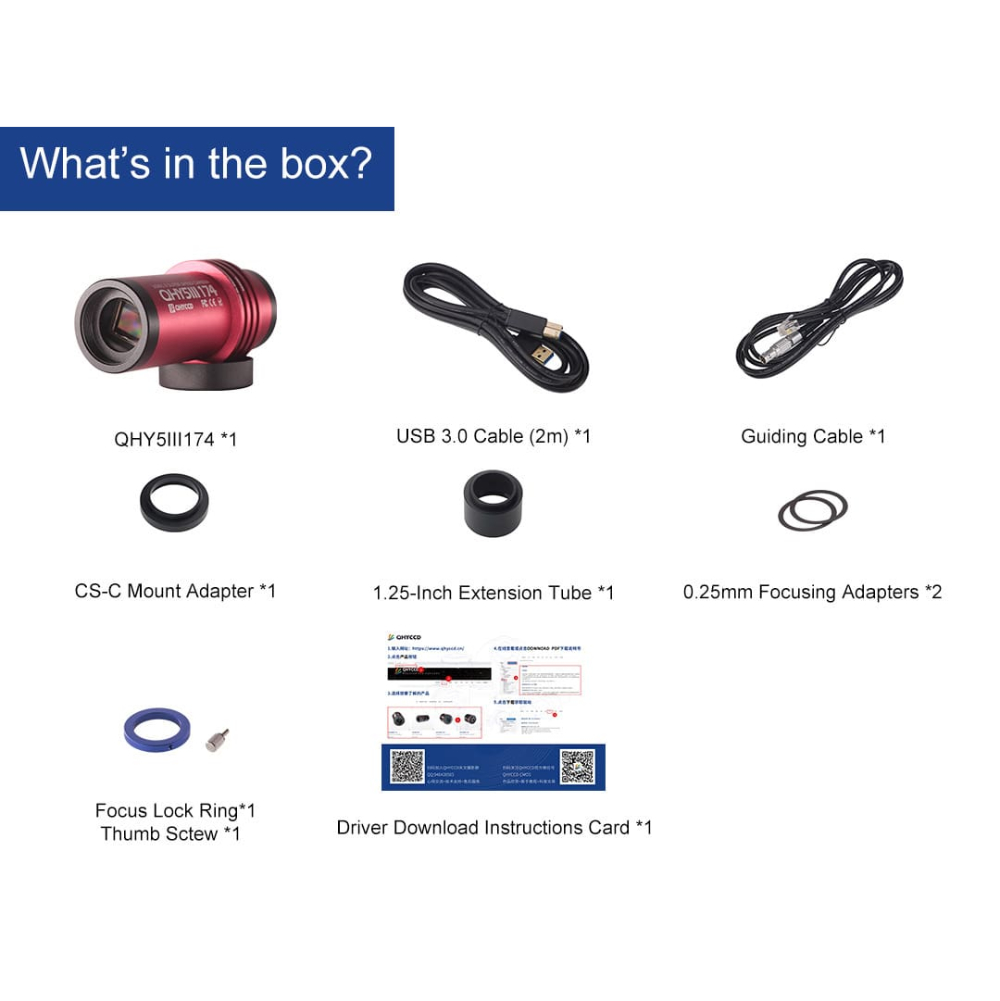
A Host of Inclusions
Packaged with this camera, you’ll find a number of useful inclusions to streamline your setup. As mentioned above, a 2m USB 3.0 Type B cable and guiding cable come standard within the box for use upon arrival. Also included is a CS-C lens adapter for seamless adaptation to C-mount lenses, improving versatility even more! A helpful 1.25” extension tube, two 0.25 focusing adapters, a focusing lock ring, and a handy driver instruction card supplement your setup, helping you get out under the stars in no time. This myriad of accessories ensure your camera is ready for 2026 rigs and beyond!
Astronomy Hub: Your one-stop-shop for Astrophotography Knowledge!
Our Gear Experts have compiled a wealth of information to help expand your astrophotography knowledge! Below you’ll find links to articles, videos and "how-to" guides. Just one more reason that our Astronomy Hub is a one-stop-shop for all your astronomy and astrophotography needs!
| Beginners Guide to Imaging the Planets |
| Undersampling and Oversampling in Astrophotography |
| 8 Things You Need to Know About the 8 Planets in Our Solar System |