Image credit: Fred Espenak
Castor
A winter highlight for telescopic observers, this multiple star can be split into two brilliant white components at around 50x, but is best seen at magnifications of 100x or higher.
January 2021
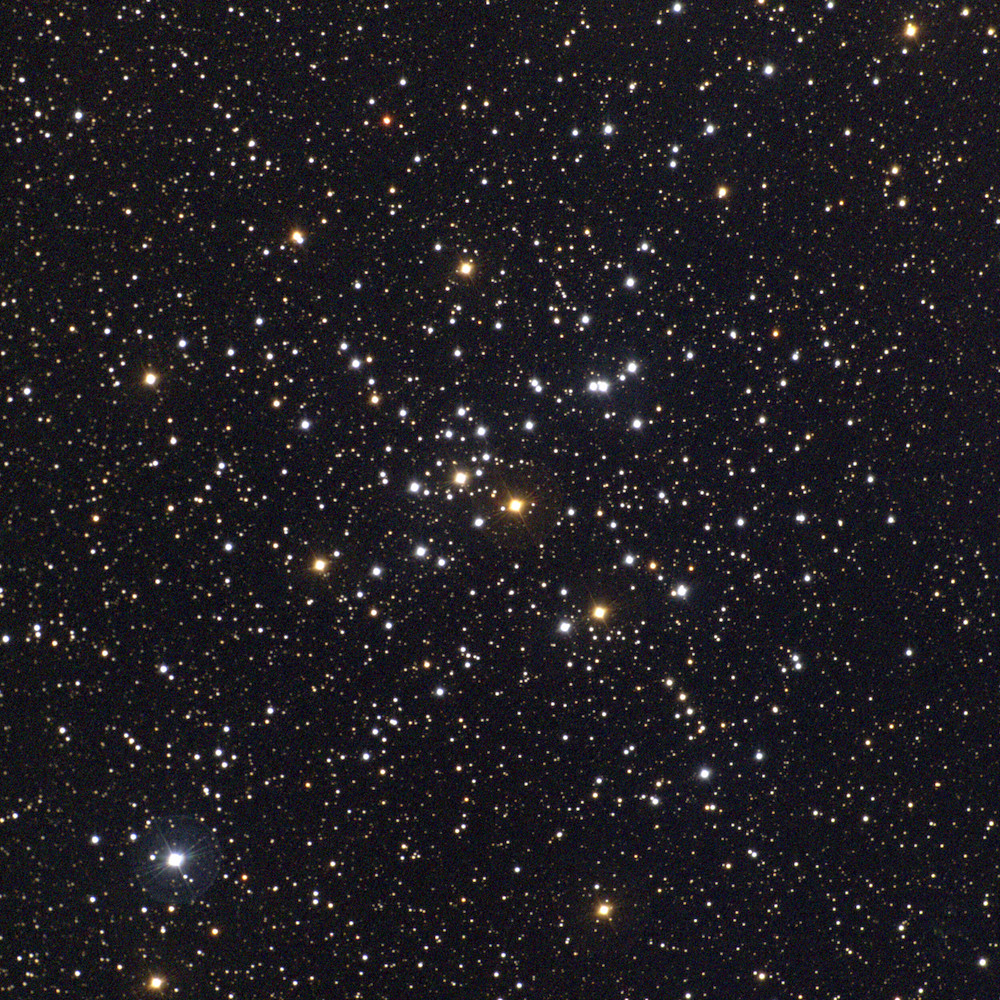
Look four degrees south of Sirius with binoculars and you’ll see a small but conspicuous hazy patch. M41 is arguably one of the most overlooked star clusters in the sky, which is a shame because it’s easily found and is an attractive sight, regardless of the equipment you’re using.
Binocular observers will notice its shape; it looks as though a bite has been taken out of its western edge. Through a small scope at low power, the cluster can be reminiscent of the Owl Cluster in Cassiopeia, but with more stars. While the vast majority are blue-white, there are a few orange stars here and there, with one appearing just off-center.
Image source: NOIRLab / NSF / AURA
Jupiter and Saturn will be swallowed by the Sun’s glare around the 20th, but you can catch one last glimpse of them low over the southwest after sunset at the start of the month. They’re joined by Mercury from the 7th to around the 15th, with a crescent Moon appearing very close to the trio on the 13th. Mercury then remains a relatively easy target in the evening twilight until almost February. Time is running out to see faint Neptune, but Mars remains visible throughout the evening and appears within the same binocular field of view as Uranus from the 8th to the 31st. The first quarter Moon passes them both on the 20th. Lastly, January is your last chance to see Venus in the morning sky this year. Look for a waning crescent Moon nearby on the 11th. New Moon occurs on the 12th with a full Moon on the 28th.
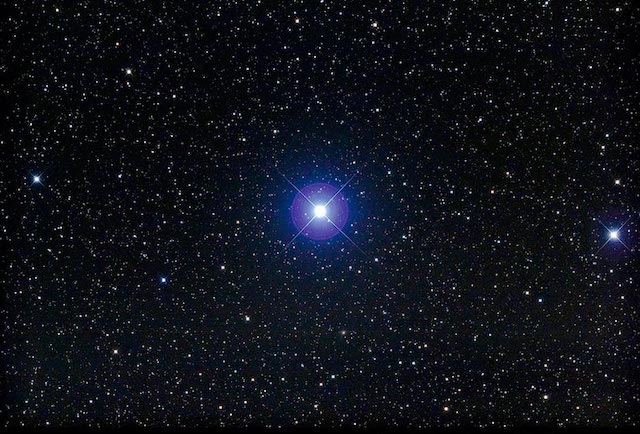
Image credit: Fred Espenak
A winter highlight for telescopic observers, this multiple star can be split into two brilliant white components at around 50x, but is best seen at magnifications of 100x or higher.
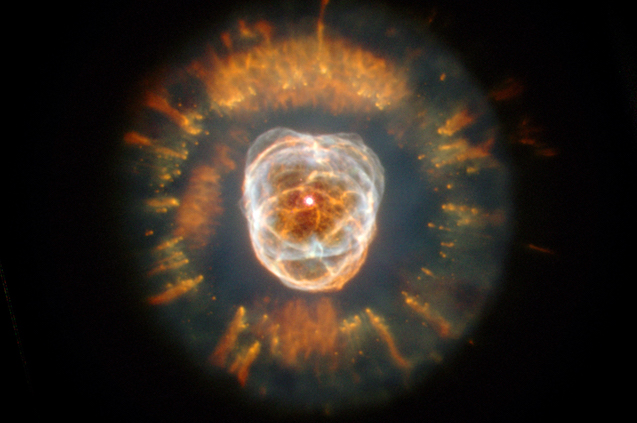
Image credit: NASA
A small scope will show this bright planetary nebula in Gemini as a small, bluish disk with a central star. Large scopes will also reveal a ring surrounding the nebula.
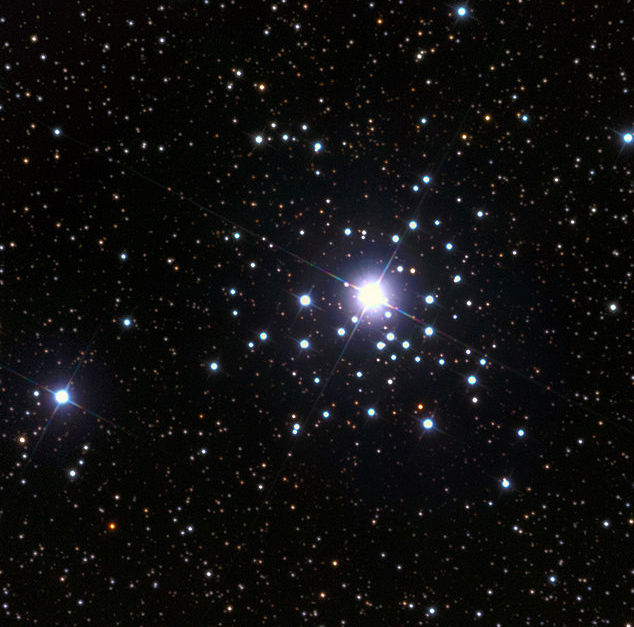
Image credit: Adam Block
Also known as the Northern Jewel Box, this gem of a cluster is best seen in scopes with a low magnification. It appears triangular, with Tau Canis Majoris just off-center and among a slew of fainter stars.
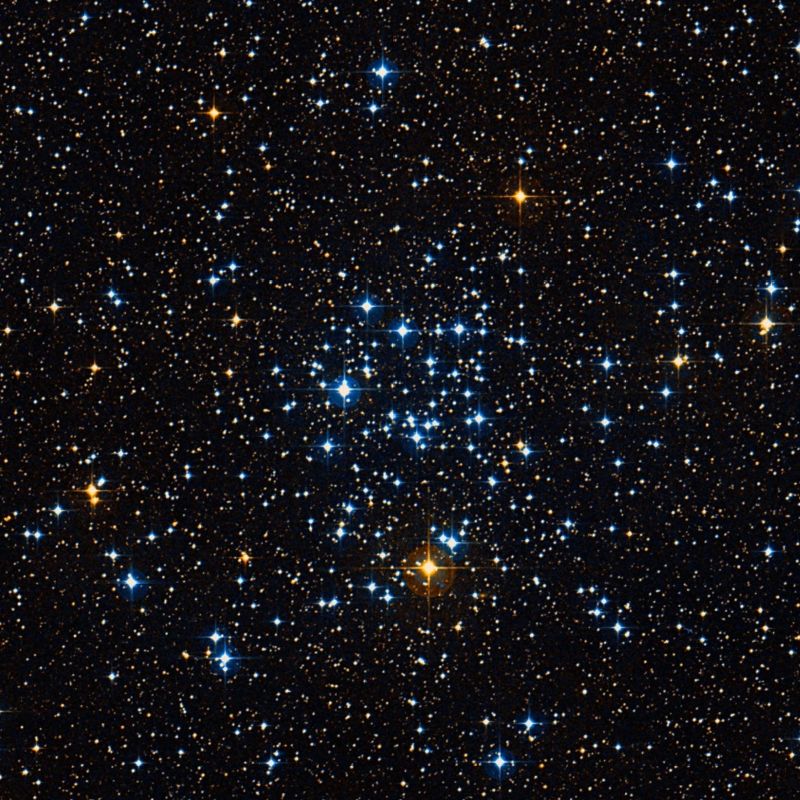
Image credit: Wikisky
A fairly large cluster, a magnification of 50x will provide the best view. About ten bright stars stand out against a smattering of fainter stars, with a coppery sun along its southern edge.
Astronomical Unit: The distance from the Earth to the Sun. Specifically, this distance, taken as 150 million km (93 million miles) equates to one astronomical unit, or AU. This measurement is typically used to make distances within the solar system more relatable. For example, Mercury orbits the Sun at just 0.39 AUs, while Neptune, the most distant planet, is 30.10 AUs from the Sun. The Oort Cloud, from which many comets originate, is thought to stretch from 2,000 to 200,000 AUs from the Sun.