Please use another browser such as Chrome, Edge, Firefox, or Safari for the best experience

Skip to content Askar FMA135 Sale

What's In the Sky This Month? April 2021

Posted By: High Point Scientific

April 2021

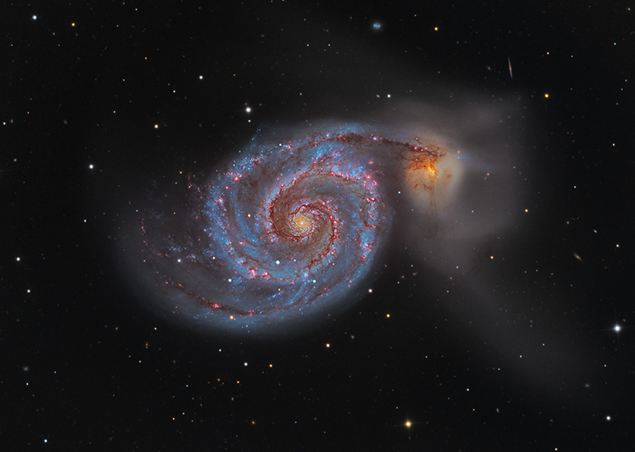
M51 - The Whirlpool Galaxy

  • Type: Galaxy
  • CONSTELLATION: Canes Venatici
  • Distance: 31 million light-years
  • Magnitude: 8.7
  • APPARENT DIAMETER: 13.8’ x 11.7’

A favorite with astrophotographers, images of the Whirlpool Galaxy are simply stunning - but be warned, you’ll most likely need a larger scope to find a view to rival them. This face-on spiral galaxy lies within the same binocular field of view as Alkaid, in neighboring Ursa Major, and can be seen in 10x50 binoculars as a faint, fuzzy star.

A small telescope will show a small, hazy patch, a little elongated to the north. This elongation is caused by NGC 5195, a satellite galaxy that passed the Whirlpool several hundred million years ago. Under good skies and using averted vision, you may be able to discern the spiral arms through a medium-sized scope, but realistically, you’ll need a 250mm or larger to see the galaxy at its best.


Image source: Martin Pugh
OUR NEAREST NEIGHBORS

Mercury, Venus and Neptune are all too close to the Sun to be easily seen this month, and Uranus is challenging too, as it sets just two hours after the Sun on the first. Meanwhile, Mars is leaving Taurus and appears between the horns of the Bull on the evening of the 12th. It crosses into Gemini on the 24th, with the waxing crescent Moon hanging below it on the 16th and above it the next night. Jupiter and Saturn are now easily seen in the predawn twilight, with both planets starting the month in Capricornus. Like Mars, Jupiter also switches constellations on the 24th, when it moves into neighboring Aquarius. You’ll find a crescent Moon below Saturn on the 6th and then below Jupiter the following morning. The Moon itself turns new on the 11th and then full late in the evening of the 26th.

Image credit: Petr Horálek

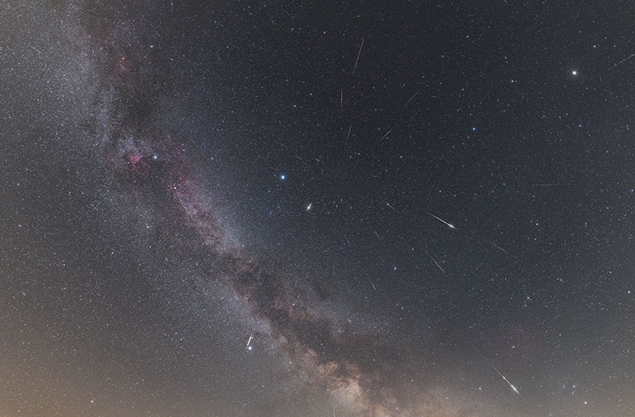
The Lyrids

This year’s Lyrid meteor shower peaks in the early hours of the 22nd. With the Moon just past first quarter, wait until after midnight for your best chance of spotting a meteor or two - and look out for fireballs!

Image credit: NASA/Donald R. Pettit

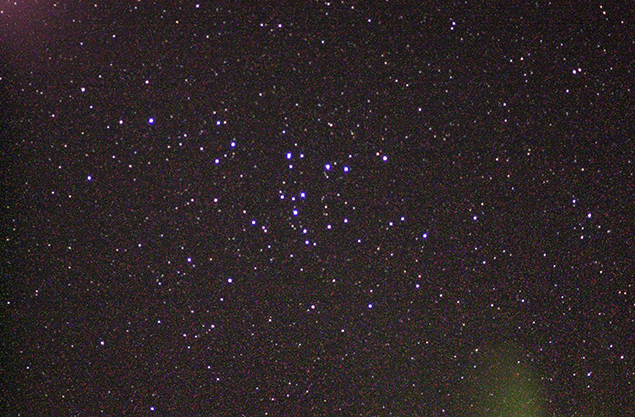
The Coma Star Cluster

Look about halfway between Denebola in Leo and Cor Caroli in Canes Venatici, and you might see a hazy patch of stars. This cluster, however, is a fine target for binoculars or through a very low-powered eyepiece.

Image credit: NASA, ESO, NAOJ, Giovanni Paglioli, Processing: R. Colombari

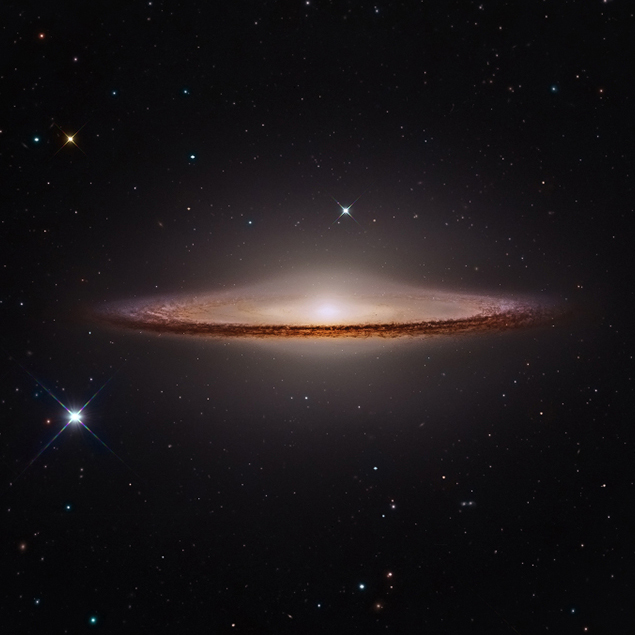
M104 - The Sombrero Galaxy

A small telescope at medium power will show a reasonably bright, elongated patch with pointed ends. The dark dust lane, which helps to give the galaxy its name, may also be seen with averted vision.

Image credit: Jeremy Perez

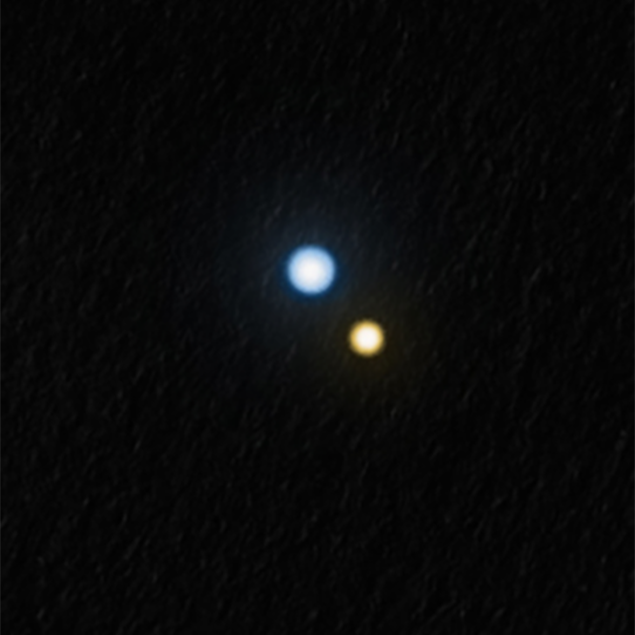
Cor Caroli

A beautiful double, easily split at low magnification. The primary appears white, while the fainter secondary has a creamy color.

STELLAR CONCEPTS

Asterism: Put simply, an asterism is a group of stars that form a familiar pattern. Asterisms can be any shape or size; for example, the seven brightest stars of the constellation Ursa Major, the Great Bear, form the Big Dipper asterism. Other asterisms include the Keystone in Hercules, the Teapot in Sagittarius and the Summer Triangle, which comprises the stars Deneb, Vega and Altair.