Image credit: N.A.Sharp
M7
Another great target for binoculars, M7 is a large open star cluster that fits into a low-powered telescopic field of view. Look out for a few pale gold stars, multiples, and chains of stars from the center.
July 2021
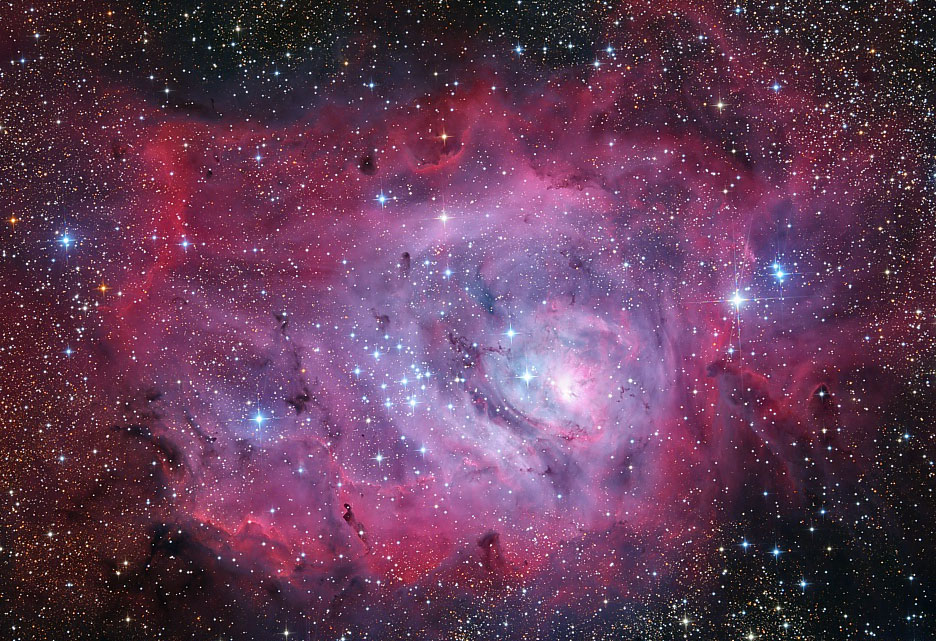
Theoretically, the Lagoon Nebula is visible to the naked eye, but if you live under suburban skies you can still enjoy this bright nebula with binoculars. You’ll find it within the same field of view as Kaus Borealis, the star that marks the tip of the teapot asterism in Sagittarius. You’ll see a misty, horizontal band, with a dark lane splitting the nebula in two. The eastern hemisphere appears brighter than the west and includes NGC 6530, an open star cluster.
Telescopically, a small scope at low power will show some texture and roughly a dozen stars in the eastern hemisphere, while larger apertures will reveal additional dark lanes and texture with the use of an O-III filter.
Image source: Gábor Tóth Astrophotography
Venus is unmissable in the west after sunset. At magnitude -4.0, it outshines everything except the Moon and is slowly catching up to Mars. The red planet is a much fainter magnitude 1.8, but you should be able to see them both within the same binocular field of view from the 2nd to the 23rd. They’re closest on the 12th and 13th with Regulus joining the pair for the last ten days of the month. Be sure to also look for the waxing crescent Moon nearby on the 11th and 12th. Both Jupiter and Saturn rise late in the evening, with a waning gibbous Moon between them on the 24th. Uranus and Neptune can be seen in the early hours with Mercury making an appearance in the predawn twilight for the first half of the month. The Moon turns new on the 9th and is full on the 23rd.
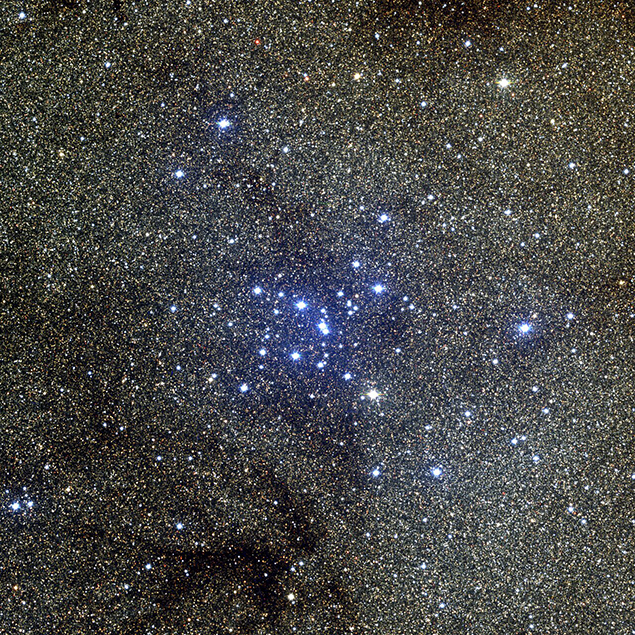
Image credit: N.A.Sharp
Another great target for binoculars, M7 is a large open star cluster that fits into a low-powered telescopic field of view. Look out for a few pale gold stars, multiples, and chains of stars from the center.
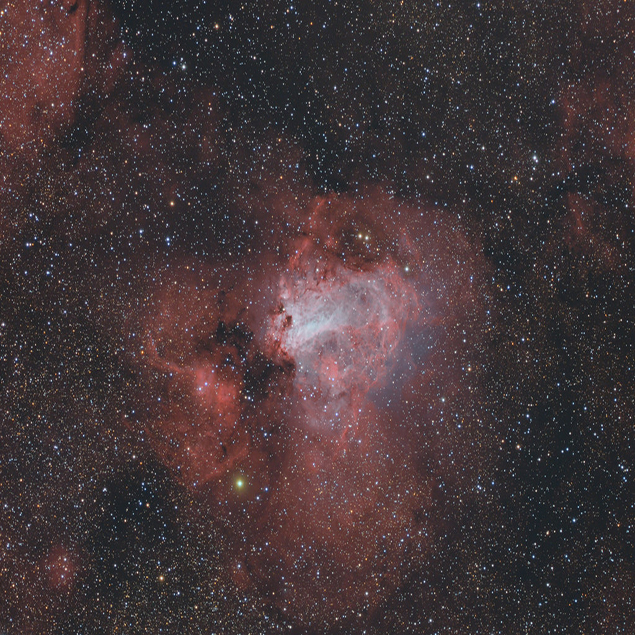
Image credit: Chuck Manges
You’ll find the Swan on the border with Scutum, and while it can be seen with binoculars, its distinctive shape is far more easily seen through a telescope at low power.
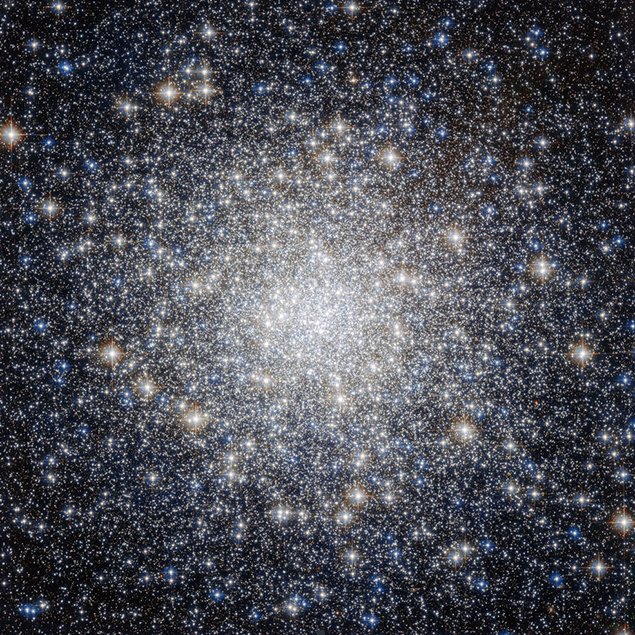
Image credit: ESA/Hubble & NASA
Despite being often overlooked in favor of M13, its more spectacular neighbor, M92 can be found with binoculars by following a train of stars north from Pi Herculis.
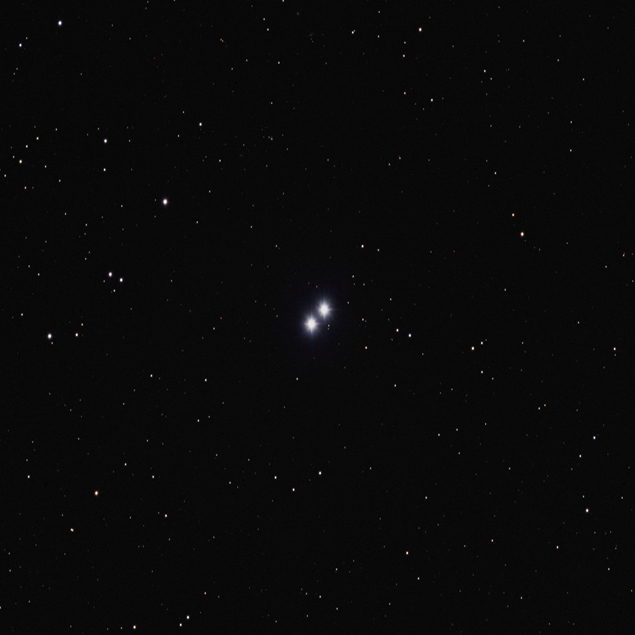
Image credit: David Ritter
This easy double, found in the head of Draco, the Dragon, can be seen as two close, white stars of equal brightness through even low-powered binoculars.
Light-Year: While it’s possible to specify distances within the solar system in miles and kilometers, those units of measurement become meaningless when applied to all the stars and other objects that lie beyond. Therefore, astronomers use the light-year to describe these distances. Light travels 186,282 miles per second or roughly 5.87 trillion miles in a year. Proxima Centauri, the nearest star to the Sun, is approximately 25 trillion miles away, and its light has taken 4.3 years to reach us.