Our Nearest Neighbors
Jupiter and Saturn both rise before sunset and are visible throughout almost the entire night. Telescopically, Jupiter’s disc is beginning to recede a little, while Saturn’s will maintain the same size throughout the month. The nearly full Moon appears close by on the 1st. Neptune rises at around 10PM at the beginning of the month and then half an hour after sunset by the end. Mars is creeping into the evening sky and now rises before midnight. Look out for a waning gibbous Moon very close by in the early hours of the 9th. Uranus rises at around midnight on the 1st and a little after 10PM by month’s end, while Venus is still a brilliant sight in the pre-dawn twilight. It reaches greatest western elongation on the 12th, with a waning crescent Moon nearby on the 15th. Mercury remains invisible throughout the month, while the Moon turns full on the 3rd and new on the 19th.
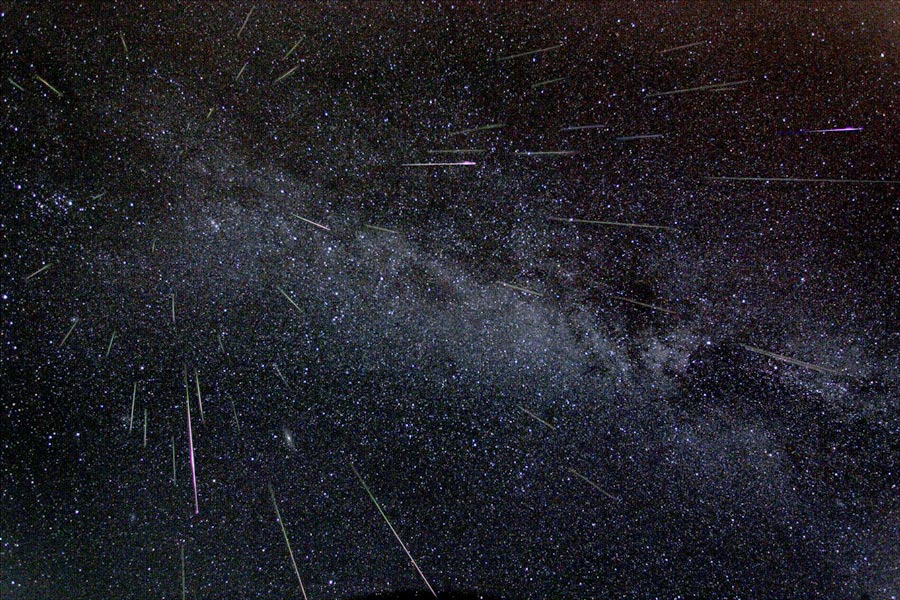
The Perseid Meteor Shower
| Radiant: | Perseus |
| Active Dates: | July 17th to August 26th |
| Maximum Date: | August 11th/12th |
| Zenith Hourly Rate: | 100 |
| Attributes: | Fast, with long bright trails and occasional fireballs. |
| Lunar Phase: | Waning gibbous |
The Perseids are probably the most reliable of all the meteor showers. Every year, you can count on it to produce a slew of shooting stars - provided the conditions are right. This year the shower reaches its maximum during the evening of the 11th and the early hours of the 12th, with your best chances coming after midnight.
The Moon is a day past last quarter that morning and it’ll be close to where the meteors will appear to originate. Its light will brighten the sky and drown out the fainter shooting stars, but fortunately, the Perseids can produce some bright meteors and are still worth checking out. Look to the north and east after midnight and, if you’re under dark skies, you can realistically expect to see 50 to 75 an hour.
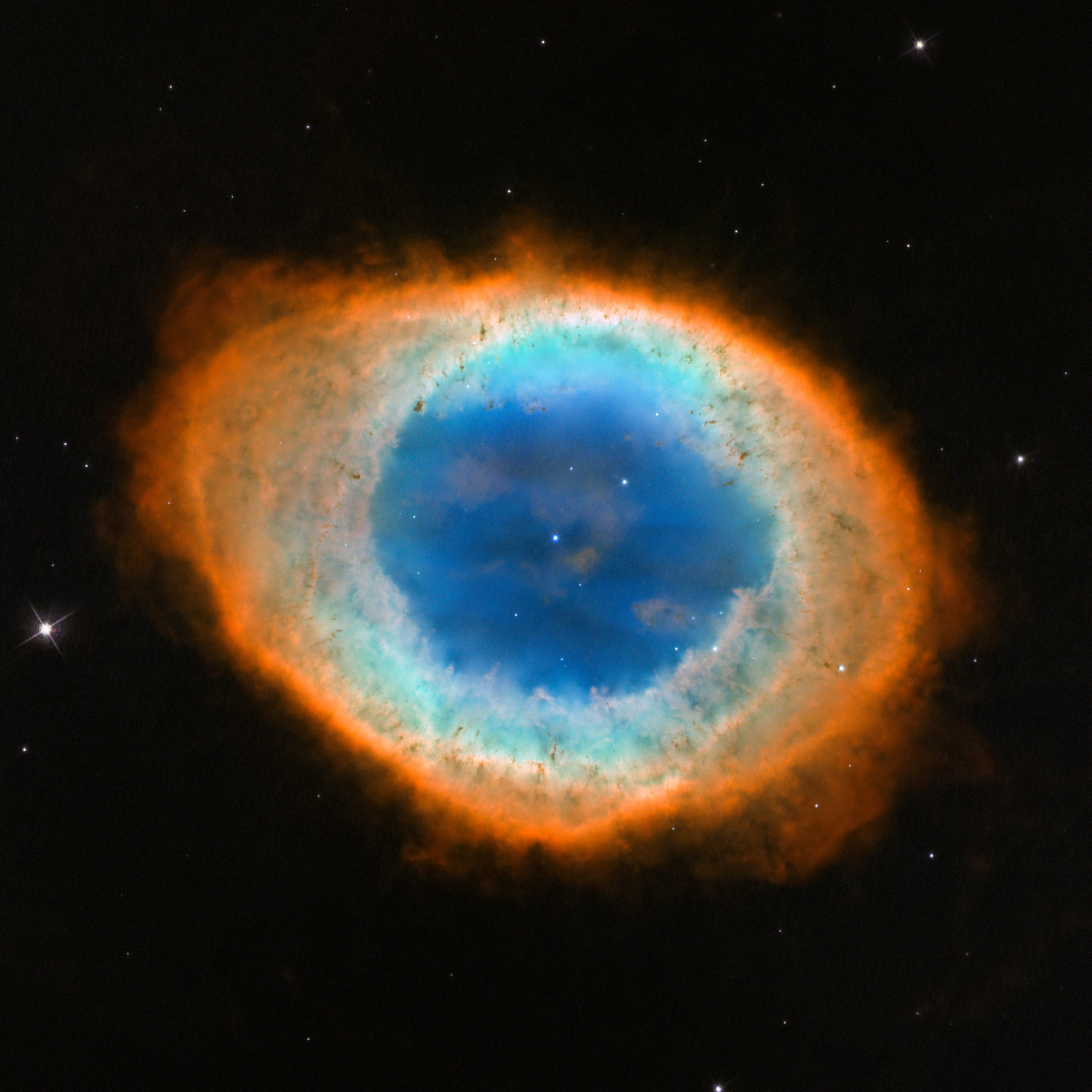
The Ring Nebula
This famous planetary nebula is an easy target for scopes of all sizes. A magnification of about 75x will show its famous ring shape, giving it the appearance of a smoke ring in space.
Albireo
Arguably the finest double star in the sky, a low magnification of just 25x is all that’s needed to split the star into its gold and sapphire components.
M22
Messier 22 would rival the Keystone Cluster for northern hemisphere observers if it wasn’t fairly low in Sagittarius. Visible with binoculars, it can be spectacular in mid and large size scopes.
The Wild Duck Cluster
Visible with binoculars from suburban skies, a small telescope will reveal a V-shaped open cluster of stars, reminiscent of ducks flying south for the winter.
Stellar Concepts
Open Cluster: A close group of stars, often numbering in the hundreds or even thousands, that formed from the same cloud of gas and dust in space. As such, they’re usually young, blue-white stars that are still relatively close together. Many of the clusters have nicknames based upon the shapes they appear to form when viewed through binoculars or a telescope.
Free Printable Celestial Newsletter