Image credit: Koen Miskotte
The Leonid Meteor Shower
The Leonids reach their maximum on the 16th and early hours of the 17th, and with the Moon a thin waxing crescent, you shouldn’t have any problems seeing a shooting star or two!

November 2020
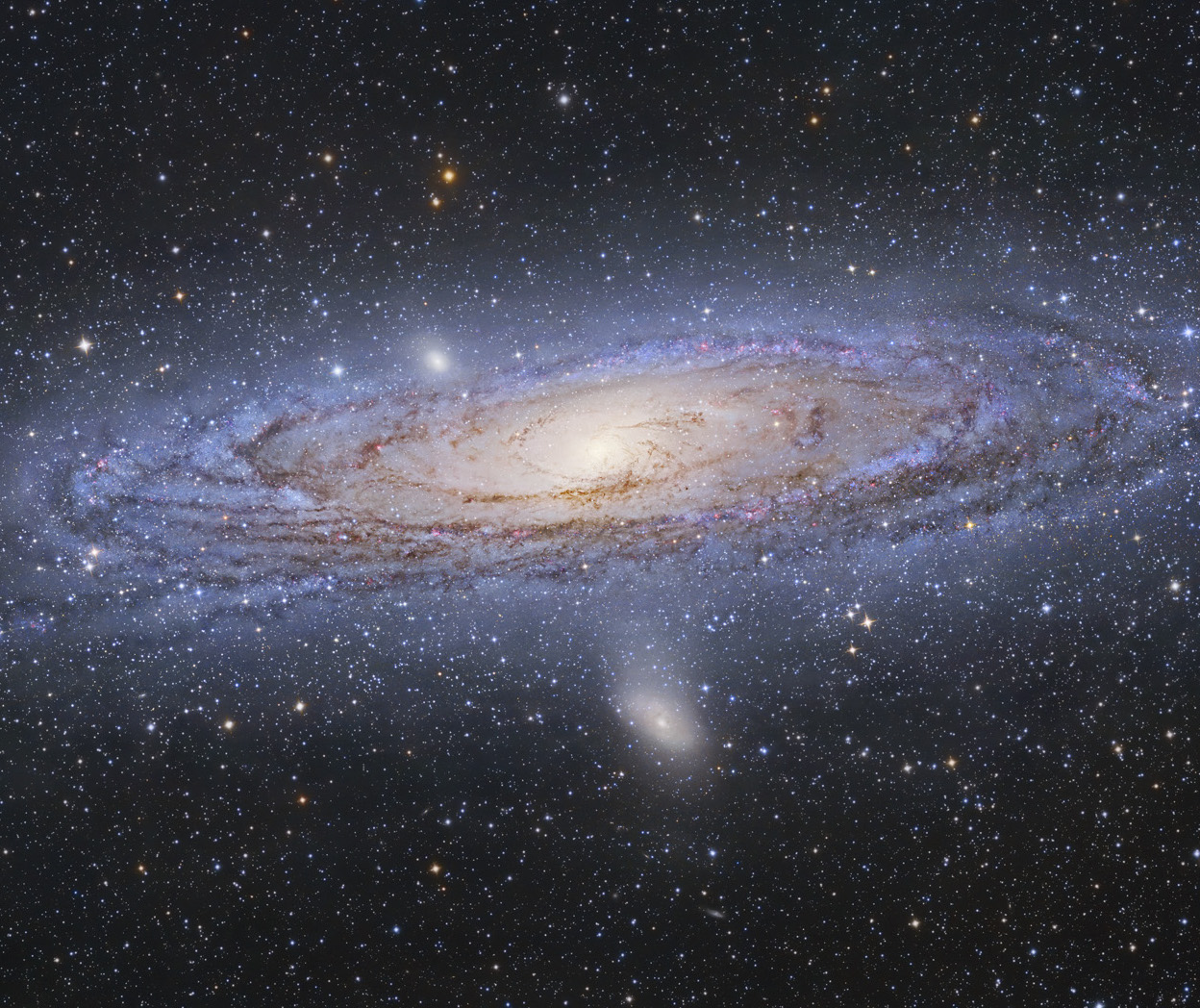
The most famous galaxy in the night sky (other than our own), the Andromeda Galaxy is the furthest object that’s relatively easily seen with just the naked eye. It can be found about midway along the more northerly line of curved stars that represent Andromeda’s body, but if you’re looking from the suburbs you’ll most likely need binoculars to see it.
Telescopically, a low magnification provides the best view as the galaxy spans an impressive three degrees across the sky. Small scopes will show a misty grey elongated patch with a bright, oval core, while larger scopes can reveal dark dust lanes and some mottling, partly revealing the galaxy’s structure. Two smaller satellite galaxies, M32 and M110, can be found to the south and north, respectively.
Image source: Tony Hallas
Jupiter and Saturn are sinking after sunset, and will be a little low by the end of the month for any serious observation. A waxing crescent Moon appears nearby on the evenings of the 18th and 19th. Faint Neptune can be glimpsed for the first half of the night while Mars continues to dominate the evening sky, but the red planet will be past its best by the 30th. Look for a waxing gibbous Moon directly below it on the 25th. Brilliant Venus shines for a few hours before sunrise in the east-southeast, with a crescent Moon above it on the 12th. It’s joined by Mercury for the first 20 days of the month; look for the Moon between them on the 13th, with the bright star Spica also glinting nearby. New Moon falls on the 15th while the full Moon (and a penumbral lunar eclipse) occurs on the 30th.
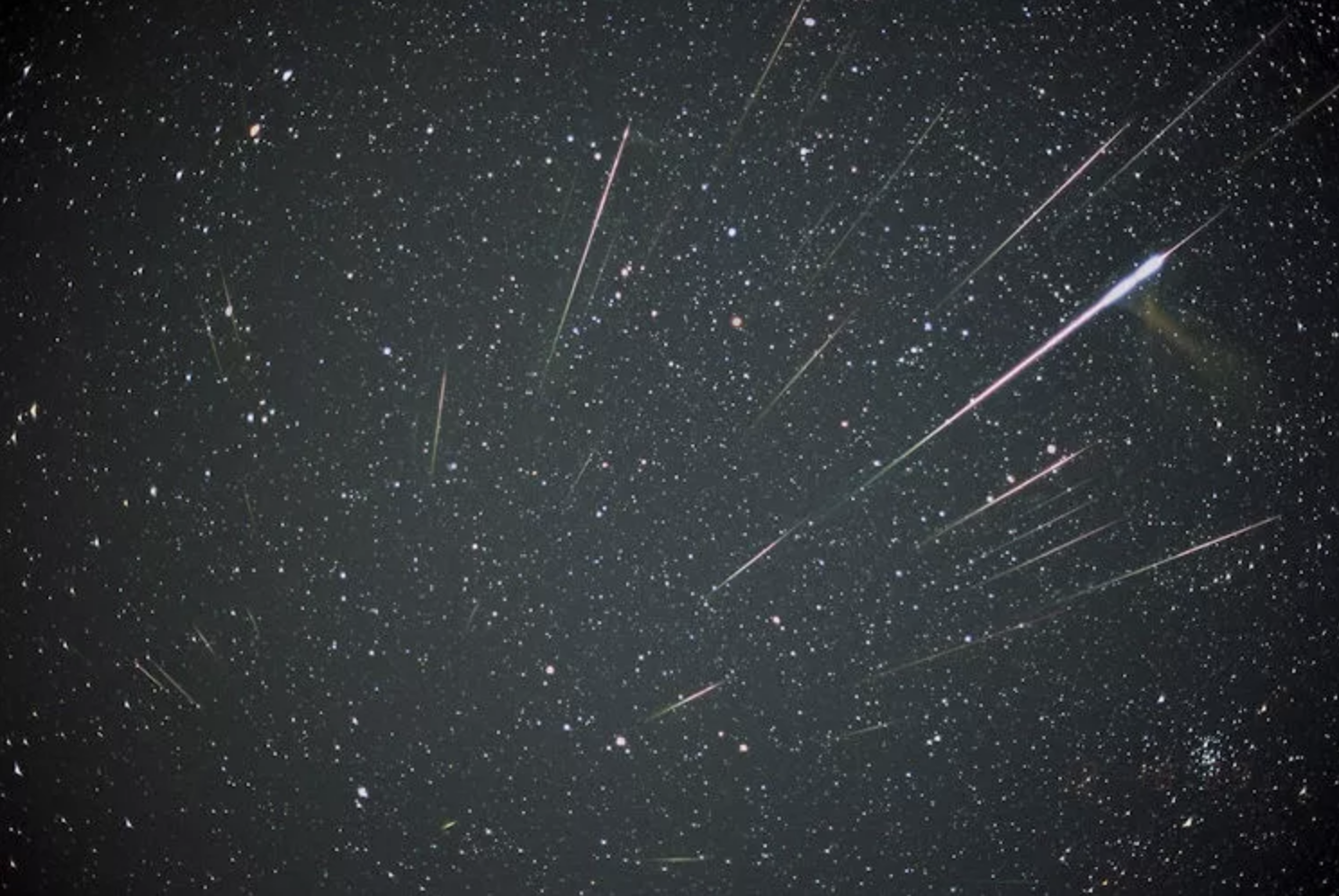
Image credit: Koen Miskotte
The Leonids reach their maximum on the 16th and early hours of the 17th, and with the Moon a thin waxing crescent, you shouldn’t have any problems seeing a shooting star or two!
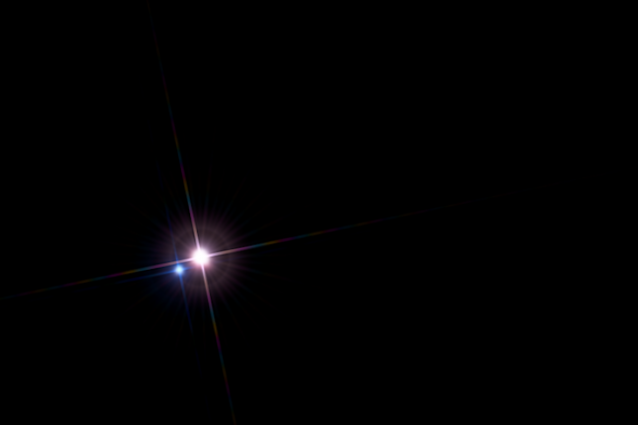
Image credit: Scott MacNeill
A pretty double star that's easily split with small scopes. A magnification of about 50x or more will show a golden star with a fainter, pale blue companion.
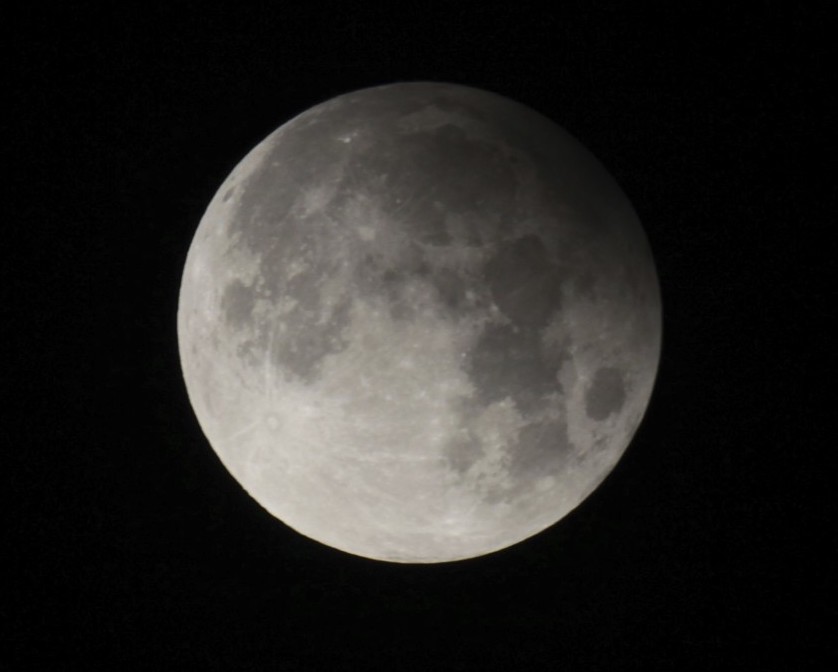
Image credit: K.M. Chaudary
Here’s a challenge for you; a penumbral lunar eclipse occurs when the Moon skims the outer edges of the Earth’s shadow. The Moon then appears a little dimmer, but not by much! Mid-eclipse occurs at 4:42 am ET - will you notice any difference?
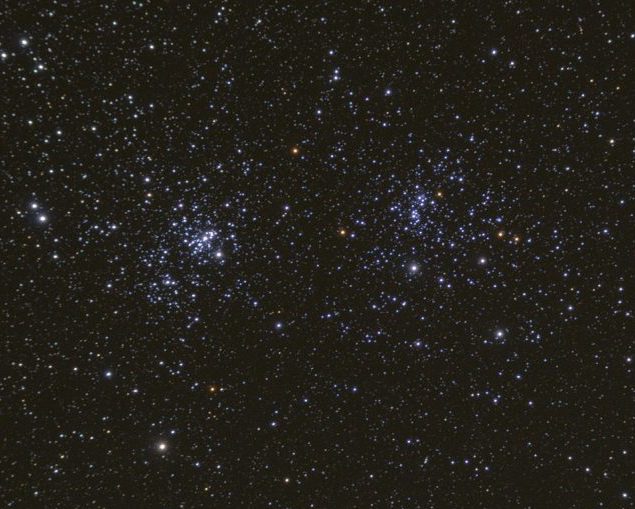
Image credit: Lukáš Kalista
A highlight of fall and winter, the Double Cluster can be seen with the naked eye but is probably best seen with binoculars. Look out for two small misty patches roughly halfway between Cassiopeia and Perseus.
Apparent Diameter: The diameter of an object as it appears in the sky, as measured in degrees, arc minutes and arc seconds. There are 60 arc seconds in an arc minute and, similarly, 60 arc minutes in a degree. There are ninety degrees from the horizon to the sky directly above your head. For example, the full Moon is, on average, about 31 arc minutes in diameter, or roughly half a degree.