Please use another browser such as Chrome, Edge, Firefox, or Safari for the best experience

Skip to content Askar FMA135 Sale

What's In the Sky This Month? December 2020

Posted By: High Point Scientific

December 2020

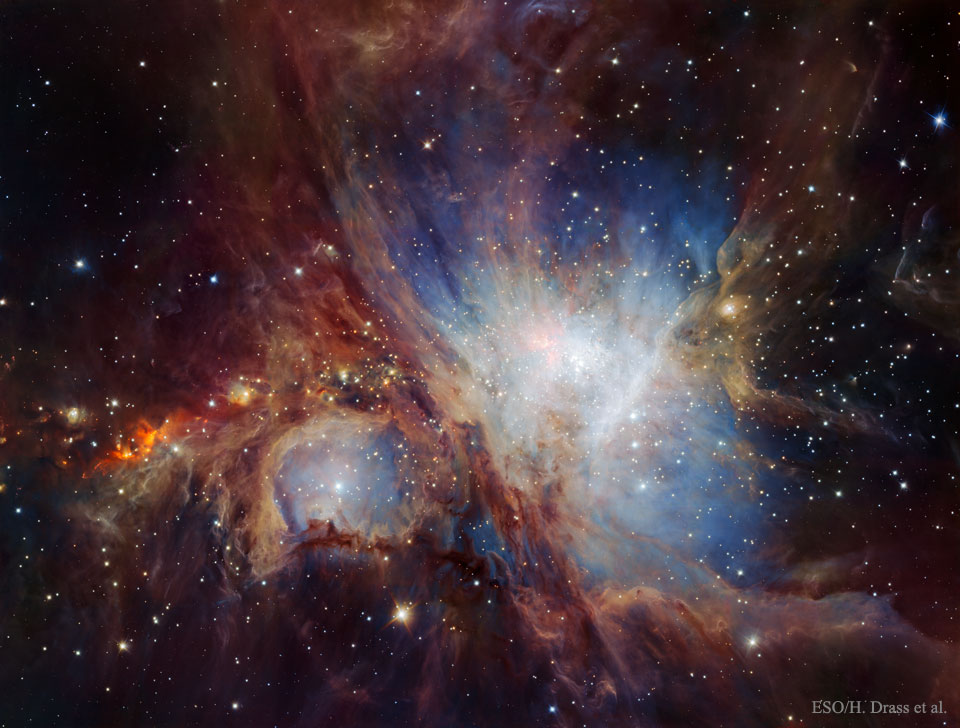
M42: The Orion Nebula

  • Type: Diffuse Nebula
  • CONSTELLATION: Orion
  • Distance: 1,344 light-years
  • Magnitude: 4.0
  • APPARENT DIAMETER: 40’ x 20’

Perhaps the most famous example of its kind (and certainly the finest visible from the northern hemisphere) the Orion Nebula has been known since antiquity and has traditionally represented the sword of Orion, the Hunter. Found beneath the three stars of his belt, it’s easily visible to the naked eye and is a fine sight in binoculars.

However, nothing is better than the view through a scope. Even at low power, the nebula takes on a milky hue, as though lit by moonlight, with a hint of green coloring the cloud. At its heart you’ll find the four brightest members of the Trapezium, a tiny cluster of stars in the process of being born within the nebula. Taken as a whole, this is a winter sight not to be missed!


Image source: ESO, VLT, HAWK-I, H. Drass et al.
OUR NEAREST NEIGHBORS

The highlight of the month is the conjunction of Jupiter and Saturn on the 21st. With just 0.1 degrees between them, this is the closest the pair have been in nearly 400 years, making this a once in a lifetime opportunity. Look out for them low in the southwest after sunset, with a crescent Moon within the same binocular field of view on the 16th. Both Uranus and Neptune remain visible throughout the evening, while Mars, now past its best, can be found high over the southeast after sunset. Mercury remains lost within the Sun’s glare for the entire month, but Venus still shines brightly for at least 90 minutes before sunrise. A crescent Moon hangs to its upper right on the morning of the 12th. The Moon turns new the next day and is full on the 29th.

Image credit: NASA

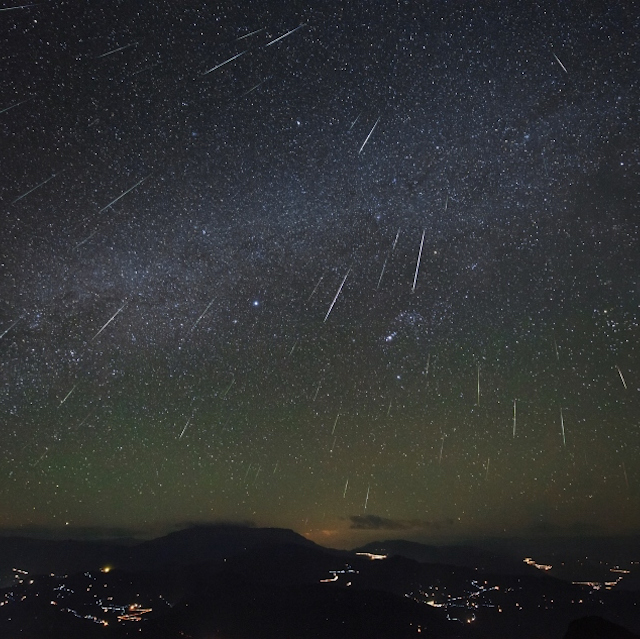
The Geminid Meteor Shower

The year’s Geminids reach their maximum on the evening of the 13th to 14th, during a new Moon. Since there’ll be no moonlight to drown out the fainter shooting stars, we should therefore be in for a good show!

Image credit: 2MASS/UMass/IPAC-Caltech/NASA/NSF

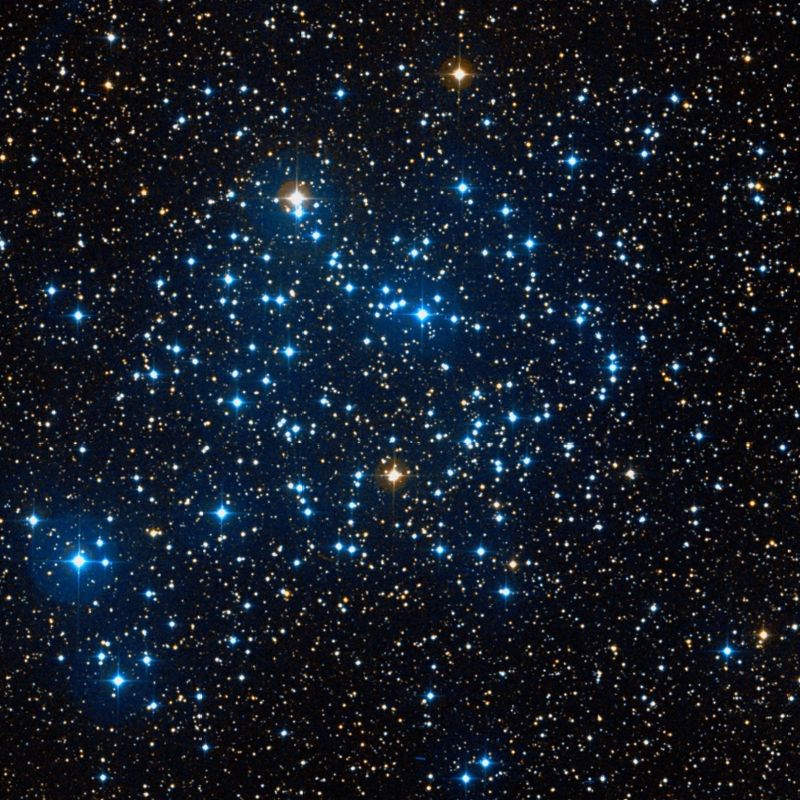
M35

M35 is a fine open star cluster, located close to the feet of Gemini, the Twins. You can find it with binoculars, but scopes will show hundreds of stars, with a pale gold star on its northeastern edge.

Image credit: SkySafari

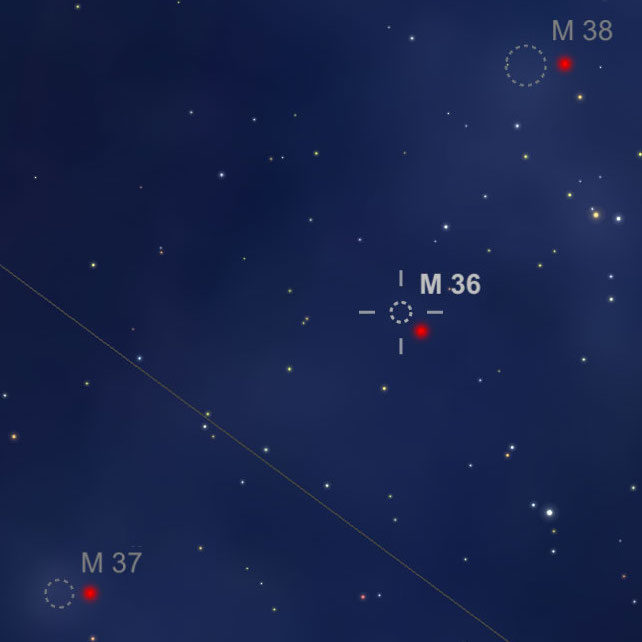
M36, M37 and M38

Found within Auriga, the Charioteer, you can’t observe one without looking at the others. While all three are visible with binoculars, M37 is arguably the finest, with the cluster appearing denser than its neighbors.

Image credit: NASA

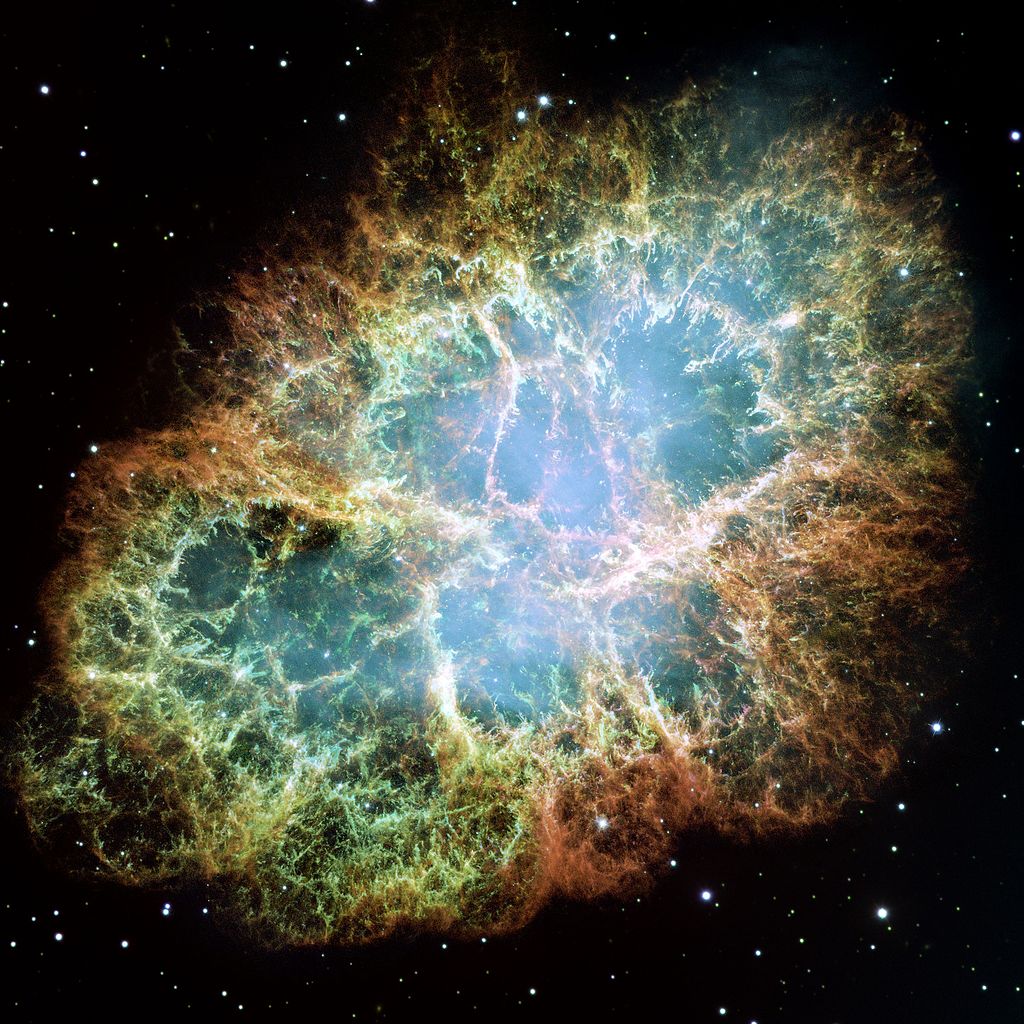
M1: The Crab Nebula

Although relatively easily found, this faint supernova remnant is best seen with averted vision through a scope at 100x or higher.

STELLAR CONCEPTS

Focal Length: The focal length of a telescope is the distance light must travel from the lens or mirror to the eye of the observer. You can find the focal length on the side of your equipment. Knowing the focal length is important as it will tell you the magnification of the eyepiece you’re using. This can be calculated by dividing the focal length of your scope by the focal length of the eyepiece. For example, a 10mm eyepiece used on a telescope with a focal length of 500mm will provide a magnification of 50x.