All coupons, tax, shipping, store credit and gift cards will be applied during checkout.

As a result of unexpected technological harmony, microscopes and microscope accessories discover a fascinating yet understated niche in astronomy, connecting the microscopic with the cosmic. Developing high-resolution eyepieces, filter systems, and laboratory-grade calibration tools for astrophotography is often informed by precision optics created for microscopes. Under extreme magnification, astronomers examine lunar regolith samples, thin meteorite slices, and delicate optical coatings with the aid of microscopes. The same exquisite process that sheds light on cellular structure can also help in comprehending the chemical structure of distant planets, in this surprising but fascinating cooperation between the microscopic and the celestial.
×
![]()
Highlighted Products
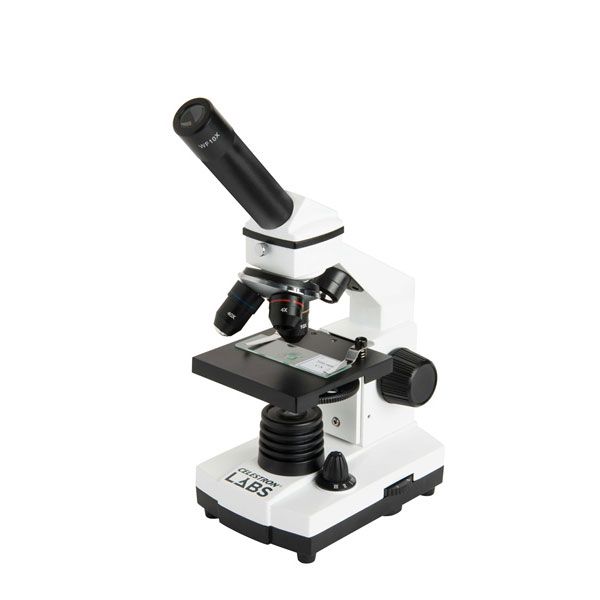
Celestron CM800 Monocular Compound Microscope
The Celestron Labs CM800 Compound Microscope offers magnifications up to 800X, features a monocular head, interchangeable eyepieces, objective lenses, adjustable LED lighting, stage, and ten specimen slides.

Celestron CB2000C Trinocular Microscope
Comprising four objective lenses, three colored filters, and 10x and 20x eyepieces, the Celestron CB2000C Binocular Compound Microscope is a classic scientific microscope with modern capabilities.

Celestron Labs CB1000CF Biological Microscope
Although the CB2000C emphasizes dual eyepiece adaptability with 10x and 20x options, the Celestron Labs CB1000CF Biological Microscope provides constant performance with its 10x eyepiece thus, it is a dependable choice for detailed scientific observation.
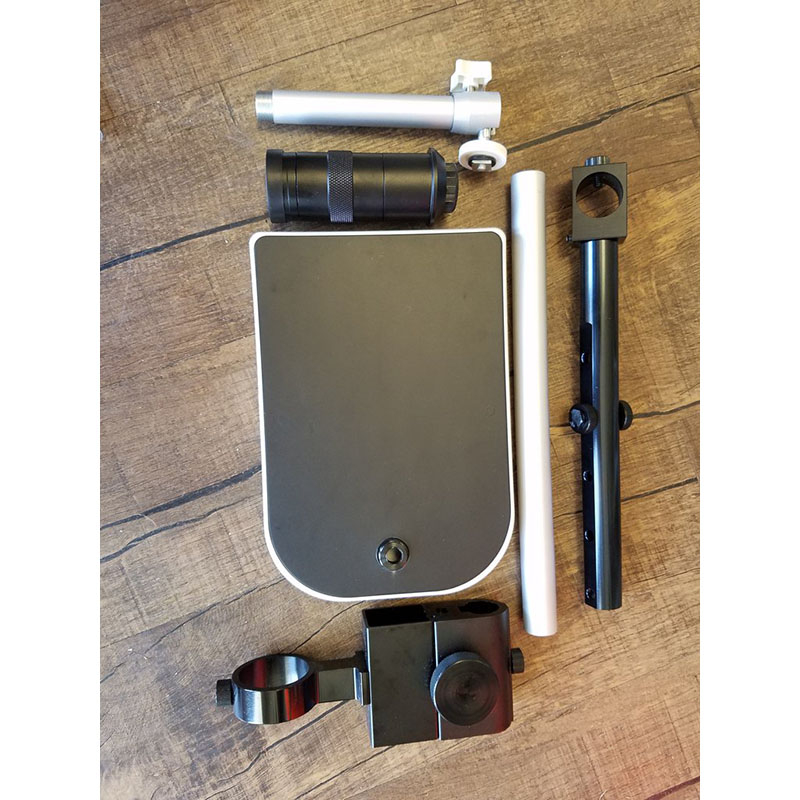
Revolution Imager Microscope Adapter Kit for R1 and R2
A microscope kit called The Revolution: Micro is made for venturing into unexplored territory. Magnification ranges from 8x to 40x, with the R2 Electric Zoom enabling zooming up to 200x. The kit includes options for dual monitor mounting with a 29 cm pillar and flexible display positioning via sturdy mounts. It has a 7" LCD screen and a securely mounted microscope lens that offers fine focus capabilities and an operational distance of 43 mm to 150 mm with a visual range of 2.4 mm to 32 mm.

Star Bound Adjustable Observing Chair
Astronomers may discover that the StarBound Adjustable Observing Chair helps them keep their feet from getting tired and hurt after hours of looking at the night sky or taking pictures. This store up to 300 pounds, is easy to fold, and can be made taller or shorter from 9 to 32 inches. The sturdy alloy steel structure will keep the chair from moving. The padded seat is not only easy to use, but it is also weatherproof and comes with a simple knob for height adjustment. With this astronomy equipment, you can rest assured that your viewing experience will be pleasant regardless of the height of your telescope.
More About This Category
Astronomy does not use microscopes in the complete sense of the word as a science discipline. Still, in the case of studies on meteorites, space dust, etc., it is a vital tool employed in relevant scientific applications. Then, follow a reasonably instructive paragraph with questions and answers based on some fascinating facts, their relevance, and some recommendations on preserving them.
Microscopes are utilized in domains like the study of meteorites and cosmic dust, rocks, planetary structures, and composition; microfossils in meteorites; combined spectroscopy in chemical analysis; and space exploration. They reveal details on microorganisms, tiny particles of space architecture, and the solar system's development, among other inventions.
Suitable ranges of images made possible by microscopes enable scientific research to advance mineral, chemical constituent, and microstructure of extraterrestrial sample results. These are essential for material characterization and education, therefore ensuring research progress.
Regular cleaning and calibration of microscopes are beneficial for their performance. They should be stored in a dust-free, dry environment, handled carefully to avoid scratches and impacts, and scheduled routine maintenance checks by professionals to ensure optimal performance.
Why is astronomical research on cosmic dust necessary? Studying cosmic dust can help us understand the mechanisms influencing our planetary system since it contains primordial elements from the solar system's development. Spectroscopy-capable advanced microscopes let researchers thoroughly investigate these particles' chemical compositions, revealing their sources and evolution. Besides, planetary geology depends heavily on microscopes.
How might scientists investigate lunar or Martian rocks? Thin pieces of these rocks are cut and highlighted under microscopes to ascertain their mineral composition and geological history. This advances our understanding of these celestial bodies' past settings and dynamics. Microfossils in meteorites provide still another intriguing use. Might microscopic life have existed in other worlds? Microscopes enable the identification of possible microfossils in meteorites, suggesting past microbial life in alien settings. Astrobiology, the study of potential life elsewhere in the universe, depends on this line of inquiry.
How many researchers and students gain from microscopes in educational environments? Microscopes benefit teaching and research, providing practical familiarity with the microscopic details of disciplines connected to astronomy. They help pupils see and examine extraterrestrial objects closely, therefore promoting a better knowledge of the universe. Though they are not used to view far-off stars or galaxies, the microscopic study of space materials depends on microscopes and their accessories. Since they provide a comprehensive knowledge of the composition and history of foreign objects and enable significant scientific discoveries, they are vital for training the following generation of astronomers and researchers. Their regular cleaning, calibration, proper storage, and routine upkeep ensure they remain in the best shape and are ready to disclose cosmic secrets.
High Point's portable handheld microscopes can be used with an eyepiece or via a computer connection. These flexible and handy microscopes are great for photographers on the run for in-field observations.
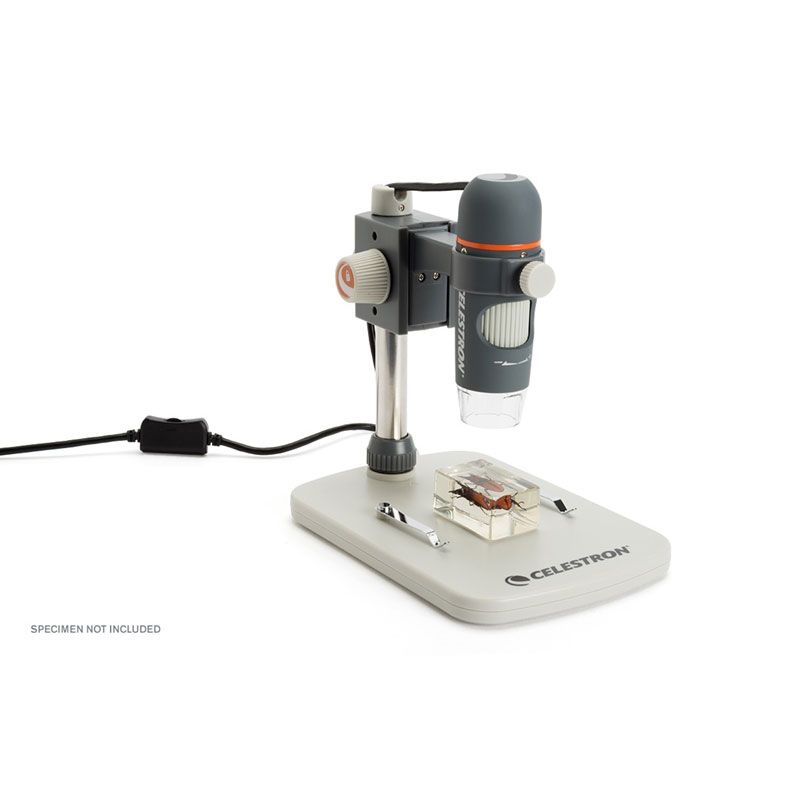
Celestron Handheld Digital Microscope Pro is a low-power microscope featuring a 5.0 MP sensor. It is perfect for photographing and video-capturing multiple objects. The provided Micro Capture Pro program can create high-resolution images, VGA-definition video, and time-lapse animations. The device also features a moveable stand for constant photos even at high magnification and adjustable LED illumination for clear, brilliant pictures.
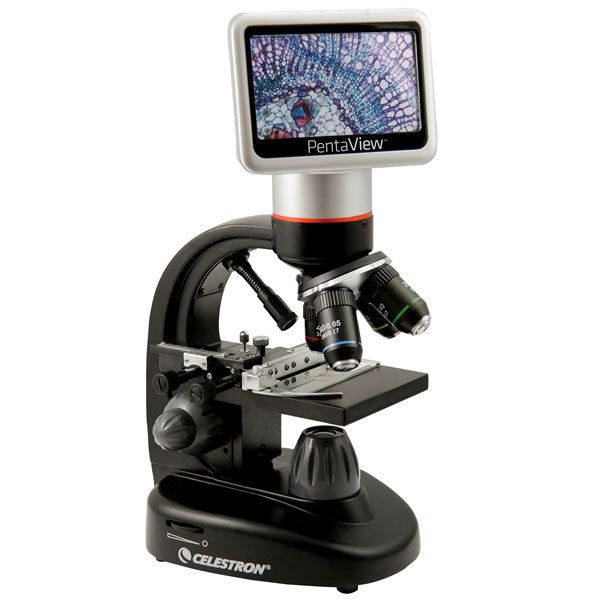
Modern alternatives to conventional optical microscopes include digital microscopes. These microscopes project images on a monitor using optics and a digital camera. Adding their viewing screen, LCD microscopes build on this concept by improving contrast and reducing eye strain for the spectator. Along with a built-in 5MP digital camera, the premium Celestron PentaView LCD Digital Microscope features a 4.3" LCD touch screen for essential viewing and image capturing. Its mechanical stage, LED lighting, and capacity to magnify up to 2400x make this a valuable tool for scientific research.
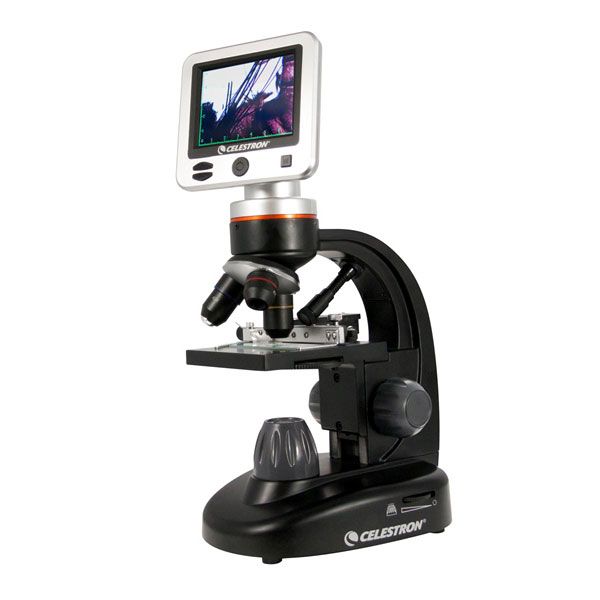
The venerable Celestron LCD Digital Microscope II offers digital zoom and magnifications ranging from 40X to 1600X on a 3.5" 180-degree rotating LCD screen. Its built-in 5MP digital camera logs films or still images. This microscope is ideal for labs, classrooms, students, or research facilities. It also shows TV output, and visuals could be shared with a large audience. A 1 GB SD card loaded with more than 600 high-resolution images for lab reports, research, and instruction comes with the microscope.