Baader Morpheus 4.5 mm 76° 1.25"/2" Eyepiece
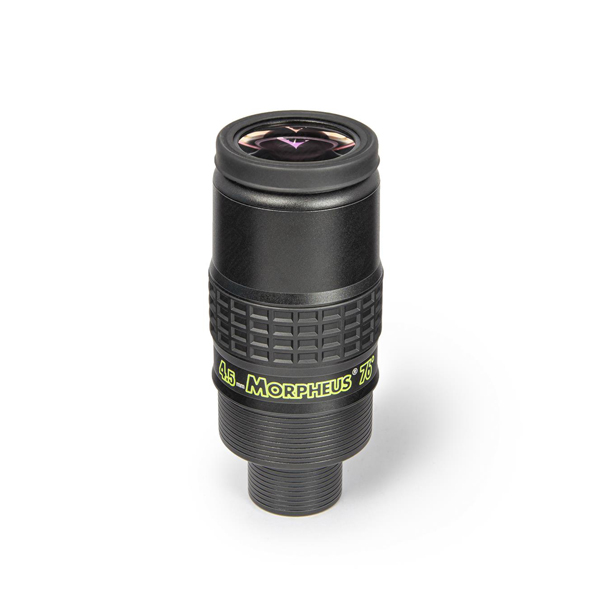

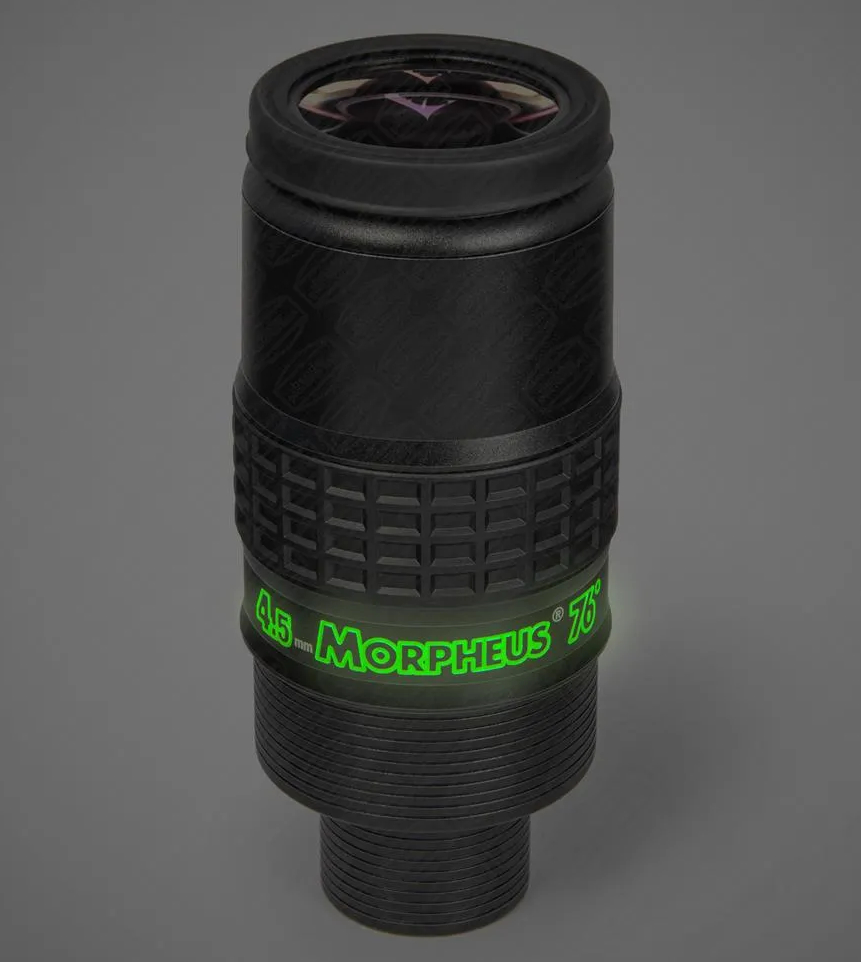
Baader 4.5 mm Morpheus 76° Eyepiece
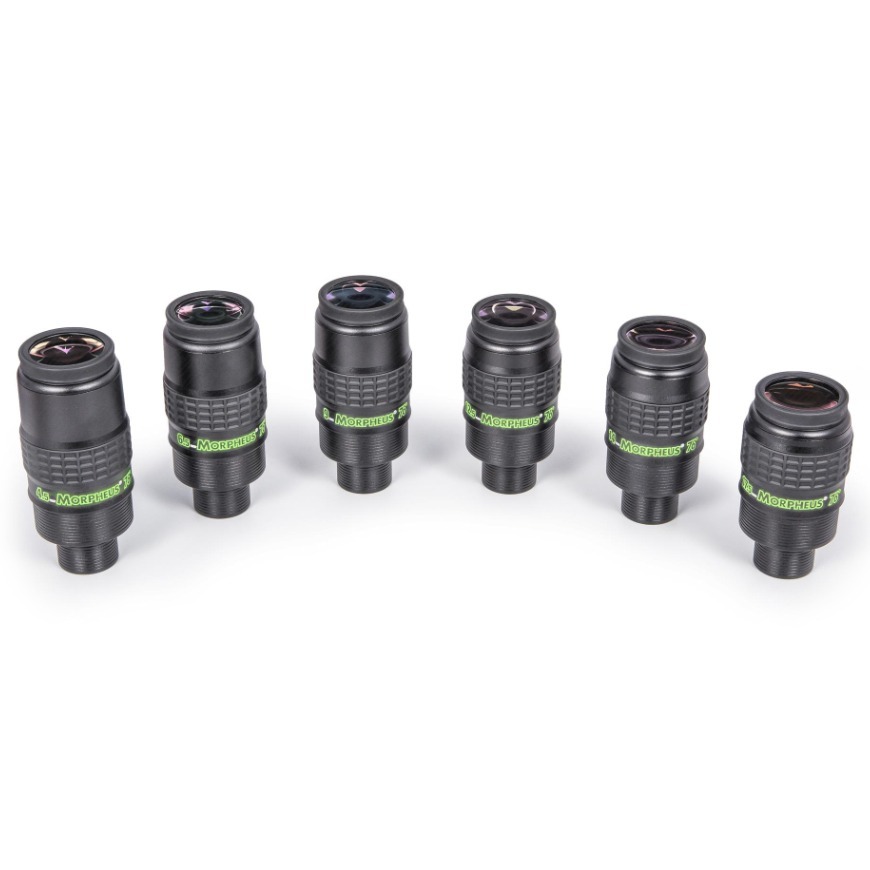
Designed to further stretch the horizons of what’s possible, Baader offers their Morpheus series, a collection of wide-field eyepieces precision-engineered for vast, expansive sights! Each eyepiece within the Morpheus line boasts an ultra wide 76° field of view with tack-sharp stars from edge to edge. This level of quality can be attributed to the meticulous degree of detail Baader commits during their eyepiece development process—offering a highly immersive experience with the famous “spacewalk” feeling. Whether you plan to view our solar system in striking clarity, or wishing to explore deep space, this Baader 4.5 mm Morpheus 76° Eyepiece is perfect for you!
As a high-power eyepiece, the 4.5 mm focal length is a wonderful choice for observing bright, compact celestial objects such as the planets, the lunar craters, and planetary nebulae. While other manufacturers may advertise a wide field of view, subpar optics prevent the entirety of the frame from being utilized. Baader sets itself apart from the rest—correcting for any distortions and delivering a flat field across the full extent of the 76° AFOV. This is made possible with the 8 internal glass elements, the Phantom Group Multi-Coatings, internal baffles, and plenty more innovative design elements. Though powerful, this eyepiece features a small, compact body, streamlining your trips to dark skies and offering seamless use with binoviewers. Take your observing sessions to new heights with this Baader 4.5 mm Morpheus 76° Eyepiece today!
Baader 4.5 mm Morpheus Eyepiece At a Glance
|
|
|
|
|
|
Precision Engineered for the Ultimate Viewing Experience
To maximize the light gathering power of your telescope, it’s necessary to pair it with an eyepiece similar in quality. Baader fully understands this notion, designing each Morpheus eyepiece with the utmost care to deliver peak sharpness and clarity within the scope of vision. Read more below as we take a deeper dive into the premiere aspects of this Baader 4.5 mm Morpheus 76° Eyepiece!
The Morpheus Design: Innovation at its Core
Designed for observers, by observers, Baader has a clear understanding of avid stargazers’ demands, delivering the Morpheus line jam-packed with features astronomers are sure to love. Carefully crafted optics (8 lenses with one ED and two Lanthanum elements) enable full use of the expanded 76° AFOV, opening the doors to cinematic views of the universe where the eyepiece practically disappears. This on-axis sharpness delivers in-focus, pinpoint stars, with no drop off in quality near the edges of the frame! The wide field is also highly beneficial for those with non-motorized mounts, such as Dobsonians, as you’ll experience a slower drift for extended viewing periods without constantly needing to recenter your object. This 4.5 mm eyepiece offers 17.5 mm of eye relief, blending best-in-class optical performance with a comfortable viewing experience. Not only is this wonderful for eyeglass wearers, but those who utilize binoviewers can expect unmatched levels of comfort and quality when viewing with both eyes. First debuted on the Baader Hyperion eyepiece line and optimized for the Morpheus series, the Phantom Group Multi-Coatings provide exceptional anti-reflective performance for crystal-clear, high contrast views. These coatings are tailored specifically for each glass element, demonstrating the meticulous attention to detail and high degree of precision provided by Baader Planetarium!
Masterfully Crafted
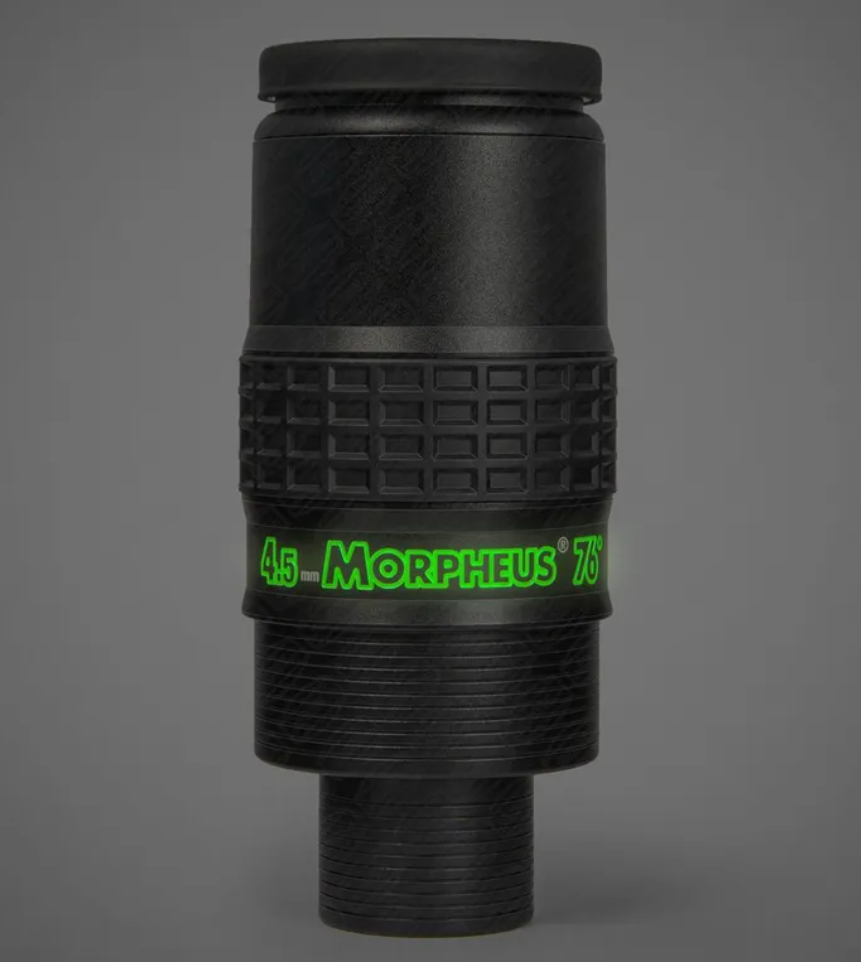
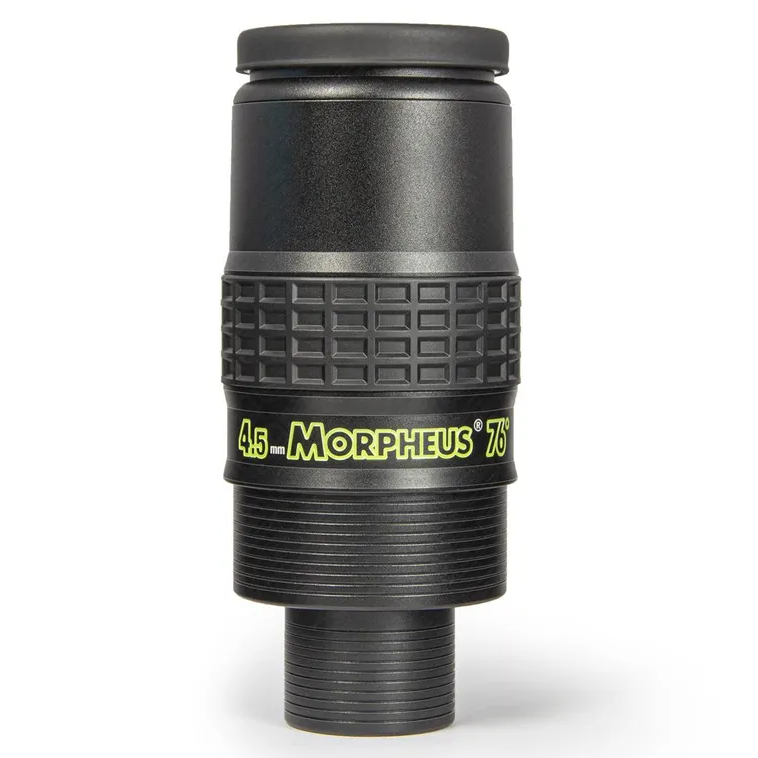
In addition to an outstanding optical design, Morpheus eyepieces are quality built, delivering remarkable performance night after night. The hard aluminum alloy and industrial-quality UV-stabilized anodizing upholds the optical integrity of your eyepiece for years to come, making it a reliable choice for all of your future stargazing adventures. Baader devotes themselves to reducing both the size and weight of these eyepieces without compromising on optical performance. The result? A highly capable eyepiece line well suited for travel, binoviewing, and improved telescope balance! This 4.5 mm model weighs in at only 0.98 lb. (15.5 oz) and provides maximum nose clearance for binoviewing thanks to its small, compact size. Additionally, this eyepiece houses a dual nosepiece for seamless integration within both 1.25” and 2” focusers. Opposed to utilizing undercuts, a design notorious for making eyepiece removal/insertion a hassle, the Morpheus eyepieces include the Baader Slip-Protect Safety-Kerfs cut into the barrels for a secure, trouble-free fit. While under dark skies, it can be annoying to try and find the right eyepiece without ruining your night vision. This is why Baader furnished the Morpheus line with easy to see, luminescent labeling so you can select your eyepieces with ease.
4.5 mm of Focal Length
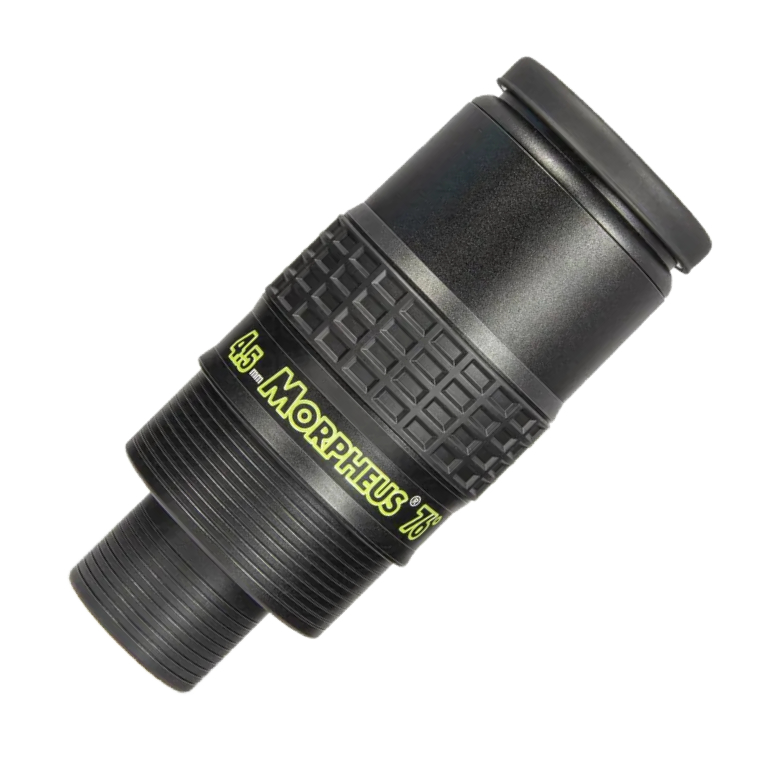
In order to take full advantage of your telescope’s light gathering power, finding the right combination of telescope focal length and eyepiece focal length (i.e. your system’s magnification) helps you achieve the best views possible. Not only does this ratio help you determine what celestial objects can be viewed, it also gives insight into how clear the image will be based on your local seeing conditions. Under good seeing conditions, it’s best to capitalize on this still air by utilizing higher magnifications, while lower magnifications help you make the most out of poor seeing. The formula for magnification is as follows: Telescope Focal Length ÷ Eyepiece Focal Length. Pairing this 4.5 mm Baader Morpheus Eyepiece with a standard 1200 mm focal length Dobsonian yields a magnification of 267x—making it wonderful for up-close sights on Saturn’s rings, Jupiter’s cloud bands, the polar ice caps on Mars, and more, with the best views under good seeing conditions. For a more in-depth look at this topic, be sure to check out our Telescope Eyepiece Guide found within our Astronomy Hub.
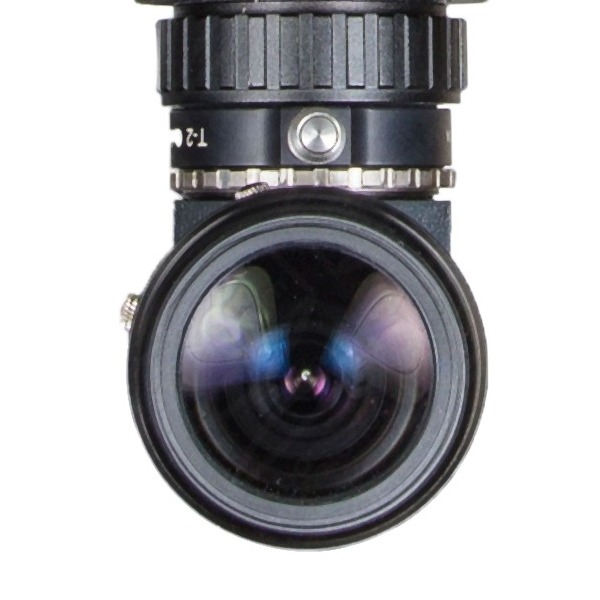
Understanding Exit Pupil
As the beam of light exiting your eyepiece, the exit pupil determines how bright the image through your eyepiece will be. We measure the exit pupil by its diameter in millimeters, with the bigger the diameter, the brighter the image. In general, deep sky objects become visible with an exit pupil of 2 mm or greater, with fainter and fainter targets becoming more and more visible as the exit pupil increases. Small exit pupils (<2 mm), on the other hand, prove to be useful for viewing compact, bright objects, such as the planets or our Moon. Calculating the exit pupil of your eyepiece/telescope combination is super easy: Exit Pupil = Telescope Aperture (mm) ÷ Magnification, or Exit Pupil = Eyepiece Focal Length ÷ Telescope Focal Ratio. This Baader Morpheus Eyepiece has a focal length of 4.5 mm. When paired with a standard f/5 telescope, the resulting exit pupil will be 0.9 mm, making this eyepiece a great choice for observing bright objects such as the planets and our Moon!
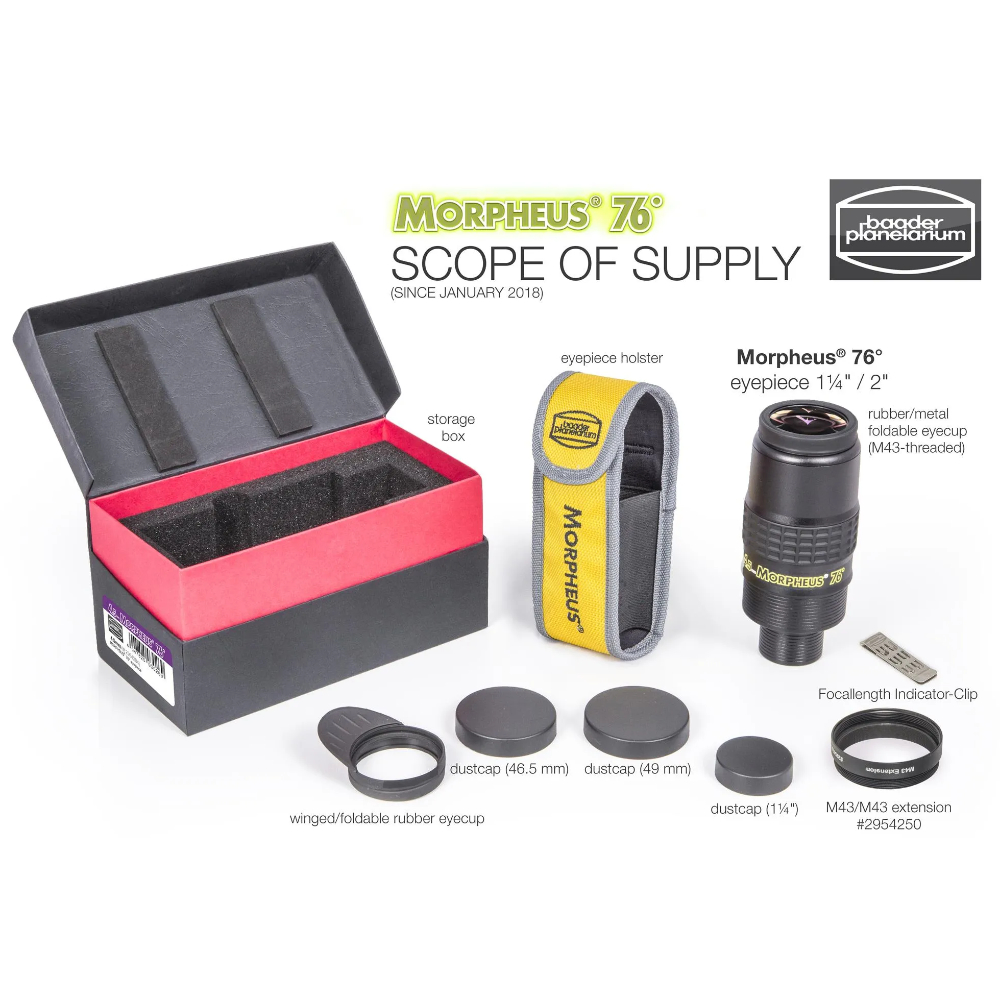
Numerous Added Accessories
Including a host of extras, Baader goes above and beyond, offering a complete and thoughtful viewing experience! Within this package you’ll find an eyepiece holster for both protection and effortless transport. This holster can also be attached to your belt or tripod for easy access, while the included focal length indicator clips make it easy to determine which eyepiece is which while in the dark. Simply bend one or more of the stainless steel indicator fingers upwards to differentiate each eyepiece, enabling you to identify each eyepiece without use of a flashlight. Not one, but two foldable eye cups are included within the box, providing both comfort and versatility. The preinstalled eyecup features a metal base with M43 threads for secure, threaded attachment to the eyepiece. This simple design is wonderful for everyday viewing, while the second, winged eyecup is highly beneficial for blocking out stray light while binoviewing with eyeglasses. Additionally included is an M43 threaded extension to adjust the eyecups to your personal viewing position. This extension is also great for adapting cameras with M43-threads (Sony & Panasonic) for eyepiece projection photography, and provides a broader surface for clamping smartphone adapters.
Frequently Asked Questions
What can I view with the Baader Morpheus 4.5 mm eyepiece?
With a focal length of 4.5 mm, this high-powered eyepiece is a great choice for up-close observations of sprawling nebulae and more compact objects such as small galaxies and planetary nebulae. For instance, a telescope with a 1200 mm focal length paired with this 4.5 mm eyepiece will result in a magnification of 267x, ideal for observing Saturn’s rings and the Cassini Division, the Tycho and Copernicus craters, Jupiter and its Galilean Moons, and more!
Can I use the Baader Morpheus eyepieces for eyepiece projection photography?
Yes! The built-in M43 threads and included M43/M43 extension allows seamless connection to a host of cameras. These threads reside below the folding rubber eyecup. The extensive number of optional Baader adapters enable coupling to DSLRs, small webcam-like cameras, and even some video-cameras for a host of applications. Take a look at this comprehensive guide on photography with your Baader Planetarium 4.5 mm Morpheus Eyepiece, diving into the various connection methods available!
How do I calculate magnification?
Magnification can be calculated by taking your telescope’s focal length and dividing it by your eyepiece’s focal length. For instance, if we have an 8” 1,200 mm focal length Dobsonian telescope, and we’re using the Baader Morpheus 4.5 mm eyepiece, the magnification will be as follows: 1200/4.5 = ~267x. It’s important to note that magnification influences how bright your image will be, as the higher magnification, the dimmer your image will become (when using the same aperture). Be sure to check out our Ultimate Telescope Eyepiece Guide for more on this topic!
What’s the difference between apparent field of view (AFOV) and true field of view (TFOV)?
Apparent field of view refers to how large the image is to your eye. For reference, a single bare human eye has a field of view of approximately 150°. These Baader Morpheus eyepieces offer an 76° AFOV for a well-immersed experience. True field of view, on the other hand, refers to the angular diameter of the “chunk” of the sky you are observing. TFOV is determined by dividing your AFOV by your system’s magnification. For instance, an 8” 1,200 mm focal length Dobsonian paired with the 4.5 mm Baader Morpheus eyepiece will yield a TFOV of 0.28°. The full disk of the Moon, for reference, has an angular diameter of 0.5°. For more on this topic, our comprehensive Ultimate Telescope Guide provides an in-depth look!
Astronomy Hub: Your one-stop-shop for Astronomy Knowledge!
Our Gear Experts have compiled a wealth of information to help you get the most out of your telescope! Below you’ll find links to articles, videos and "how-to" guides. Just one more reason that our Astronomy Hub is a one-stop-shop for all your astronomy and astrophotography needs!
| The Best Telescopes of the Year |
| Best Telescopes For Urban Stargazing |
| What's in the Sky This Month? |