Baader Hyperion 10 mm 68° 1.25"/2" Eyepiece with Free Case


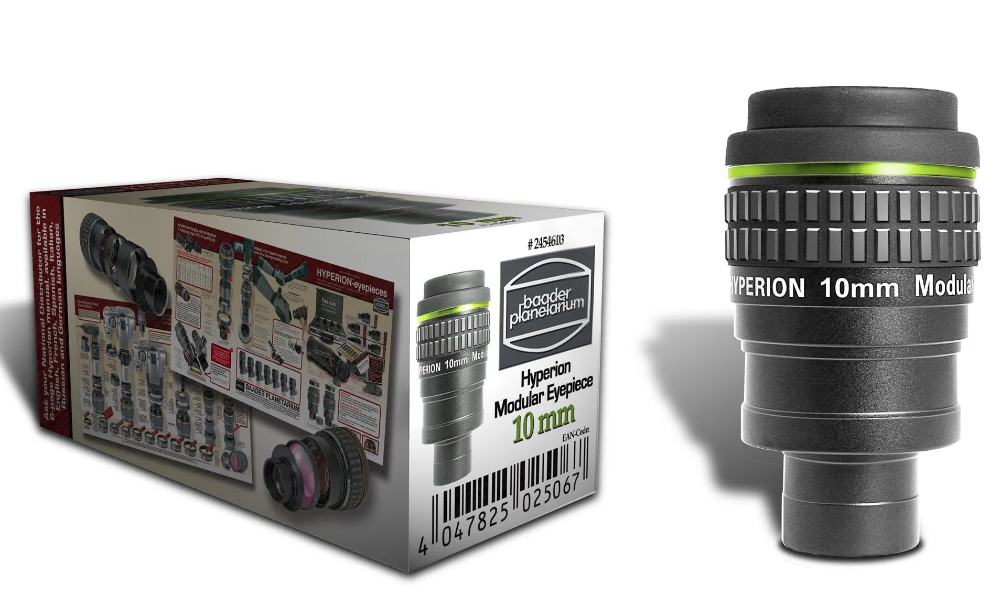
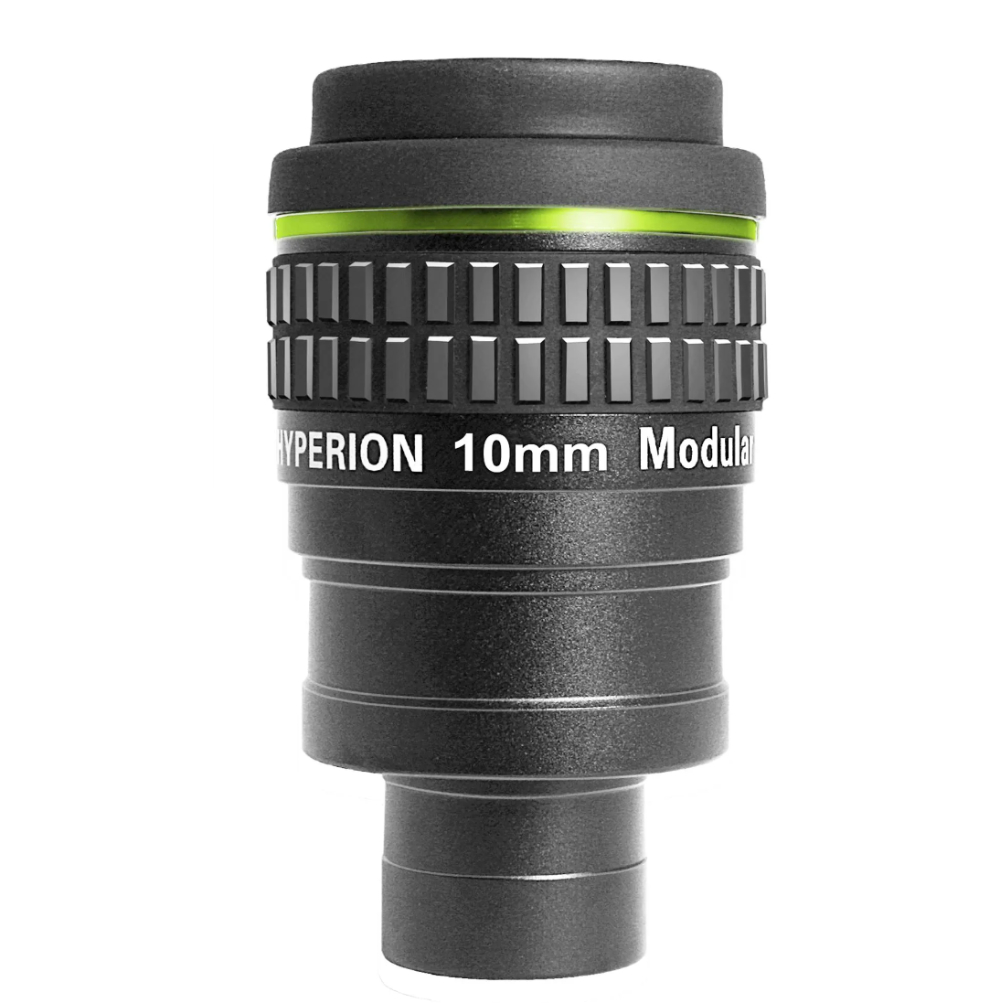
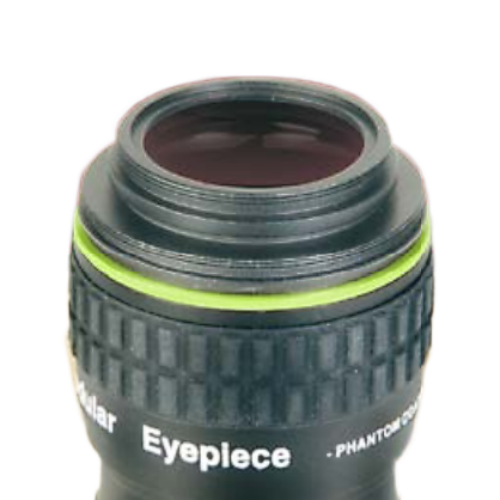
Baader Hyperion 68° Modular Eyepiece 10 mm
Includes a Free Eyepiece Case
Receive a free eyepiece case when you buy this Hyperion eyepiece from High Point Scientific! You will love the way the two piece “bolt-style” case threads together to securely protect your new eyepiece from dust, moisture, and scratches during storage.
Boasting high quality optics, world-class performance, and a unique modular design, the Baader Planetarium Hyperion 68° eyepieces are a wonderful addition to any observing toolkit! These unique instruments are designed to accept optional spacers and include a removable lens group to adjust the eyepiece’s native focal length, essentially providing multiple eyepieces with one unit. Additionally, built-in threads offer streamlined connection to your camera for simple eyepiece projection photography. Whether you plan to enjoy crisp widefield views, or capture stunning images, true high-end performance at an incredible price point is yours for the taking.
The superb optical power of this Baader Hyperion 68° 10 mm eyepiece can be attributed to the high-index water-white glass and the premium Hyperion Phantom Group multi-coatings. Stark, beautiful color correction across the wide field of view is right at your fingertips! Also, observations through this Baader Hyperion 10 mm eyepiece are notably comfortable and relaxing thanks to the extra-large eye lens and generous 20 mm eye relief. Modular in design, you have the ability to add user-supplied spacers or remove the first group of lenses of this eyepiece, changing the effective focal length ranging from 6.1 mm to 22.4 mm. Read more about the variable focal lengths in the "Modular Design: How it Works" section below. Under the rubber eyecup, you’ll find two system threads (M43 and SP54) for easy attachment to your webcam, DSLR, or video camera. Multiple Baader adapters and extenders are available for add-on, helping you adjoin your camera with ease!
Baader Hyperion 68° Eyepiece At a Glance
|
|
|
|
|
|
Modular Design: How it Works
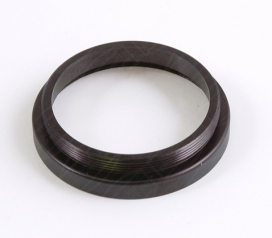
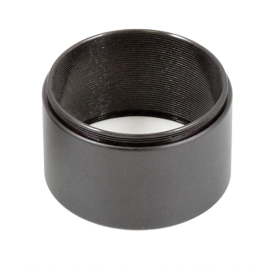
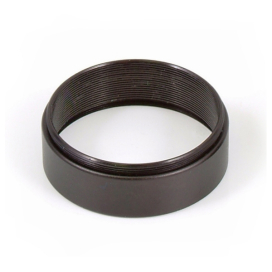
The Baader Hyperion 68° Modular Eyepieces are designed with a detachable first lens group built into the 1.25" barrel. Unthreading of this lens group exposes M48 threads that accept 2" Baader Planetarium Finetuning rings to increase the space between the internal lenses. Simply unscrew this 1.25" section, add in your optional Finetuning Ring, reattach the 1.25" section, and enjoy an altered focal length! Two Finetuning Rings are available for add-on: 14 mm and 28 mm. In addition to adding spacer rings to adjust the focal length, you can simply remove the first lens group in the 1.25" barrel to achieve a much longer focal length. Want to add a 2" filter? Easily do so by unthreading the 1.25" barrel, joining your filter to the exposed M48 threads, then reintroducing the 1.25" barrel. Check out the chart below for the full span of focal lengths available with the Baader Planetarium Modular 68° eyepieces!
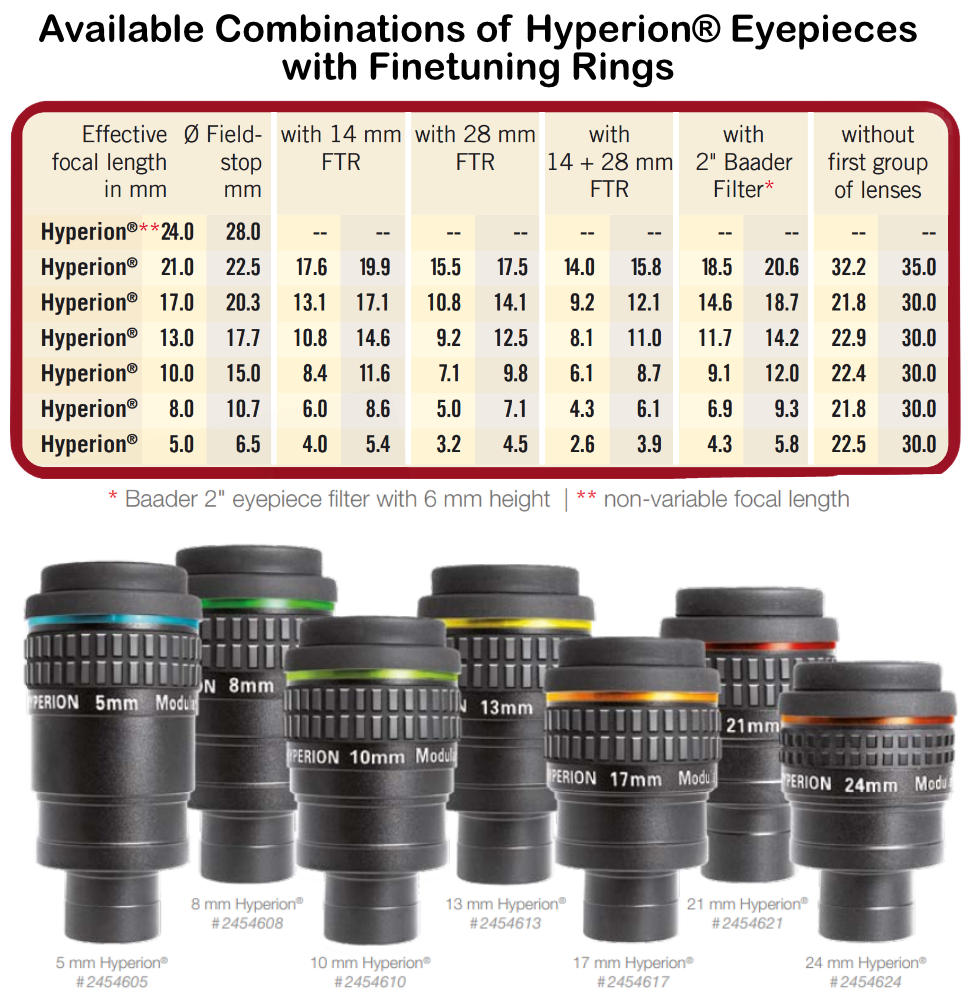
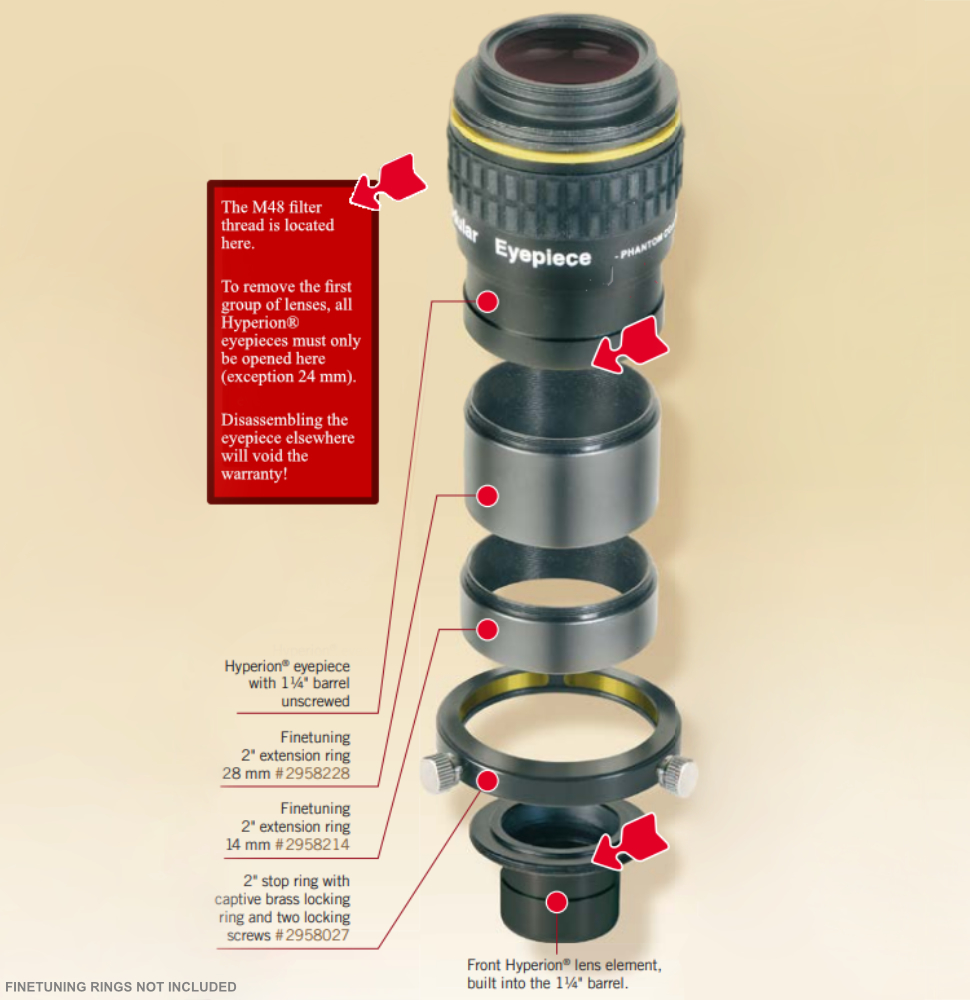
Quality Crafted & Designed for Crisp, Immersive Views
The Baader Planetarium Hyperion 68 degree Modular Eyepieces offer top-tier performance and unique photo-visual features at an incredible price. Versatile and built with quality in mind, these Baader instruments are a must have within your observing toolkit. Read on as we take a deeper look at the outstanding features offered!
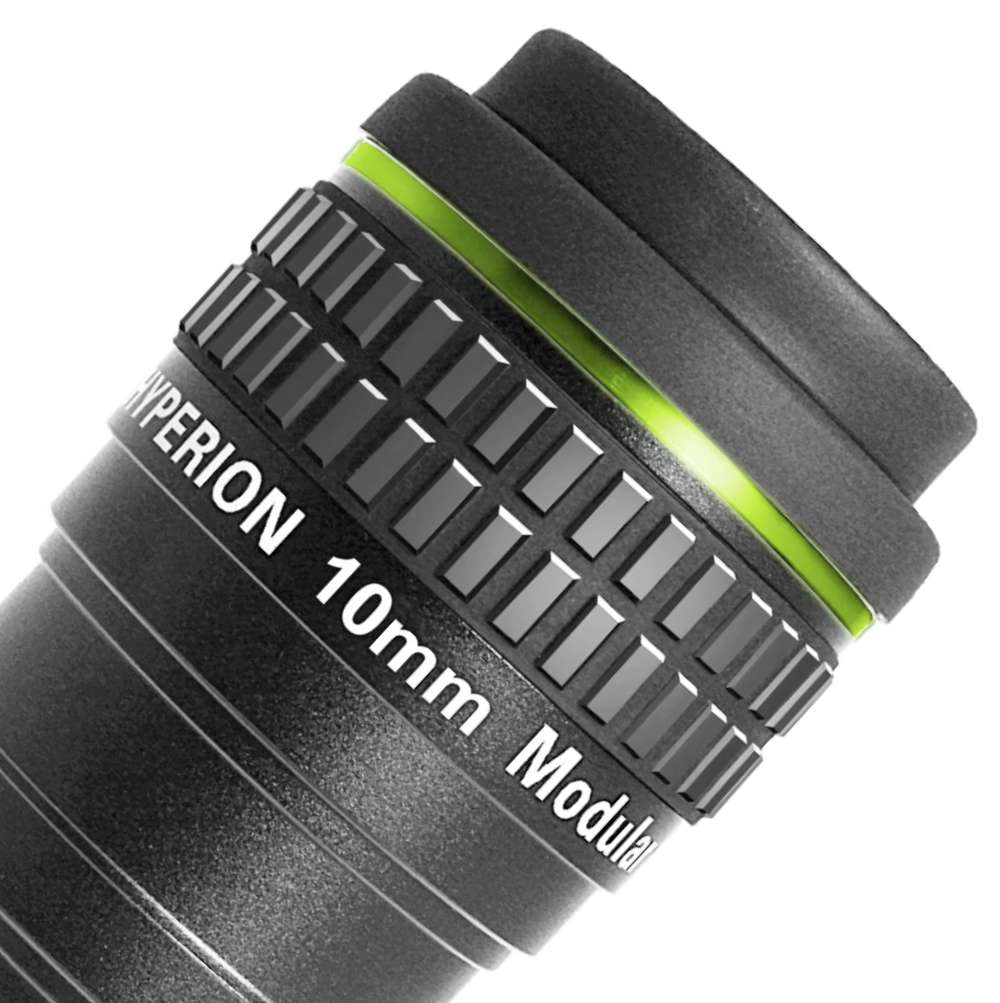
Outstanding Optical Quality
The Baader Hyperion 68° Modular Eyepieces are constructed with high grade water-white glass for crystal-clear views with minimal scatter. The internal lenses present exceptional color correction free from the yellow or bluish tint seen on other, lower quality eyepieces. The high-index glass elements deliver low distortion and astigmatism, even on scopes as fast as f/4. Bolstering clarity, these lenses are fitted with the advanced Hyperion Phantom Group multi-coatings specially designed for the Hyperion eyepieces. This optimized coating technology means fainter stars and a darker background sky, helping you observe the night sky with outstanding detail!
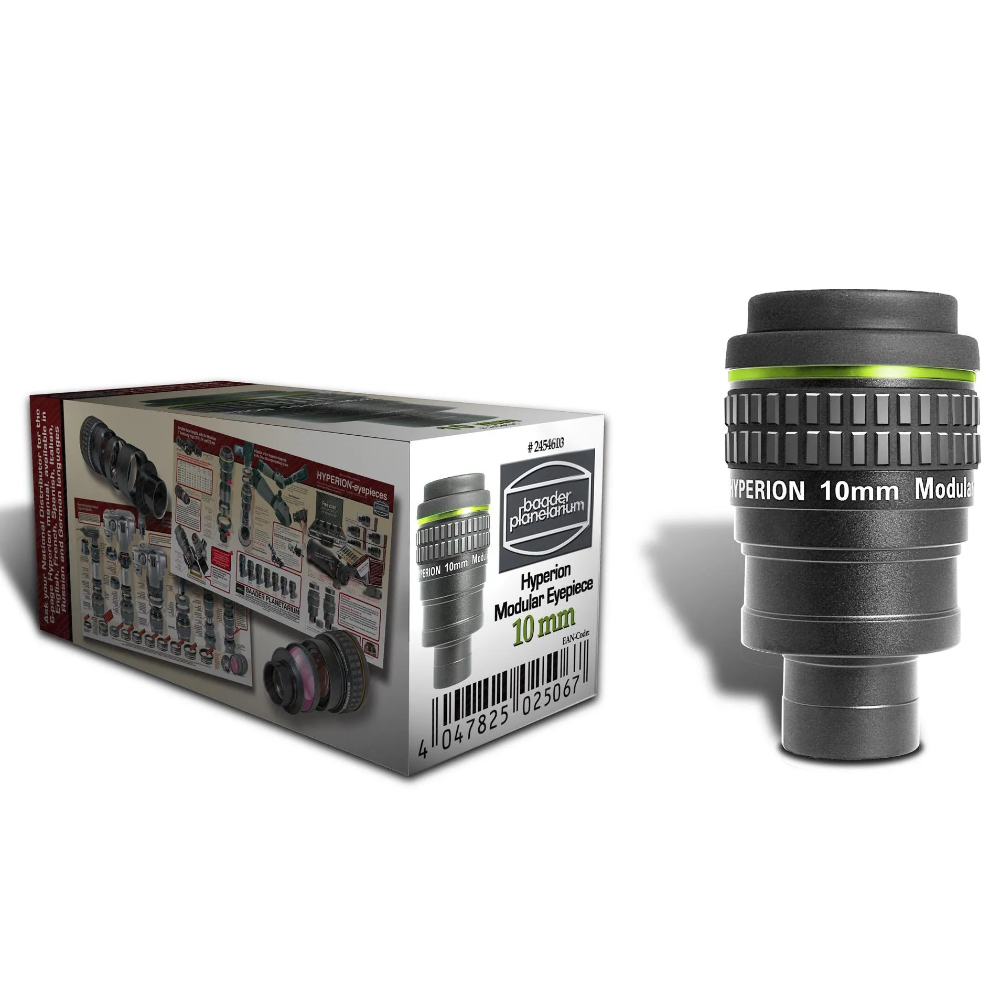
10 mm Focal Length
This Baader Planetarium Hyperion Modular 68° eyepiece boasts 10 mm of focal length. The ratio of telescope focal length and eyepiece focal length (i.e. your system’s magnification), will help you determine which celestial objects could be viewed and how clear your overall image will be based on your local seeing conditions. To calculate magnification, take your telescope focal length and divide it by your eyepiece focal length. A standard 1200 mm focal length Dobsonian paired with this 10 mm Hyperion eyepiece will yield a magnification of 120x, a wonderful rate for up-close sights on bright, compact celestial objects. To take a deeper dive within this topic, take a look at our Ultimate Telescope Eyepiece Guide found within our Astronomy Hub.
Compatible with both 2” and 1.25” Focusers
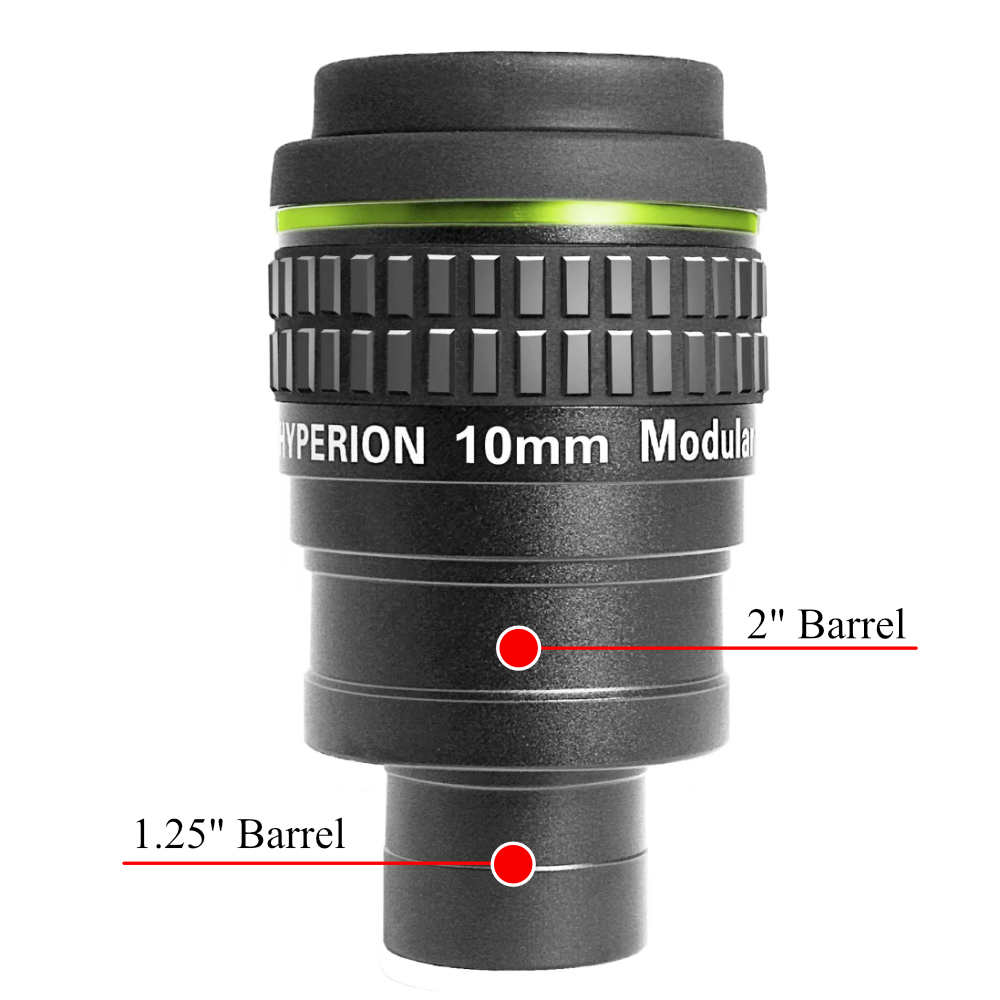
The innovative design of the Baader Hyperion Modular 68° eyepieces offer use with both 1.25” and 2” focusers. The bottom 1.25” barrel adapts seamlessly with smaller scopes and more compact diagonals, while the full-length (0.94" long) 2” barrel built into the housing of this eyepiece opens the doors for use with larger equipment. The first group of lenses is located inside the 1.25” nosepiece. Removal of this section offers use as a standalone 2" eyepiece with a different focal length (now 22.4 mm from 10 mm). As a helpful add-on, the Baader Hyperion 2" Finetuning Stop Ring (not included) prevents the 1.25" eyepiece barrel from damaging your diagonal’s mirror or prism by putting a hard stop on its sitting position. This is especially useful when Baader Finetuning Rings have been added, lengthening the original eyepiece body.
Precision Engineered
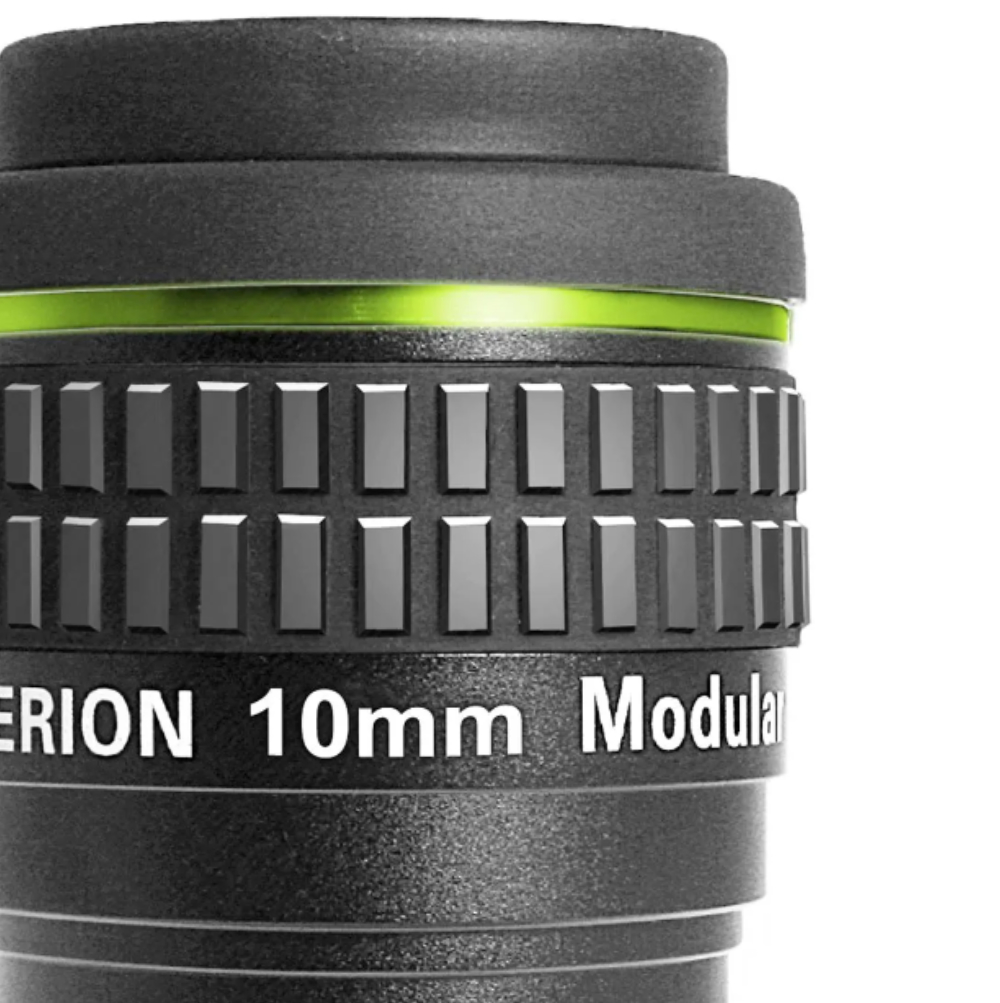
Constructed with a sleek precision-machined body, hard anodizing, and soft, folding rubber eyecups, this Baader Planetarium Modular 68° eyepiece is built with the utmost quality in mind. Each Hyperion comes with protective lens caps to keep your eyepiece safe when not in use. The careful opto-mechanical design and inclusion of interior baffling eliminates stray light and ghost reflections for maximum clarity. Within the eyelens is a pitch black interior to further dampen unwanted stray light. Additionally, the broad upper housing and tactile rubber grip provides secure handling even with gloves on.
Great for Binoviewing!
The Baader Hyperion Modular 68° eyepieces are a standout choice for binoviewing. When compared to some wide field eyepieces developed especially for binoviewing, the Hyperions were superior in every aspect: more comfortable view with better eye relief, smaller housing diameter at the eyelens gives more nose-room, better coatings for better contrast, a wider field, and half the cost. In addition, the Hyperion field stop locations have been re-designed and optimized to give the shortest focus position possible, a feature incredibly useful for binoviewer use.
An Ideal Projection Eyepiece
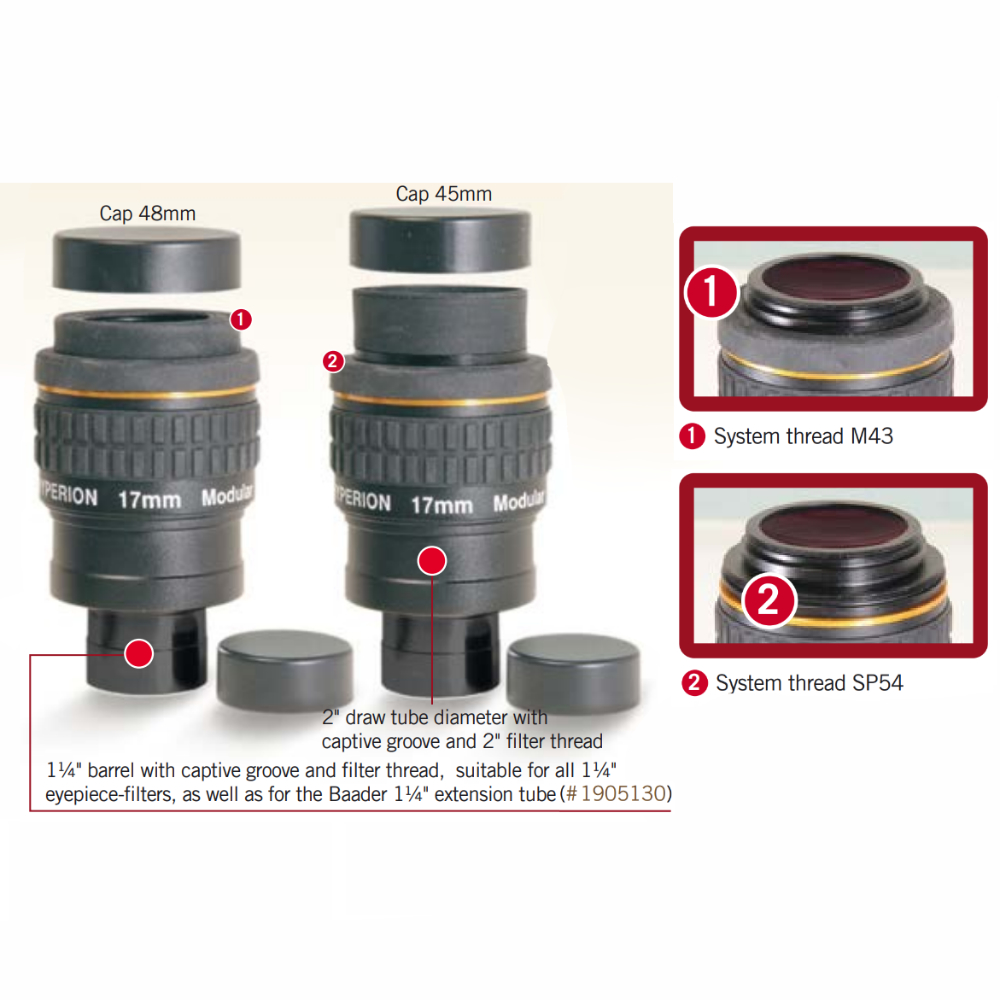
Ready for streamlined eyepiece projection imaging? With the built-in threads on the top of this Baader Hyperion 68° Modular Eyepiece, attaching your camera is a breeze. Simply remove the rubber eyecup and thread-protecting silicon ring to expose the M43 or SP54 threads. The extensive number of Baader adapters enable coupling to just about any camera, DSLRs, small webcam-like cameras, and even some video-cameras for a host of applications. Take a look at this comprehensive guide on digiscoping with your Baader Planetarium 10 mm 68° Modular Eyepiece, diving into the various connection methods available!
Understanding Exit Pupil
The exit pupil of your eyepiece is the diameter of the beam of light exiting your eyepiece, and it’s an important factor in determining how bright your image will be and what objects are best suited for observation. We measure the exit pupil by its diameter in millimeters, with the bigger the diameter, the brighter the image. Exit pupil is calculated with the following equations: Exit Pupil = Telescope Aperture (mm) ÷ Magnification, or Exit Pupil = Eyepiece Focal Length ÷ Telescope Focal Ratio. Large (5-7 mm) and medium (2-5 mm) exit pupils are wonderful for deep sky objects. Small exit pupils, on the other hand, perform well for small, bright objects like the planets or the lunar craters. This Baader Planetarium Hyperion eyepiece has a focal length of 10 mm. A standard f/6 telescope paired with this eyepiece will yield an exit pupil of 1.67 mm, a great option for viewing our planetary neighbors, our Moon, and bright nebulae and star clusters!
Frequently Asked Questions
What can I see with the Baader Hyperion 68° 10 mm Modular Eyepiece?
Boasting a focal length of 10 mm, this medium-to-high powered eyepiece is wonderful for observing compact objects and getting up close and personal with larger deep sky targets. For instance, pairing this 10 mm eyepiece with a 1200 mm focal length telescope will yield a magnification of 120x. This is a great rate for observing the Crab Nebula, the Dumbbell Nebula, the core of the Orion Nebula, and plenty more!
How do I attach the Baader finetuning rings to change the focal length of my Hyperion Modular eyepiece?
Adding the Baader finetuning rings is quick and easy. Simply unthread the detachable first lens group to expose the M48 threads at the bottom of your eyepiece, adjoin your finetuning ring, reattach the first lens group, and you’re all set. The two user-supplied finetuning available are the 14 mm and the 28 mm. Please be sure to refer to this guide on proper opening of Baader Hyperion eyepieces to prevent accidental void of warranty.
How do I attach my camera to my Baader Hyperion eyepiece?
These Hyperion Modular eyepieces house M43 and SP54 threads underneath the protective silicon ring atop the eyepiece. Baader offers a wide variety of adapters to adjoin your camera to these threads for projection photography. While determining which adapters needed depends on your specific setup, this comprehensive guide on digiscoping with your Hyperion eyepiece goes in depth on the various connection methods available!
How do I calculate magnification?
Magnification can be calculated by taking your telescope’s focal length and dividing it by your eyepiece’s focal length. For instance, if we have an 8” 1,200 mm focal length Dobsonian telescope, and we’re using the Baader Hyperion Modular 10 mm eyepiece, the magnification will be as follows: 1200/10 = 120x. It’s important to note that magnification influences how bright your image will be, as the higher magnification, the dimmer your image will become (when using the same aperture). Be sure to check out our Ultimate Telescope Eyepiece Guide for more on this topic!
What’s the difference between apparent field of view (AFOV) and true field of view (TFOV)?
Apparent field of view refers to how large the image is to your eye. For reference, a single bare human eye has a field of view of approximately 150°. These Apertura Panorama eyepieces offer an 82° AFOV for a well-immersed experience. True field of view, on the other hand, refers to the angular diameter of the “chunk” of the sky you are observing. TFOV is determined by dividing your AFOV by your system’s magnification. For instance, an 8” 1,200 mm focal length Dobsonian paired with this Baader 10 mm 68° Hyperion eyepiece will yield a TFOV of 0.57°. The full disk of the Moon, for example, has an angular diameter of 0.5°. For more on this topic, our comprehensive Ultimate Telescope Guide provides an in-depth look!
Astronomy Hub: Your one-stop-shop for Astronomy Knowledge!
Our Gear Experts have compiled a wealth of information to help you get the most out of your telescope! Below you’ll find links to articles, videos and "how-to" guides. Just one more reason that our Astronomy Hub is a one-stop-shop for all your astronomy and astrophotography needs!
| The Best Telescopes of the Year |
| Best Telescopes For Urban Stargazing |
| What's in the Sky This Month? |