
Celestron StarSense Explorer DX 5" SCT
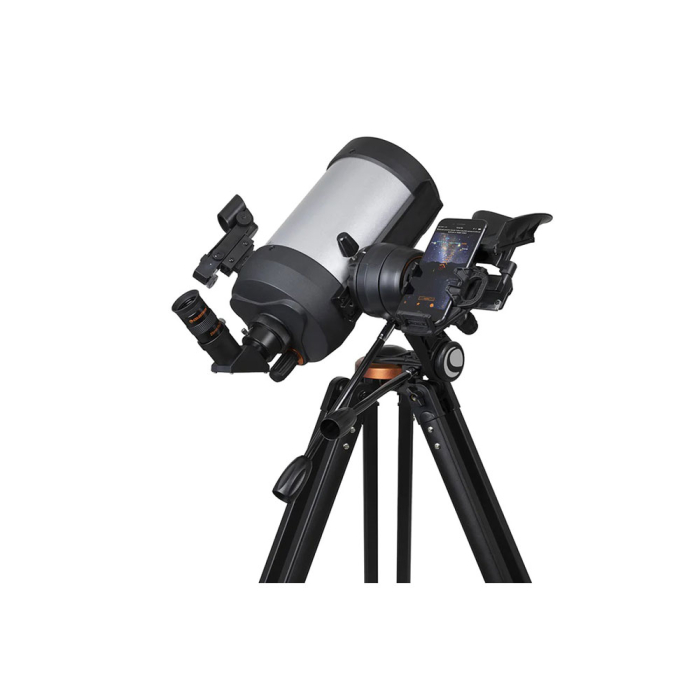

Powerful & Perfect for Beginners. The Celestron StarSense Explorer DX 5" Schmidt-Cassegrain
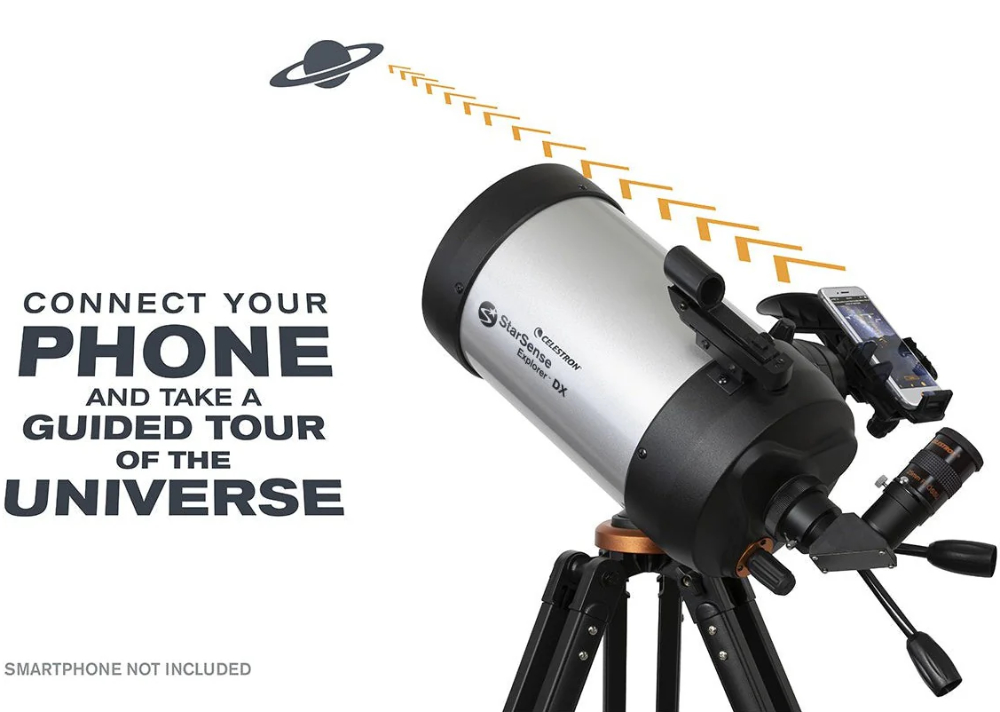
Celestron has reinvented the manual telescope with StarSense Explorer—the first telescope that uses your smartphone to analyze the night sky and calculate its position in real time. This StarSense Explorer DX is ideal for beginners thanks to the app’s user-friendly interface and detailed tutorials. It’s like having your own personal tour guide of the night sky!
Backed by the optical prowess of Celestron, you can expect outstanding sights through your eyepiece! All air-to-glass surfaces are coated with Celestron's StarBright XLT optical coatings to visibly increase contrast and light transmission for brighter deep space views. With StarBright XLT, you’ll be able to discern subtle details while viewing the Moon and planets as well as faint galaxies and nebulae. Even if you live in a light polluted city location, StarSense Explorer is advanced enough to be able to pick out Jupiter, Saturn, Venus, the Orion Nebula, double stars, and a few more of the most famous celestial objects! An ultra-stable altazimuth mount provides a sturdy foundation for this StarSense Explorer DX. Slip clutches and geared slow motion controls in both axes help you move the telescope smoothly and zero in your target. As celestial objects appear to drift across the night sky, you’ll be able to follow them with just a few turns of the knobs. It’s all anchored by an adjustable, full-height tripod. The best part? Everything you need comes within the box, no external tools required!
A High Quality 5” SCT Packed With Features!
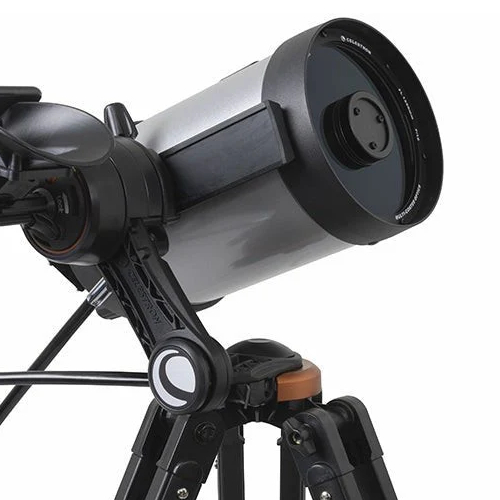
With a large 5" Schmidt-Cassegrain optical tube—Celestron’s tried-and-true optical design for over 50 years—this telescope has enough light gathering ability to bring out impressive detail in celestial objects while remaining compact and lightweight. You can expect sharp, bright views of Jupiter’s four Galilean moons, its cloud bands and Great Red Spot, the rings of Saturn, the trapezium in the Orion Nebula, and the beautiful Pleiades Open Star Cluster. Couple this with the innovative StarSense technology, and you have yourself an outstanding system for exploring the night sky. Read more about this Celestron StarSense Explorer DX 5” SCT below!
Powerful, Bright, Versatile
When it comes to determining the capabilities of a telescope, focal length and aperture play a big role in what is available for viewing. The larger the aperture, the more light gathering power of the telescope and the brighter objects will become. This Celestron StarSense Explorer has a focal length of 1250 mm and an aperture of 127 mm (5”). At this aperture, incredible views of our universe, from our solar system to deep space objects, are easily within your reach. Celestron has included a 25mm and a 10 mm eyepiece so you can start using the telescope right out of the box. The 25 mm produces a magnification of 50X and the 10 mm eyepiece provides 125X magnification for a closer look. Using the included eyepieces, discover our nearest celestial neighbor, our Moon! Get up close and personal with the endless craters on the Moon such as Tycho and Copernicus and discover the intricate details revealed by the terminator line. Not only is our Moon remarkable in the eyepiece, Jupiter’s moons become apparent as well! Get to know Jupiter’s Galilean Moons: Ganymede, Callisto, Io, and Europa. Also, the cloud bands on Jupiter and the stunning sight of the Cassini division on Saturn are incredible through the Celestron StarSense Explorer DX 5” SCT. Not only is our solar system spectacular through this reflector telescope, bright deep space objects such as galaxies, nebulae, and star clusters are extraordinary as well. Meet the magnificent Andromeda Galaxy, dive into the beauties of the Orion Nebula, and get lost counting the stars within the Hercules Cluster!
Easy to Set Up
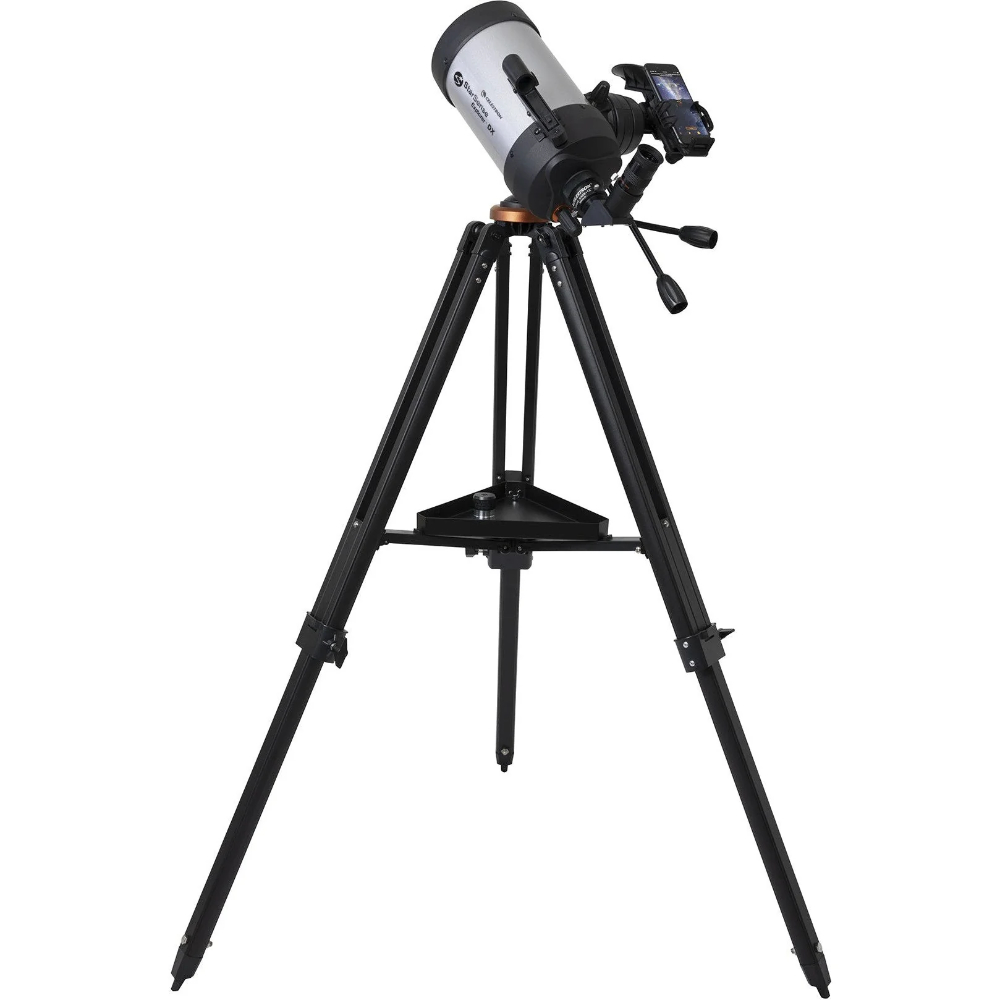
When it comes to ease of set up, leave it to Celestron. Everything you need to get ready for a stargazing session is in the box. No adapters, tools, or external equipment necessary! This Celestron StarSense Explorer Explorer DX 5" SCT can be used anywhere, as it is fully manual and no power is required to get incredible views of space. There is no complicated mount alignment required by the user and no elaborate instructions for set up. This Celestron StarSense Explorer DX 5” SCT can be set up anywhere in the world and its portable design makes it perfect for camping trips or travelling to dark skies!

Easy to Use
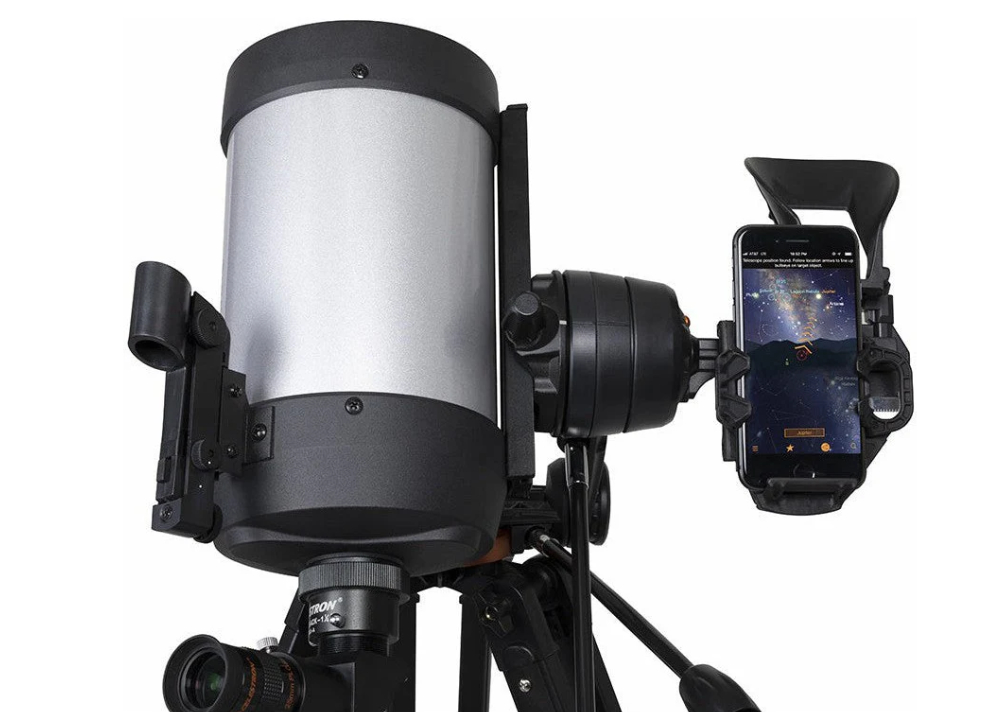
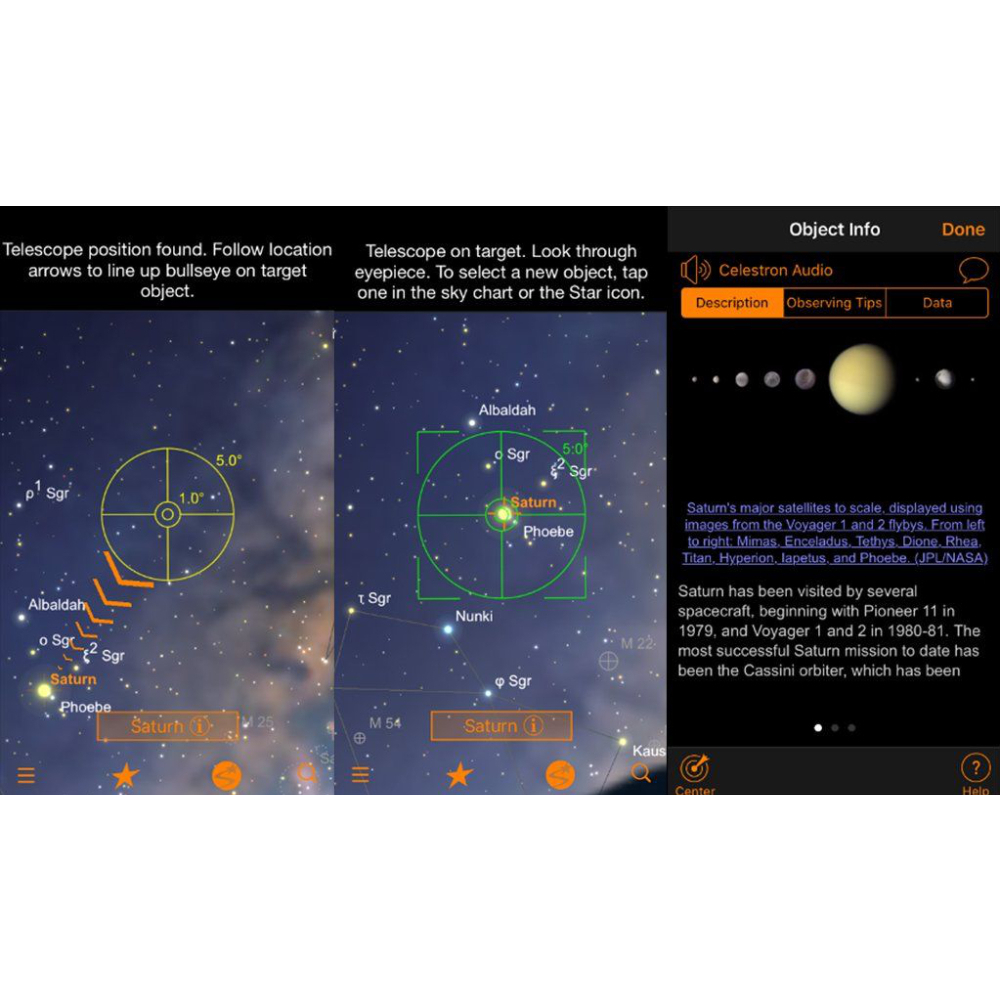
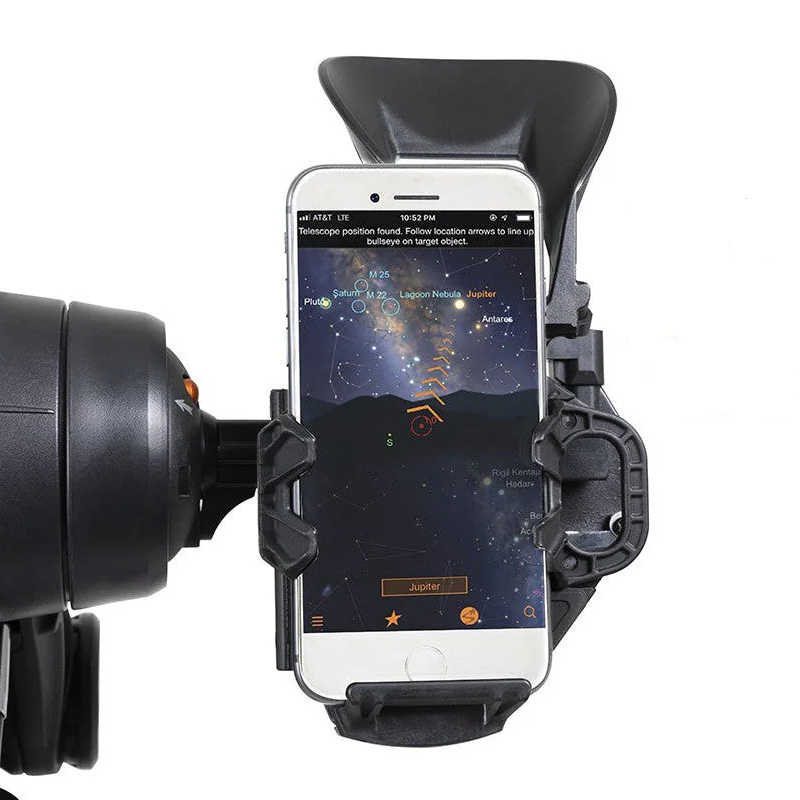
Leave complicated star charts, imprecise planetarium apps, and computerized mounts behind. With StarSense Explorer, locating objects has never been easier, faster, or more accurate. Within minutes of setting up the telescope, you’ll be navigating the sky with confidence. Simply place your phone in the unique StarSense dock and launch the StarSense Explorer app. After aligning your phone to the telescope’s optics (a quick, 2-minute procedure), StarSense Explorer generates a list of celestial objects currently visible. Make your selection and arrows appear onscreen, guiding you as you move the telescope. When the object is ready to view, the bullseye turns green.
Observatory Grade Software in the Palm of Your Hand!
By taking the concept of plate solving, a technique used by professional astronomers to determine their precise location when pointed at the sky, Celestron uses the camera of your smartphone to take photos of the sky and the StarSense Explorer App can accurately determine where the telescope is pointing. By knowing exactly where the telescope is pointed to in the night sky, it can then give you precise instructions on where to move your telescope to find your desired target. This unique method gives your manual telescope the capabilities of an observatory class system! After following a quick and simple two-step process to align your smartphone’s camera with the telescope's field of view, the Celestron StarSense Explorer App shows you the current night sky based on your location and a bulls eye to show you where your telescope is currently pointing. The next step is to observe! Find a good selection of targets from the Tonight's Best observing list, which shows the most popular objects that are currently visible from your location. Depending on the time of year, your location, and the time of night, the list might include planets like Jupiter or Saturn, galaxies, nebulae, star clusters, and more. Follow the arrows displayed on your phone and be impressed by the views within your eyepiece!
Smartphone Compatibility and StarSense Sky Recognition Technology
This StarSense Explorer is compatible with Android 12 and later, iOS 18 and later, and the minimum supported iPhone models are XR, XS, and XS Max. If you have an older phone with the StarSense app installed, you will still be able to utilize the app, though bear in mind it cannot be downloaded again if it is uninstalled. Take a look at the complete compatibility list for further detail. StarSense Explorer uses patented technology and your smartphone to determine exactly where the telescope is pointed in the night sky. A Lost in Space Algorithm (LISA), like the ones satellites use in orbit to correctly orient themselves, helps the app match star patterns it detects overhead to its internal database.
Astronomy Hub: Your one-stop-shop for Celestron StarSense Explorer Knowledge!
Our Gear Experts have compiled a wealth of information to help you get the most out of your Celestron StarSense Explorer series telescope! Below you’ll find links to articles, videos and "how-to" guides. Just one more reason that our Astronomy Hub is a one-stop-shop for all your astronomy and astrophotography needs!
| High Point Guide to Telescope Eyepieces |
| Why is the View Upside Down in My Telescope? |
| How to Observe Saturn |
| How to Choose a Solar Filter: Measuring Your Telescope & Solar Filter Calculator |