All coupons, tax, shipping, store credit and gift cards will be applied during checkout.

Silhouettes of glass and metal, refractor telescopes, and optical tube assemblies, recall the essence of sophisticated time machines. Their offerings include achromatic and apochromatic refractors, with lens apertures varying from 60 mm to exceeding 150 mm. They make it easy for the endless possibilities of spacecraft design to mix with people's natural interest. They are the best thing for astronomers because they let them see the moon, planets, and star groups very clearly. Because they have exact lenses and sealed tubes, they are easy to take care of and look classic, so stargazers of all kinds can trust them. Reflector optical telescopes let people see the stars up close, clearly, and admirably, whether they are on a mountain or in a dark sky preserve.
×
![]()
Highlighted Products
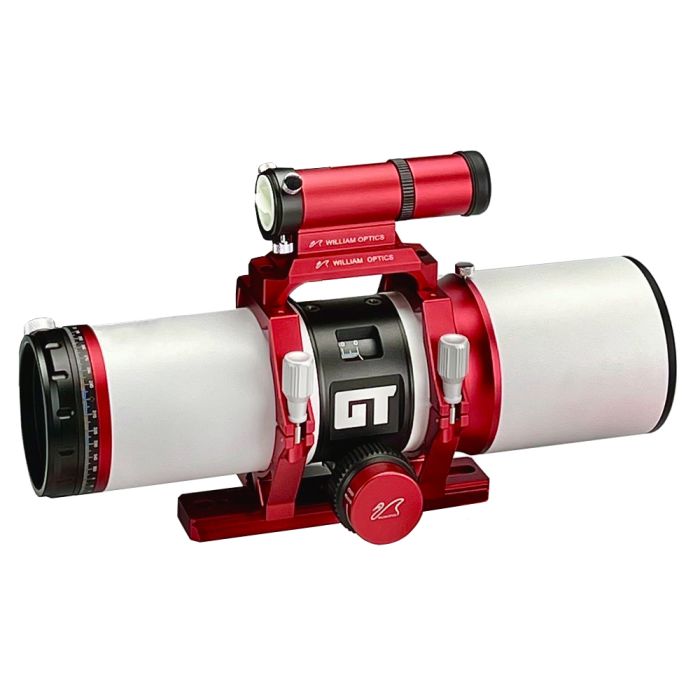
William Optics WIFD Gran Turismo 81 APO Refractor w 32mm UniGuide - Red
The William Optics Gran Turismo 81 is an apochromatic triplet refractor with a unique focuser design. It provides an aperture of 81 mm and a focal length of 478 mm. It features FPL-53 apochromatic glass for high-contrast and sharp images. The patented "William Optics Internal Focus Design" focuser, high-quality components, and accessories make the Gran Turismo 81 a stylish, capable, and innovative astrograph.
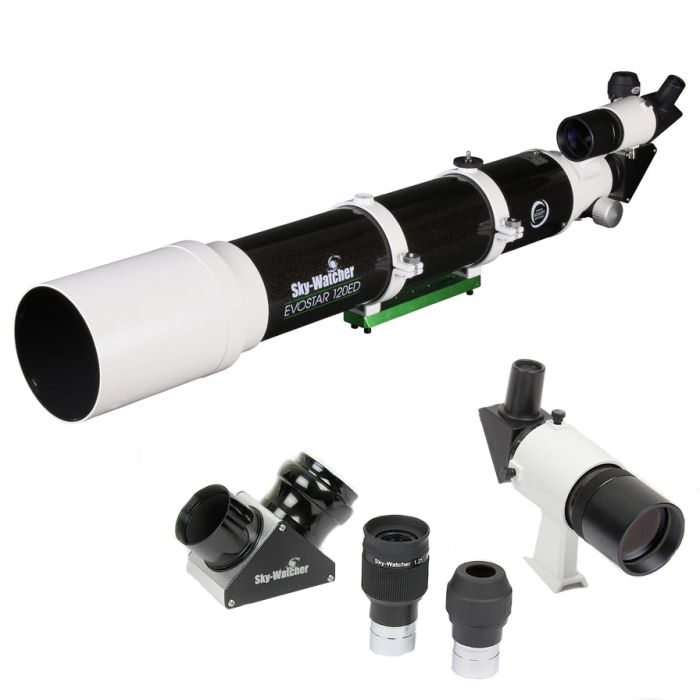
Sky Watcher Evostar PRO 120 ED APO OTA with Aluminum Carry Case
Revolutionary optical characteristics of this resilient Sky-Watcher EvoStar PRO 120 mm f/7.5 ED APO OTA telescope yield clear images. It can look into items beyond our solar system, including binary stars, lunar craters, and volcanic craters. Focusing on the middle, airy disk and the early diffraction rings, the most advanced imaging technology—a refractor—allows sharp images.
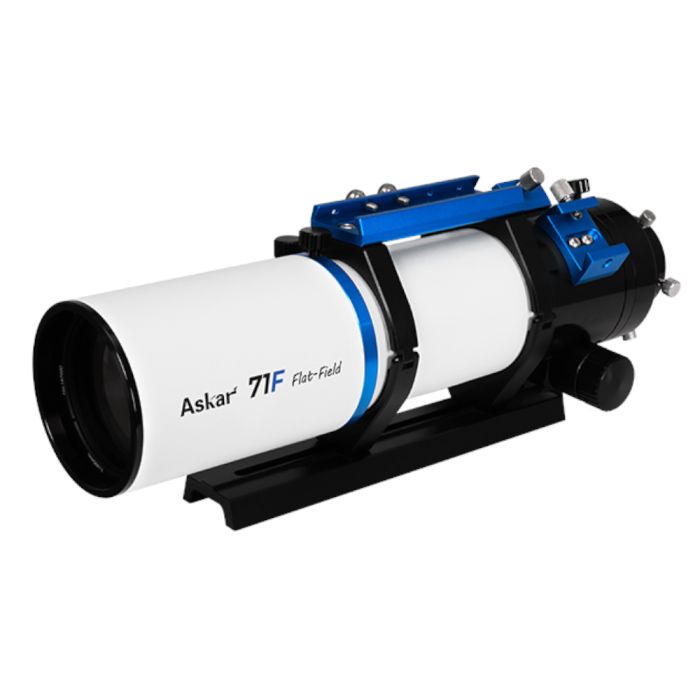
Askar 71F Flat-Field Refractor
Look no further than the Askar 71F Flat-Field Refractor if you want a hassle-free, reasonably priced, and flexible high-quality telescope! This simple refractor has four lens elements; hence, backspacing is unnecessary and has a natural flat field. Apart from being ideal for astrophotography, the supplied visual accessories let you view day and night straight out of the box.
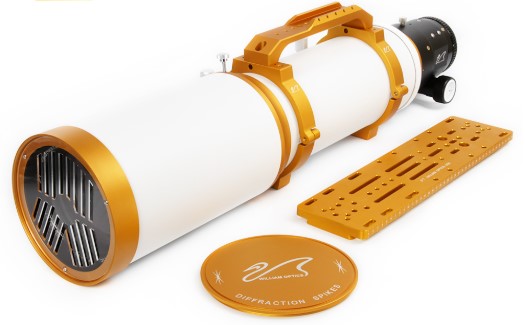
William Optics Fluorostar 132 Refractor with 3.7" Rack and Pinion Focuser
With three elements, or triplets, spread apart in air, the William Optics FLT132 IV objective shines. This scope is for astronomical photography because to its exceptionally high level of sharpness and excellent color correction. This high-quality telescope is made possible by the use of STM coatings with FPL-53 glass. In order to ensure precise camera alignment, the scope is equipped with a graduated scale. A 3.7" Rack & Pinion style focuser, which can be spun 360 degrees, is used by the FLT132. Sturdy construction ensures its longevity. Large aluminum knobs ensure easy operation. Absolutely no plastic in this telescope! A solid piece of high-grade aluminum makes it up. A dew shield cover with engravings, a focuser that can be rotated 360 degrees, and an anodized finish round out the features.
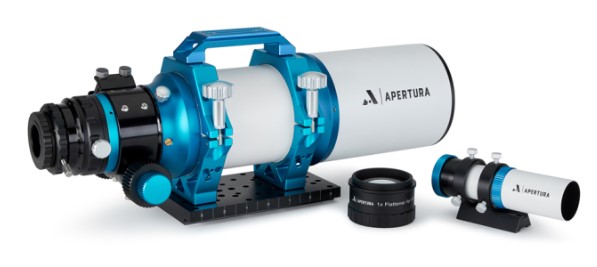
Apertura 90 mm Triplet Refractor with Field Flattener, Hard Case, and Guidescope
For all astronomical and photographic needs, choose this 90 mm apochromatic refractor by Apertura. Its sharp and potent optics are its hidden weapon. This 90 mm apochromatic refractor, like all Apertura products, expertly balances performance and affordability. Electrifying blue accents adorn the white body and dew shield/lens shade that retracts. An additional lovely decorative touch is the laser cutting of the Apertura "A" logo onto the skeletonized tube rings. Equipped with an abundance of top-notch features and components, the most powerful and opulent apochromatic refractor from Apertura is sure to impress. With the two included adapters, one for 2.5" to 2" and another for 2" to 1.25", this 90 mm apochromatic refractor can accommodate diagonals and eyepieces of varying sizes.
More About This Category
Essential parts of a telescope are optical tube assemblies (OTAs). Hence, refraction provides the ideal solution for both regular and professional users. Particularly for planet, moon, and binary star observations, these kinds of telescopes gather and combine light using lenses to create detailed images with excellent contrast. Usually built with an objective lens at the front section of the tube, a refractor OTA gathers light and channels it to create a picture at the focal plane.
The eyepiece at the opposite end enhances this image for the spectator. Since their construction assures that they are closed systems, refractors are more resistant to dust and moisture than other types of telescopes, such as reflectors. By reducing air currents inside the tube, this closed-tube construction aids telescopes with open tubes in producing more precise images.
One cannot stress the value of refractor OTAs, especially for those who prioritize image quality and low maintenance. Refractors usually keep their optical alignment well over time, lowering the need for frequent corrections, unlike reflector telescopes, which depend on regular collimation—alignment of mirrors. Refractors are an excellent alternative for individuals looking for a "grab-and-go" telescope with constant performance free from much maintenance. Moreover, refractors' rigid and sealed construction makes them quite robust; with reasonable care, they can sometimes last decades.
What are chromatic aberrations, and how would viewing be affected? Chromatic aberrations or color fringing result from different light wavelengths focusing at various points. Suitable refractors, especially those with ED (extra-low dispersion) glass or apochromatic designs, lessen this effect.
Why choose a refractor over a reflector or a compound telescope? Another question that comes to mind when choosing telescopes and the answer is simple, refractors are well known for generating precise, high-contrast images with low upkeep. Another frequently requested topic is, "What size of refractor OTA should I buy?" The response relies on the observer's needs. Beginners might find a 60–100mm aperture appropriate, while more experienced users may wish for a 120–150mm aperture for detailed lunar and planetary views.
Refractor Telescope Optical Tube Assemblies (OTAs) are an excellent choice for astronomers seeking sharp, high-contrast views with minimal maintenance. Their sealed design, durability, and straightforward operation appeal to beginners and experienced observers. Although long-term performance depends on refractor OTAs, maintenance is relatively simple. Refractors are sealed systems, so they need less regular maintenance than other kinds of telescopes. Use a blower or soft brush to remove loose particles; use a microfiber cloth dipped in the lens cleaning solution for tough stains. Using a desiccant in the storage case helps preserve the optics for individuals living in humid conditions.
Providing some of the best examples will help you decide whether to integrate one into your astronomical toolkit since it offers various features and capabilities to match various observing needs and budgets. Imagine yourself ready to see or photograph the night sky with sharpness and clarity unattainable with any other telescope design. Under such circumstances, you should look at the offers of a great refractor optical tube assembly!
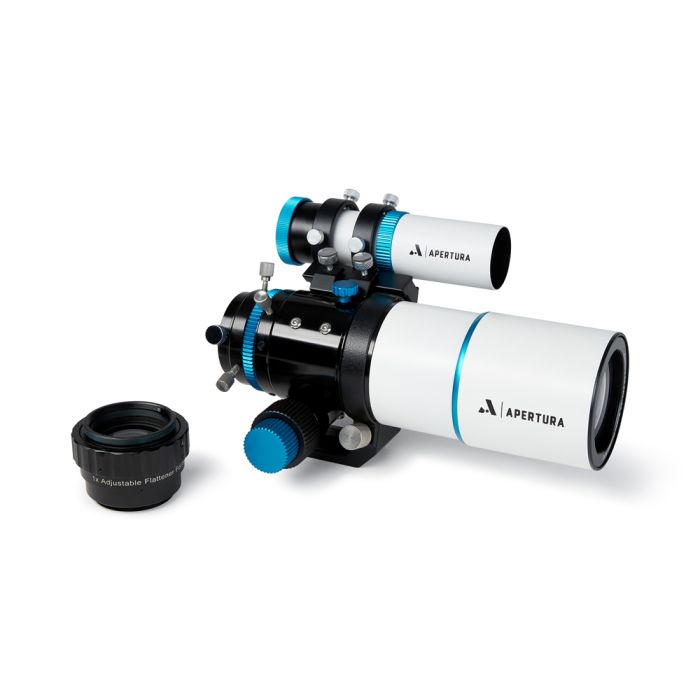
With Apertura's 60 mm refracting telescope using Ohara FPL-53 glass lenses, one achieves outstanding contrast, color correction, and clear images. The modest size of the 60EDR refractor enables easy mounting of it to a camera tripod or alt-azimuth mount. Apart from a built-in camera angle adjustment, a 2" rack and pinion focuser with a 10:1 micro focuser, and a 2" rack and pinion focuser with a 10:1 micro focuser, the telescope also features Complementing both conventional and mini form factor cameras, the Apertura 32 mm guidecope has a focal length of 121.05 mm and an f/3.78 focal ratio. Portable, easy to use, and flexible the telescope is.
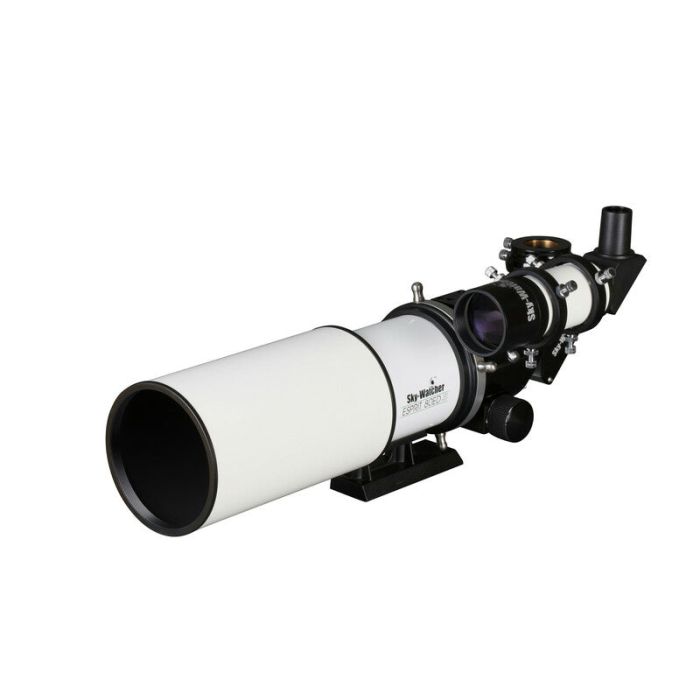
Three internal lenses for best performance, an apochromatic design for color correction, and several lens coatings for light transmission define the Sky-Watcher 80mm ED telescope. Its carrying bag, tube rings, field flattener, Canon camera adaptor, finderscope, and 2" diagonal are For best views and images, the telescope boasts an APO triplet refractor, Schott-BK-7 glass, FLP-53 ED glass, and internal knife-edge baffling. Its 400mm focal length and 80mm aperture provide first-rate astronomical gazing.
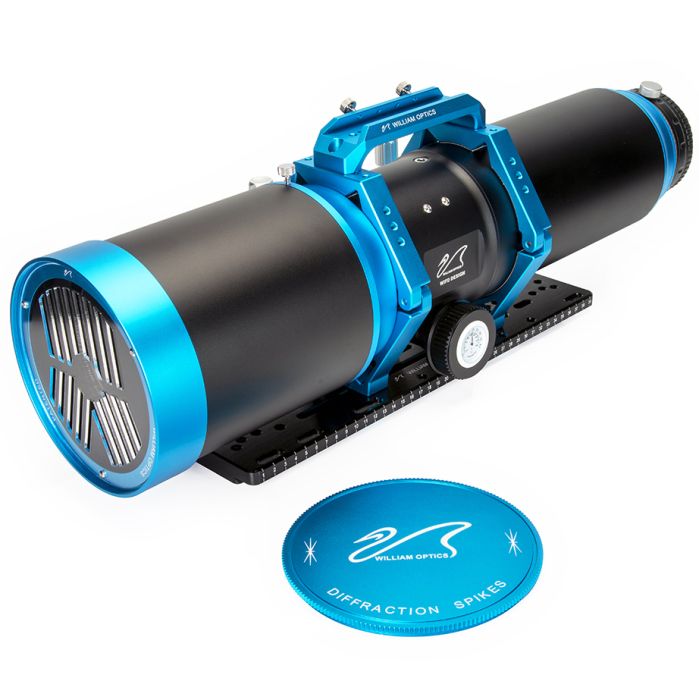
William Optics' portable, large-aperture telescope is a Septuplet APO Refractor designed for astrophotographers. Seven optical lenses provide contrasted, sharp, clean views of heavenly objects. With William Optics' revolutionary internal focus design, fast focal ratio of f/4.8, and other accessories, the Pleiades 111mm refractor shows remarkable performance. By giving the telescope its solid body, vignetting problems are eliminated, and stiffness and stability are guaranteed. Using an EAF-compatible internal focuser design guarantees reliability and helps avoid vignetting. The twin-speed 10:1 Rack & Pinion focuser precisely and smoothly handle the telescope. For a clean and elegant appearance, the Pleiades 111mm refractor is color-coded with the Pleiades range of telescopes.