All coupons, tax, shipping, store credit and gift cards will be applied during checkout.
This video looks at the latest developments in telescope design, with special attention to the renewed interest in reflectors and the steady progress in refractors. Newtonian reflectors, in particular, are attracting astrophotographers for their ability to deliver large apertures at lower cost and making it easier to gather more light and capture faint details. Leading this resurgence is the Apertura CarbonStar 150 Imaging Newtonian, built with a lightweight carbon fiber tube for focus stability, a 0.95x coma corrector for sharp stars and a fast f/4 focal ratio that brings deep-sky objects into view quickly and clearly.
×
![]()
Highlighted Products
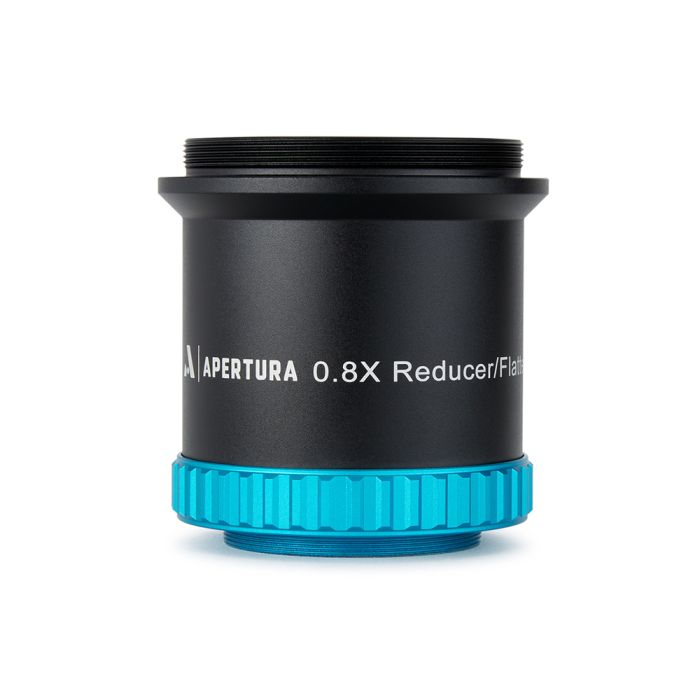
Apertura 0.8x Reducing Flattener for 90 mm Triplet APO Refractor
Offering a corrected field of vision and a broad field of view, the Apertura R-FLAT 0.8x Reducing Flattener improves the Apertura 90 mm Triplet APO Refractor. It reduces the focal length of the OTA to about 430 mm, therefore transforming the f/6 90 mm scope into an f/4.8 astrograph with a higher signal per exposure period.
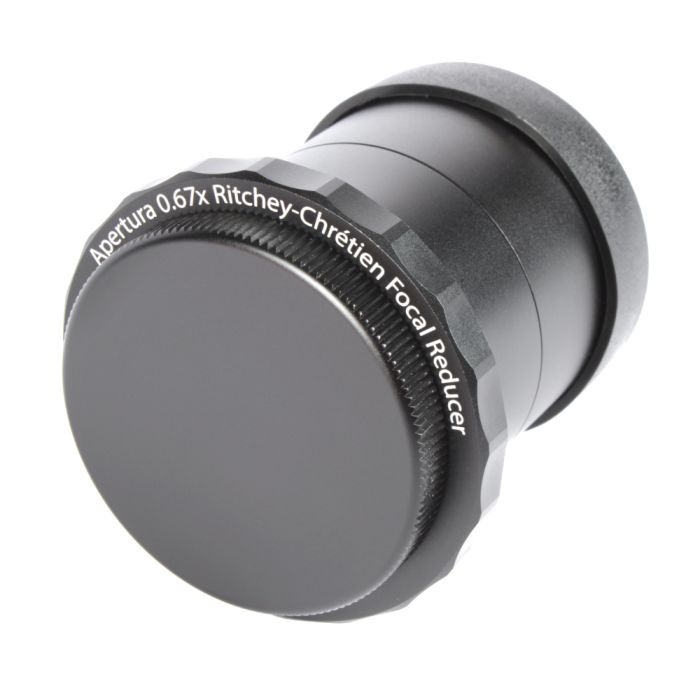
Apertura 0.67x Ritchey-Chrétien Focal Reducer2
Premium optics were produced to enhance Ritchey-Chrétien telescopes; the Apertura 0.67x Ritchey-Chrétien Focal Reducer is a 0.67x focus reduction factor that speeds up captures. The reducer for the Apertura CarbonStar 6" and 8" telescopes fits with a 2" eyepiece barrel and M56 threaded collar for attachment. Its M48 threaded output connection and 55mm back focal design suit astronomical and photographic equipment.
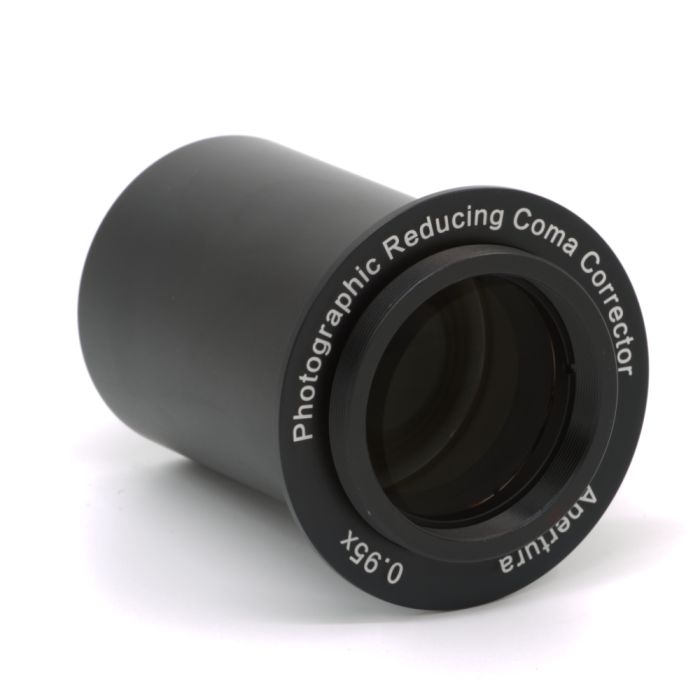
Apertura Photographic Reducing Coma Corrector (PRCC)
Apertura created a Photographic Coma Corrector for the CarbonStar 150 Imaging Newtonian to eliminate coma and enhance image quality. The gadget uses three optical components and a 0.95x reduction rate to correct unfocused light from parabolic reflectors, increasing light accessing the camera sensor. The sleek, anodized aluminum casing of the coma corrector adds minimal weight and might be utilized with several cameras and lenses.
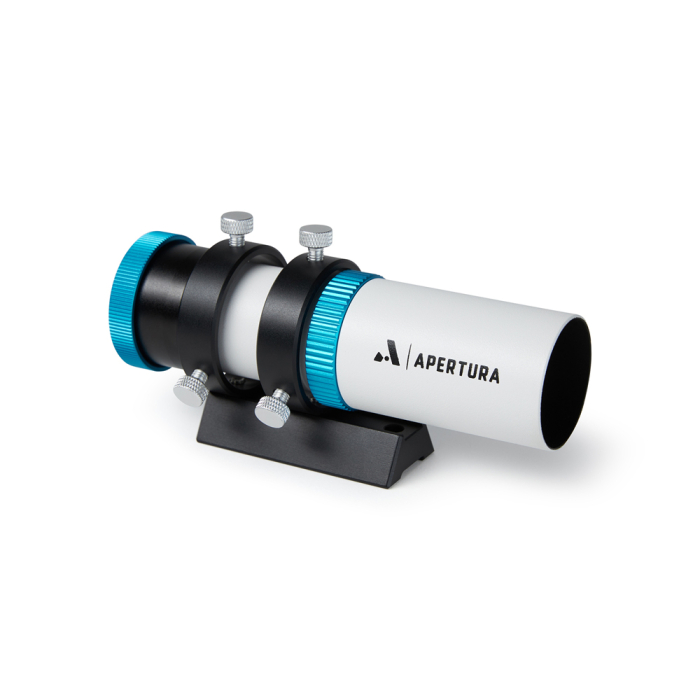
Apertura 32 mm Guide Scope - Blue Accented
The Apertura 32 mm Guide Scope with blue accents is a compact, lightweight tool designed for precise guiding during astrophotography. Its wide field of view makes it easier to lock onto guide stars, improving tracking accuracy over long exposures. The sturdy design pairs well with most guide cameras and mounts securely on a variety of telescope setups. The blue accents add a stylish touch while maintaining solid functionality.
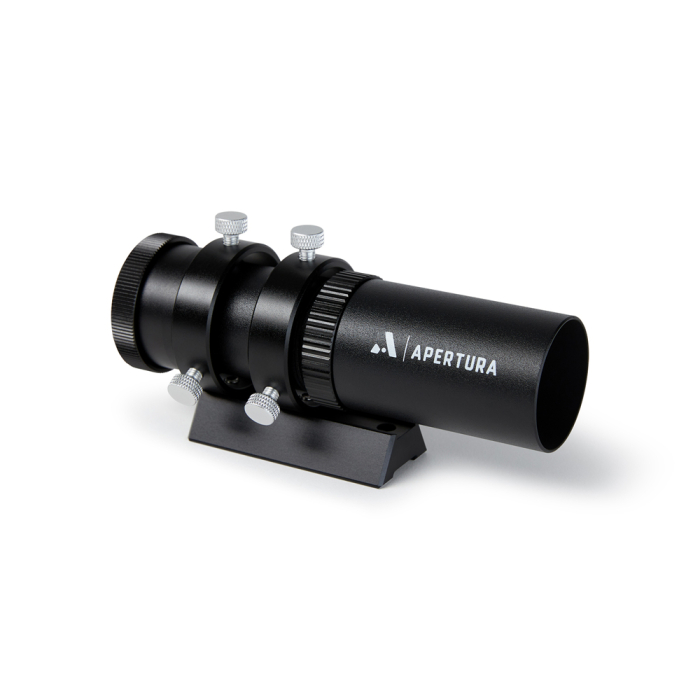
Apertura 32 mm Guide Scope - Black
The Apertura 32 mm Guide Scope in black offers a simple, effective solution for astrophotography guiding. Its wide field of view helps locate and follow guide stars with ease, supporting smoother, longer exposures. The lightweight design minimizes strain on your mount while providing solid performance. Its sleek black finish blends well with most telescope setups.
More About This Category
Recreational astronomy is a fascinating field where people always try to figure out how the cosmos works. The telescope, developed over centuries to bring far-off astronomical objects closer to Earth, is central to this endeavor. Telescope accessories are essential for improving the watching experience as technology evolves and precision requirements rise.
Apertura reducers, correctors, and flatteners stand out among these add-ons as essential parts of a telescope configuration that allow astronomers to tailor their instruments for astronomical observations. Coma, field curvature, and astigmatism can seriously affect how well astronomical observations turn out. These accessories can correct optical aberrations, lessen visual flaws, and produce more explicit images free of distortion.
These Apertura accessories may have similar functionality, but many users still question them. What are the differences between the 3? Will each piece work without the other? And other confusions are not being thrown out into the open.
Functions and Differences of Apertura Accessories
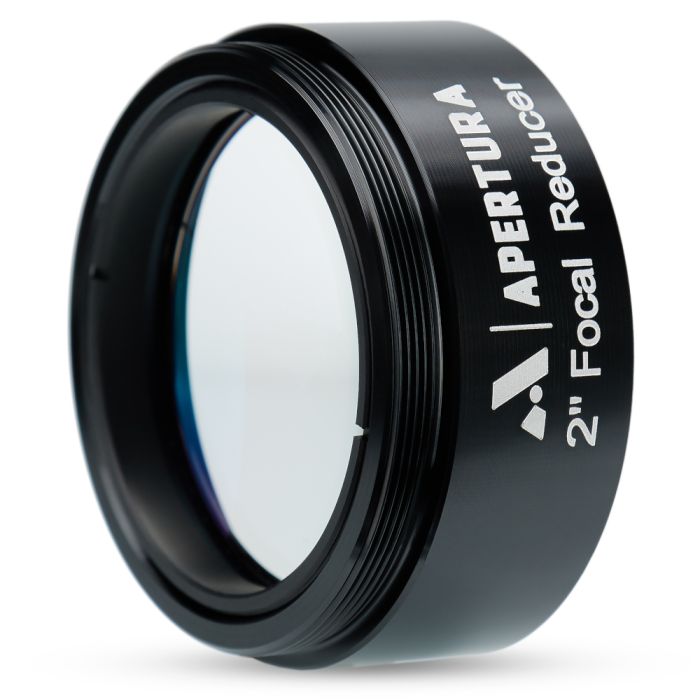
Apertura Reducers
Excel reduces the focal length and provides a magnification boost. This versatility is particularly advantageous for astronomers seeking flexibility in visual observations and astrophotography. Focal reducers, like the Apertura 2” 0.5x Focal Reducer are used when a faster imaging time is needed, or a wider field of view is desired. By incorporating a reducer into the telescope setup, astronomers can achieve higher magnification without sacrificing image quality, opening up new possibilities for detailed observations of planets, lunar features, and deep-sky objects.
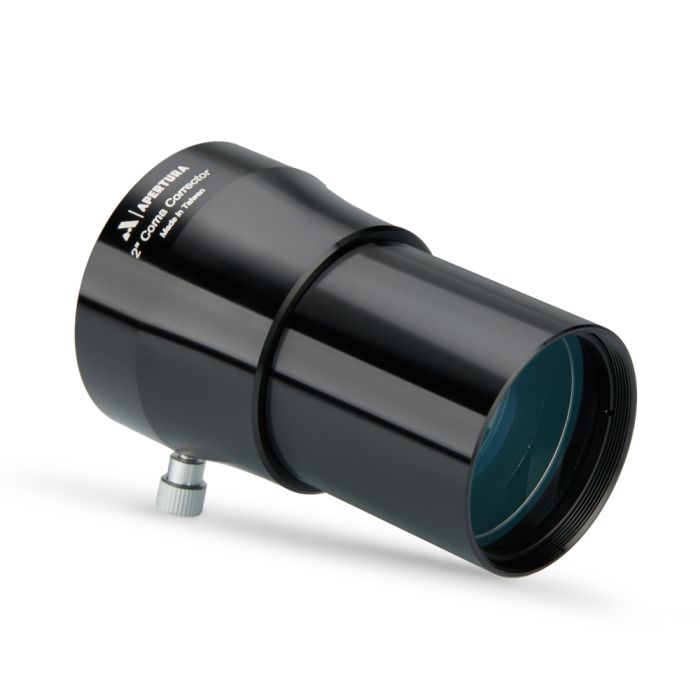
Apertura Correctors
Tackles spherical aberration and field curvature, ensuring sharpness across the field of view. An optical aberration called field curvature makes stars near the boundaries of the field of view look out of focus. The Apertura 2” Coma Corrector for Newtonian Telescopes, inserted into the optical path, can remarkably rescue or even eliminate coma. This specialized corrector produces pinpoint stars across the frame by guaranteeing a flat field and lowering the focus ratio for speedier imaging. These adjustments significantly impact wide-field astrophotography because keeping the entire image sharp is critical.
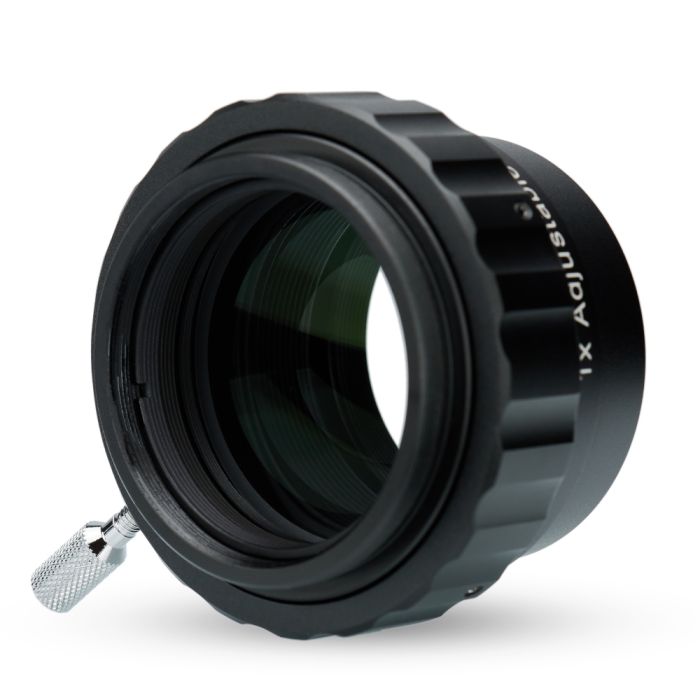
Apertura Flatteners
Field curvature and distortion can be addressed with flatteners such as the Apertura Adjustable Field Flattener for the Apertura 60EDR and 72EDR refractors. These flatteners are especially useful for refractor telescopes, whose optical design may have field curvature. Astronomers can attain a flat field of view using a flattener, guaranteeing that stars and other objects are accurately represented without distortion or blurring at the edges. This is particularly useful when imaging large celestial objects or conducting surveys of extended sky regions.
The significance of correctors, flatteners, and reducers is further highlighted by how telescope technology develops. The need for accessories that improve the performance of telescopes is growing as they progress in design and functionality. Adding these optical attachments to a reflector, refractor, or compound telescope makes the system more flexible and adaptive.
These accessories cater to amateur astronomers, professionals, and astrophotographers, improving the clarity of planetary details and defining deep-sky objects while enhancing sharpness and fidelity in capturing stunning images of galaxies, nebulae, and star clusters.