
Apertura Panorama 82° Eyepiece Kit
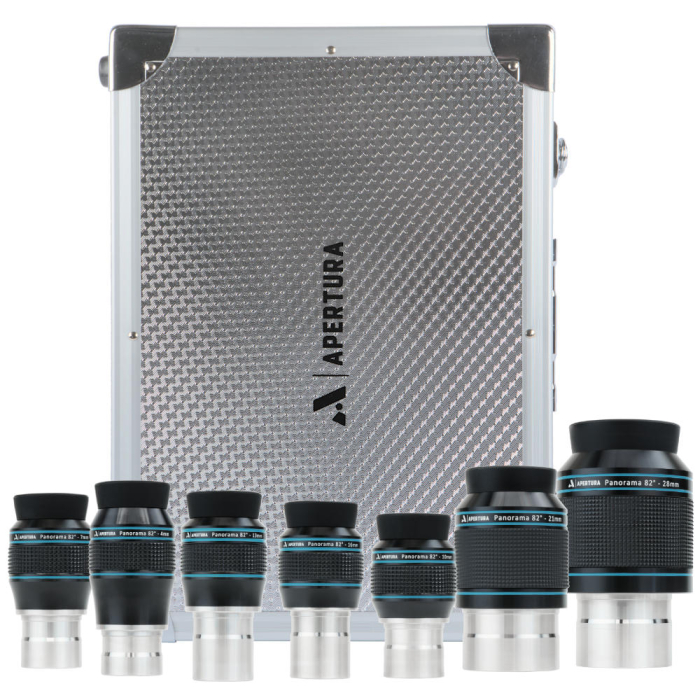

Seven Premium Eyepieces for Next Level Views. The Apertura Panorama Eyepiece Kit!
Be sure to take a look at this in-depth video on the Apertura Panorama Eyepiece series, diving into their exceptional build quality, specifications, and how they can vastly improve your stargazing experience!
Apertura Panorama Kit At a Glance
|
|
|
|
|
|
Transform your stargazing experience with this complete Apertura Panorama Eyepiece Kit! Built with an impressive 82° AFOV across the entire series, you can immerse yourself in the cosmos and witness vast nebulous scenes, striking views of star clusters, planetary splendor, captivating lunar views, and plenty more! If you’re looking for an unforgettable, “wow” experience, the Apertura Panorama eyepieces are the standout choice for wide, captivating views of the night sky!
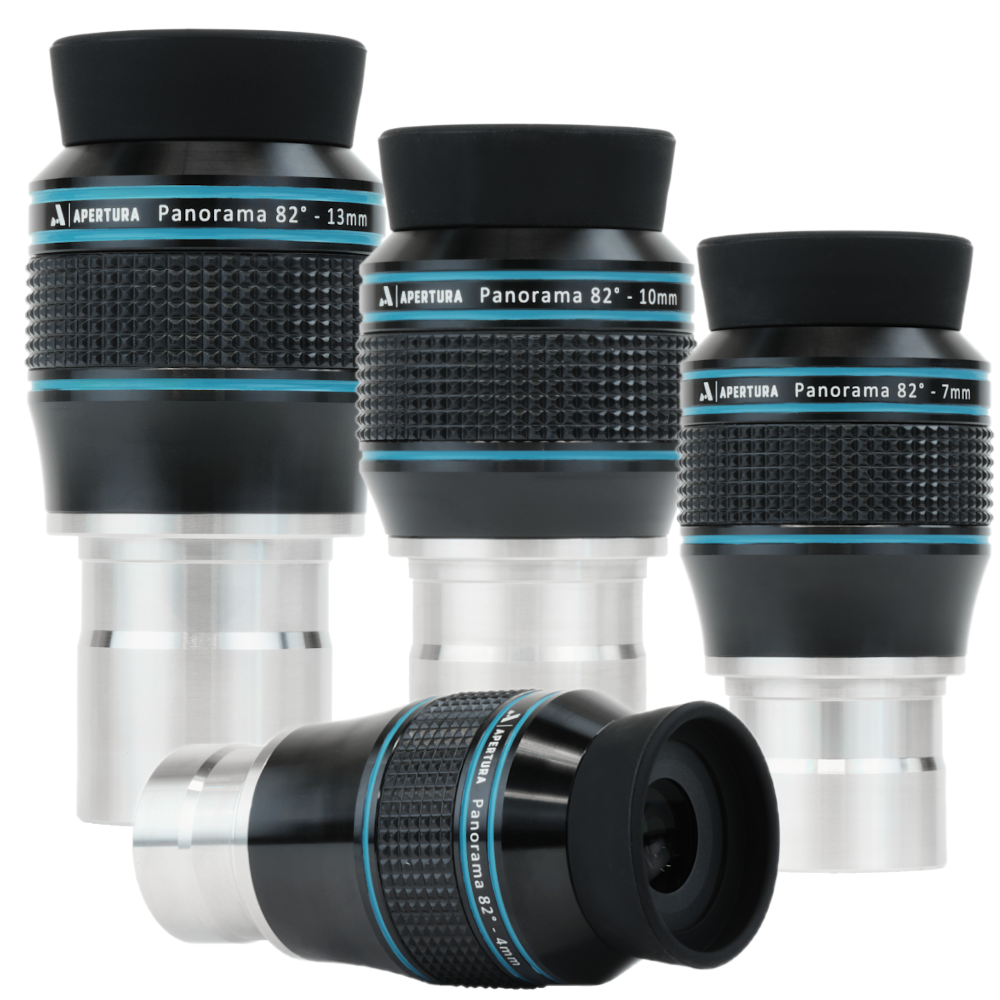
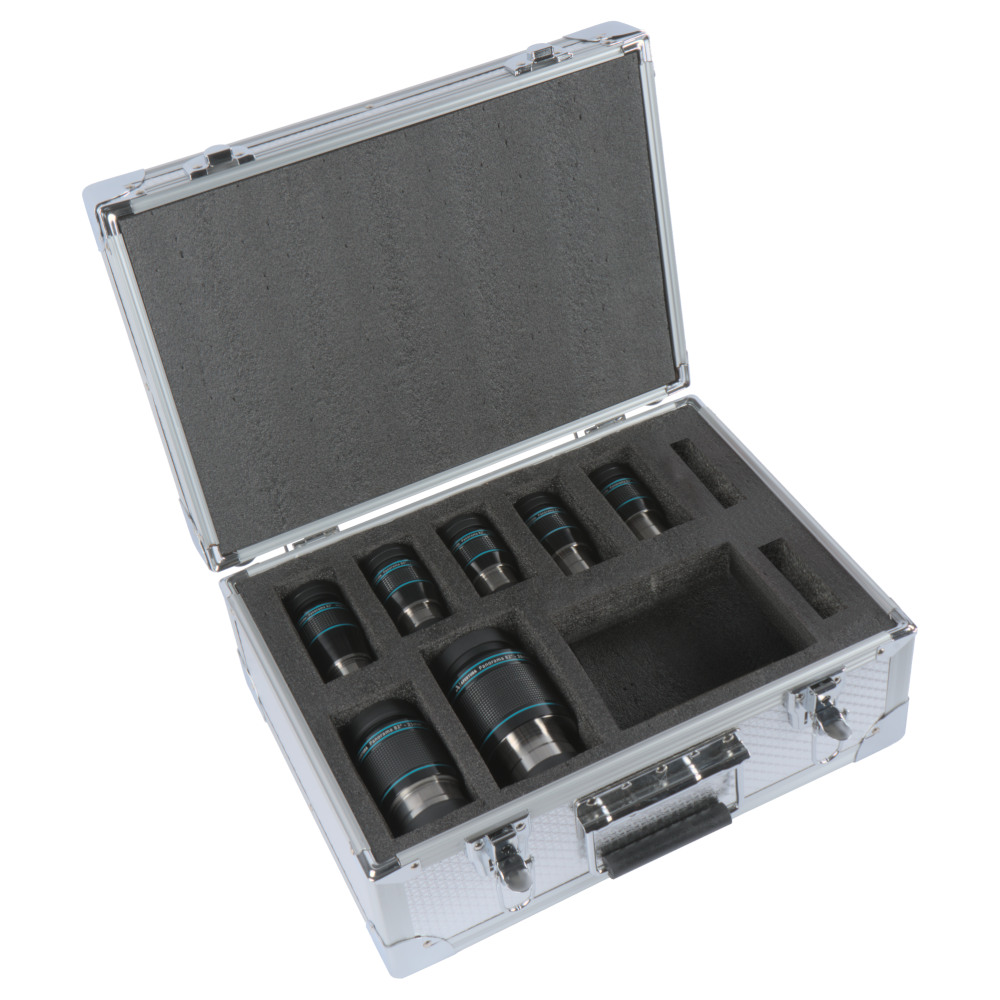
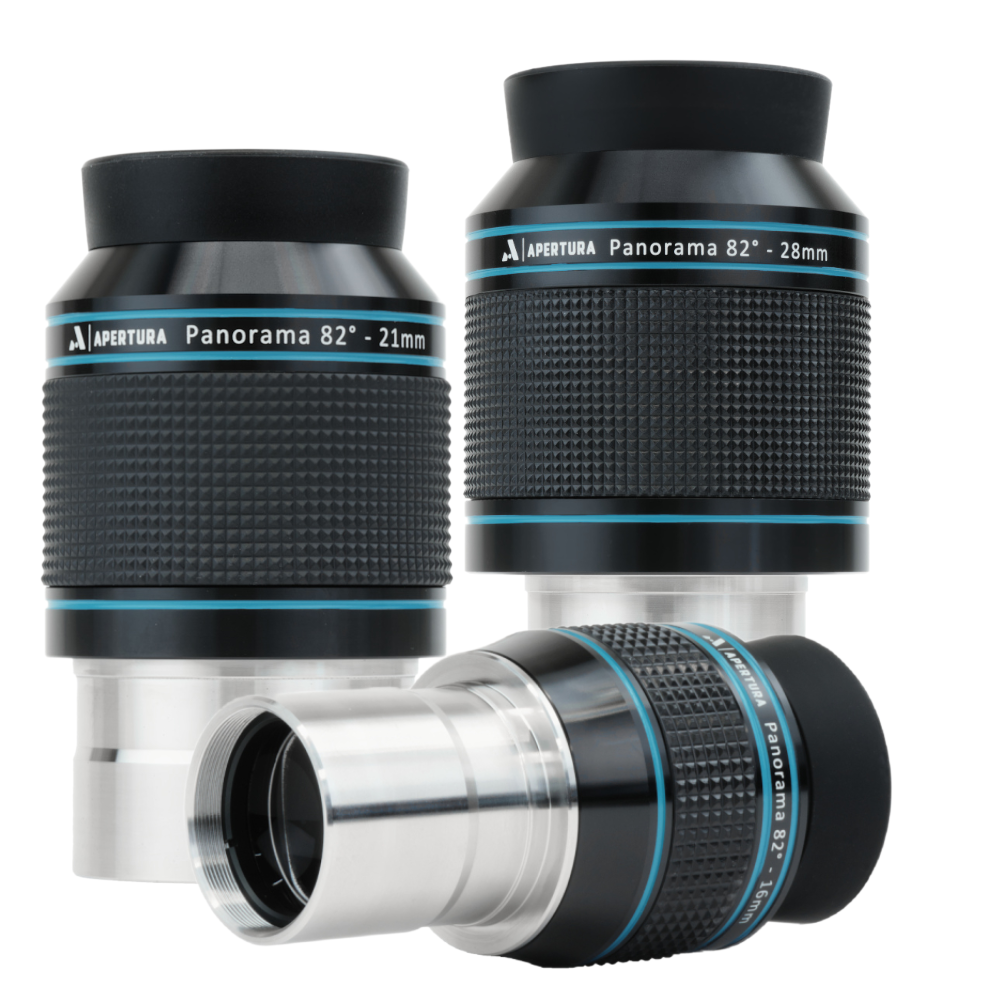
The Apertura Panorama Eyepieces are a highly corrected, wide field astronomy tool on par with some of the most well-regarded eyepieces in astronomy today. Comparable in quality to the revolutionary TeleVue Nagler and Delos eyepieces, you’re in for crisp, jaw-dropping sights on a host of celestial objects, at a fraction of the price! A broad range of focal lengths are available to help you find the perfect eyepiece for your needs, all featuring the wide 82° AFOV. This complete Panorama eyepiece kit houses focal lengths of 4mm, 7mm, 10mm, 13mm, 16mm, 21mm, and 28 mm, making it a great choice for those who wish to view everything from the planets, the Moon, nebulae, galaxies, and more with stunning clarity. When it comes to build quality, Apertura is a front-runner in producing top-of-the-line astronomy gear, constructing these eyepieces with durable stainless steel, multicoated lenses, and comfortable, foldable eyecups. To keep the set safe and secure, Apertura also includes a hard carry case, with precise foam compartments for the eyepiece set and three additional compartments for extra observation accessories. Providing striking wide field views, exceptional craftsmanship, and built for those eager to explore the night sky with next-level immersion, the Apertura Panorama Eyepieces are a powerful addition to your astronomy toolkit!

Observe the Cosmos Like Never Before
The Apertura Panorama eyepiece series broadens the horizons of your stargazing endeavors, offering an expansive 82° apparent field of view. Quality crafted and demonstrating optical excellence, you’re well on your way to unforgettable nights under the stars. Discover more about this premium eyepiece kit below!
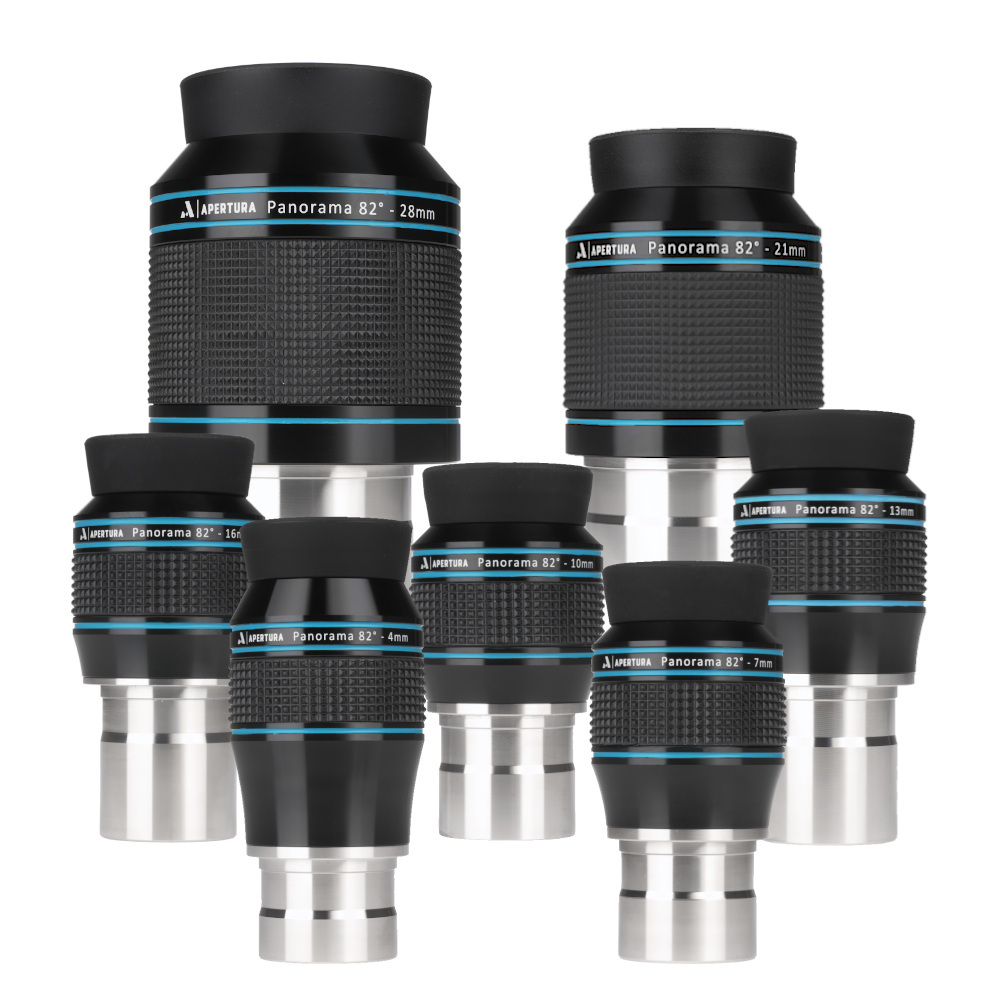
7 Eyepieces for A Wide Variety of Viewing Opportunities
This Apertura Panorama Eyepiece Kit is complete with all seven premium
eyepiece models. The higher powered eyepieces (4 mm, 7 mm, and 10 mm) are
optimal for planetary and lunar viewing thanks to the high magnification
they provide. Be stunned by Saturn’s Rings, Jupiter’s cloud bands, the polar
ice caps on Mars, and plenty more! The lower powered options (21 mm and 28
mm) are ideal for viewing large, sprawling targets like the Orion Molecular
Cloud Complex, the Andromeda Galaxy, and the Pleiades Open Star Cluster. For
a nice mid-range view, this kit also includes the 13 mm and 16 mm Apertura
Panorama eyepieces!
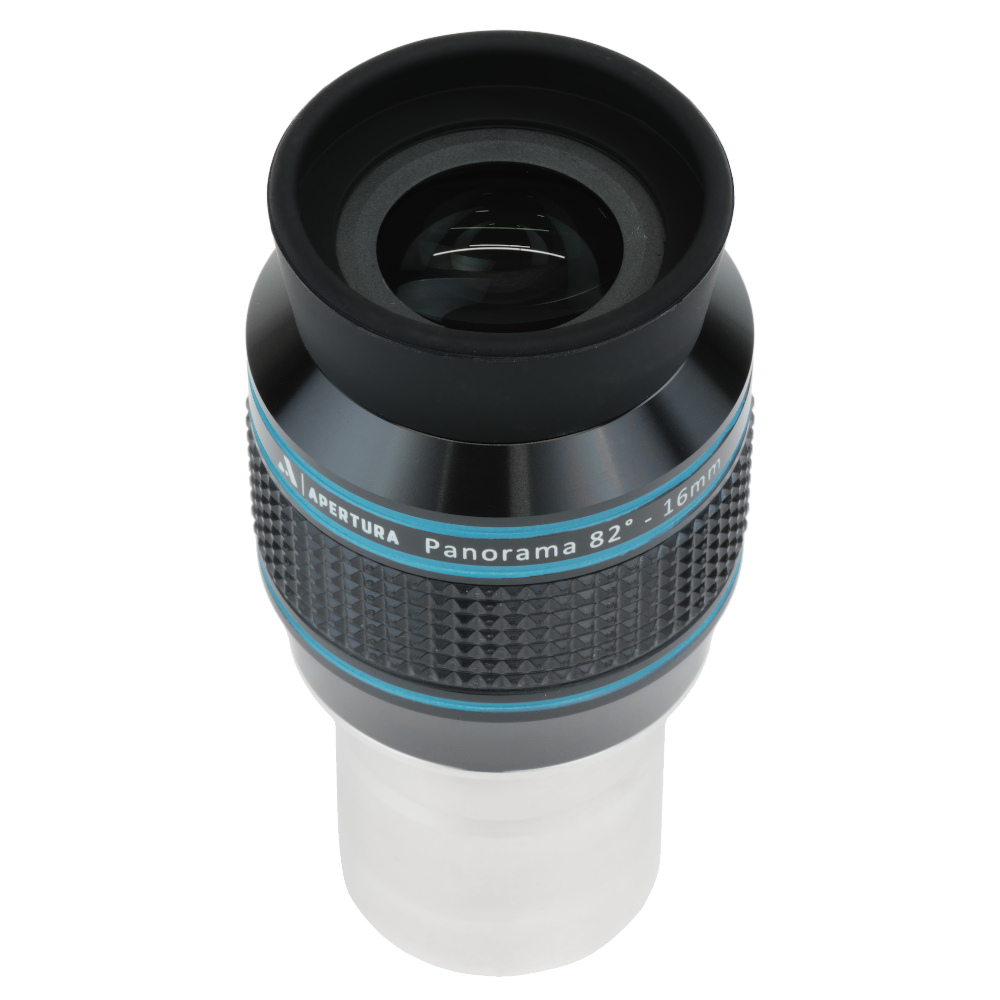
Stunningly Sharp, 82° Views
As a team of dedicated night sky enthusiasts themselves, Apertura has a full
understanding of the needs of observers and continues to develop remarkable
tools to enhance your stargazing endeavors. This Panorama eyepiece series is
no exception, offering a wide 82° AFOV that expands across the majority of
your field of vision. To put this into perspective, a 50° eyepiece of the
same focal length will yield the same magnification, though the 82° Panorama
eyepieces present more of the sky around your selected targets. As a result,
you’ll be enveloped by a riveting “spacewalking” sensation when peering
through your telescope, where it’s as if the eyepiece practically
disappears! These cinematic views are available for users of SCTs,
Dobsonians, refractors, and many other types of telescopes, making it a
great addition to any setup.
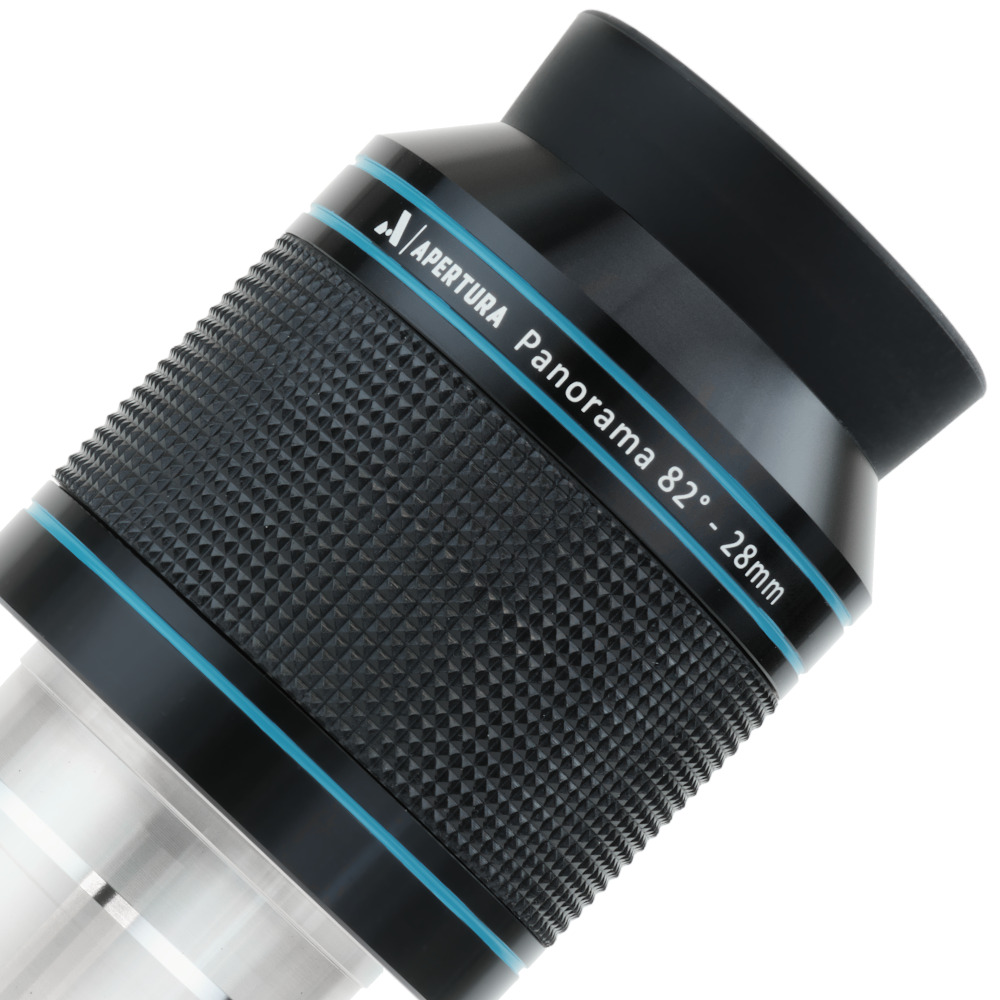
Top-Tier Build Quality
Apertura is a top performer when build construction is concerned, crafting
these eyepieces with premium materials to ensure the utmost longevity. In
comparison to other 82° eyepieces on the market, the Apertura Panorama
eyepieces utilize a rigid stainless steel barrel to ensure integrity for
years to come. This dedication to quality continues with the design of the
flexible, yet durable eyecups. Made of soft rubber, these eyecups deliver
maximum comfort during observations, with the option to fold them up or down
for personalized eye placement. Within the eyepiece, each lens is fully
multicoated with anti-reflective finishes for maximum light throughput. The
result? Bright, vivid detail and outstanding clarity. When tested against
TeleVue Nagler and Delos eyepieces, the Apertura Panorama eyepieces present
image quality and sharpness in step with these elite models, a fantastic
feat for eyepieces within this price range!
Understanding Exit Pupil
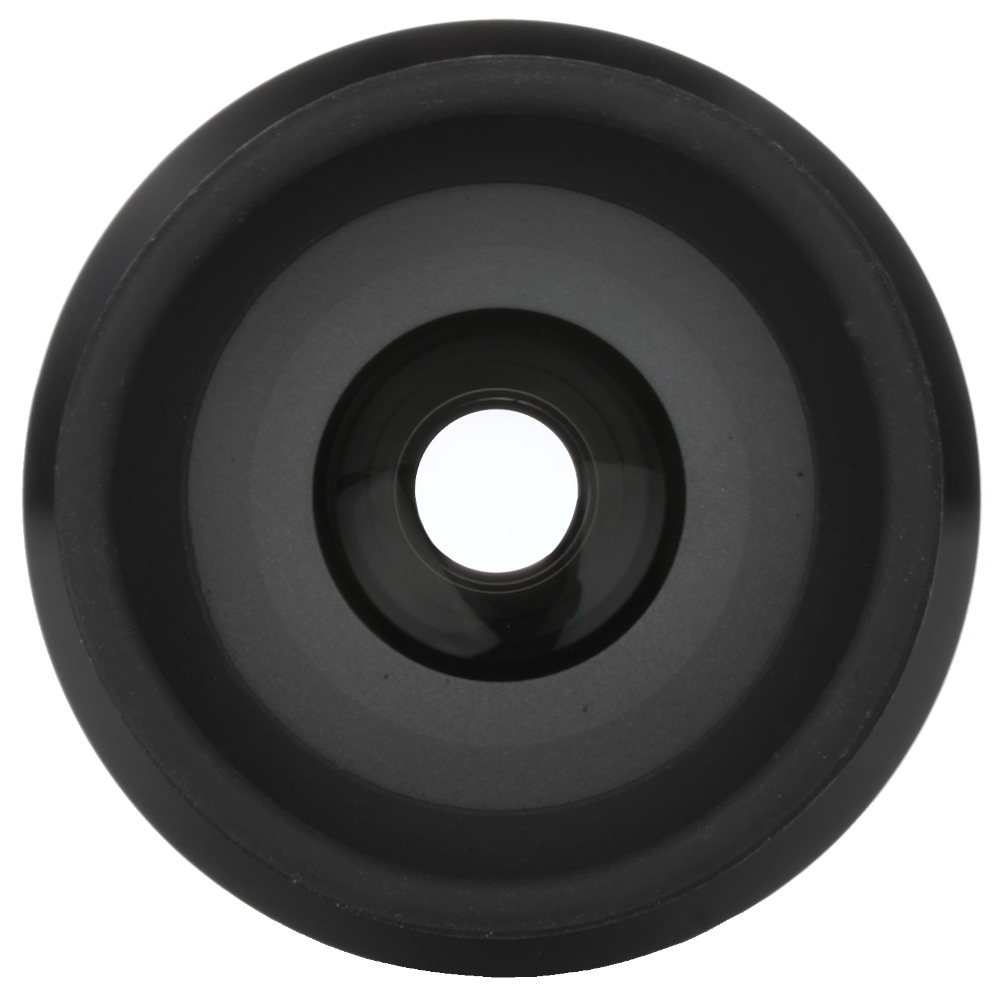
Your exit pupil is the beam of light exiting your eyepiece, and it’s
an important factor in determining how bright the image through an eyepiece
will be. We measure the exit pupil by its diameter in millimeters, with the
bigger the diameter, the brighter the image. Exit pupil is calculated with
the following equations: Exit Pupil = Telescope Aperture (mm) ÷
Magnification, or Exit Pupil = Eyepiece Focal Length ÷
Telescope Focal Ratio. Large (5-7 mm) and medium (2-5 mm) exit pupils are
wonderful for deep sky objects. Small exit pupils, on the other hand,
perform well for small, bright objects like the planets or the lunar
craters. Taking the Apertura 7 mm Panorama Eyepiece as an example, when
paired with a standard f/6 telescope, the resulting exit pupil will be 1.18
mm, making this eyepiece a great choice for observing the wonders of our
solar system and some bright nebulae and star clusters. The Apertura 21 mm
Panorama Eyepiece on the other hand, yields an exit pupil of 3.55 mm when
paired with an f/6 scope for observing large, dim deep sky objects.
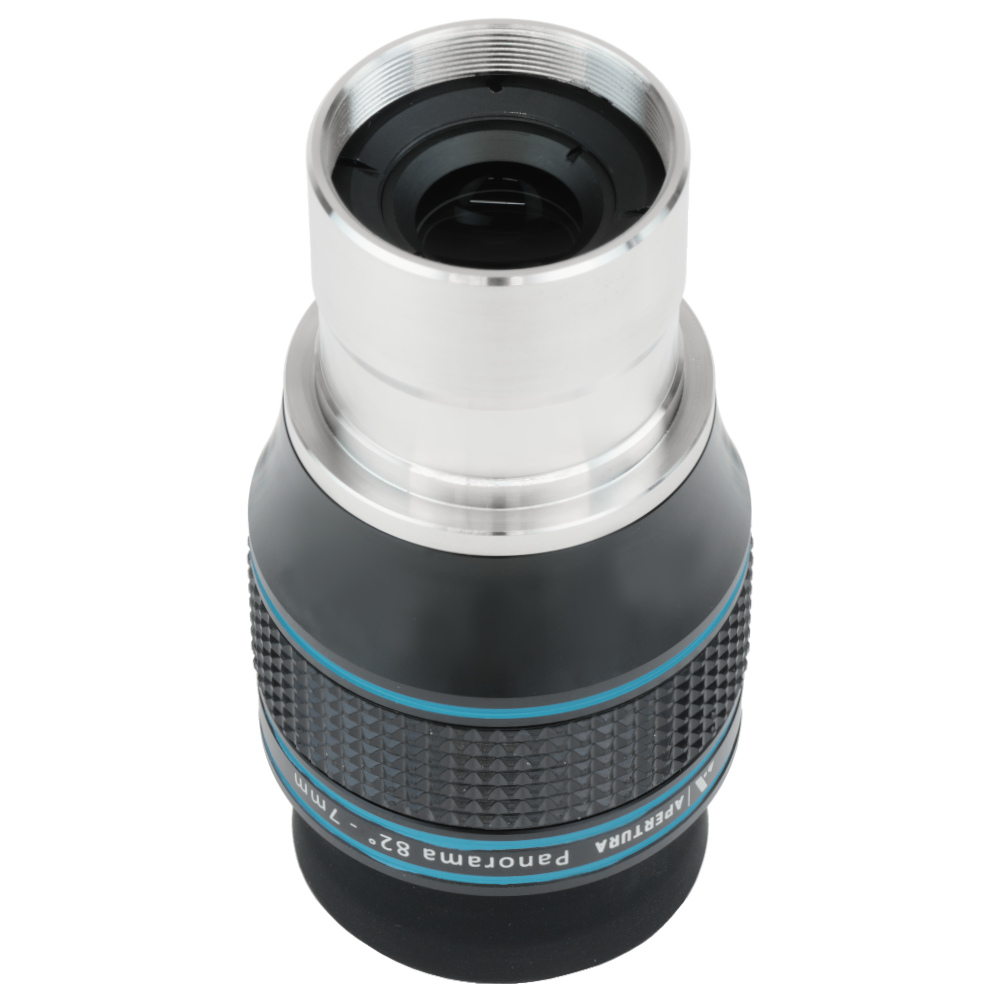
Add Filters with Ease!
Filters are a wonderful way to enhance your observing sessions as they open
the doors to details that otherwise would have gone unnoticed. Thankfully,
adding a filter to your Panorama eyepiece is a piece of cake! Simply thread
in a 1.25” or 2" filter to the bottom of your eyepiece, then insert
your eyepiece into your telescope as normal. Apertura also offers a host of
filters for add-on to help get you started. Whether you plan to enhance
nebulous structure with the
UHC filter, reduce the effects of urban lighting with the
Moon and Skyglow filter, or amplify the surface details on the Moon with the
variable polarizing filter, Apertura helps you do so with ease!
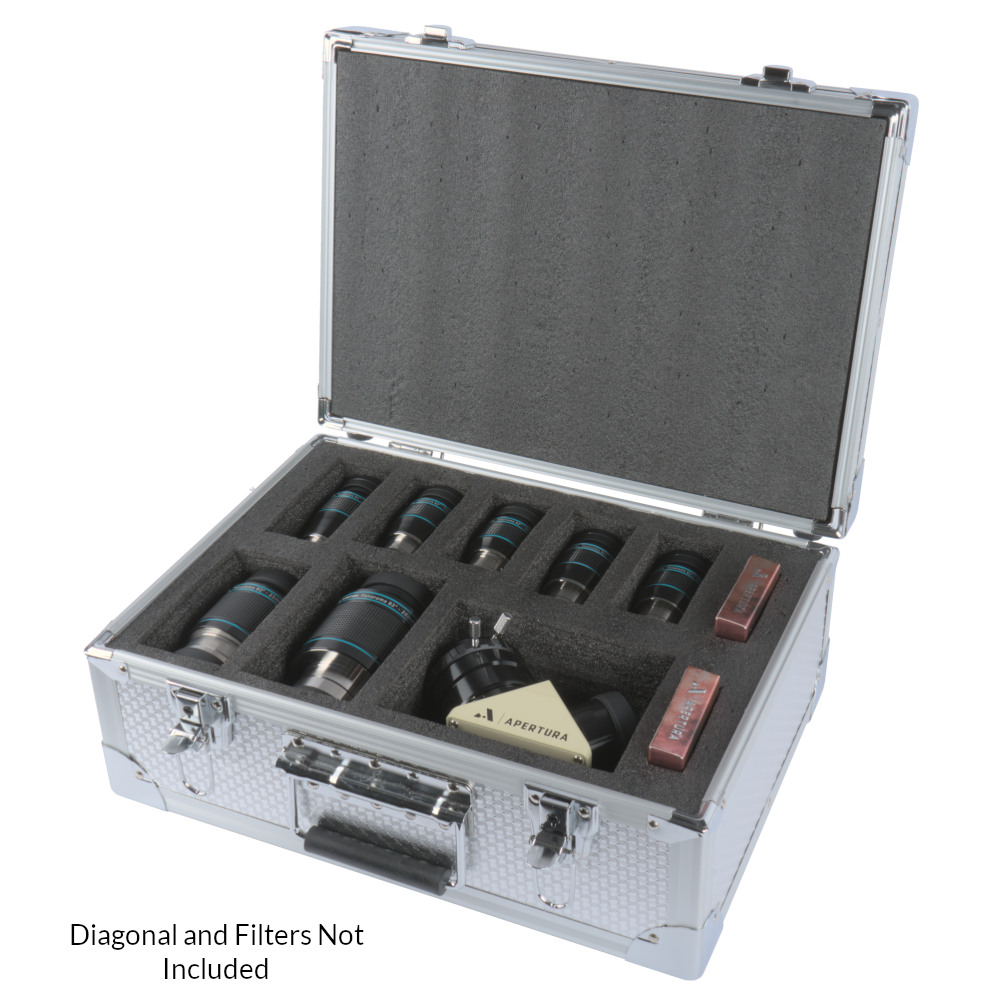
Hard Carry Case Included
Keep your premium eyepiece
set safe and secure, with the included hard carry case! Custom made for the
Apertura Panorama Eyepiece line, this case features a precision cut foam
interior with compartments for each eyepiece. Three additional cutouts allow
you to safely stow other observation accessories, such as a 2" diagonal and
observing filters. Once closed, the case presents a hard metal exterior that
guards against scuffs and scrapes, with dual closing latches. These latches
can be secured with the included keys for added peace of mind, and the
convenient carry handle provides a comfortable grip to transport the entire
set.

Comes with the Apertura Absolute Warranty!
The Apertura Absolute Warranty provides two years of coverage against
product defects. After the initial two-year warranty expires, this product
qualifies for Apertura's Three-Year Accident Replacement Program. In
addition, the Apertura Absolute Warranty is transferrable! Download a copy
of the
Apertura Absolute Warranty
for more information on this program, how to make a claim, and why it is
important to keep your original receipt and the product's original
boxes & packaging!
Frequently Asked Questions
Do I need a Barlow lens with these eyepieces to view the planets?
The high focal length of the 7 mm and 10 mm Apertura Panorama Eyepieces
mean a Barlow is not needed, though the addition of a Barlow accessory
essentially doubles your focal length arsenal making it a highly valuable
inclusion within your stargazing toolkit. It's important to remember, however,
increasing your magnification will decrease your exit pupil, leading to an
overall dimmer image. Need a Barlow lens suggestion? We highly recommend the
Apertura 2x ED Barlow Lens!
How do the Panorama eyepieces compare to Tele Vue and Explore
Scientific?
Product Developer and Award Winning Amateur Telescope Maker, Matthew
Paul, conducted a blind test involving these three eyepiece models. While the
Tele Vue Nagler eyepieces are hard to beat, the Apertura Panorama eyepieces
offered performance that stood neck and neck with these elite Tele Vue models
at a fraction of the cost. In comparison to the Explore Scientific eyepieces,
the Panorama eyepieces presented indistinguishable, and even slightly better
performance, with certain focal lengths.
How do I calculate magnification?
Magnification can be
calculated by taking your telescope’s focal length and dividing it by your
eyepiece’s focal length. For instance, if we have an 8” 1,200 mm focal length
Dobsonian telescope, and we’re using the Apertura Panorama 7 mm eyepiece, the
magnification will be as follows: 1200/7 = ~171x. It’s important to note that
magnification influences how bright your image will be, as the higher
magnification, the dimmer your image will become (when using the same
aperture). Be sure to check out our
Ultimate Telescope Eyepiece Guide
for more on this topic!
What’s the difference between apparent field of view (AFOV) and true field
of view (TFOV)?
Apparent field of view refers to how large the image is to your eye.
For reference, a single bare human eye has a field of view of approximately
150°. These Apertura Panorama eyepieces offer an 82° AFOV for a
well-immersed experience. True field of view, on the other hand, refers to the
angular diameter of the “chunk” of the sky you are observing. TFOV is
determined by dividing your AFOV by your system’s magnification. For instance,
an 8” 1,200 mm focal length Dobsonian paired with the 7 mm Apertura Panorama
eyepiece will yield a TFOV of 0.48°. The full disk of the Moon, for
example, has an angular diameter of 0.5°. For more on this topic, our
comprehensive
Ultimate Telescope Guide
provides an in-depth look!
What is exit pupil and why does it matter?
Exit pupil is
the diameter of the beam of light that departs your eyepiece. It’s directly
tied to the overall brightness of your image, and it’s an important factor to
consider when determining which objects are available for observation. This
term is analogous to our very own pupils, hence its name. As the pupil within
our eye expands, more light is brought into our retina. This same concept is
applicable to eyepiece exit pupils, with the larger the exit pupil, the
brighter the image. Exit pupil and magnification go hand in hand; as
magnification increases, exit pupil decreases, and vice versa. We measure the
exit pupil by its diameter in millimeters. To calculate the exit pupil of your
eyepiece/telescope combination, use either of the two equations: Exit Pupil =
Telescope Aperture (mm) ÷ Magnification or Exit Pupil = Eyepiece Focal Length
÷ Telescope Focal Ratio.
Astronomy Hub: Your one-stop-shop for Astronomy Knowledge!
Our Gear Experts have compiled a wealth of information to help you get the most out of your telescope! Below you’ll find links to articles, videos and "how-to" guides. Just one more reason that our Astronomy Hub is a one-stop-shop for all your astronomy and astrophotography needs!
| The Best Telescopes of the Year |
| Best Telescopes For Urban Stargazing |
| What's in the Sky This Month? |
| The Ultimate Telescope Eyepiece Guide |
| The Ultimate Telescope Accessories Guide |