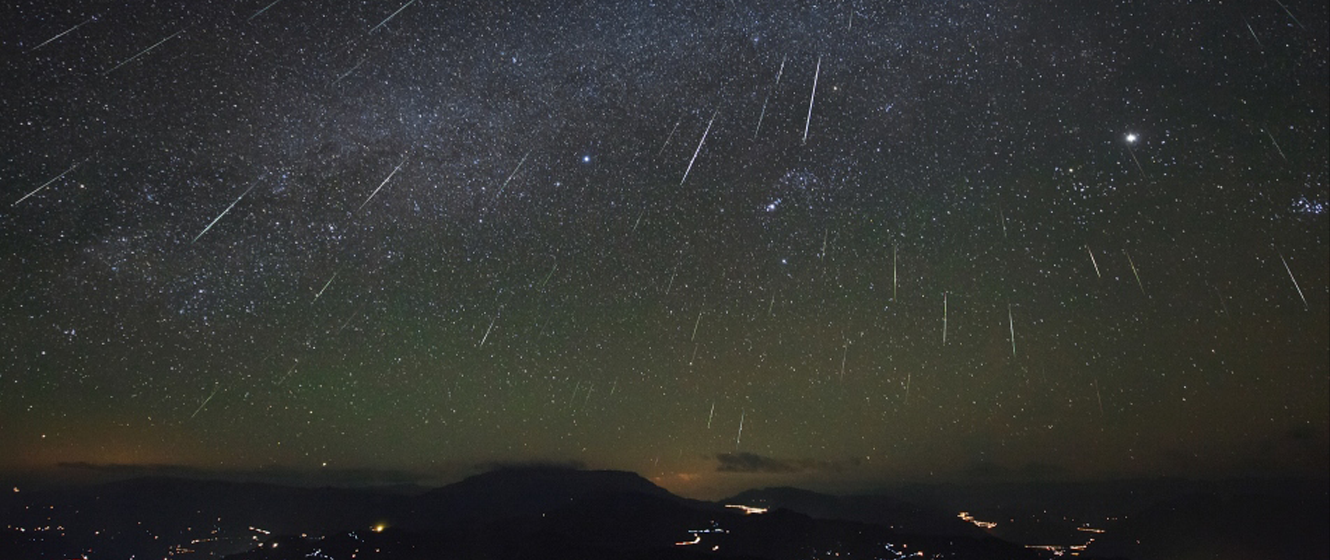
Banner Image Credit: Jeff Dai
Geminid Meteor Shower: A Summary
What Is the Geminid Meteor Shower?
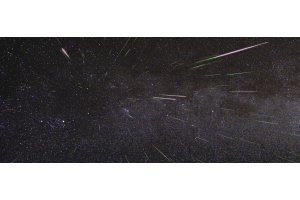
Ask the average layperson to name a meteor shower, and they’ll probably mention the Perseids - and with good reason. After all, thanks to their reliability, brightness, and high meteor yield, the Perseids get a lot of media attention. However, the Geminids of winter are easily on a par with their summer cousins.
The meteors of both showers are brighter than most, but at a speed of 36.5 miles per second (58.8 km/s), the Perseids are fast. The Geminds are relatively slow in comparison - just 21.0 miles per second (33.8 km/s) - but this simply makes them easier to spot, with the average Geminid taking nearly twice as long to streak across the sky.
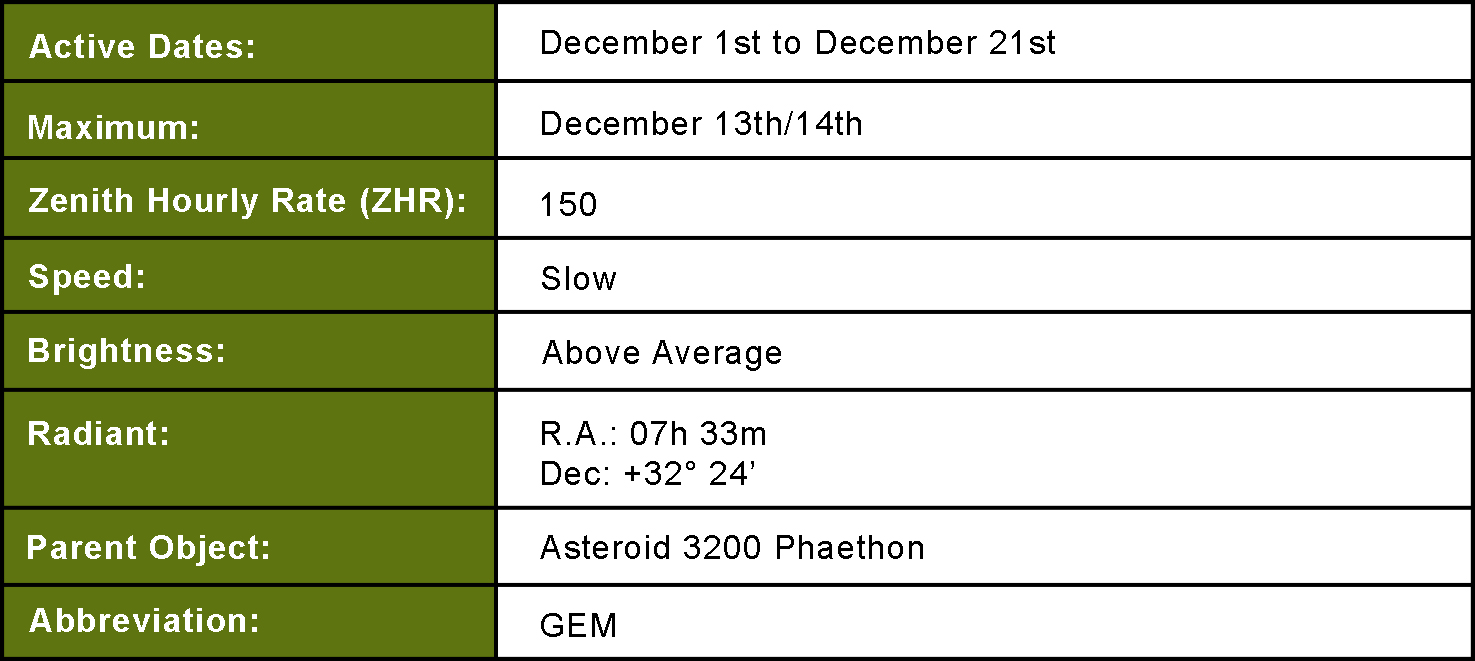
With a zenith hourly rate of about 100, the Perseids are famously prolific, but in the past few decades, the Geminids have regularly surpassed that, and you can expect to see about 150 under ideal conditions. This easily beats the Perseids and makes the Geminids the most active of all the major meteor showers. However, the Perseids have the edge when it comes to comfort, as they reach their maximum on a warm August night. This makes them the perfect meteor shower for an early evening barbecue (or even a star-b-q!) before the skies darken and the celestial fireworks begin.
The downside? You’ll have to wait until fairly late for the skies to darken, and you’ll need to be outside after midnight for the shower’s radiant to rise above the eastern horizon. (You can, of course, look for meteors in the hours before, but you’ll see more once the radiant is sufficiently high in the sky.)
The Geminids reach their maximum in mid-December, four months later than the Perseids, and while that’s not ideal cookout weather for most of us, this still gives the Geminids a few advantages. The first big advantage is that the constellation Gemini, from which the meteors appear to originate, rises just a few hours after sunset. This means you can start your meteor watch around mid-evening, which can be a big plus for younger observers, especially if they have school the next day! The second big advantage is that the nights are at their longest; this, coupled with the early rise of Gemini, means you can be outside at almost any time and enjoy the shower. The shower’s radiant culminates at around 2:00 AM, making it one of the few showers to be at its best while the skies are still dark. Of course, the downside to its timing is the weather. Unless you’re in a southerly location, the chances are it’ll be too cold to be outside all night, but at least there’s some flexibility.
The Geminids have one final advantage over the Perseids. Both showers are known to produce fireballs, but the Geminids can be strongly multi-colored, making this a true celestial fireworks extravaganza that should not be missed!
The Unusual Source of the Geminids
While there’s evidence to suggest the Geminids have been observed for nearly 500 years, it wasn’t until 1862 that the first confirmed observations were made, when observers in both the United States and England noted an increase in meteor activity in December. It was officially recognized as a minor shower, with a zenith hourly rate of 15 and a maximum in mid-December, in the 1870s.
However, while the link between the debris left by comets and meteor showers was established at around the same time, the origins of the Geminids remained a mystery. In the late 1940s, the American astronomer Fred Whipple conducted studies that indicated the Geminid debris had a high orbital inclination and an orbital period of 1.65 years. He speculated that the source was a short period comet, and that the debris had been gravitationally influenced by both the Earth and Jupiter. The gravitational pull of the planets could have pulled the debris away from its original path, which might explain why no known comet could be associated with the shower.
The mystery remained until the 1980s. On October 11th, 1983, Simon F. Green and John K. Davies discovered an object moving through Draco in images captured by the Infra-Red Astronomical Satellite (IRAS). Subsequent observations confirmed the discovery of an asteroid, later named 3200 Phaethon. Just 3.6 miles (5.8 km) in diameter, its orbital elements matched those of the Geminids, indicating that the shower’s parent body had probably been found. But asteroids aren’t the same as comets, as they don’t leave a trail of debris in their wake as they orbit the Sun. So if 3200 Phaethon is the parent of the Geminids, how was the debris cloud formed?
One theory speculated that the asteroid is essentially the core of a dead comet whose ice had all melted as a result of numerous interactions with the Sun. The meteoroid debris could have been deposited while the comet still had water. However, recent studies have shown that the asteroid had suffered a violent collision with another object in the past, likely creating the debris that gives rise to the Geminids. Either way, the sad news is that without water-ice from a comet, or another collision with the asteroid, the debris cloud has no source for renewal, and the shower will eventually die out.
How Can I Observe the Geminid Meteor Shower?
As mentioned above, the constellation Gemini, the Twins, rises just a few hours after sunset, but it won’t be above the thicker atmosphere close to the horizon until around 9:30 PM. However, by that time the sky will be truly dark, and since the constellation doesn’t set until after dawn, you’ve got most of the night to enjoy the show.
The radiant - the point from which the meteors appear to originate - is just three-quarters of a degree north of Castor, one of the two stars that mark the heads of the twins. The other, Pollux, is slightly brighter, but to the naked eye, you may not notice the difference. If you’re not sure which is which, remember that Castor is the star closest to Capella (in Auriga), while Pollux is closest to Procyon in Canis Minor. That said, for all intents and purposes, looking towards both stars will point you in the right direction.
Castor and Pollux are fairly easy to spot, as they’re really the only two stars of almost equal brightness that appear close to one another in the sky. If you’re unfamiliar with the pair, the Big Dipper can help you find them, but be aware that the dipper itself won’t rise until fairly late in the evening. Draw a line through Megrez, the star that joins the handle of the dipper to the bowl (and also the faintest star in the group), and then draw a diagonal line through Merak, the star that marks the bottom front edge of the bowl. Continue until you reach the two nearly identical stars.
The radiant culminates at around 2:00 AM, but you don’t need to be out that late to catch a few shooting stars. Generally speaking, it’s a good idea to look about 45 degrees away from the radiant for the best chance of seeing the meteors, so if Gemini is in the east (around 10 PM or earlier), you’ll want to look towards the northeast and southeast. Similarly, if Gemini is over the southeastern horizon (at around midnight), then you should look towards the east and south, and if Gemini is towards the south (at around 2 AM), then look towards the southeast and southwest.
The Geminid 10 Year Forecast
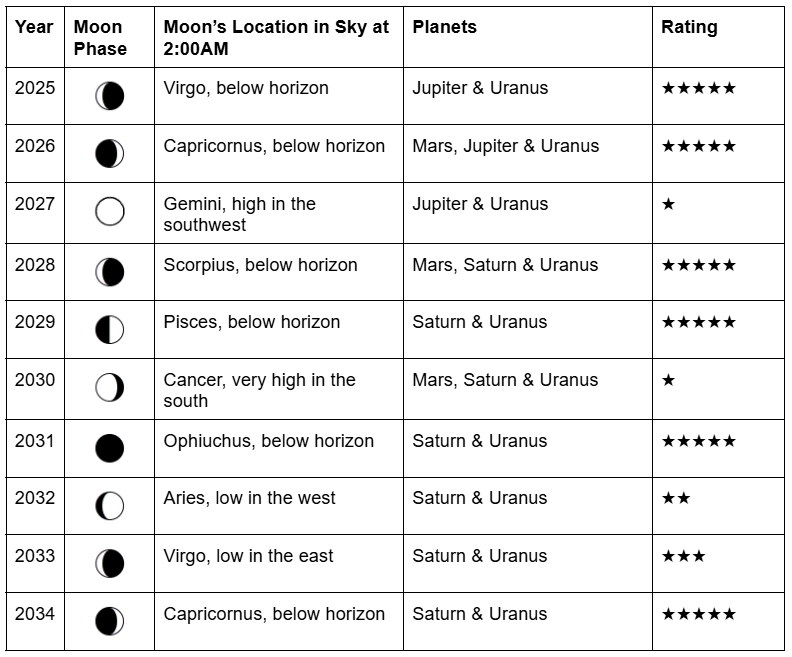
The table below shows the Moon phase and planets that may be visible above the horizon at 2:00 AM on December 14th of each year. It should be noted that (again, as with all meteor showers) the date of the maximum can vary a little from year to year, and the exact timing isn’t typically known until the International Meteor Organization releases its annual report.
With that in mind, although the Geminids are often at their best on the evening of the 13th and in the early hours of the 14th, they can also peak on the evening of the 12th and in the early hours of the 13th.
In terms of the rating, if the Moon is below the horizon at that time, then its light won’t drown out the fainter meteors, and the rating is five stars. However, if the Moon is above the horizon, then the rating is based upon the phase, altitude, and distance of the Moon from the radiant at that time.
Lastly, if the Moon is in the western hemisphere and more than half full, it might be best to wait for the Moon to set before stepping outside. If the Moon is waning and half full or a little less, then it’s best not to wait to observe the shower, as the Moon will only rise higher as the night progresses, potentially causing more interference as its altitude increases.
Learn More
Interested in diving deeper into the world of astronomy? Check out our AstronomyHub for a wealth of articles, guides, local resources for planetariums and observatories near you, and more to enhance your stargazing experience.