Banner Image Credit: Luo Hongyang
Leonid Meteor Shower: A Summary

What Is the Leonid Meteor Shower?
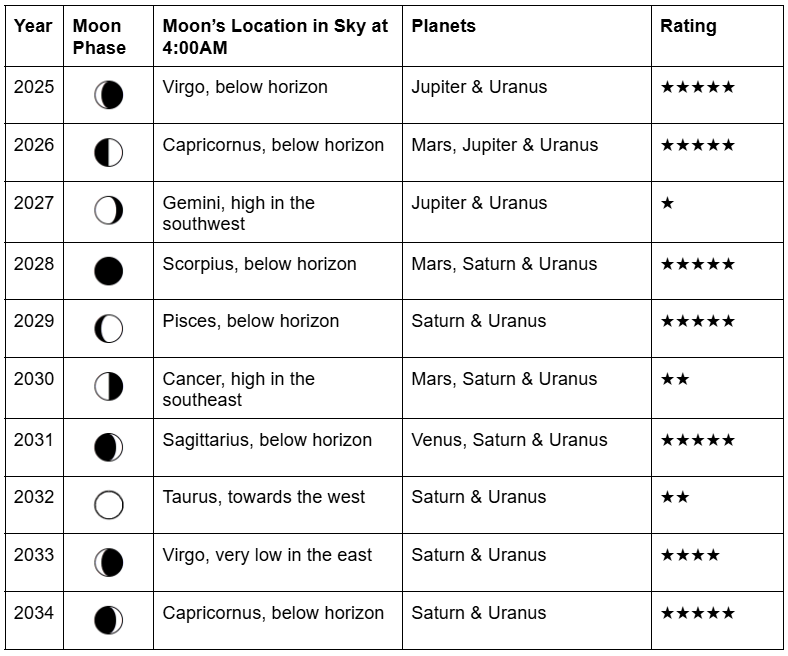
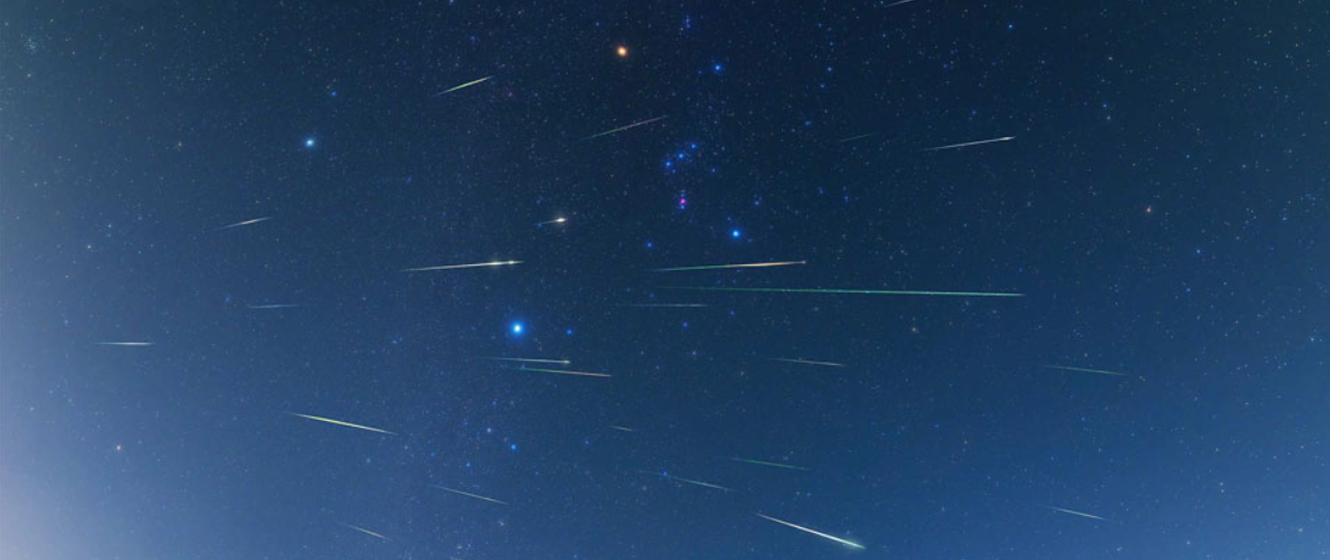
A major meteor shower, the Leonids are very similar to the Orionids in nature. They’re both relatively bright, fast, and have a similar zenith hourly rate, but the Leonids tend to garner more attention. Its relative fame can be attributed to its tendency to produce meteor storms, where thousands of shooting stars can appear every hour, as opposed to the regular 15 the shower would normally produce.
Unfortunately, the meteor storms are relatively rare. The parent object, Comet 55P/Tempel-Tuttle, is a short period comet that orbits the Sun once every 33.8 years. As it returns to the inner solar system, it leaves behind a fresh trail of dust that the Earth then later passes through. Instead of the usual shower, observers on Earth then witness a storm.
However, that’s not the only difference between the two showers. As well as being of above average brightness, the Leonids shoot across the sky at an impressive speed of 43 miles per sec (nearly 70 km/sec), making these meteors the fastest of all the showers.
Lastly, there’s one other important point that’s worth noting. Although the shower tends to reach its maximum in the early hours of November 17th, the trails of meteoroids that form the shower can be gravitationally influenced by the planets. As a result, the date of maximum may vary by a few days from year to year, and it’s advisable to check with a reputable source (for example, the International Meteor Organization) to accurately determine the date of maximum for the current year.
A Brief History of the Leonid Meteor Shower
Thanks to its meteor storms, the Leonids have a rich history that can be traced back hundreds of years, with most of the historical notes tied to the storms themselves. The first storm to be recorded in modern times occurred in November 1833, when a nine-hour storm was observed throughout North America. Estimates vary, but it’s thought that the shower could have produced roughly a quarter of a million meteors during that time, with one source estimating a rate of 100,000 meteors an hour at the storm’s peak.
The storm’s lack of visibility elsewhere in the world led the American astronomer Denison Olmsted to correctly speculate that the Earth had passed through a cloud of particles in space. Subsequent storms, in 1866, 1867, and 1868 were less intense but still allowed astronomers to link the shower to Comet Swift-Tuttle, which had reached perihelion in 1862.
While the Leonids of 1899 and 1933 produced a higher-than-average number of shooting stars, activity generally abated until 1966, when a storm producing between 100,000 and 150,000 meteors an hour occurred. Again, like the storm of 1833, this event was predominantly visible from North America. Subsequent studies led to a prediction that another storm might occur in 1998, but while there was an increase in the number of bright meteors and fireballs, the hoped-for storm itself failed to materialize.
That changed over the next three years. In 1999, a typical rate of around 1,500 meteors an hour was observed worldwide, while the following year saw three peaks, as the Earth passed through three debris clouds left behind during previous passages of Comet Tempel-Tuttle. Of these, the third peak was strongest, with nearly 500 meteors an hour being recorded. The last storm of recent memory occurred in 2001, and was typically more active, with observers worldwide reporting anywhere between 500 and 4,500 meteors an hour.
If you want to experience a storm for yourself, you may only need to wait until 2034 or 2035, when it’s thought the hourly rate could match the 500 observed in 2000. However, if you want to witness a truly spectacular storm, on the scale of 1966 or 1833, you may have to wait until 2099, when the rate could reach thousands per hour once again.
How Can I Observe the Leonid Meteor Shower?
As with most meteor showers, the Leonids are named for the region of sky from which they appear to originate. In this case, it’s the constellation Leo the Lion, a relatively bright spring constellation that’s easily identified by the sickle-shaped asterism of stars that represent the lion’s head.
Its brightest star, Regulus, lies at the bottom of the sickle, like a period below a backwards-question mark. The shower’s radiant lies ten degrees to the northeast of Regulus, and just a little under two degrees east of Adhafera, the northernmost of two bright stars that form the curve of the sickle. (The other is Algieba, the famous double star.)
As with most meteor showers, the radiant doesn’t rise until around midnight, and won’t rise above the thicker air that clings to the horizon until roughly 2:15 AM. It then culminates at around 6:30 AM, close to sunrise for many locations. Taking this into account, the best time to observe the shower is sometime between 2:30 AM and 5:30 AM, while the skies are still dark and the shower’s radiant is sufficiently high above the horizon. You’ll want to look towards the northeast and southeast during that time. Again, these meteors are fast, so you’ll need to be vigilant!
A 10 Year Forecast
The table below shows the Moon phase and planets that may be visible above the horizon at 4:00 AM on November 17th of each year. It should be noted that (again, as with all meteor showers) the date of the maximum can vary a little from year to year, and the exact timing isn’t typically known until the International Meteor Organization releases its annual report.
With that in mind, although the Leonids are often at their best on the evening of the 16th and in the early hours of the 17th, they can occasionally peak on the evening of the 17th and in the early hours of the 18th.
In terms of the rating, if the Moon is below the horizon at that time then its light won’t drown out the fainter meteors, and the rating is five stars. However, if the Moon is above the horizon, then the rating is based upon the phase, altitude and distance of the Moon from the radiant at that time.
Lastly, if the Moon is in the western hemisphere and more than half full, it might be best to wait for the Moon to set before stepping outside. If the Moon is waning and half full or a little less, then it’s best not to wait to observe the shower, as the Moon will only rise higher as the night progresses, potentially causing more interference as its altitude increases.