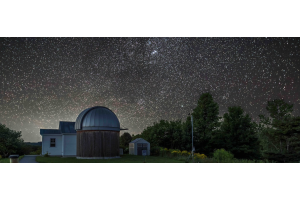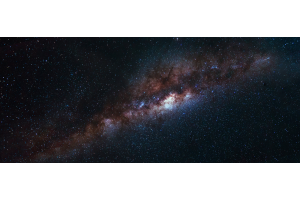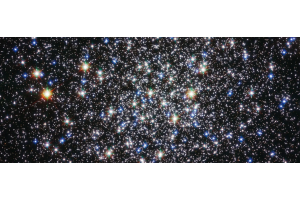
In this episode of What's in the Sky this Month, Teagan reviews some of the beautiful celestial objects you can see in the month of April 2026!
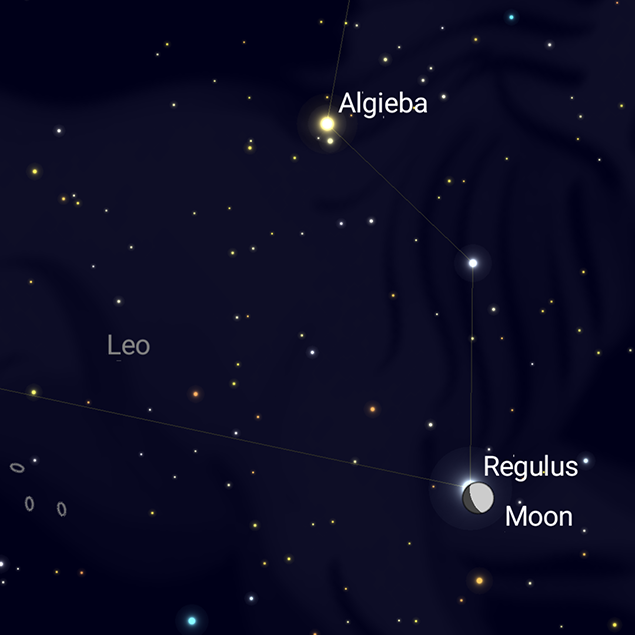
Image credit: SkySafari
The Moon Occults Regulus
Observers in the eastern half of the US are treated to a special event on April 25th, when the waxing gibbous Moon occults (ie, passes in front of) Regulus, the brightest star in the constellation of Leo. Observers in the southeast will get the best views, as the event will start in twilight skies and end in darkness. However, those in the midwest may find the event starting at sunset (ie, before Regulus is visible) and ending in twilight.
The exact circumstances will vary by location, so it’s best to use an app like SkySafari to simulate the event, but generally, it will start somewhere between 8:00 PM and 9:00 PM Eastern Time. Southeastern observers will enjoy a longer show (Miami being an excellent location) while those farther north might only see Regulus briefly skim the Moon’s northern limb. If you live north of New York, the star might miss the Moon entirely, providing a close but tantalizing near-miss.
OUR NEAREST NEIGHBORS
Neptune is too close to the Sun to be seen this month, but Venus climbs and shines in the west after sunset, joined by a crescent Moon on the 18th. Binocular observers might also catch a glimpse of faint Uranus during the first few evenings of the month, starting from about an hour after sunset. Jupiter remains bright, and can be found high in the southwest as darkness falls, with a nearly first quarter Moon close by on the 22nd. Of the predawn planets, only Mercury is relatively easily seen, low in the east-southeast until about the 20th. Look for it about 20 minutes before sunrise, with a very thin crescent Moon directly above it on the 15th. Mars and Saturn both require a very clear view of the eastern predawn horizon and - most likely - binoculars. If you have both, look for Mercury from the 16th onwards, as all three planets will appear within the same 10x50 binocular field of view. Their positions will change daily, but they’ll form a straight line on the 20th, with Mercury at the bottom, Mars to its upper left, and Saturn in between. Lastly, there’s a Full Pink Moon in Virgo on the 1st and a New Moon in Pisces on the 17th.
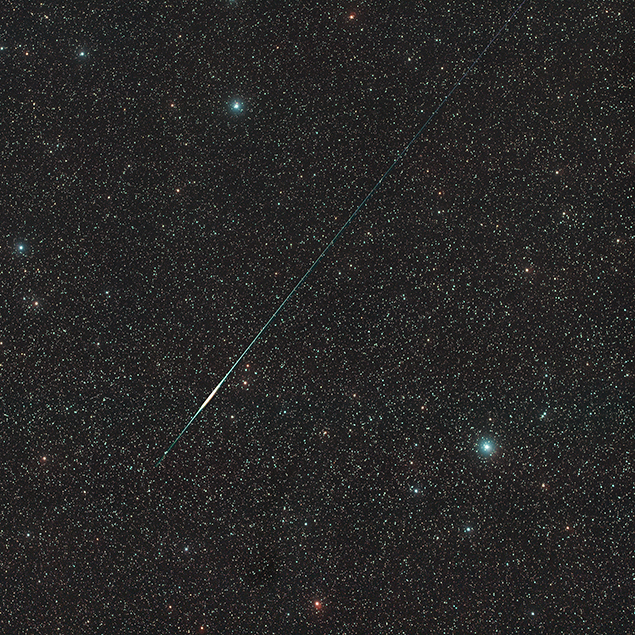
Image credit: Pawel Zgrzebnicki
Lyrid Meteor Shower
April brings us the Lyrid meteor shower, which peaks on the night of April 21st/22nd. You’ll want to wait until the early hours of the 22nd to get the best views, when the Moon will be below the horizon. Under ideal conditions, you can expect to see around 18 shooting stars an hour.
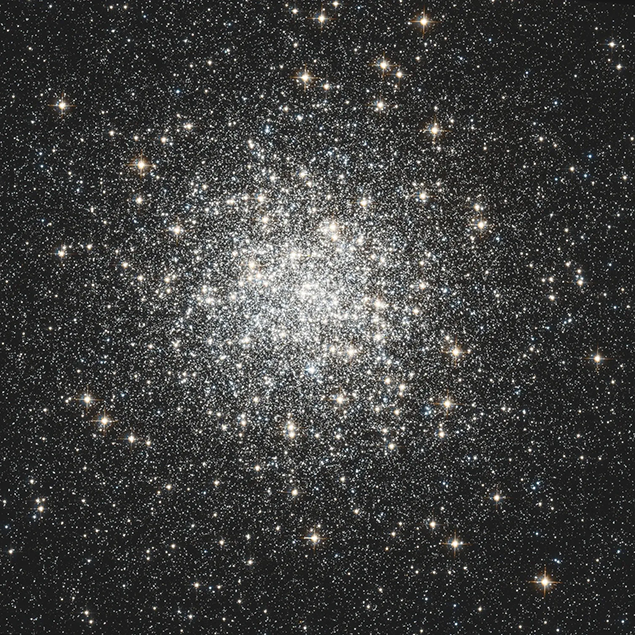
Image credit: NASA, ESA, STScI and A. Sarajedini
Messier 3
Messier 3 is a stunning globular cluster for both visual observers and imagers, especially if you’re looking for an easy smart telescope target. You can spot it with binoculars, but through a telescope the cluster appears to have a large, bright core and a halo that uniformly fades towards the cluster’s edge.
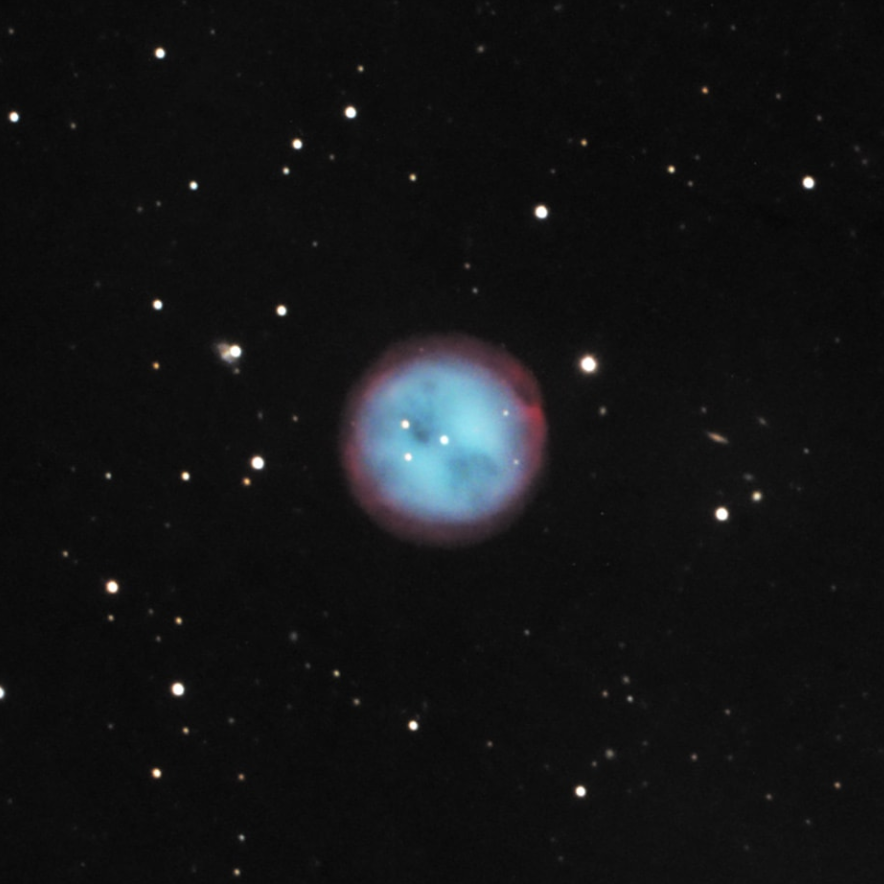
Image credit: Stargazer Observatory
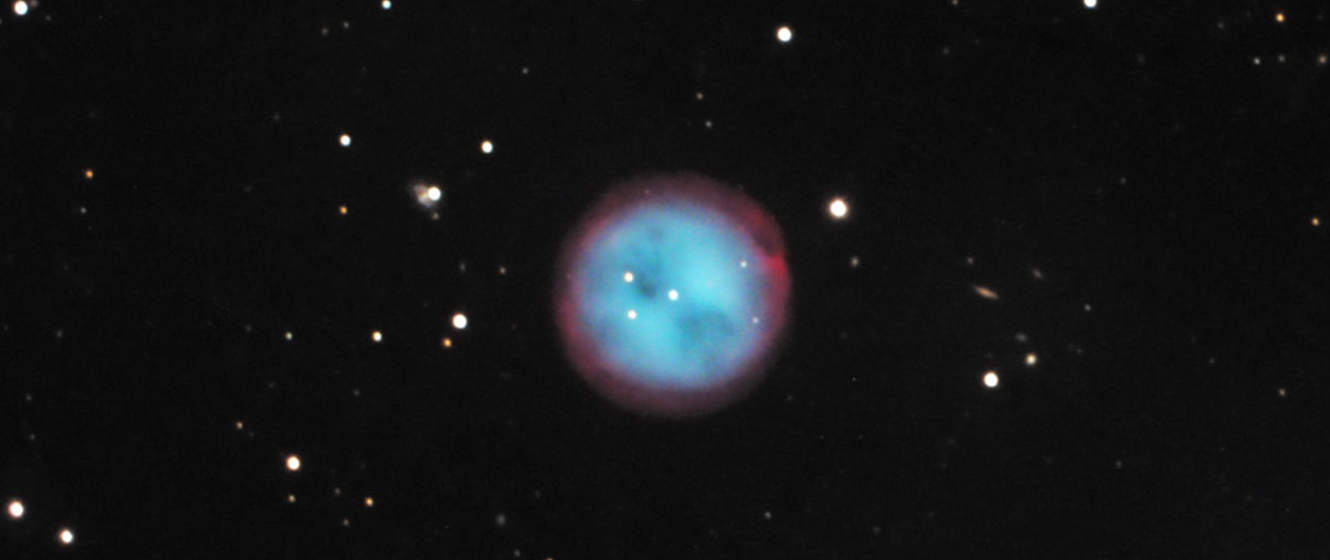
Messier 97 - The Owl Nebula
A planetary nebula, the Owl Nebula is the outer shell of gas and dust ejected by a star during the final stages of its life. It can be spotted with telescopes, but is best suited to larger apertures. Imagers and smart telescope owners will find the nebula’s greenish tint shows up nicely.
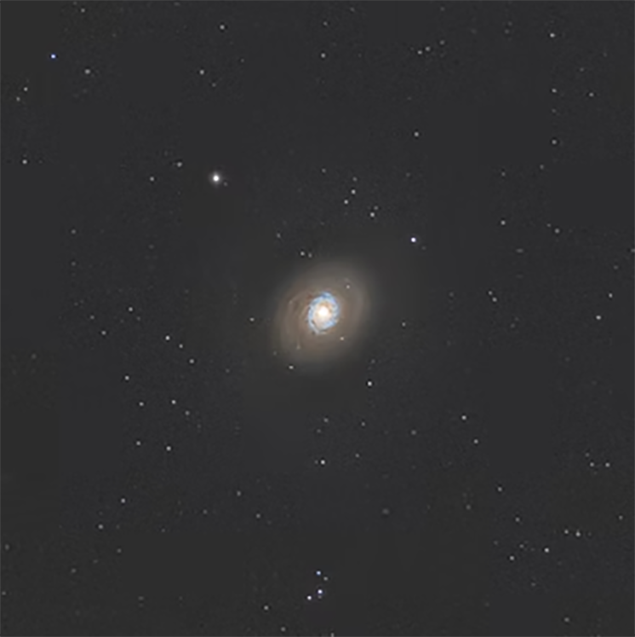
Image credit: Galactic Hunter
Messier 94
If you live under dark skies, Messier 94 can potentially be spotted with binoculars, but otherwise, a telescope will do the trick. A larger aperture will show a bright circular core, with a magnification of over 100x revealing texture in the halo.
LOOKING BACK
In the early hours of April 20th, 1803, residents of Richmond, Virginia rushed outside to the sound of a fire alarm - and saw the heavens ablaze. Between 1 AM and 3 AM, meteors streamed down “like rain,” with some observers likening the sight to “a shower of sky rockets.” The spectacular display was an unexpected outburst of the Lyrid meteor shower. Though usually modest, the Lyrids are notorious for surprise bursts, with eyewitness accounts reminding us that even the quietest showers can turn dramatic - so it pays to keep watch when late April nights roll around.