In this episode of What's in the Sky this Month, Teagan reviews some of the beautiful celestial objects you can see in the month of December 2025!
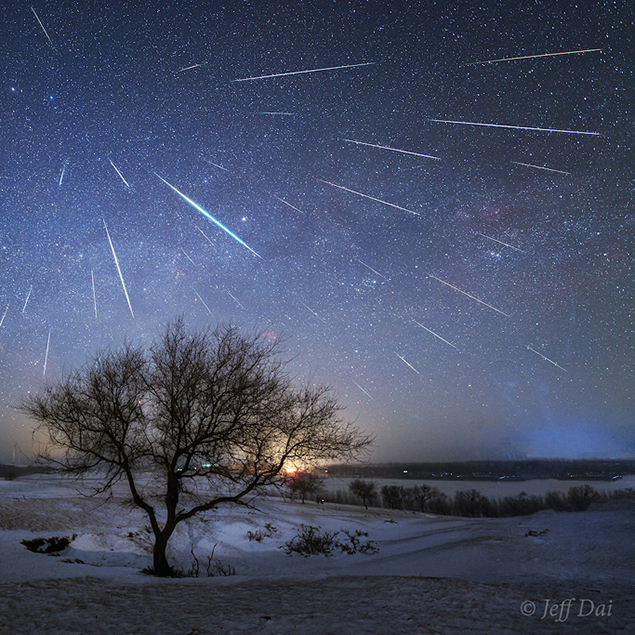
Image credit: Jeff Dai (TWAN)
The Geminid Meteor Shower
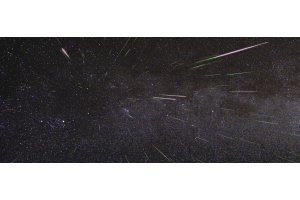
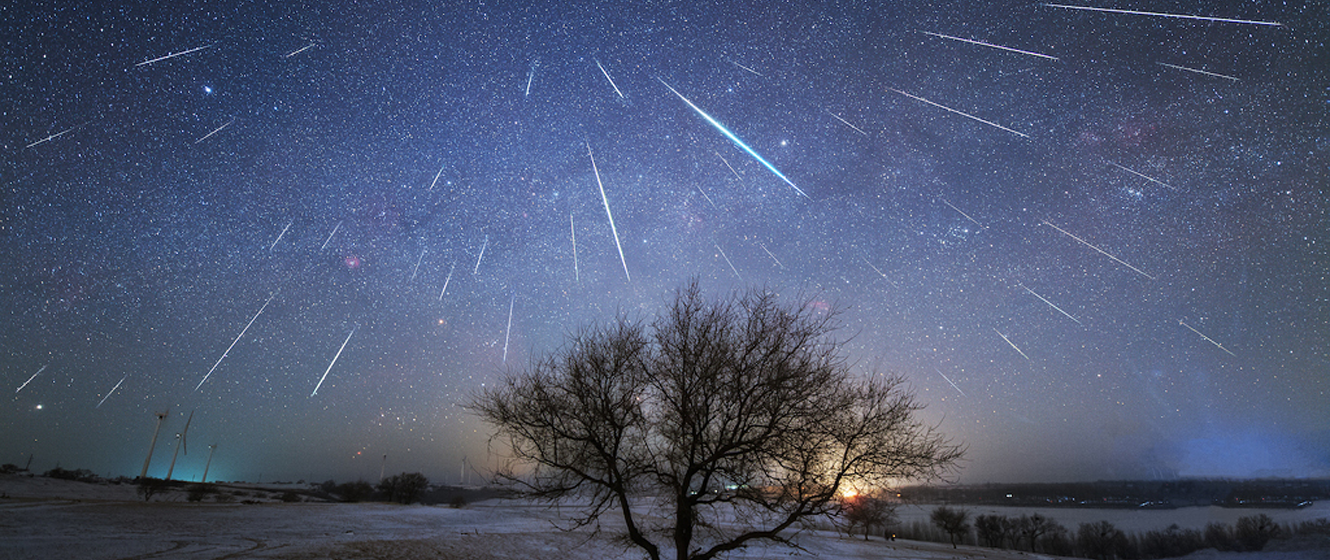
The best of the meteor showers - this month’s Geminids - has the potential to put on a good show. There are two reasons for this: firstly, under ideal conditions, the Geminids can produce up to 150 meteors an hour (more than any other shower) and, secondly, the Moon is a waning crescent when the shower peaks in the early hours of the 14th, and its light won’t be brightening the sky.
This means the fainter shooting stars won’t be drowned out by moonlight, and you may see more meteors than usual. Another big plus for the shower is that Gemini - the constellation from which they appear to originate - rises a few hours after sunset, so you can start your meteor watch from around 8pm on the 13th. Wrap up warm, find a dark location away from any lights, and enjoy the show!
OUR NEAREST NEIGHBORS
Venus and Mars are now too close to the Sun to be visible, but Saturn and Neptune can be found high in the south at the onset of night, giving you plenty of time to observe the pair telescopically. A first quarter Moon appears to the right of Saturn on the 26th. After reaching opposition last month, Uranus remains in a strong position, close to the Pleiades, and is observable throughout most of the night. Jupiter doesn’t reach opposition until January 10th, but is easily visible from mid-evening onwards and is a fine sight telescopically. It’s close to the stars Castor and Pollux in Gemini, with a waning gibbous Moon joining the trio on the 6th. Mercury puts on a good show in the predawn twilight and can be found towards the southeast, where it will be visible from about 30 minutes before sunrise for most of the month. It’s at its best from the 7th to the 10th, when the planet is at its brightest and farthest from the Sun in the sky. After that, it will start to fade and drop closer to the horizon, but you’ll see a waning crescent Moon to its upper right on the 17th. The Moon itself turns full on the 4th (the “Cold Moon”) and then new on the 19th.

Image credit: NASA
Messier 42 - The Great Orion Nebula
Messier 42, the Great Orion Nebula, is one of the few objects that looks as spectacular through a telescope as it does in photographs. Visible as a tiny, misty patch just below the three stars of Orion’s belt, a telescope will show a large, greenish gray cloud with a tiny group of stars - the Trapezium - sparkling at its center.
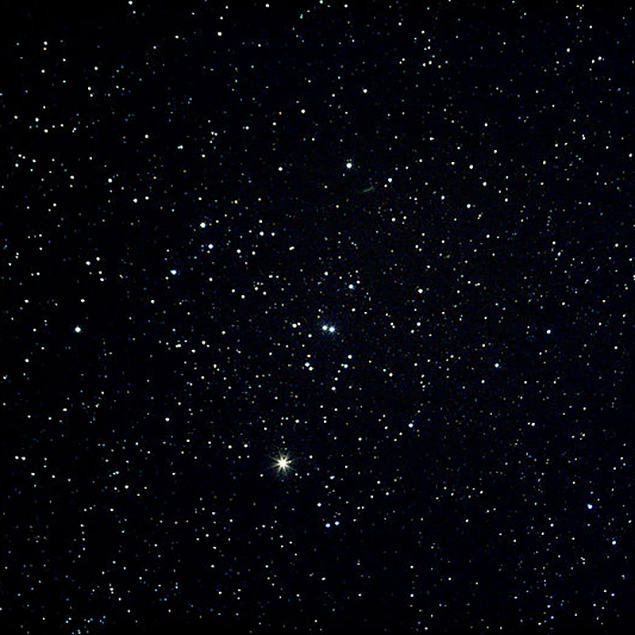
Image credit: Todd Vance
The Hyades
Follow the three stars of Orion’s belt upwards, and you’ll come to a V-shaped group of stars. This is the Hyades star cluster, and it represents the head of Taurus the Bull. Coppery-colored Aldebaran, the brightest star in the cluster, marks the red eye of the bull.
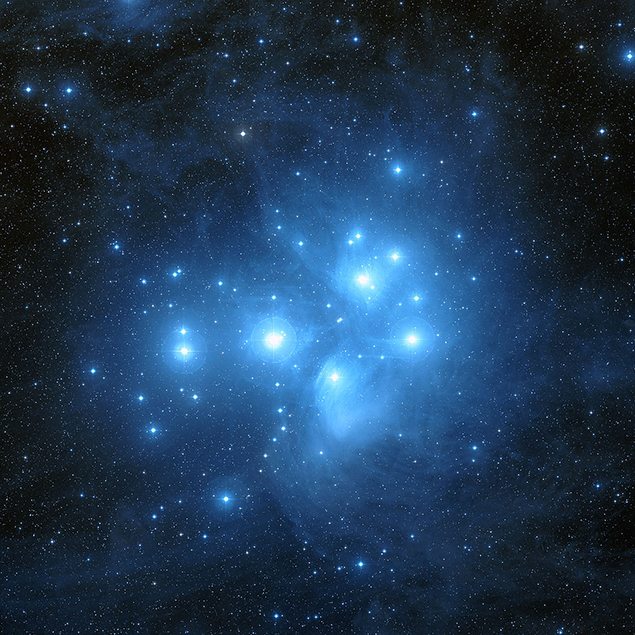
Image credit: Davide De Martin & the ESA/ESO/NASA Photoshop FITS Liberator
Messier 45 - The Pleiades
Continue the line up from Orion’s Belt, through Aldebaran, and you’ll come to a tiny group of stars. Known as the Pleiades, these stars are easily visible to the naked eye (even from light-polluted skies) and are a beautiful sight in binoculars and telescopes at very low power.
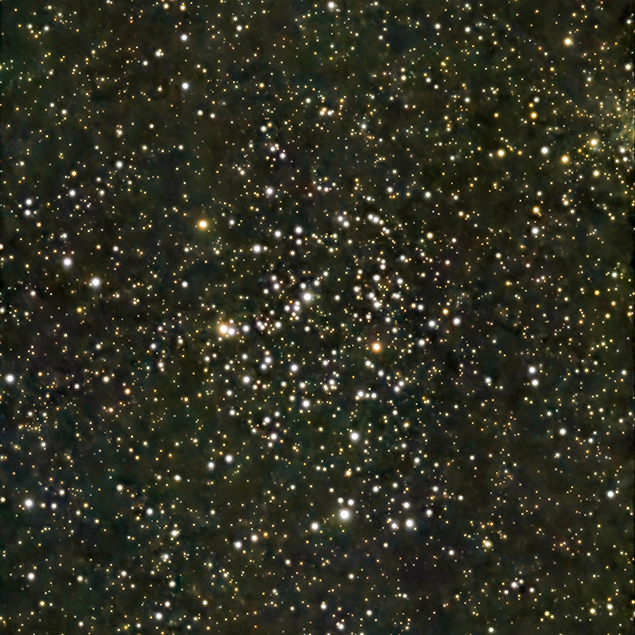
Image credit: Richard Bartlett
Messier 35
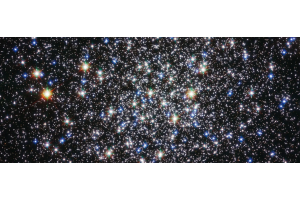
A relatively easily found cluster located at the feet of Gemini, the Twins, 10x50 binoculars will show a number of individual stars, while a telescope at low power will show hundreds more. Look out for a pale gold and blue pair on the cluster’s northern edge.
STELLAR CONCEPTS
Elongation: When either Mercury or Venus is at its furthest from the Sun in the sky, we say that the planet is at greatest elongation from the Sun. When the planet is furthest west of the Sun (ie, at greatest western elongation), it is visible in the predawn sky, whereas when the planet is furthest east of the Sun (ie, at greatest eastern elongation), it is visible in the evening sky. Elongations only apply to the inner planets of Mercury and Venus, as they cannot appear opposite the Sun in the sky (unlike the outer planets) and therefore cannot be said to be at opposition.