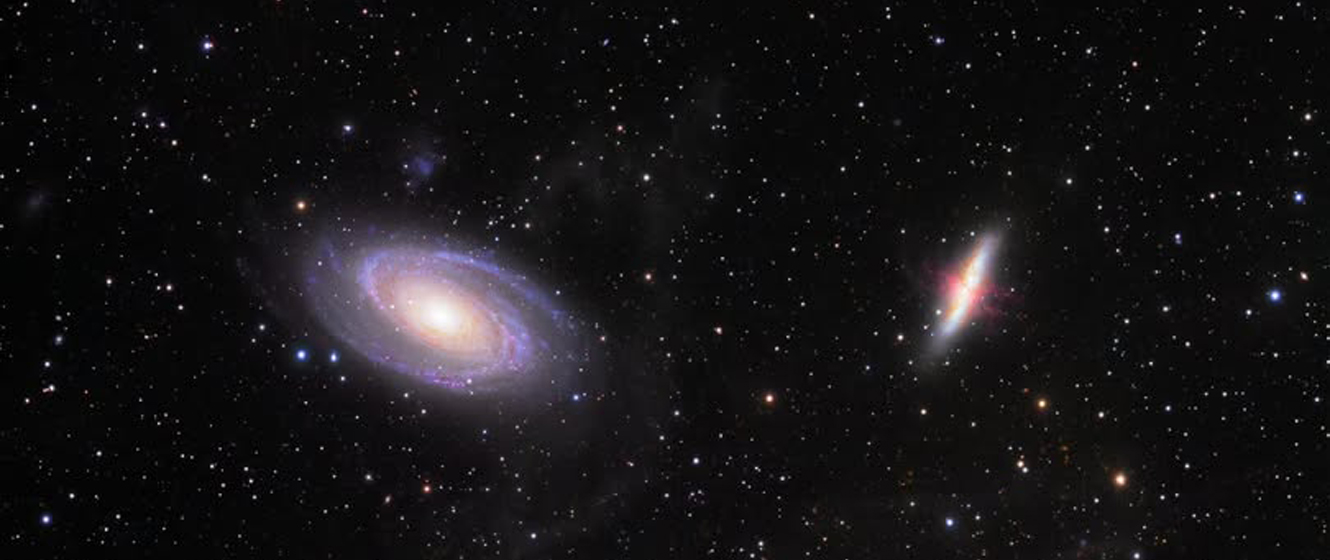
In this episode of What's in the Sky this Month, Teagan reviews some of the beautiful celestial objects you can see in the month of February 2026!
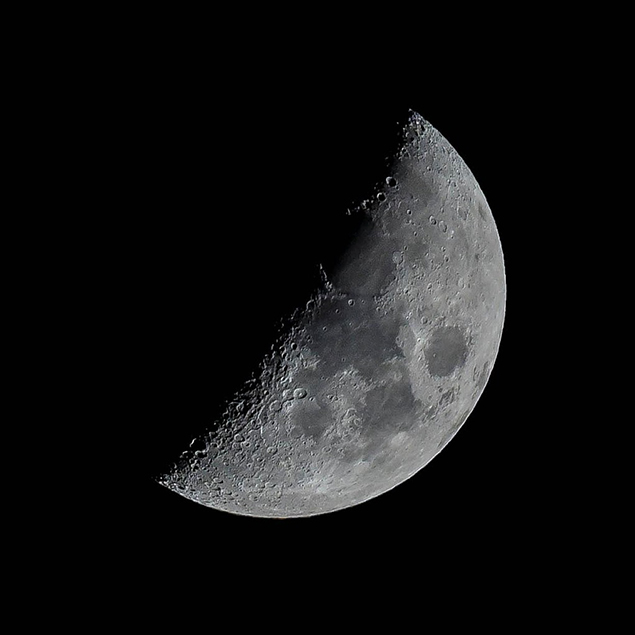
Grazing Occultation of the Pleiades by the Moon
An occultation occurs when one object (often the Moon) passes in front of another, hiding it from view. A grazing occultation, however, occurs when the background object is only partially obscured by the other. On February 23rd, many observers in North America will get the chance to see this for themselves, when the nearly first quarter Moon will skim across the north-westerly edge of the Pleiades.
Observers in the Midwest and West are favored, as the event starts late in the evening (around 10 PM) for East Coast observers, when both objects are sinking in the west. Conversely, observers in the Northwest might find the sky isn’t quite dark, as the event begins shortly before 7 PM PT. (The timing will vary, depending upon your location, and it’s best to check with an app, such as SkySafari.) Binoculars are ideal for this event, but the Moon will be bright, and you may need to edge it out of the field of view to see the cluster’s stars.
OUR NEAREST NEIGHBORS
Mars and Neptune are too close to the Sun to be observable this month, but every other planet can be seen in the evening sky. Mercury becomes visible from around the 8th onwards, and can be seen low in the west-southwest approximately 15 to 20 minutes after sunset. Look for a thin crescent Moon just to its right on the 18th before it reaches greatest elongation from the Sun (a meager 18 degrees) on the 19th. Venus will also be emerging into the evening twilight later this month, with the two worlds just 4.5 degrees apart on the 26th and 27th. By this time, you’ll need binoculars to spot Mercury, but the pair will fit within the same 10x50 field of view, with Mercury appearing to the upper right of Venus. Saturn clings to the western horizon and is joined by the crescent Moon on the 19th, while Uranus is still within the same 10x50 binocular field of view as the Pleiades. Jupiter continues to shine brilliantly, near Castor and Pollux in Gemini, and can be seen throughout the evening and early morning hours. A waxing gibbous Moon passes by on the 26th. Lastly, the month begins with a Full Snow Moon in Cancer on the 1st, followed by a new Moon in Aquarius on the 17th.
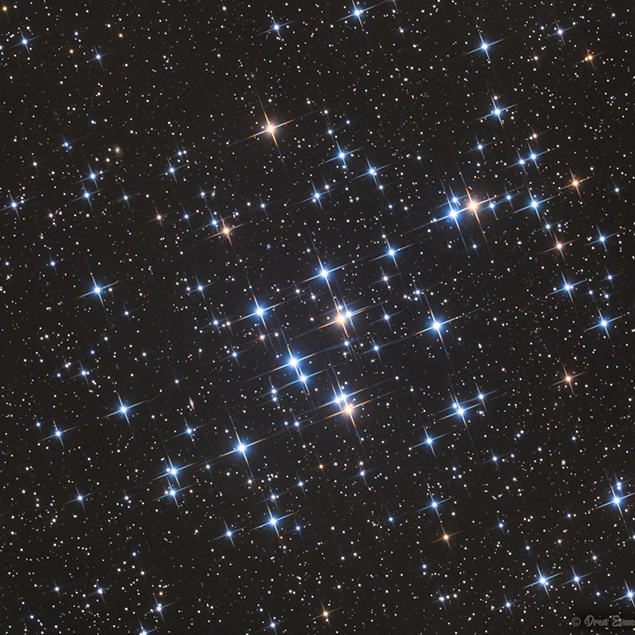
Image credit: Drew Evans
Messier 44 - The Beehive Cluster
The famed Beehive Cluster in Cancer is visible to the naked eye - if your skies are dark enough. This one is quite easy to spot. You’ll find it roughly midway between Castor and Pollux in Gemini and Regulus in Leo. While this is a fine sight in binoculars, it’s a little too large for telescopes unless you’re using a very low magnification.
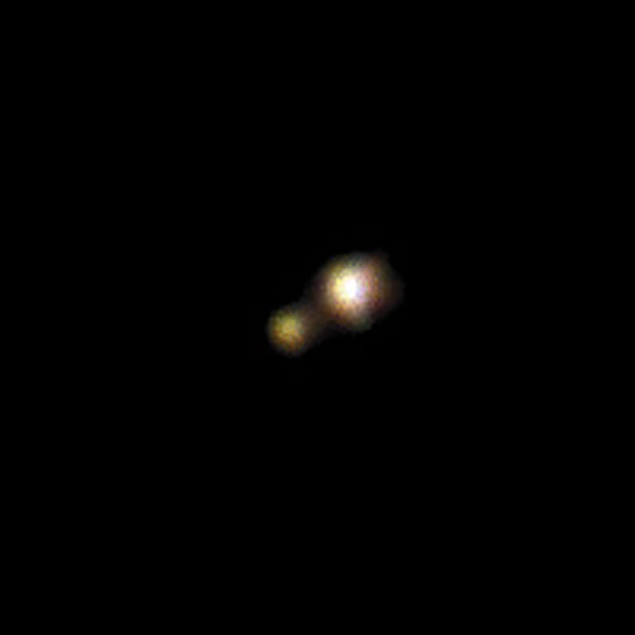
Image credit: Rainer Anton
Gamma Leonis - Algieba
Algieba is a famous double star that’s one of a handful that can be enjoyed with both binoculars and a telescope. Almost any pair of binoculars will show a golden star with a wide, fainter blue companion, but a telescope at around 90x will split the gold star into two components - a gold primary, and a slightly fainter pale gold secondary.
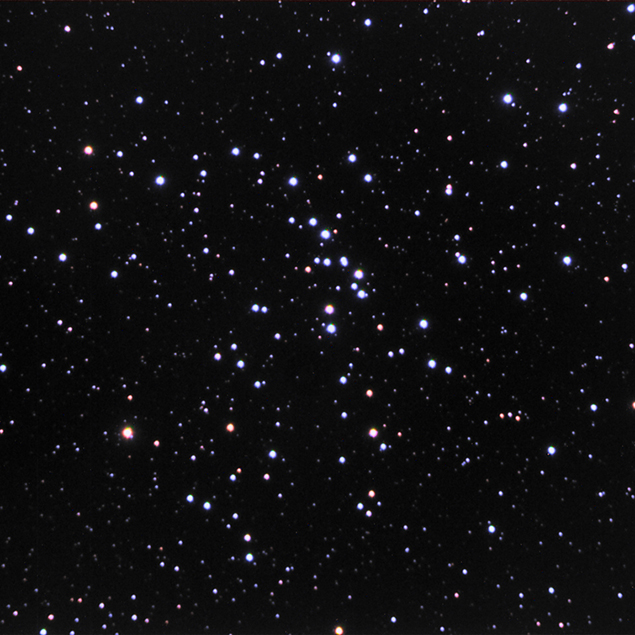
Image credit: Jim Mazur
Messier 48
A little tricky to locate, M48 is roughly 12 degrees southwest of the Head of Hydra and 14 degrees southeast of Procyon (the two stars of Canis Minor will point to it). This scattered open cluster is bright enough to be seen with binoculars, but is best seen with a telescope at low power.
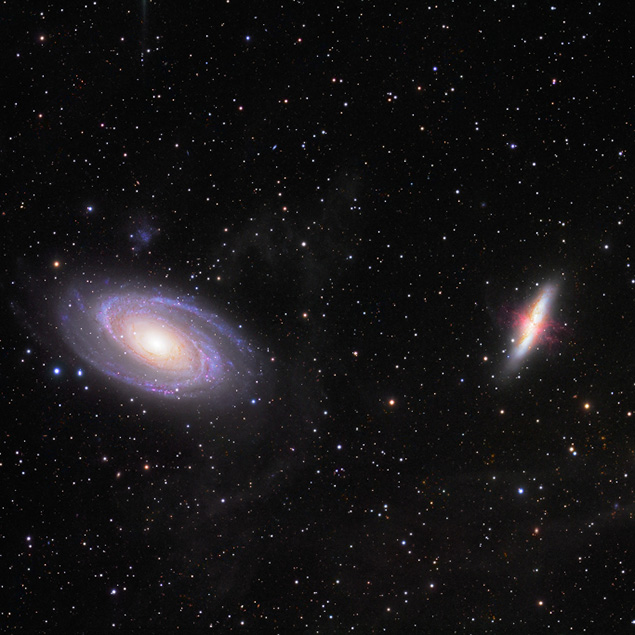
Image credit: Dietmar Hager, Torsten Grossmann
Messier 81 & Messier 82
Galaxy season is almost here, but we can get an early start with Messier 81 and 82 in Ursa Major. Detectable with binoculars, this duo can be seen together within the same low-powered telescopic field of view (around 40x) and images well with smart telescopes.
LOOKING BACK
On February 19, 1771, the French astronomer Charles Messier recorded an open star cluster now known as Messier 48 (NGC 2548). He described it as a “cluster of very small stars, without nebulosity,” but mistakenly noted its position. As a result, Messier 48 was considered “missing” for more than a century. In 1934, Oswald Thomas correctly identified it, and in 1959, T. F. Morris confirmed the match. Today, Messier 48 can be seen with binoculars and is a fine telescopic target, spanning the diameter of the full Moon. So the next time you sweep through Hydra with binoculars, pause on Messier 48 and remember its curious journey from forgotten to found!