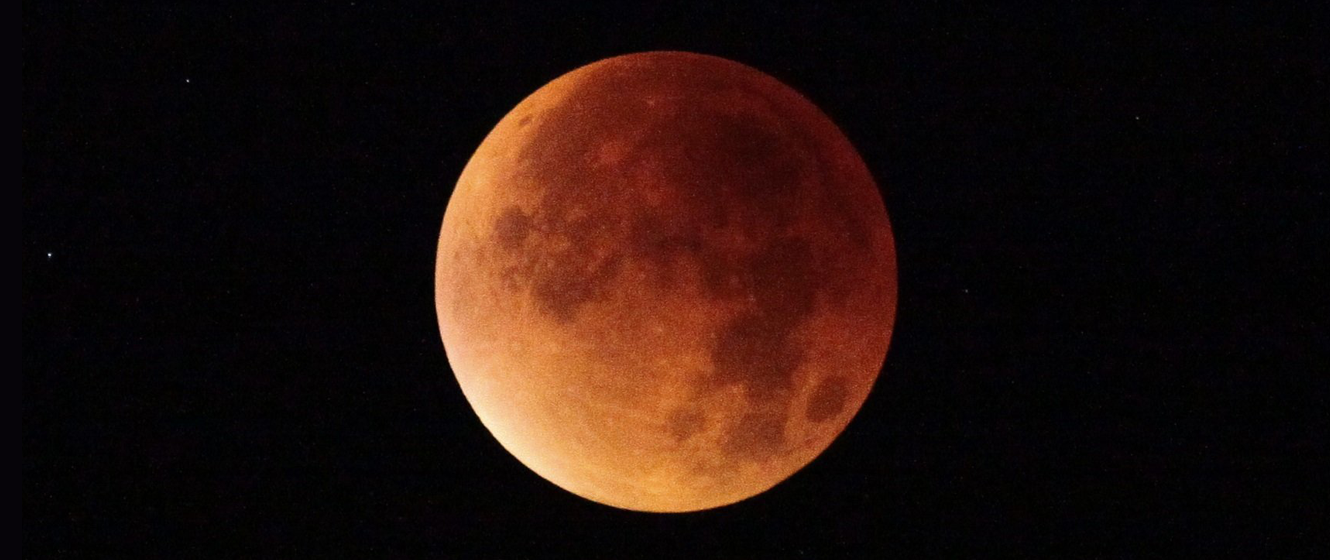
In this episode of What's in the Sky this Month, Teagan reviews some of the beautiful celestial objects you can see in the month of March 2026!
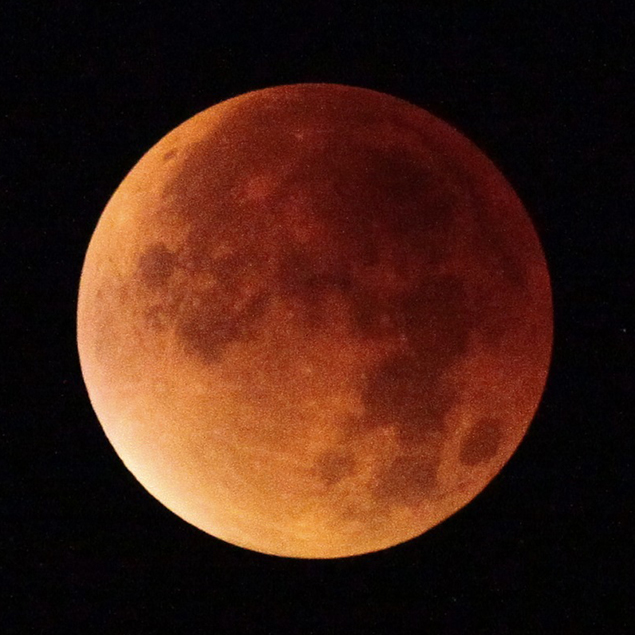
Total Lunar Eclipse
Full Moon occurs in the early hours of the 3rd, and for many in North America, it comes with an added bonus - a total lunar eclipse. West coast observers are favored, as the penumbral phase begins at 3:44 AM ET (12:44 AM PT) with the partial phase beginning at 4:50 AM ET (1:50 AM PT). By the time the eclipse enters totality, at 06:04 AM ET (03:04 AM PT), the Moon will be on the western horizon for many on the East Coast, while those in the Midwest and West will have the opportunity to enjoy the eclipse a little while longer.
If you’re lucky enough to experience totality, the Moon will appear below Leo, roughly 12 degrees from Regulus. Totality then ends at 7:02 AM ET (4:02 AM PT), with the partial phase ending 75 minutes later. The concluding penumbral phase then ends at 9:23 AM ET (6:23 AM PT), with the Moon either below or on the horizon for everyone.
OUR NEAREST NEIGHBORS
Neptune is too close to the Sun to be visible, but binocular observers may catch Mercury shortly after sunset and very low in the west during the first few days of the month. You’ll find it to the lower right of Venus, which is visited by a waxing crescent Moon on the 19th and 20th. As Venus climbs away from the Sun, Saturn sinks towards it, with the two being just a degree apart on the 7th and 8th. Uranus remains within the same 10x50 binocular field of view as the Pleiades, while Jupiter can be found roughly halfway along the length of Gemini. Look for the first quarter Moon nearby on the 25th and 26th. Mercury creeps into the eastern predawn sky around mid-month, with the thin crescent Moon to its lower right on the 17th. The planet may be tricky to spot until almost the end of the month, but step outside some 15 to 20 minutes before sunrise to try your luck. Mars may also be barely visible by the very end of the month, but it will be too low and faint to be easily seen. There’s a Full Worm Moon in Leo on the 3rd, and it then turns new in Pisces on the 18th.
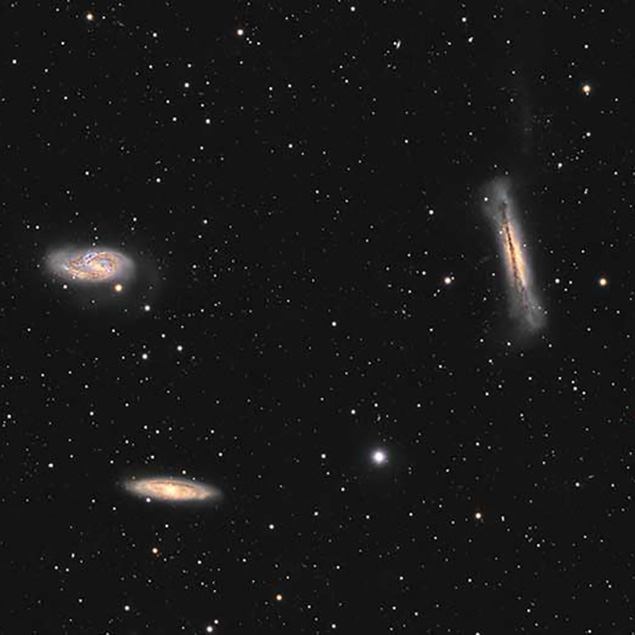
Image credit: Ron Brecher
M65, M66 & NGC 3628 - The Leo Triplet
A favorite target for both imagers and visual observers, the Leo Triplet of galaxies neatly fits within the same low-powered field of view. M66 is the brightest and appears elongated, while M65 is a little fainter. NGC 3628 appears as a faint streak to the northeast.
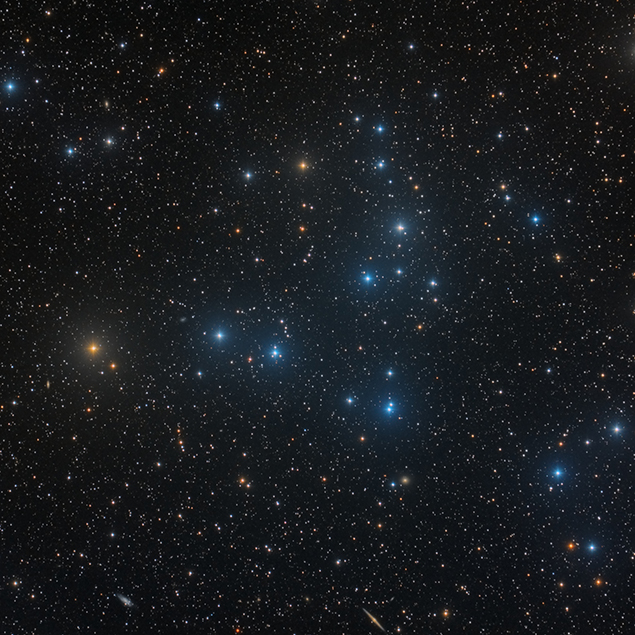
Image credit: Alberto Pisabarro
Melotte 111 - The Coma Star Cluster
This large, scattered cluster of stars can be seen with the naked eye from under dark skies and represents the hair of Queen Berenices of Egypt. It looks great with low or medium-powered binoculars (7x or 10x), with its brightest star, Gamma Comae Berenices, appearing at the top of an inverted Y.
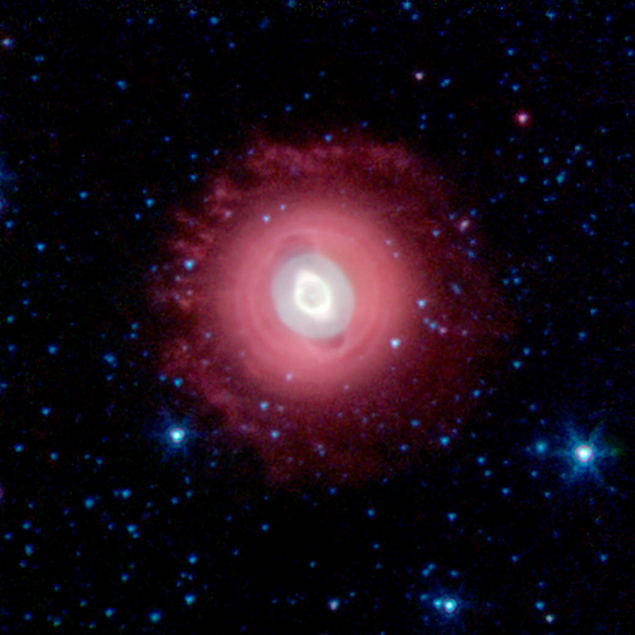
Image credit: NASA/JPL-Caltech/Harvard-Smithsonian CfA
NGC 3242 - The Ghost of Jupiter
A little tricky to find, the Ghost of Jupiter is so-called because it appears the same size as Jupiter in the sky. Smaller scopes will show a bright, bluish disc, while mid-sized scopes will show the central star encircled by a ring, giving the nebula the appearance of an eye.
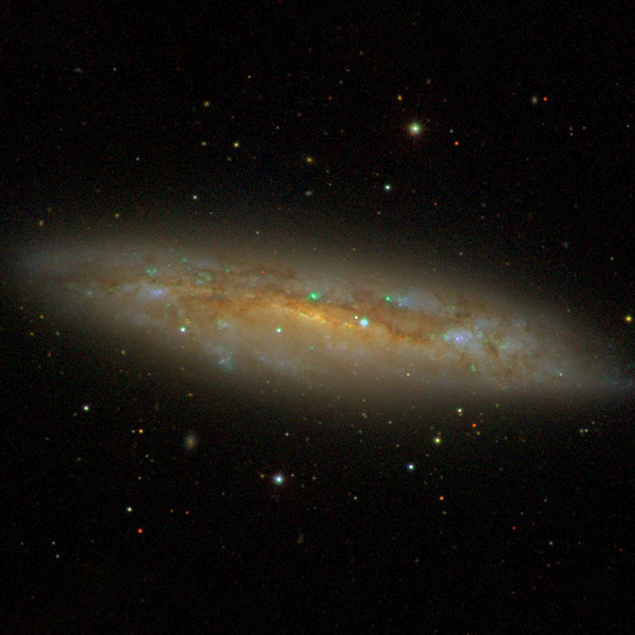
Image credit: Sloan Digital Sky Survey
Messier 108
Close to both Merak and M97, the Owl Nebula, in Ursa Major, this edge-on galaxy can be seen in small scopes, while larger apertures will show texture in its halo and an offset core split in two. As with many galaxies, imagers will need to invest both exposure and processing time to get the best results.
LOOKING BACK
On March 25, 2024, a penumbral lunar eclipse was visible across much of the Americas. During the event, the Moon passed through the outer part of Earth’s shadow, causing a subtle dimming rather than a full eclipse. The eclipse lasted a little over 4.5 hours, reaching its maximum at 3:12 AM ET (12:12 AM PT). While less dramatic than a total lunar eclipse, it offered skywatchers a chance to see the effects of Earth’s shadow on the Moon and served as a reminder of the regular, observable rhythms of the solar system.