In this episode of What's in the Sky this Month, Teagan reviews some of the beautiful celestial objects you can see in the month of November 2025!

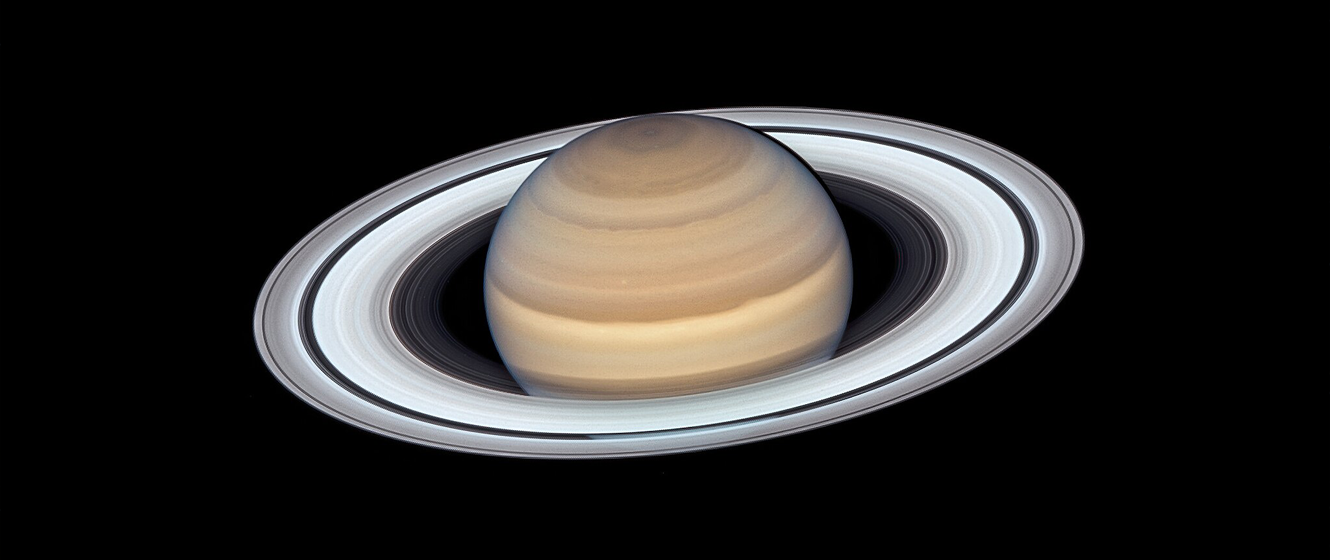
Image credit: ESA/HUBBLE, CC BY 4.0/WIKIMEDIA
Saturn’s Rings (Almost) Disappear
It takes Saturn roughly 30 years to orbit the Sun, and for much of that time, the planet’s rings are clearly visible. However, every 15 years or so, when the Earth crosses Saturn’s orbital plane, the rings appear edge-on to us, and for a brief time they disappear.
The ring plane crossing itself actually occurred on March 23rd, but the planet appeared too close to the Sun in the sky at that time. Thanks to the Earth’s orbital inclination, the gap has been closing again, and on November 23rd, we’ll get the next best thing - the rings won’t quite be edge-on, but they’ll appear so narrow that they’ll all but disappear, with only larger amateur scopes being able to detect them.
OUR NEAREST NEIGHBORS
Mercury appears in both the evening and morning sky this month. It’s briefly visible in the evening sky until the 10th at about 15 minutes after sunset, very low towards the west-southwest. If you have binoculars, try looking for faint Mars, which appears five degrees to Mercury’s right. Saturn & Neptune remain visible for much of the night, separated by four degrees, with the waxing gibbous Moon appearing to the right of Saturn on the 1st and 29th. Uranus is at opposition on the 21st (see below) while Jupiter is observable after midnight, close to Castor and Pollux in Gemini. A waning gibbous Moon appears between Pollux and Jupiter in the early hours of the 10th. Venus is low over the east-southeastern horizon at about 30 minutes before dawn at the start of the month. Spica, the brightest star in Virgo, appears to its right at that time, and a thin crescent Moon to its upper right on the 18th. Step outside at around 15 minutes before sunrise on the 24th and 25th, and you might also see dim Mercury, just 1.5 degrees to the left of Venus. Lastly, there’s a Full Beaver Moon in Aries on the 5th, and the Moon turns new on the 20th.
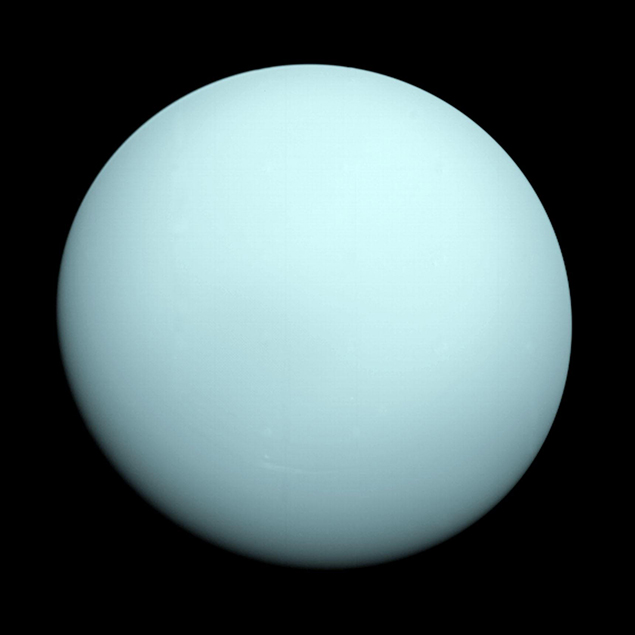
Image credit: NASA/JPL-Caltech
Uranus at Opposition
Uranus reaches opposition on the 21st and is at its best for the year. Regular 10x50 binoculars will show the planet as a starlike point, within the same field of view as the Pleiades star cluster. A telescope and a magnification of around 100x will show the planet as a tiny, aquamarine disc.
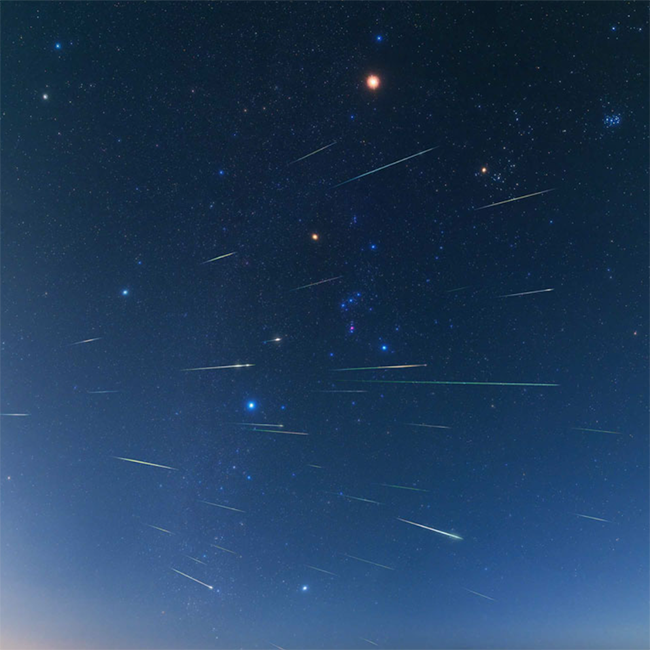
Image credit: Luo Hongyang
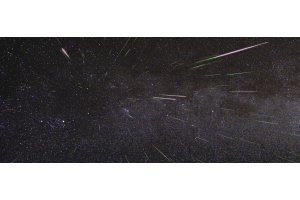
The Leonid Meteor Shower
Step outside on the evening of the 16th or the early hours of the 17th, and you might see a shooting star or two. The Leonids are not the most prolific shower - you could see up to 15 meteors an hour under ideal conditions - but the waning crescent Moon won’t be causing any interference.
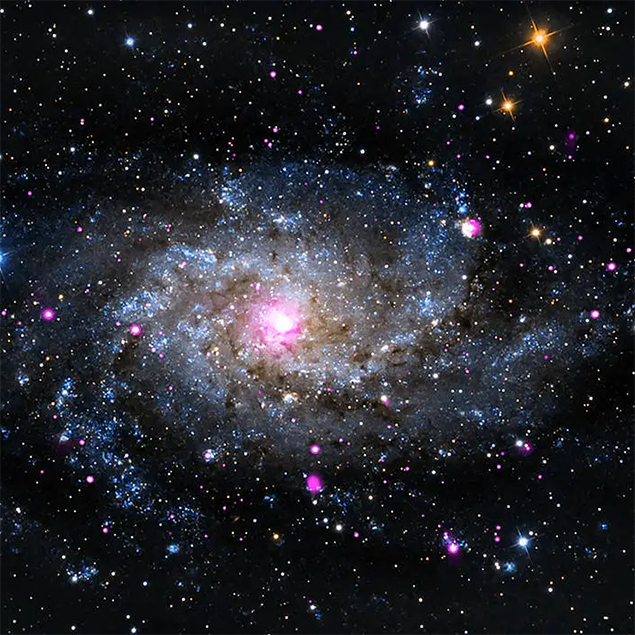
Image credit: X-ray: NASA/CXC/SAO/P. Plucinsky et al.
Messier 33 - The Triangulum Galaxy
While being a little tricky for visual observers, M33 is a treat for astrophotographers. Through binoculars, it appears as a faint, oval patch of light, but you’ll need a large telescope to see anything of its spiral arms.
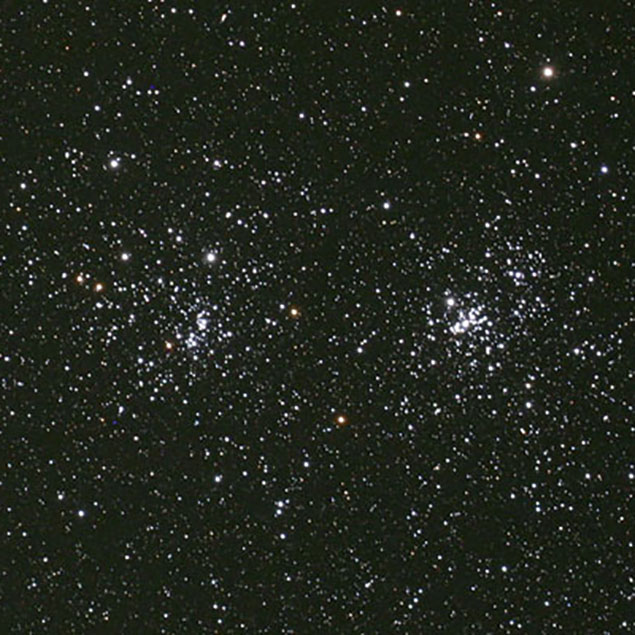
Image credit: Andrew Cooper
NGC 869/884 - The Double Cluster
A gem for almost any observer, the famous Double Cluster is conveniently located between Cassiopeia and Perseus. It can be glimpsed with the naked eye under dark skies and provides an attractive view through binoculars. Telescopically, you’ll need a magnification of around 70x or less to fit them both within the same field of view.
STELLAR CONCEPTS
Retrograde & Prograde Motion: As confusing as it sounds, sometimes a planet will appear to move backwards through the sky. This is due to the orbital motions of the Earth and planets; a planet appears to have backwards (retrograde) motion across the sky as it passes, or is passed by, the Earth. Mercury will be retrograde for about 3 weeks, Venus for about 6 weeks, and the outer planets will each be retrograde for several months at a time. When the planet is moving normally (ie, forwards) across the sky, this is called prograde motion.