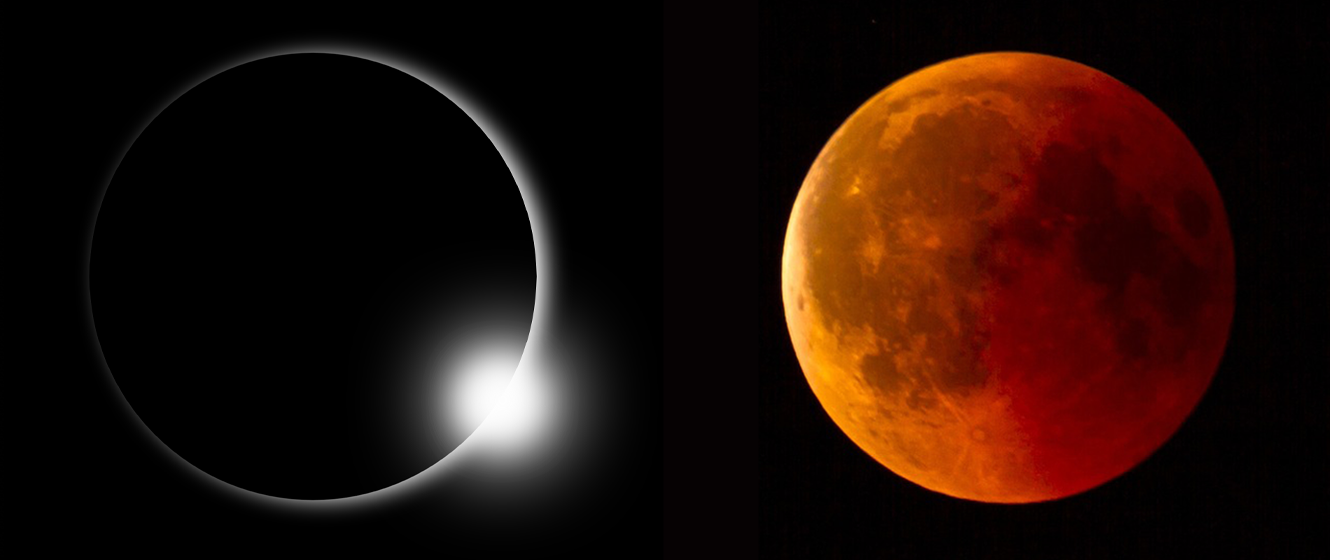
There’s nothing quite as awe-inspiring as an eclipse. Both solar and lunar eclipses have captivated millions of people worldwide for thousands of years, with many civilizations attributing the phenomena to gods or netherworld spirits.
While there’s nothing mystical causing the eclipses themselves, that’s not to say the phenomenon isn’t a magical experience. Whether it’s a solar eclipse where the sunlight fades over the course of several hours, the temperature drops, and the landscape is plunged into momentary darkness, or a lunar eclipse where the Moon temporarily takes on a coppery hue, there’s an otherworldly aspect to eclipses that no other astronomical event can emulate. Let’s review the eclipses you can see this year!
The Eclipses for 2026
It’s a mixed bag this year for eclipses. On the plus side, we have a little variety - an annular solar eclipse and a total solar eclipse, plus a total lunar eclipse and a partial lunar eclipse. Unfortunately, the annular solar eclipse is only visible near the South Pole; a few lucky observers in North America may only see the Moon scrape the side of the Sun during the total solar eclipse, and both lunar eclipses are problematic.
This also seems to be a year when, for many, the eclipses occur with the Sun or Moon close to the horizon, giving observers the opportunity to witness a sunset, moonrise, or moonset eclipse, depending on the eclipse and, of course, your location. If you’d like to know the details for your specific location, visit the Time and Date site. There’s also a very useful interactive map of solar eclipses from Xavier M. Jubier.
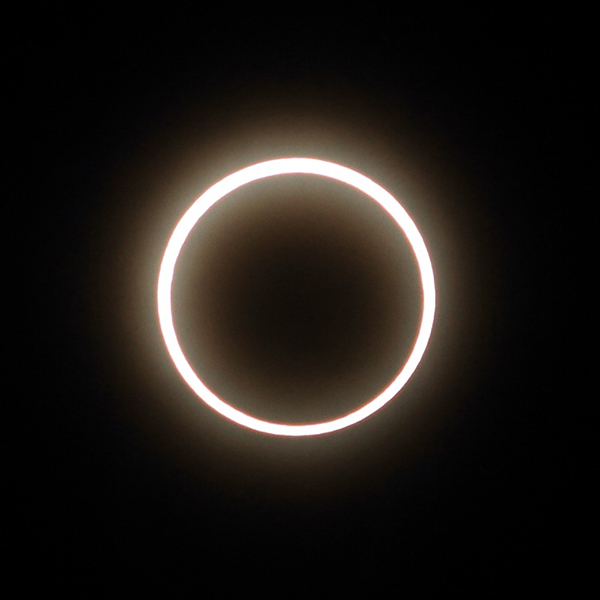
February 17th 2026 - Annular Solar Eclipse
If you’re looking for the chance to experience an annular solar eclipse, this isn’t it. With the path of annularity only curving through the Southern Ocean, the only ones likely to witness it are the scientists (and penguins) located at Concordia Station, in Antarctica. Those lucky few, if the weather is favorable, will see a truly unforgettable sight - a ring of fire at sunset, hovering low over the southwestern horizon, with a vista of snow and ice barely a few degrees below it.
The hundred or so residents and visitors in the Kerguelen Islands will have the next-best view, with observers in the capital of Port-aux-Français seeing 88% of the Sun’s disc covered. Since only seasoned, dedicated eclipse chasers are likely to venture that far, a more likely alternative are the islands of Mauritius and Réunion, which will both experience an early evening partial eclipse with 43% obscuration.
Lastly, Madagascar and South Africa offer a partially eclipsed afternoon Sun, with coverage ranging from 13% in Cape Town to 32% in Antananarivo and Toamasina.
| Location | Start of Eclipse | Maximum Eclipse | Magnitude | Altitude | Direction | End of Eclipse |
|---|---|---|---|---|---|---|
| Antarctica - Concordia Station | 18:48 | 19:47 | 0.97 | 5.1° | SW | 20.45 |
| French Southern & Atlantic Lands - Port-aux-Français | 16:35 | 17:41 | 0.88 | 17.5° | W | 18:43 |
| Madagascar - Antananarivo | 15:43 | 16:35 | 0.32 | 24.5° | W | 18:43 |
| Madagascar - Antsiranana | 16:04 | 16:46 | 0.21 | 19.4° | W | 17:24 |
| Madagascar - Toamasina | 15:45 | 16:36 | 0.32 | 22.6° | W | 17:24 |
| Mauritius - Port Louis | 16:38 | 17:34 | 0.43 | 15.5° | W | 18:24 |
| Réunion - Saint-Denis | 16:37 | 17:32 | 0.43 | 18.1° | W | 18:24 |
| South Africa - Cape Town | 14:01 | 14:43 | 0.13 | 57.8° | NW | 15:24 |
| South Africa - Durban | 14:09 | 15:05 | 0.27 | 45.6° | W | 15:57 |
| South Africa - Johannesburg | 14:26 | 15:11 | 0.17 | 47.7° | W | 15:54 |
March 3rd 2026 - Total Lunar Eclipse
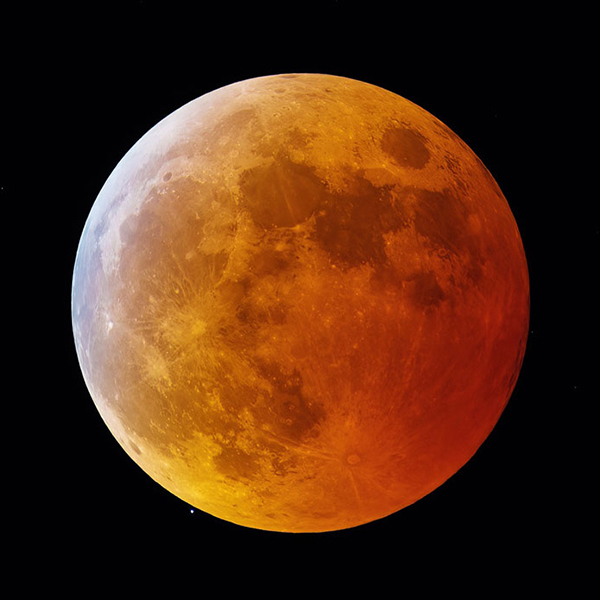
Last year in March, North American observers were treated to a total lunar eclipse that the entire continent could enjoy, from start to finish. This year, we’re not so lucky, as the eclipse primarily takes place in the early hours of the 3rd, with totality beginning at moonset for those on the east coast.
That said, given that the full Moon sets at sunrise, the sky will be relatively bright and the Moon a pale, coppery color, making this an interesting sight for anyone with a clear view of the western horizon.
The further west and further south you are, the better off you’ll be, but realistically, there isn’t much improvement for those in the Central Time zone, as the Moon will be low in the west when totality starts.
Those on the west coast can witness the partial and total phases in their entirety, but post-totality, partial phase views may be hampered by the Moon’s low altitude and the predawn brightening sky.
If you’re able to step outside during totality, you can expect to see the Moon in Leo, roughly halfway along the length of the constellation, with Regulus appearing to its lower right.
| Event | UT | Eastern Time | Central Time | Mountain Time | Pacific Time | Alaska Time | Hawaii Time |
|---|---|---|---|---|---|---|---|
| Penumbral Phase Begins | 08:44 | 03:44 | 02:44 | 01:44 | 00:44 | 23:44* | 22:44* |
| Partial Phase Begins | 09:50 | 04:50 | 03:50 | 02:50 | 01:50 | 00:50 | 23:50* |
| Totality Begins | 11:04 | 06:04 | 05:04 | 04:04 | 03:04 | 02:04 | 01:04 |
| Mid-Eclipse | 11:33 | 06:33 | 05:33 | 04:33 | 03:33 | 02:33 | 01:33 |
| Totality Ends | 12:02 | 07:02 | 06:02 | 05:02 | 04:02 | 03:02 | 02:02 |
| Partial Phase Ends | 13:17 | 08:17 | 07:17 | 06:17 | 05:17 | 04:17 | 03:17 |
| Penumbral Phase Ends | 14:23 | 09:23 | 08:23 | 07:23 | 06:23 | 05:23 | 04:23 |
*Event occurs on the evening of the 2nd
September 7th, 2025 - Total Lunar Eclipse
Whereas February’s solar eclipse favored the far southern hemisphere, August’s eclipse favors the northern, but with a path that extends across a much greater area of dry - and comparatively warm - land. In fact, if you’re looking for a good excuse for a Spanish summer vacation, then this is the eclipse for you.
The far northeastern reaches of Greenland are the first to witness totality, with the Moon’s shadow then moving south towards Iceland. It misses Nuuk, the capital of Greenland, but observers in Reykjavík, Iceland, skim through the shadow and will witness a short period of totality lasting 58 seconds.
The shadow then passes south through the North Atlantic, passing west of Ireland and then making landfall in northern Spain. This provides observers in cities across western and northern Europe with a darker-than-usual sunset, as many locations will see a Sun roughly 90% obscured hovering near the western horizon.
When it comes to Europe, all the sweet spots are in northern Spain and the Balearic Islands, with Bilbao and Zaragoza both experiencing totality (Zaragoza being the better option) and Barcelona, Madrid, and Seville barely missing out. Palma, on the island of Mallorca (aka Majorca), experiences totality lasting 1 minute and 36 seconds at sunset, with the other Balearic Islands of Ibiza and Menorca enjoying similar views.
Meanwhile, a few key locations in the northeastern United States and Canada will experience an afternoon partial eclipse, with those further east seeing more of the Sun’s disc eclipsed. Canada fares better, with St. John’s in Newfoundland seeing the Sun a little more than 60% obscured, while those in the New England states of the US will see less than a third of the Sun covered.
(It’s worth noting that while the eclipse will skim through central and western Canada, as well as north-central states of the US, the Moon’s disc will barely touch the Sun, with just a small percentage of the Sun’s surface being obscured for many locations.)
| Location | Start of Eclipse | Maximum Eclipse | Magnitude | Altitude | Direction | End of Eclipse |
|---|---|---|---|---|---|---|
| Canada - Montreal, QC | 12:50 | 13:45 | 0.29 | 57.8° | S | 14:38 |
| Canada - St John’s | 14:28 | 16:34 | 0.62 | 45.1° | SW | 16:37 |
| Czechia - Prague | 19:19 | 20.11 | 0.89 | 1.8° | W | 21.01* |
| France - Paris | 19:22 | 20.17 | 0.93 | 7.6° | W | 21.09 |
| Germany - Berlin | 19:15 | 20:08 | 0.87 | 3.5° | W | 20.58* |
| Greenland - Nuuk | 15:30 | 16:35 | 0.83 | 36.3° | SW | 17:39 |
| Hungary - Budapest | 19:22 | 19:56 | 0.64 | 0.3° | W | 21:02* |
| Iceland - Reykjavík | 16:47 | 17:48 | 1.00 | 24.6° | W | 18:47 |
| Ireland - Dublin | 18:12 | 19:10 | 0.95 | 14.8° | W | 20.05 |
| Italy - Rome | 19:32 | 20:11 | 0.75 | 0.3° | W | 21:13* |
| Norway - Oslo | 19:02 | 19:57 | 0.86 | 8.5° | W | 20:49 |
| Poland - Warsaw | 19:14 | 20:02 | 0.85 | 0.3° | W | 20:55* |
| Portugal - Lisbon | 18:39 | 19:36 | 0.95 | 10.2° | W | 20:29 |
| Spain - Barcelona | 19:35 | 20:29 | 0.99 | 3.8° | W | 21:20* |
| Spain - Bilbao | 19:31 | 20:27 | 1.00 | 8.3° | W | 21:20* |
| Spain - Madrid | 19:36 | 20:32 | 0.99 | 7.3° | W | 21:24* |
| Spain - Palma (Mallorca) | 19:38 | 20:31 | 1.00 | 2.8° | W | 21:22* |
| Spain - Seville | 19:41 | 20:37 | 0.95 | 7.4° | W | 21:29* |
| Spain - Zaragoza | 19:34 | 20:29 | 1.00 | 5.9° | W | 21:21* |
| Sweden - Stockholm | 19:03 | 19:56 | 0.84 | 5.0° | W | 20:47* |
| United Kingdom - London | 18:17 | 19:13 | 0.93 | 10.4° | W | 20:06 |
| United States - New York | 13:07 | 13:54 | 0.19 | 61.6° | SW | 14:38 |
*After sunset
August 27th/28th - Partial Lunar Eclipse
If you live in North America, this is probably the most accessible eclipse of the year. February’s annular solar eclipse doesn’t pass anywhere near the continent, August’s total solar eclipse can only be seen as a relatively minor partial eclipse from a few select locations, and while there’s a total lunar eclipse in March, only those on the west coast will have a decent view of it.
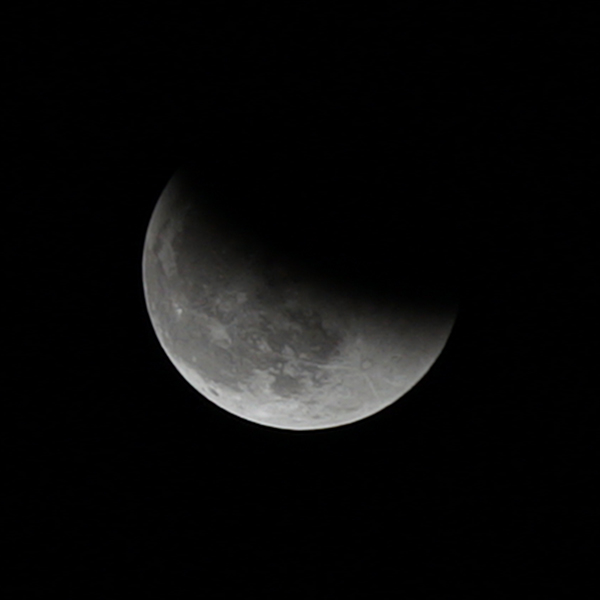
The good news is that, with roughly 93% of the Moon’s disc covered by the Earth’s shadow, August’s partial eclipse is almost as good as a total eclipse, and this time, observers on the east coast are treated to better views.
The penumbral phase - when the Moon first enters the Earth’s shadow and its light is subtly dimmed - begins several hours after sunset on the east coast, with the Moon rising in the southeast. The further west you are, the lower the Moon will appear, with this phase beginning before sunset for those on the west coast.
Unfortunately, west coast observers will have to wait to catch a glimpse of the eclipsed Moon, as the partial phase begins at around sunset, with the Moon below the horizon. Meanwhile, on the east coast, the Moon will continue to climb in the southeast.
By the time mid-eclipse occurs, the Moon will be culminating in the south for those in the east, while those in the west will see it low over the southeastern horizon. The partial phase then continues for another hour and 39 minutes, which will give west coast observers a chance to see the eclipsed Moon at a sufficient altitude.
This eclipse takes place with the Moon in Aquarius, and while there are no bright stars immediately nearby, east coast observers may see Fomalhaut closer to the horizon and Saturn glowing dimly some way towards the southeast.
| Event | UT | Eastern Time | Central Time | Mountain Time | Pacific Time | Alaska Time | Hawaii Time |
|---|---|---|---|---|---|---|---|
| Penumbral Phase Begins | 01:23 | 21:23* | 20:23* | 19:23* | 18:23* | 17:23* | 15:23* |
| Partial Phase Begins | 02:33 | 22:33* | 21:33* | 20:33* | 19:33* | 18:33* | 16:33* |
| Mid-Eclipse | 04:12 | 00:12 | 23:12* | 22:12* | 21:12* | 20:12* | 18:12* |
| Partial Phase Ends | 05:51 | 01:51 | 00:51 | 23:51* | 22:51* | 21:51* | 19:51* |
| Penumbral Phase Ends | 07:01 | 03:01 | 02:01 | 01:01 | 00:01 | 23:01* | 21:01* |
*Event occurs on the evening of the 27th