All coupons, tax, shipping, store credit and gift cards will be applied during checkout.
QHY cameras offer impressive high sensitivity and low noise performance, making them excellent for capturing detailed astrophotography images with crisp contrast and fine structure, similar to what’s seen with the ZWO ASI533MM featured in the video. Available in both monochrome and color sensor models, QHY cameras give astrophotographers flexibility to explore various imaging techniques, from narrowband deep-sky captures to vibrant broadband galaxy shots. Their seamless integration with advanced accessories like motorized filter wheels and electronic focusers ensures more precise control over each imaging session. This combination of quality sensors and robust compatibility makes QHY cameras a trusted choice for both amateur and dedicated astrophotographers seeking stunning, professional-level results.
×
![]()
Highlighted Products
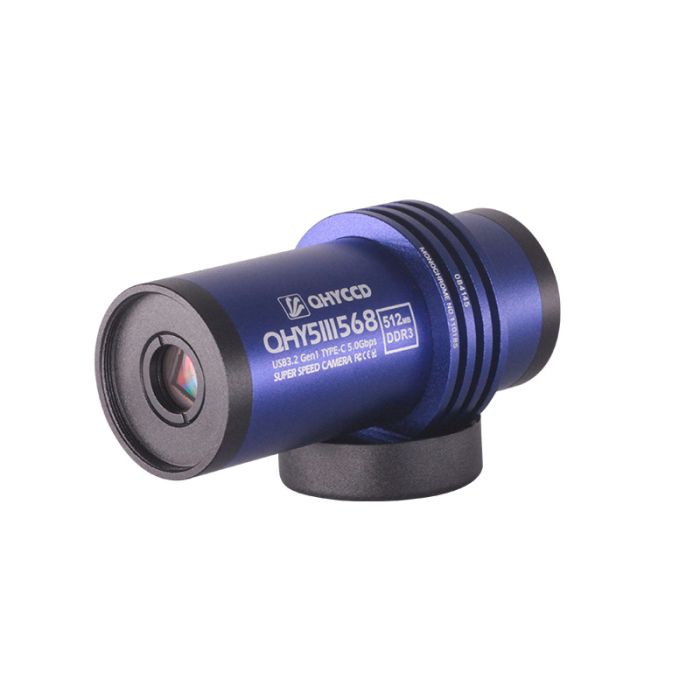
QHY QHY5III568 Monochrome Planetary Camera and Guider
The QHY QHY5III568 is a monochrome planetary camera and guider designed for high-resolution imaging. With a back-illuminated Sony IMX568 CMOS sensor, it achieves low noise and high sensitivity, capturing fine details in planetary, lunar, and solar imaging. Its compact design integrates seamlessly with guiding setups, enhancing both imaging and guiding precision.

QHY QHY5III462 Planetary Color and NIR CMOS Imaging Camera
The QHY QHY5III462 is a high-performance planetary imaging camera optimized for visible and near-infrared (NIR) light. Equipped with the Sony IMX462 CMOS sensor, it delivers high sensitivity, especially in NIR, for enhanced detail in lunar, planetary, and solar imaging. The Standard Kit includes accessories for versatile setup and seamless integration.

QHY QHY268M Camera Kit with Large Color Filter Wheel
The QHY QHY268M Camera Kit with Large Color Filter Wheel offers astrophotographers high-resolution capabilities with a 26MP monochrome sensor, ideal for capturing detailed deep-sky images. Paired with a large 7-position filter wheel, this kit allows smooth and precise multi-filter imaging, making it an excellent tool for advanced astronomical imaging workflows.
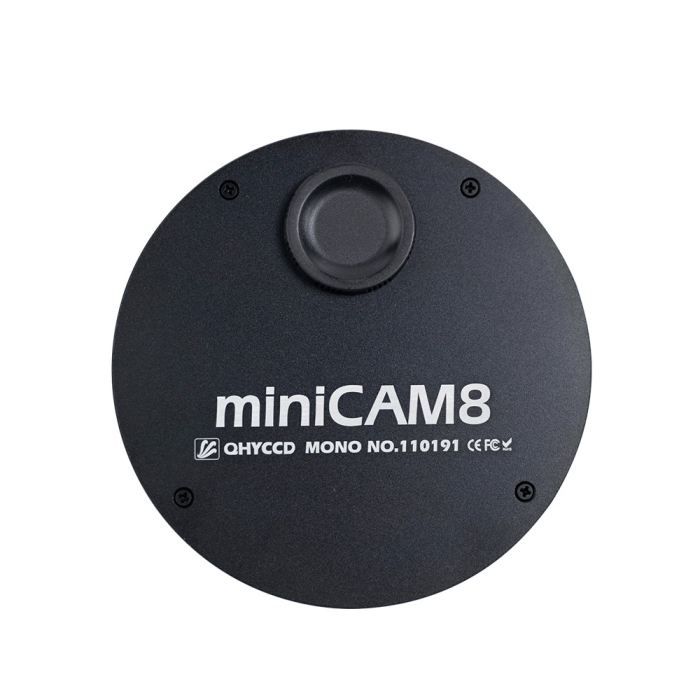
QHY Mini Guide Scope and Mount Adapter for QHY5 Series Cameras
The QHY miniCAM8 Monochrome Camera - Deep Sky Combo is crafted for capturing fine details in faint celestial objects. Its sensitive monochrome sensor excels at bringing out subtle structures in galaxies and nebulae. Paired with deep-sky accessories, this setup allows astrophotographers to achieve precise, high-contrast images. It’s a solid choice for those looking to elevate their long-exposure astrophotography.
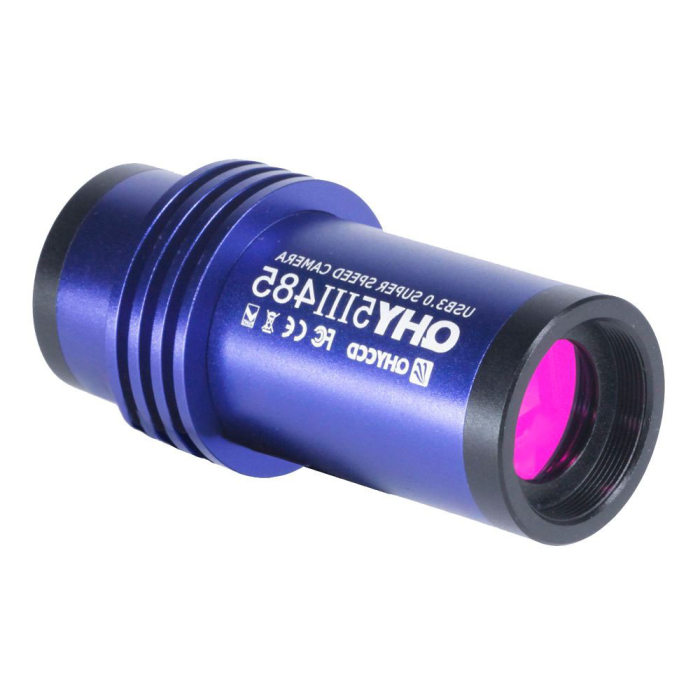
QHY QHY5III485C Color Planetary & All-Sky Camera
The QHY QHY5III485C Color Planetary & All-Sky Camera is built to deliver vibrant, detailed views of planets and wide-field sky scenes. Its advanced sensor captures excellent color data, making it a strong option for imaging everything from lunar features to meteor showers. With fast frame rates, it handles planetary imaging smoothly, reducing blur caused by atmospheric turbulence. This camera is a practical tool for astronomers who want both planetary close-ups and broader all-sky captures in one device.
More About This Category
Today, all the known astrophotography experts are familiar with QHY as a fabulous, reasonably priced, and explicitly assembled camera company specializing in making CCD and CMOS cameras. But what is beneath the fabulous fame? QHY has relied on technology in the last decade to produce the finest imaging sensors and cameras for hobbyist astronomers. Due to their products, many astronomer amateurs have felt the first urge to engage in a wholesome hobby at a near-negligible cost.
So, what makes the QHY cameras any better than the rest in terms of the price? The significant advantages of these cameras are:
- They use research-quality sensors that create low-noise images, preserving precision details even in nebulae, galaxies, and planets.
- QHY cameras have high quantum efficiency, and the sensors can produce many-electron states that can be detected and converted to digital data with more than 90% efficiency.
- QHY also requires extensive cooling, and it employs numerous cooling projects, such as thermoelectric or liquid projects, that can significantly reduce the thermal noise for long exposure shots.
The essence is that the images produced by cameras whose sensor is different than usual should be of higher resolution and sharper than those of DSLRs with standard sensors. QHY offers mono-color cameras in diverse range to capture astronomical objects. From broad sweeping Milky Way to close-up Mars craters where QHY cameras are used, there is the most outstanding performance no matter what type of images are required.
Such questions interest hobbyists in knowing what type of astrophotography they could embark on with QHY cameras. The capabilities are excellent, considering the relatively low cost of owning this gadget. The pictures taken and brought back by space probes exemplify this attribute. Cameras like the QHY5III 462C capture any details on the lunar and planetary surface, particularly on Jupiter, Saturn, and other such planets and solid celestial formations in the solar system. Due to the fast readout and small pixels, these planetary cameras provide the shape of the dots, the curvatures of the cloud bands, and even the transits of the planets.
This shows that the Color camera is designed to capture scenes on planets while the Monochrome camera may be more sensitive and can thus capture better pictures in deeper space. Such equipment as QHY600 has become the favorite of astronomy buffs for astrophotography of objects like filaments, galaxies, and clusters of stars seen from the backyards of homes with the help of observation instruments called observatories. Also, the QHY268C color camera has the potential to view the night sky and other structures of interest in great detail. Its color restoration makes the real reds, greens, and blues of distant nebulae and galaxies, invisible to the amateur scalar vision, manifestly obvious.
Given the status, where these cameras do rank high, do QHY cameras serve as the best value optics for astrophotography?
ZWO's lineup of high-end brands might have the same specs as QHY, but that still does not prevent the brand from producing a similar level of performance at lower costs. Let me put the case of QHY128C on the table, one that features a high resolution of about 4096 x 3288 (4K) and is comparable to the higher-end 1600 x 1200 (Q374M1C) or 800 x 600 (ASI462MC) ZWO models. Also, there are some cases of an exception - some ZWO cameras do better than QHY models with the same sensor, for example, in the readout speeds or sensor cooling.
Yet, QHY cameras are also one of the most reliable options because they ensure the highest image quality, specifications, and price-value ratio. Overall, they achieved a bright position in the Astronomy market, providing research-class but very low-cost devices for astrophotography cameras. They are the gateway for countless amateurs, the power that gives the new generation permission to share the experience of exploring the Universe from their backyard. QHY cameras, whatever the level you are in, match the desired astrophotography camera for you to the extent of your budget.
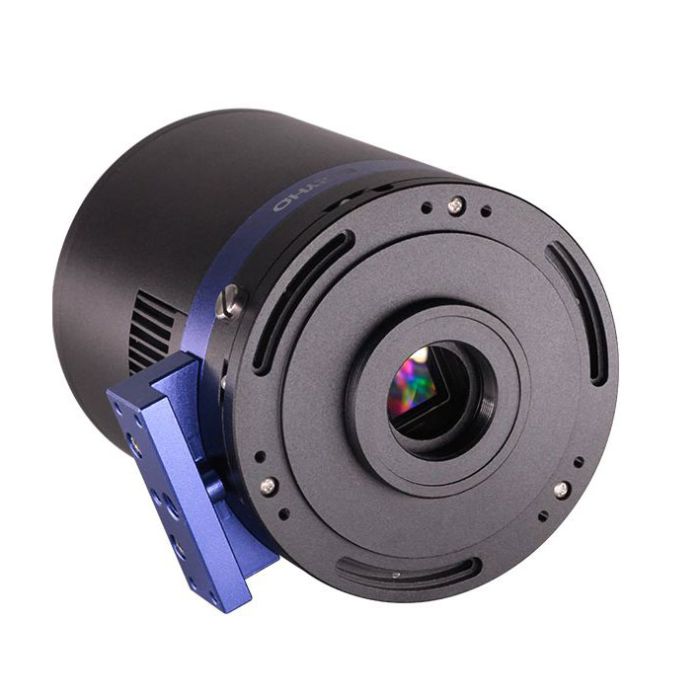
QHY533M is one of the most sophisticated monochrome cameras designed to advance astrophotography by endowing it with new features. It has a Sony imx533m sensor, which is good for low noise and high sensitivity and can deliver an image up to 9 megapixels. The back-illuminated CMOS technology makes the sensor more efficient at light-capturing, leading to enhanced sensor performance and efficiency.
Other features include no glow-in amplifier, a large image buffer with fast throughput, and true RAW streaming output that passes the raw signal to post-processing stages. Environmental factors are also considered, with two-stage TE cooling and several technological features helping to reduce dark current and prevent dew or frost.
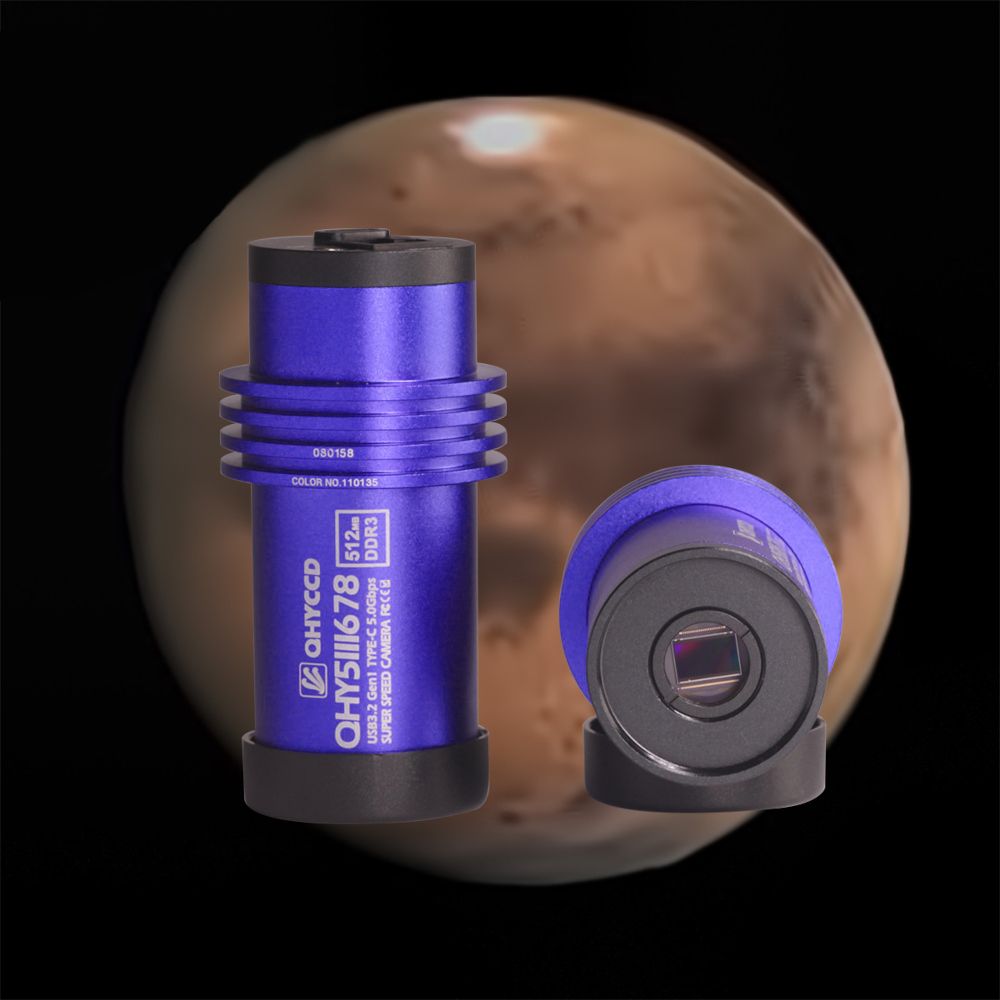
The Sony IMX678 sensor in the QHY5III678 offers the resolution of these cell phones goes beyond eight megapixels, up to 3856 x 2180. Under-line illumination allows a deeper photodiode pixel well section for pixel sizing and process depth. With all these integrated features, the QHY5III678C CMOS camera/guide is a perfect, relatively cheap camera for astrophotography and other tasks that may involve high-quality visual capturing.
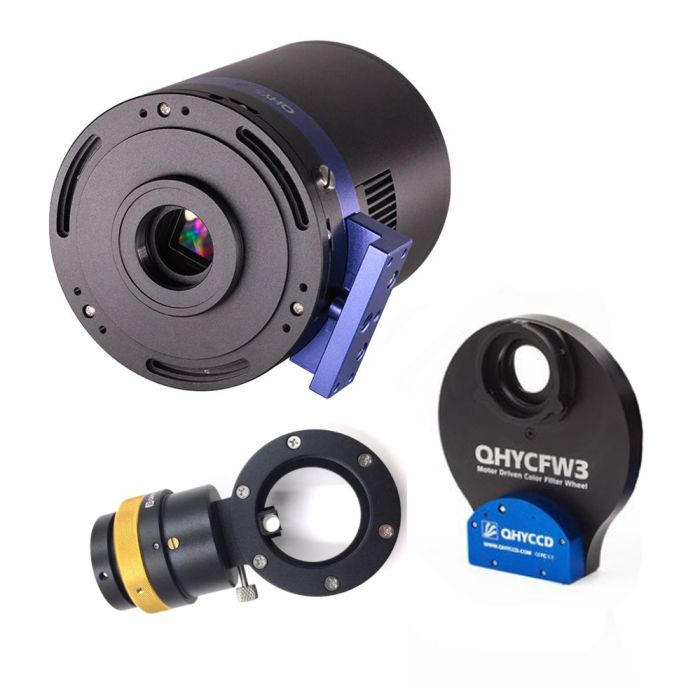
The QHY533 M is a cooled, monochrome camera from QHYCCD designed for astrophotography. It supports a QHY small filter wheel and Nikon and Canon lens adapters for infinity focus. Its back-illuminated CMOS technology improves performance, efficiency (QE), and full well capacity. An adjustable front plate allows for customizable camera orientation. A threaded interface allows for attaching a QHY small filter wheel, Nikon or Canon lens adapters, and other accessories.