Page 3 - Richard Bartlett
- June 01, 2025
Uranus is lost in the Sun’s glare, but if you have an unobstructed view towards the west-northwest, you may be able to see Jupiter very low over the horizon during the first few days of the month.
- May 30, 2025
There are roughly 5,000 - 10,000 stars in the night sky that are visible to the naked eye. Many of these stars can be used as “pointer” stars to help lead your way to faint celestial objects. This article will serve as a general overview of some basic...
- May 23, 2025
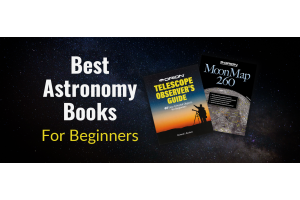
Astronomy is a fascinating hobby that literally allows you to explore the universe like no other. Maybe you’ve already read some books and magazines or seen some stunning images online. Maybe you’ve been inspired by the unmanned space probes we’ve sent...
- May 01, 2025
Uranus is in conjunction with the Sun on the 17th, and therefore isn’t visible this month. Jupiter glints in the evening twilight but is rapidly losing ground against the Sun.
- April 25, 2025
Whatever the reason, you’re excited to explore the universe and can’t wait to see these amazing sights for yourself. But what’s the reality of the situation? Can you hope to see anything resembling the images you’ve seen? What factors will play a role...
- April 10, 2025
Here’s a question that gets asked a lot in astronomy, especially when it comes to telescopes: what’s the most distant object you can see? Maybe you’re thinking of buying a telescope, or maybe you already own one, and you’ve had a friend or neighbor ask...
- April 07, 2025
If you’re new to astronomy, there are a few key terms you’ll need to know. Some, like aperture and focal length, are important, and you might make a point of learning them early on. Other terms won’t initially seem so important, but you might often hear...
- April 01, 2025
Neptune is too close to the Sun to be visible, and Uranus is too low in the evening twilight to make observations worthwhile. However, Jupiter remains telescopically observable for a short time after twilight for the first half of the month
- March 17, 2025
A solar eclipse occurs when the Moon passes between the Sun and Earth, casting a shadow on our planet's surface. During this phenomenon, the Moon appears to completely or partially cover the Sun, creating a dramatic and awe-inspiring celestial display...
- March 07, 2025
Few things in astronomy - or in nature itself - rival the wonder and spectacle of a total solar eclipse. It’s an event that’s instilled awe and fear among people around the world for thousands of years, and it’s a sight that, once seen, can never be forgotten...
- March 01, 2025
While Saturn and Neptune are too close to the Sun to be visible, Mercury is furthest from the Sun on the 7th, and can be easily seen in the west about 15 minutes after sunset for roughly the first half of the month.
- February 28, 2025
When it comes to astronomy, there are few events that can rival an eclipse. But why do eclipses happen? What happens during a total lunar eclipse?
- February 24, 2025
Eclipses top the list of many astronomers’ must-see lists. Lunar eclipses can be seen by millions of people across the world simultaneously. But what is a lunar eclipse, and what can you expect from one?
- February 21, 2025
A total lunar eclipse occurs when the Moon passes behind the Earth’s shadow, turning the Moon a deep, dark red color. This red color is why some call a lunar eclipse a “blood moon”. During the eclipse, all direct sunlight to the lunar surface is completely...
- February 18, 2025
If you’re fortunate enough to be in the path of a total solar eclipse, you’ll have anywhere from 2-5 minutes to capture tons of different detail in the Sun’s atmosphere. These different features can be captured by adjusting your exposure and getting the...
Subscribe to the

New articles every week!
Recent Posts