Books can be a fantastic resource for anyone learning the night sky, but with thousands of titles to choose from, it can be hard to know where to begin. Which book is best for learning the constellations? Which is best if you’ve just bought a small telescope? What if you’re stuck in an urban location?
In this article, we’ll suggest some of the best books to get you started. It’s not an exhaustive list, and it’s a good idea to ask the members of any clubs or groups for their own suggestions too.
Many are still easily available, but there are some gems that are now, unfortunately, either out of print or simply hard to come by. The good news is that you can still buy out-of-print and difficult to find books online. Amazon has the option to buy used books (though prices can sometimes spiral), and eBay (and other online resellers) can also be a good option.
Best for Learning the Constellations
The Stars: A New Way to See Them by H. A. Rey
H. A. Rey’s book was first published in 1952 and has since become the gold standard for learning the constellations. However, it offers a lot more than just that, as it also covers the fundamental concepts (such as the zodiac and ecliptic) you’ll need to get started.
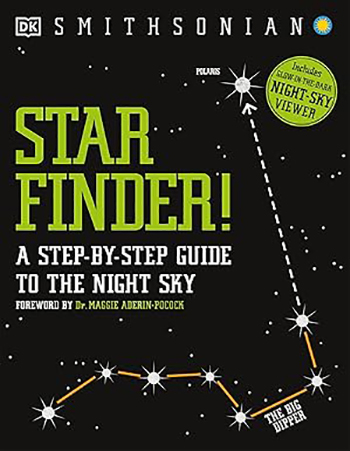
Star Finder! A Step-by-Step Guide to the Night Sky by DK
Star Finder! was written for children, but don’t let that put you off. As with many DK books, it’s very visual, with easy-to-understand graphics and charts. The book does a great job of helping you navigate the night sky, with selected highlights along the way.
Best for Naked-Eye Astronomy
365 Starry Nights: An Introduction to Astronomy For Every Night of the Year by Chet Raymo
Chet Raymo’s book, 365 Starry Nights, is another classic that many budding astronomers have benefited from. It’s also one of those rare books that’s instantly accessible to a wide range of readers, regardless of age. As its title implies, there’s something to read (and often to see) on every day of the year, with Raymo’s easy-to-understand style encompassing both the seasonal changes in nature and the night sky.
100 Things to See in the Night Sky: Your Illustrated Guide to the Planets, Satellites, Constellations, and More by Dean Reegas
100 Things to See in the Night Sky by Dean Reegas takes a more traditional approach. Reegas starts by covering the Sun, Moon, and naked eye planets before exploring the stars and constellations themselves. The book concludes with everything else, from satellites and meteors to astronomical events such as conjunctions, occultations, and eclipses. Of the three books listed here, this is the only one with a Kindle edition.
National Geographic Backyard Guide to the Night Sky by Andrew Fazekis
A popular choice is the National Geographic Backyard Guide to the Night Sky by Andrew Fazekis. This pocket-sized guide is beautifully illustrated and includes seasonal star charts with highlighted constellations, as well as guides to the constellations themselves with key objects to look out for.

Best for Binocular Astronomy
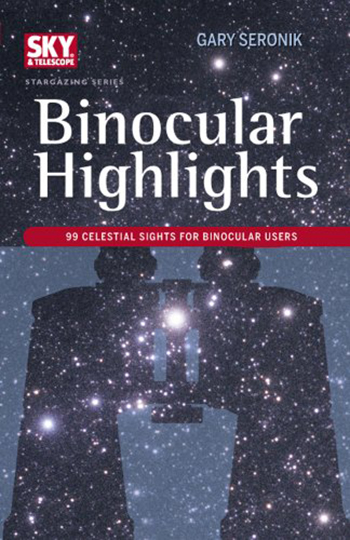
Binocular Highlights: 99 Celestial Sights for Binocular Users by Gary Seronik
Seronik’s book is another classic you won’t want to be without. After a brief introduction, the rest of the book is divided into seasons, with each page containing a star chart of the area surrounding the object (which includes a highlighted circle to give you an idea of the binocular view) and a few paragraphs describing the object itself.
Touring the Universe Through Binoculars: A Complete Astronomer’s Guidebook by Philip S. Harrington
Philip Harrington wrote Astronomy magazine’s popular binocular column for nearly 12 years, so there’s no doubting his credentials. Arguably, his book isn’t as beginner-friendly as Seronik’s, but it contains hundreds of potential targets compared to Seronik’s 99. The downside? You’ll need a star chart or app to find many of them.
Binocular Stargazing by Mike D. Reynolds
Binocular Stargazing by Mike D. Reynolds is the smallest (and therefore most portable) of the three, and like Harrington’s, contains hundreds of objects for binocular observers. Also like Harrington, you’ll need a star chart or app, as there are no full-sized charts in the book itself. However, there are numerous depictions of binocular views to help you get a sense of what to expect.
Best for Astronomy with a Small Telescope
Turn Left At Orion: Hundreds of Night Sky Objects to See in a Home Telescope - and How to Find Them by Guy Consolmagno & Dan M. Davis
Another classic, Turn Left At Orion is probably the book that gets recommended more than any other for beginners with a small scope - and with good reason. Spiral bound, the book reviews the seasonal night sky sights and includes useful charts and graphical depictions to help you locate and identify each target. You’ll also find a lot of useful information on observing the Moon and planets.
Illustrated Guide to Astronomical Wonders by Robert Bruce Thompson & Barbara Fritchman Thompson
The Illustrated Guide to Astronomical Wonders is a fairly thick book that might be a little cumbersome, but it contains a wealth of information on hundreds of deep sky objects and multiple stars. The well-designed finder charts are printed black on white (as with Turn Left), making it easy to use in the field. Of the three, the Illustrated Guide is the only one available on Kindle.
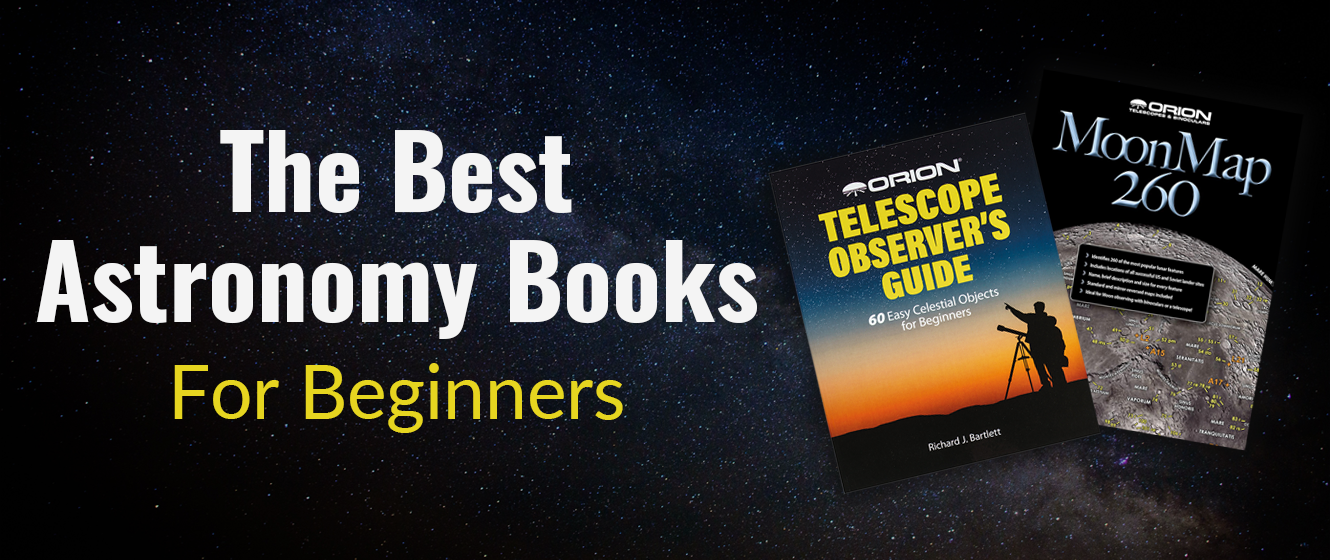
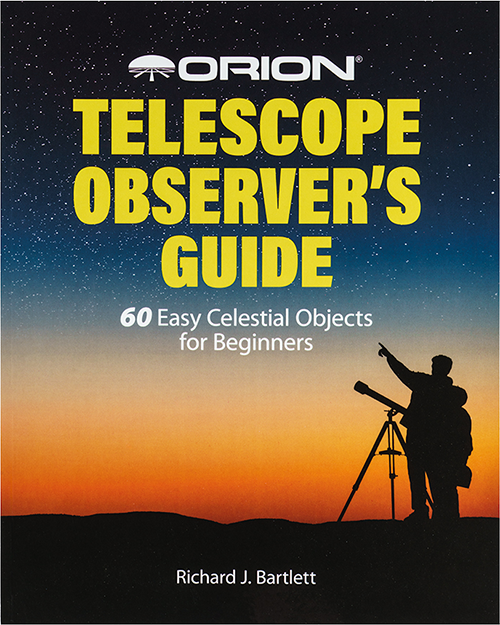
The Orion Telescope Observer’s Guide by Richard J. Bartlett
There’s also The Orion Telescope Observer’s Guide. Aimed at owners of a small scope, the book highlights 60 of the best easy-to-find objects for beginners and includes multiple stars, star clusters and nebulae. A small chart, plus simulated views through a finder scope and low-powered eyepiece, accompanies each object. There’s even pages at the back so you can record your observations.
Best for Observing the Moon
Photographic Atlas of the Moon by S. M. Chong, Albert C. H. Lim and P. S. Ang
You’d think there’d be a plethora of lunar observing books for beginners, but that’s not actually the case. Maybe it’s because our nearest neighbor is frequently covered in other titles (such as Turn Left At Orion.) Unfortunately, our top pick, the Photographic Atlas of the Moon, is hard to come by.
That’s a shame, as it’s a book whose form is as good as its function. It’s a hardcover, large format book that includes a full-page image of the Moon for every day of the lunar cycle, with key features highlighted. The text then describes the image in much the same way a fellow observer at the eyepiece would.
Moon Observer’s Guide by Peter Grego
Another option is the Moon Observer’s Guide by Peter Grego. This guide is pocket-sized, making it an ideal addition for your telescope equipment case. This also takes a look at the Moon on a daily basis, but the difference is that the book utilizes illustrations rather than photographs. There’s also a ton of other useful information, such as what you can see, the equipment you’ll need and how to image the Moon.
50 Things to See on the Moon by John A. Read
50 Things to See on the Moon by John A. Read comes highly rated, is easy to read and is graphically very appealing, making it suitable for readers of all ages. You’ll also find additional useful information, such as some of the notable features on the far side of the Moon. Of the Moon books listed here, this is the only one available on Kindle.
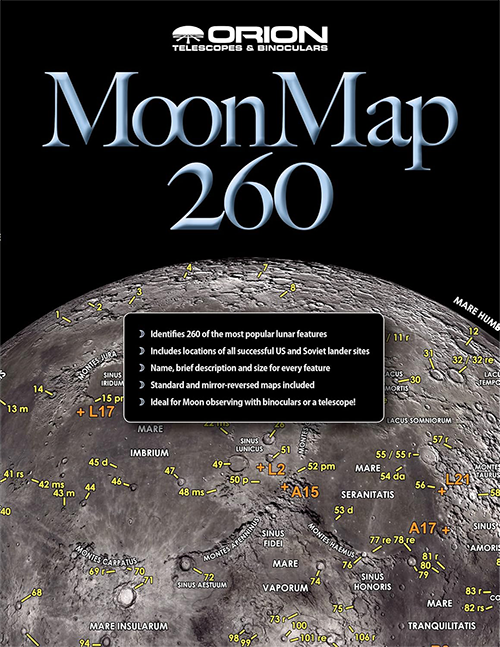
Meade Moon Map 260 by Meade & Orion Moon Map 260 by Orion
Alternatively, if you’re looking for something a little more practical to use in the field, consider a Moon map from Meade or Orion. Both highlight 260 individual features on the Moon and both are laminated to protect against scratches, dust, dirt and dew. When folded, these maps measure 8.5 x 11 inches, making them highly portable for a night out under the Moon and stars.
Best for Urban Astronomy
The Art of Urban Astronomy: A Guide to Stargazing Wherever You Are by Abigail Beall
There are very few books for urban astronomy on the market, with The Art of Urban Astronomy: A Guide to Stargazing Wherever You Are by Abigail Beall being the best one suited to absolute beginners. It’s relatively small, making it very portable, and covers many of the brighter sights (including the stars and constellations) you can expect to see.
The Urban Astronomer’s Guide by Rod Mollise
The Urban Astronomer’s Guide is more detailed and serves as an outstanding guide for the beginner who’s already familiar with the basics, as well as more experienced observers. It’s organized by season and contains a lot of information regarding potential targets for anyone under light-polluted skies.
Best for Deep Sky Objects
Celestial Sampler: 60 Small-Scope Tours for Starlit Nights by Sue French
Sue French’s Celestial Sampler is a beautiful book and definitely one you can also read when the skies are cloudy. There are five guided tours of the sky for each month, with each tour highlighting a number of sights to be found within an area of sky and the steps you need to locate them. The downside? The charts are full color, which looks good, but makes them hard to see with a red flashlight when you’re out in the field.
Objects in the Heavens by Peter Birren
Objects in the Heavens by Peter Birren is an outstanding guide that’s compact, concise, and spiral-bound, making it another perfect addition to your telescope’s equipment case. Full of finder charts and objects to track down, Birren’s guide makes it easy to pick the best targets for both binoculars and telescopes.

The Night Sky Observer’s Guide (Volumes 1 & 2) by George Robert Kepple & Glen W. Sanner
Lastly, if you’re looking for a truly in-depth look at the constellations, with realistic descriptions of the objects as seen with a range of apertures and magnifications, then The Night Sky Observer’s Guides by Kepple and Sanner are for you. These guides are potentially hard to come by, but once you own them, you’ll find yourself using them for many years to come.
Best Star Atlas
A lot of the fun in astronomy comes from tracking down and finding deep sky objects for yourself - and for that, you’ll need a star atlas. There are a number of options available, but if you’re looking for something pocket-sized you can take to a dark sky site, two in particular stand out.
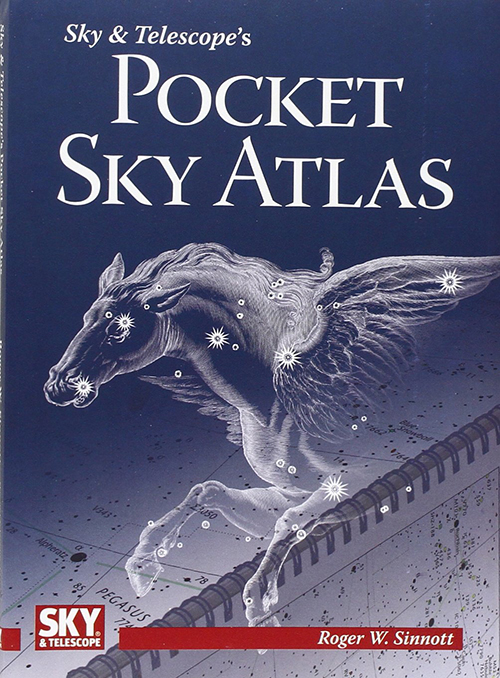
Sky & Telescope’s Pocket Sky Atlas by Roger W. Sinnott
Firstly, there’s the popular Sky & Telescope’s Pocket Sky Atlas by Roger W. Sinnott, which covers the entire night sky in a traditional format, with each page covering an area of sky. The charts are clearly printed black on white, making them easy to read with a red flashlight while you’re outside at the eyepiece.
Observer's Sky Atlas, The: With 50 Star Charts Covering the Entire Sky by Erich Karkoschka
Karkoschka’s Observer’s Sky Atlas also covers the entire night sky (and is also printed black on white) but takes a slightly different approach. Each chart has a highlighted area to help you locate specific objects, and there are tables of potential targets with a substantial amount of concise information about each one.
Of the two, The Observer’s Sky Atlas is more compact and portable, but the Pocket Sky Atlas is spiral bound and therefore easier to use in the field. (Incidentally, there’s also a more recent, table top version of Karkoschka’s Observer’s Sky Atlas which could also be useful.)
Sky Maps and Planisphere by Celestron
An atlas is an incredibly useful tool, especially when you’re familiar with the night sky, but what if you’re unsure if a constellation is visible? That’s where Celestron's Sky Maps and Planisphere book has the solution. Not only does it contain star charts and tables of suggested objects, but it includes a planisphere to help you get an idea of when those objects might be visible.
Best Annual Guide
Astronomy Calendar: Astronomical & Celestial Events by High Point Scientific
If you’re looking for a resource that outlines the best celestial events for the year, check out our own free annual guide in the Astronomy Hub. For each month, you’ll find in-depth descriptions of highlighted must-see events, such as eclipses and conjunctions, plus a list of key dates and other noteworthy events to keep an eye out for.
(You’ll also find annual guides for both eclipses and meteor showers.)
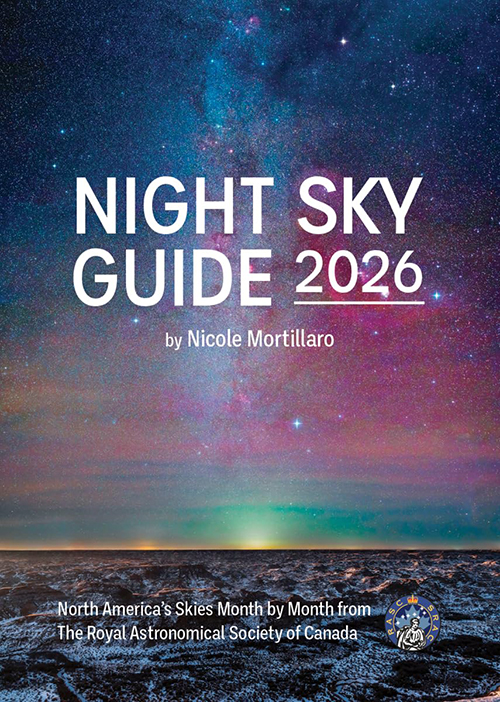
Night Sky Guide: North America's Skies Month by Month from The Royal Astronomical Society of Canada by Nicole Mortillaro
In terms of books, you can’t go wrong with the very highly-rated annual Night Sky Guide from the Royal Astronomical Society. This month-by-month guide provides detailed information to help you make the most of your astronomical year, and includes star charts to help you identify the constellations. Unfortunately, the guide is only available in paperback.
Best All-Round Choice
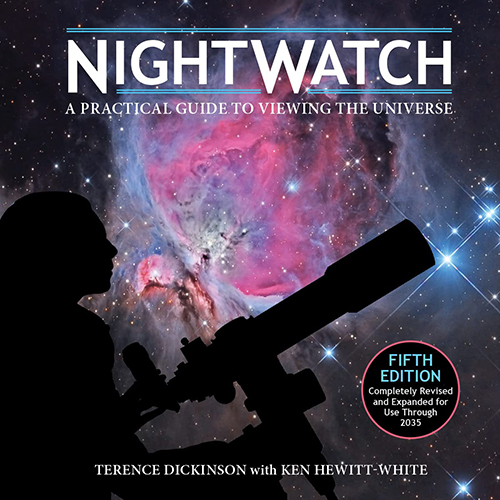
NightWatch: A Practical Guide to Viewing the Universe by Terence Dickinson & Ken Hewitt-White
Ask hobbyists which book they’d recommend to a beginner, and many will mention NightWatch. Like some of the other books on the list, this has become a “must-have” guide, packed with information on almost every aspect of astronomy. (And with over 400 pages, it’s also well worth the money.)
For a guide more specifically aimed towards the night sky itself, consider its companion volume, The Backyard Astronomer’s Guide by Terence Dickinson and Alan Dyer. Both are beautifully illustrated and worthy additions to any collection.
The Practical Astronomer: Explore the Wonders of the Night Sky by Will Gater
Lastly, there’s The Practical Astronomer by Will Gater. Another title from DK, it starts by covering the basics (for example, the types of objects you can see and the equipment you’ll need), then takes an in-depth look at the constellations before ending with a tour of the solar system.
Best for Cloudy Nights
The Astronomy Book: Big Ideas Simply Explained by DK
Whether you’re looking for a distraction during the cloudy nights or simply a good read, there are a multitude of books available that are both informative and educational. DK’s The Astronomy Book: Big Ideas Simply Explained takes you on a tour across more than 2,500 years of astronomical history, literally explaining (in a simple, easy-to-understand manner) the big ideas that changed our view of the universe.
The Total Skywatcher's Manual: 275+ Skills and Tricks for Exploring Stars, Planets, and Beyond by The Astronomical Society of the Pacific
There are 298 skills you can learn in The Total Skywatcher’s Manual, with three sections covering the essentials of Naked Eye Astronomy, Telescopes & Other Tools, and Advanced Techniques. You’ll find tips and tricks on how to locate the stars, planets, and constellations, highlighted sights for naked-eye, binocular, and telescopic observers, as well as overviews of key terms and concepts.
Astronomy Hacks: Tips and Tools for Observing the Night Sky by Robert Bruce Thompson and Barbara Fritchman Thompson
The Total Skywatcher’s Manual is a great starting point for anyone new to the hobby, but if you’re looking for something that’ll take you beyond the beginner level, consider Astronomy Hacks: Tips and Tools for Observing the Night Sky. An excellent book, packed full of practical tips to make your nights under the stars more productive, you’ll find 65 hacks inside that even seasoned observers might be unaware of.
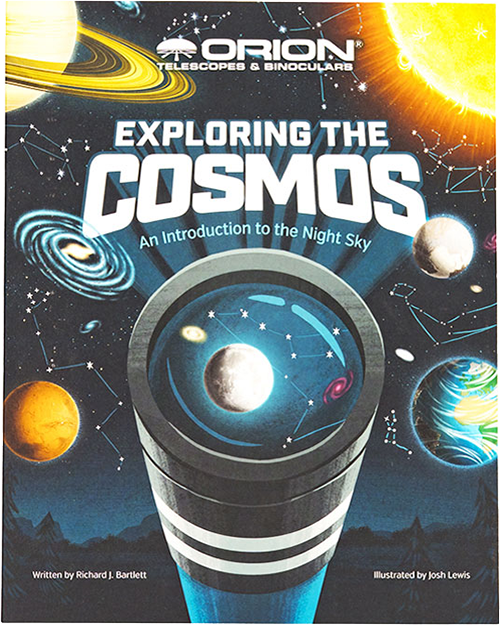
Exploring the Cosmos by Richard J. Bartlett and Josh Lewis
If you’re looking for a book to get kids excited about space in general, try Exploring the Cosmos by Richard J. Bartlett, with beautiful illustrations by Josh Lewis. This book takes your kids on a journey through the cosmos, starting at the Sun and then exploring each planet in the solar system. The book also highlights several constellations and includes star charts to help you locate them.
Bonus Book: Best for Astrophotography
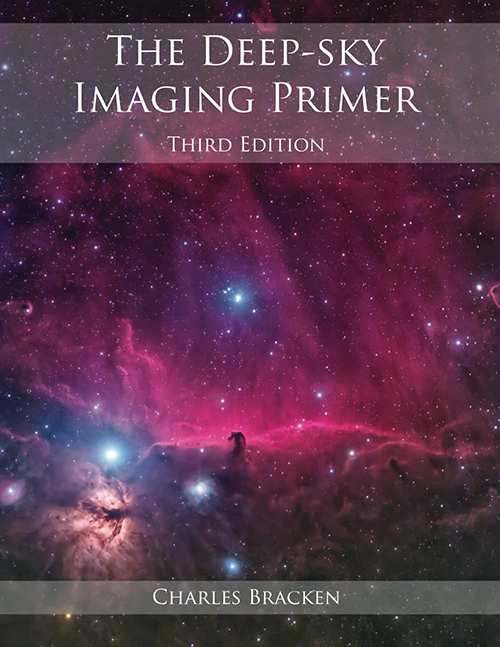
The Deep-Sky Imaging Primer by Charles Bracken
Lastly, we come to the bonus section and the topic of astrophotography. While many people might be drawn to astronomy thanks to the beautiful images they’ve seen in books, magazines, and online, this aspect of the hobby can be difficult to learn.
However, if you’ve gotten your feet wet already and want to dive in, then The Deep-Sky Imaging Primer is a great place to start. With over 270 pages, you’ll find in-depth advice on the fundamental principles (such as sensors, signal, and noise), equipment, capturing the images themselves, and then, of course, post-processing.
The Deep-Sky Imaging Primer is only available in paperback format.