Table of Contents
Contents
Dobsonian Telescopes for Beginners
A Dobsonian telescope is one of the best options for getting started in the astronomy hobby, whether you're a budding backyard observer or sidewalk star-gazer! A solid core design with a number of exciting offshoots and a solid presence in the current market all make the Dob a very compelling choice for the beginner. If you're looking for your first serious scope, join us and discover why this design shines!
When it comes to getting started in astronomy, the Dobsonian makes a powerful case: large aperture, approachable design, adaptable to a growing skill set, and excellent value. While today's equipment landscape offers more choice than ever before and consequently has made ticking these boxes possible with other offerings, these goals were in John Dobson's sights when he designed the telescope system that would end up bearing his name. As a result, even with a plethora of competing packages the Dobsonian design still consistently stands out in this segment and continues to be one of our go to recommendations. If you're wondering just what makes this design so special, what variations are out there, and some scopes we think standout in this stellar segment, follow along with us as we explore these points or jump ahead with the navigation bar below!


A Stellar Starter Pick
A Dobsonian telescope balances great light gathering ability with ease-of-use and generally lower out-of-pocket expense. All things considered, a Dobsonian might be the perfect choice for anyone who has recently caught the astronomy bug!
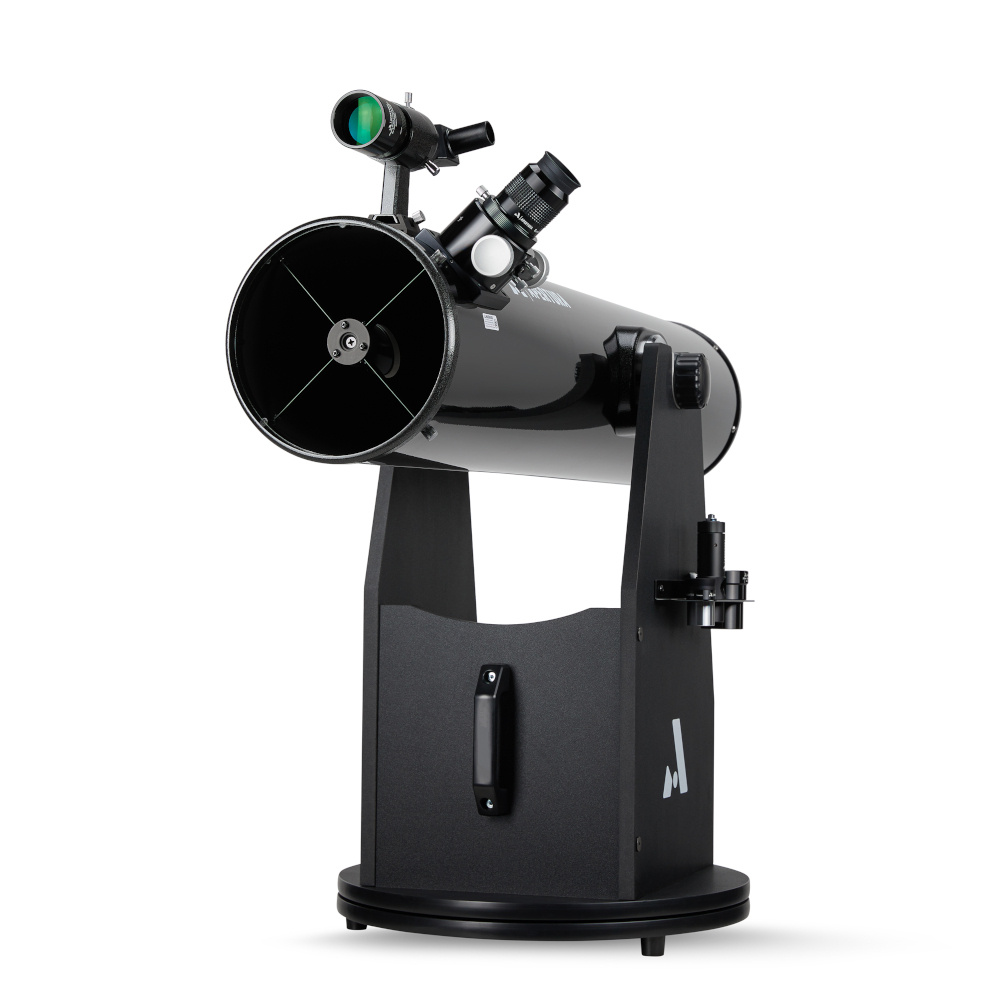
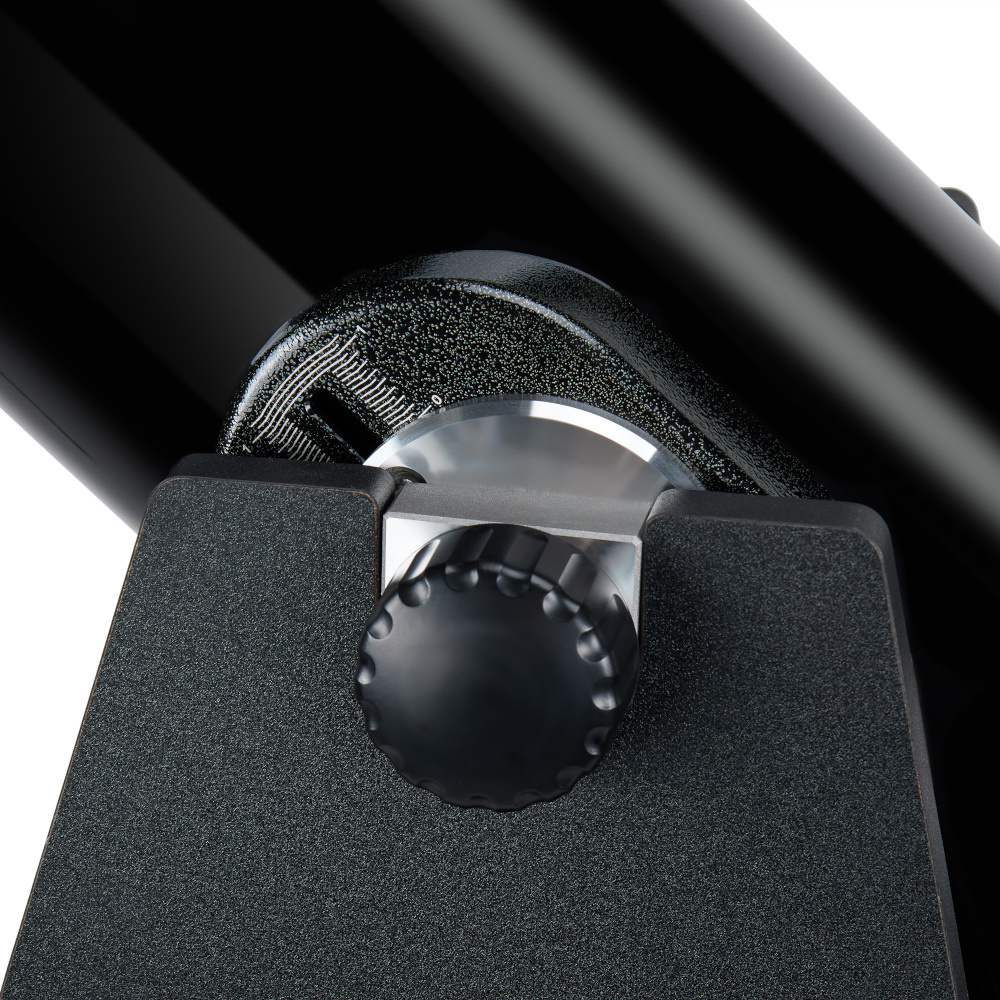
Dobsonian Telescope Mounts Are More Affordable - One
of the primary reasons that many astronomers love Dobsonian telescopes
for their night-sky observation is cost. Simply put, a Dobsonian mount
is generally cheaper to make than an equatorial mount or even other
alt-azimuth mount designs.
As a result, individuals can
invest in optics, which is ultimately at the heart of deep-sky
observing! Specifically, Dobs offer an economical way to get more
mirror for your dollar, and larger mirrors gather more light. More
light gathering means seeing fainter objects. Many of the most
interesting deep-sky objects have details that can’t even be seen with
smaller optics, especially not by common department store
refractors.
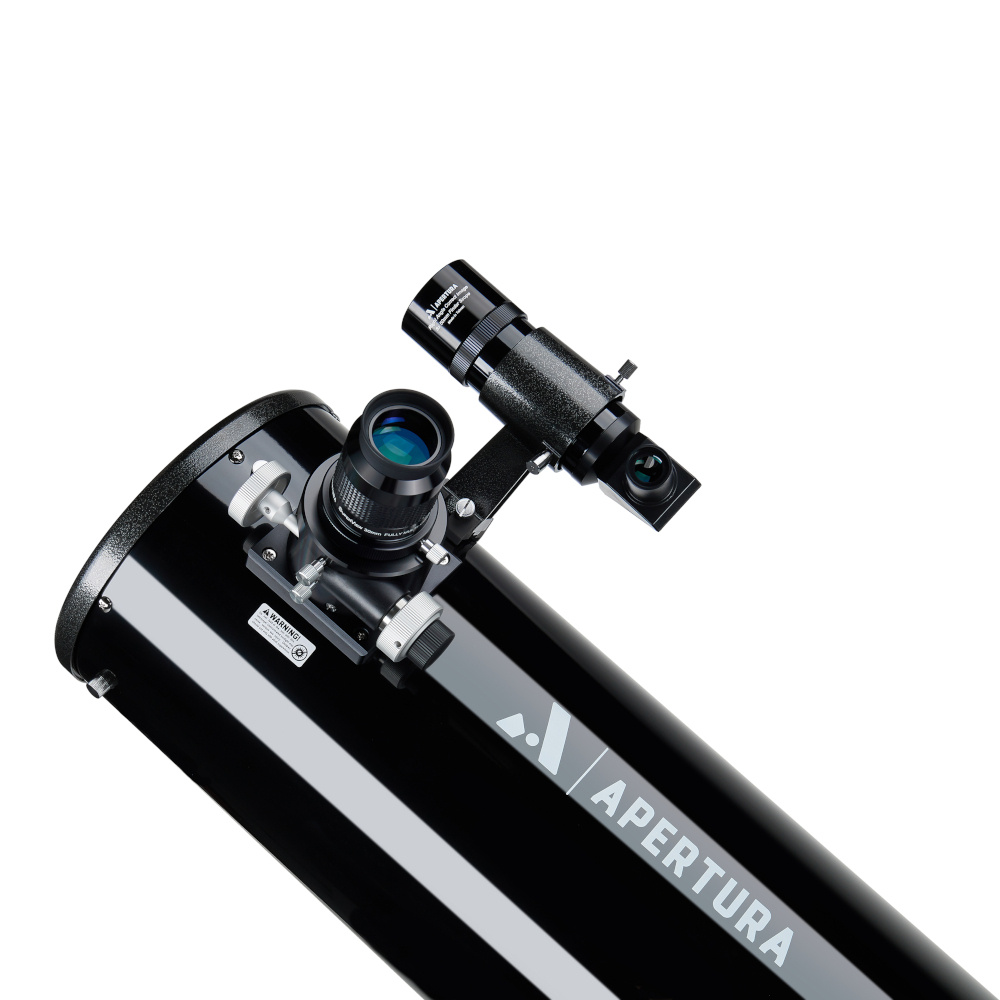
The Dobsonian telescope is quite simple, using
the classic Newtonian telescope design. This consists of a large
concave mirror focusing incoming light to a smaller flat mirror which
then focuses into an eyepiece. This optical simplicity contributes to
the Dobsonian's value proposition, while also providing powerful
visual performance!
Dobsonian Telescope Mounts Are Easy to Set Up and Use
- When beginning your astronomy journey, ease of use is a big
consideration. Dobsonian are intuitive/ easy to operate and simple to
set up, making them perfect for beginners!
Manually setting
up an equatorial mount can be challenging for beginners. Some have
problems finding the celestial pole, especially those in the Southern
hemisphere. While EQ mounts do offer their own rewarding experience
once properly aligned, altitude azimuth mounts shine for those
starting out as polar alignment is not required; with no alignment
required at all for completely manual systems.
Dobsonian
telescope mounts are a type of alt-azimuth mount, but there are some
key differences from the alt-azimuth mount that comes on a tripod. A
Dobsonian mount is so easy to set up and use, it feels like second
nature. All a person needs to do is grab the scope and move it in the
right direction.
Since the heaviest part of a Dobsonian
telescope is near the bottom of the mount, the physical effort
required for moving even a very large telescope is minimal, another
thing that makes a Dobsonian an ideal telescope for beginners!
Dobsonian Types
The superb Dobsonian telescope design has seen some offshoots since its debut, miniaturizing it for enhanced portability and modernizing it for easier object location! All options remain excellent picks for beginners, but which is right for you? Read on below, and discover your ideal Dob configuration!
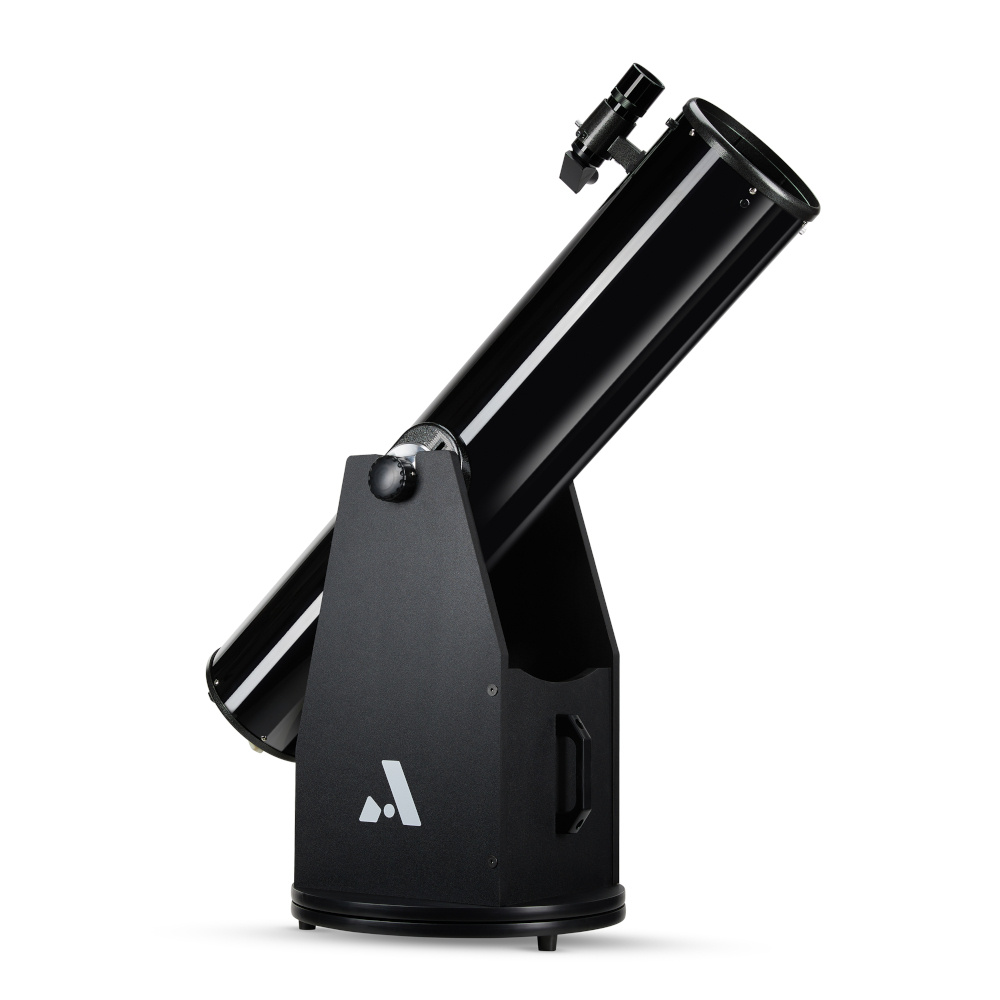
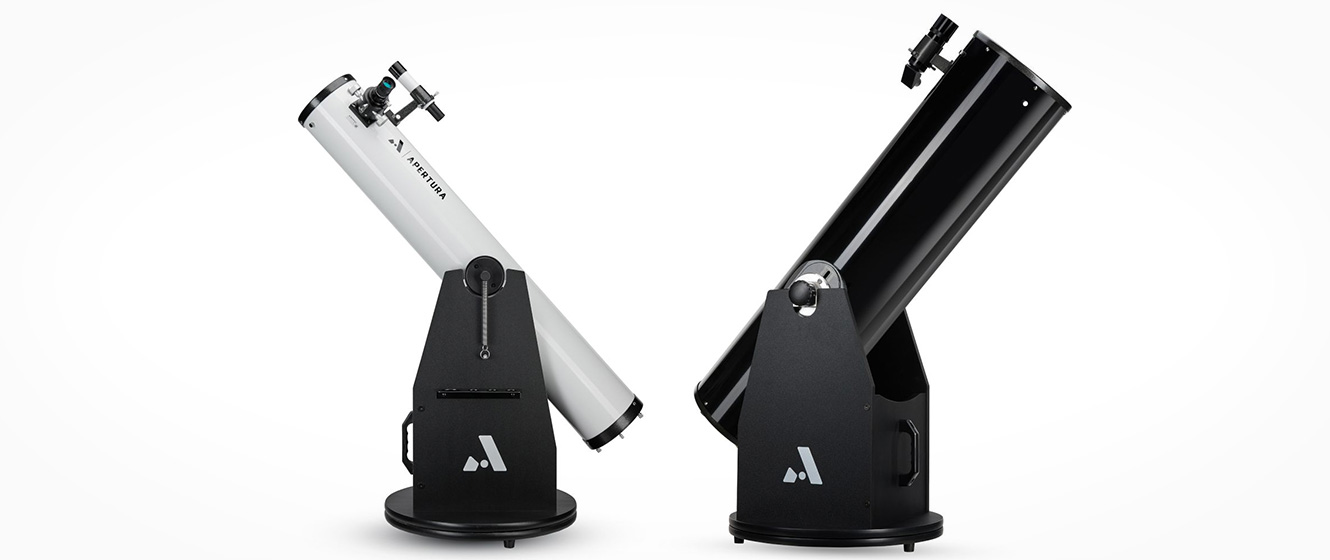
Manual (Standard) - This is the standard Dobsonian design! A full sized optical tube and base places the eyepiece in position for comfortable viewing for most adult individuals. Apertures generally start at 6" and can span upwards of 16" while still retaining the excellent Dob value proposition! This is thanks to the rocker-base, which scales well with mirror size compared to other Altitude Azimuth or Equatorial mounts that require significantly more reinforcement, engineering, and expense to support some of the mammoth mirrors seen on large Dobs. Movement is entirely manual, guided with star charts, planisphere, or mobile apps and the finder scope. This style is well suited to the DIYer looking to undertake the labor of love that is hand-crafting a telescope from scratch, given the optical prescription and construction are some of the most within reach of the home workshop astronomer by design. For the beginning backyard astronomer and advanced user alike, the manual mounted Dobsonian design is an excellent and easy choice.
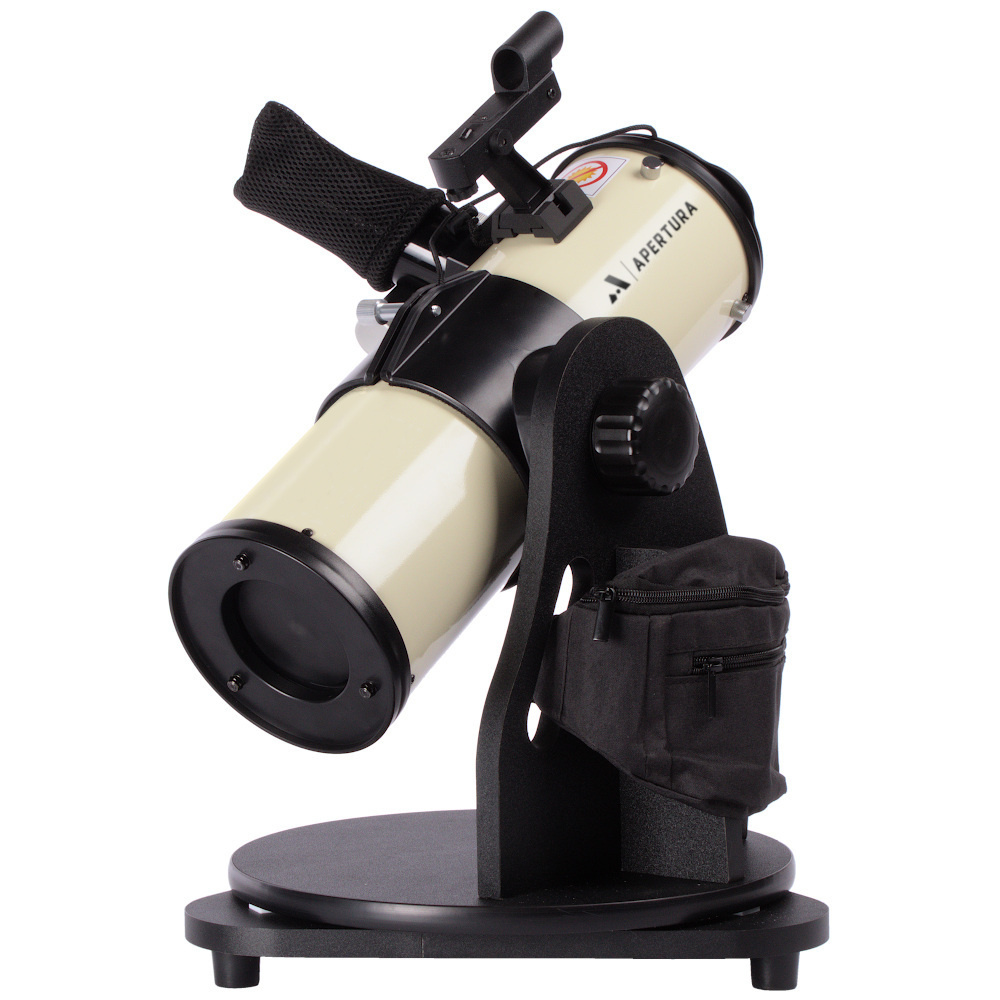
Table Top - A compact take on the Dobsonian design, the table top is as its name suggests is designed to sit atop a table or other high, stable surface. This brings the ease of use of the Dobsonian to a more portable form factor, perfect for observing the night sky while on the go. If a suitable surface isn't nearby, some models also come equipped with tripod mounting studs to allow you to match the 'observe from anywhere' nature of other AltAz or EQ telescope systems. These scopes are great for a wide audience, with the miniaturized design being easier to move and use for younger astronomers, while also not feeling 'cramped' for teens and adults. To keep the form factor table top, apertures on these models typically fall around and below 5".
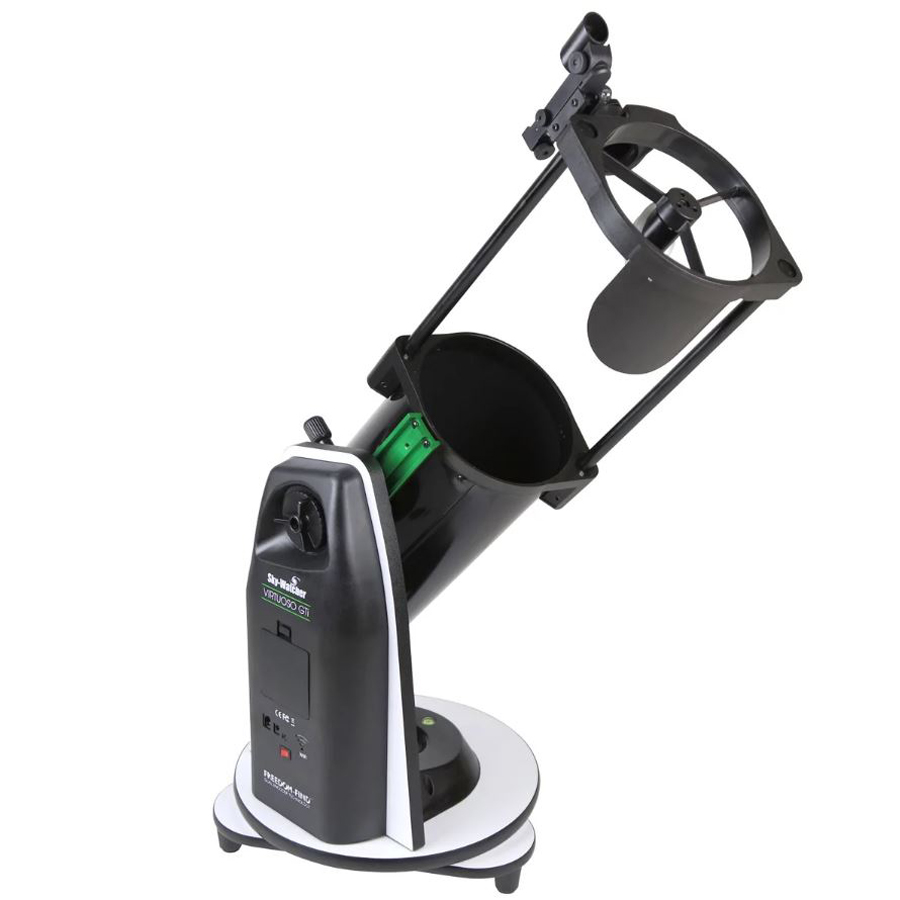
Collapsible - Collapsible models are another take on making the Dobsonian design portable. These can take the form of standard or table top designs; or more unique designs, such as what some call the hybrid truss tube or trunnion rocker style Dob. A common feature of these designs is the separation of the secondary mirror/focuser and the primary mirror, placing them in two independent assemblies instead of one long tube. The two are then set in place at the proper position with a set of trusses, either by holding one assembly up while connecting the tubes or simply sliding the cage into place. While all these designs feature truss tubes, and most truss tube telescopes can be broken down, it should be noted that not all truss tube telescopes are necessarily designed with collapsibility or portability in mind. Aperture size spans a wide range, with table top class designs that make smaller sized scopes even more on the go friendly and standard size selections that make it easier to bring your light bucket with you.
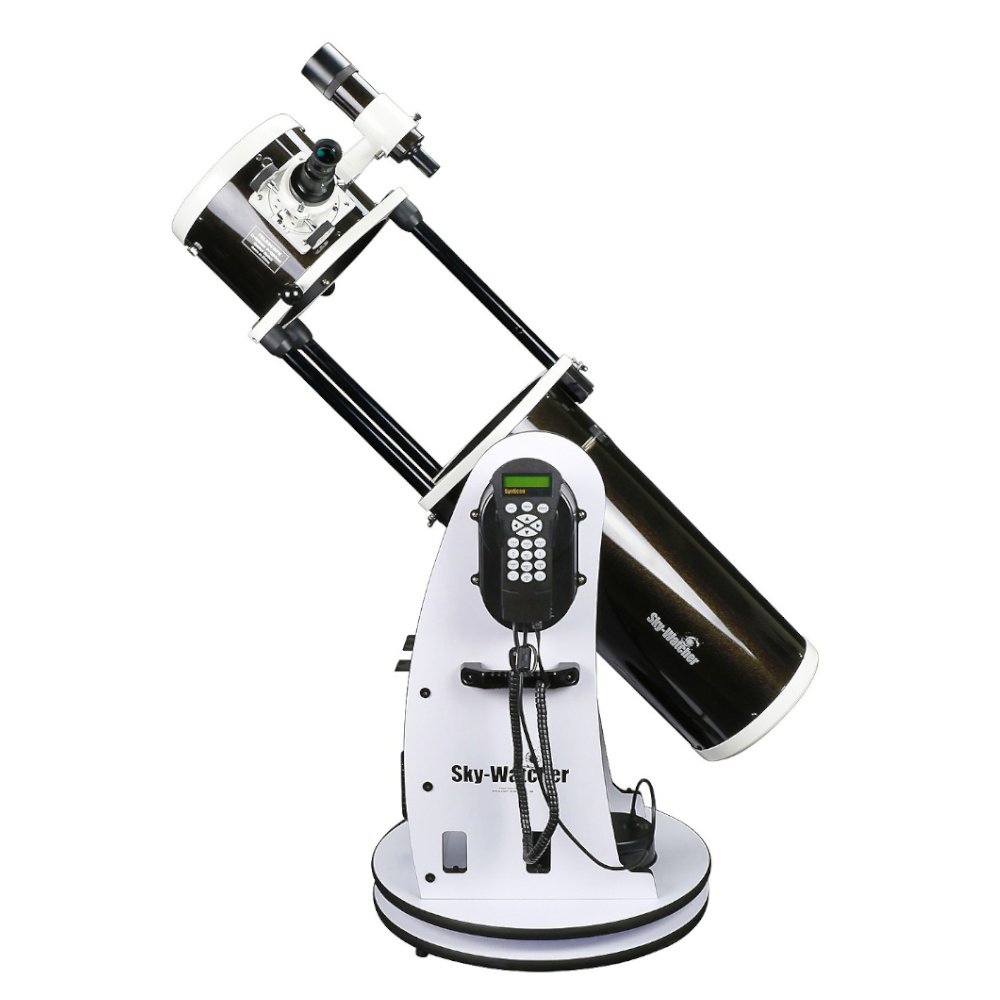
Computerized / Computer Assisted - These models take the standard and table top Dob designs and pair them with an electronic guide. This keeps the same excellent performance and form factor, while making locating objects simpler. This assistance can be provided by a Go-To system like those found in common electronic EQ mounts, or Push-To system. Push-To systems blend manual and electronic together, requiring users to physically move the telescope, but providing real-time direction on which direction to move the telescope and feedback on when the target is in view. Go-To systems on the other hand feature motors which precisely move targets into frame without any user input other than target selection. While both systems require more initial set up compared to other variants, this is a straightforward process that is still very accessible to the beginner.
Standout Selections
Now that we've touched on what makes the Dob design a stellar pick for beginners and some of the common variations, let's explore some of what the current Dobsonian space has to offer! Below is a shortlist we've compiled of excellent options across a range of apertures and designs to help you hone in on your dream Dob.
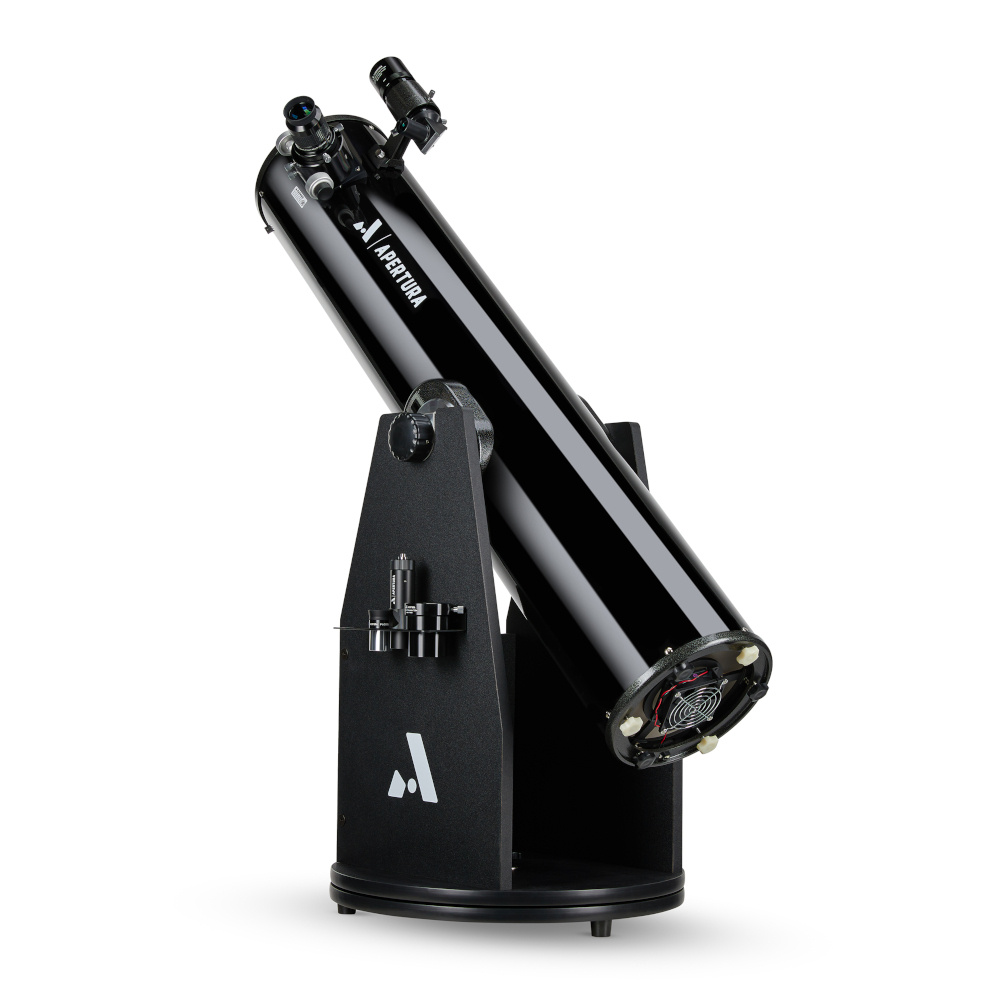
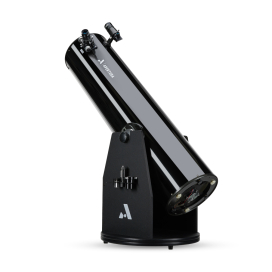
Apertura AD8 8" Dobsonian Telescope -
| Aperture | Magnification w/ Included Eyepieces |
Focal Ratio | Focal Length | Type | 8" | 40x | 133x | f/5.9 | 1200 mm | Standard |
|---|
The Apertura AD8" Dobsonian Telescope brings you the Moon, planets, galaxies, and nebulae at an incredible value! This telescope comes equipped with an 8" mirror paired with a classic Dobsonian design for an offering packed with performance and built to last. This telescope has enough light gathering power to reveal hundreds of celestial objects, and is easy to use! It comes with a thoughtful array of accessories to get you up and running right out of the box, with two eyepieces, a Moon filter, a 8x50 finder scope, and laser collimation tool. You will love how the AD8 can offer you a consistent and impressive observing experience for years to come!
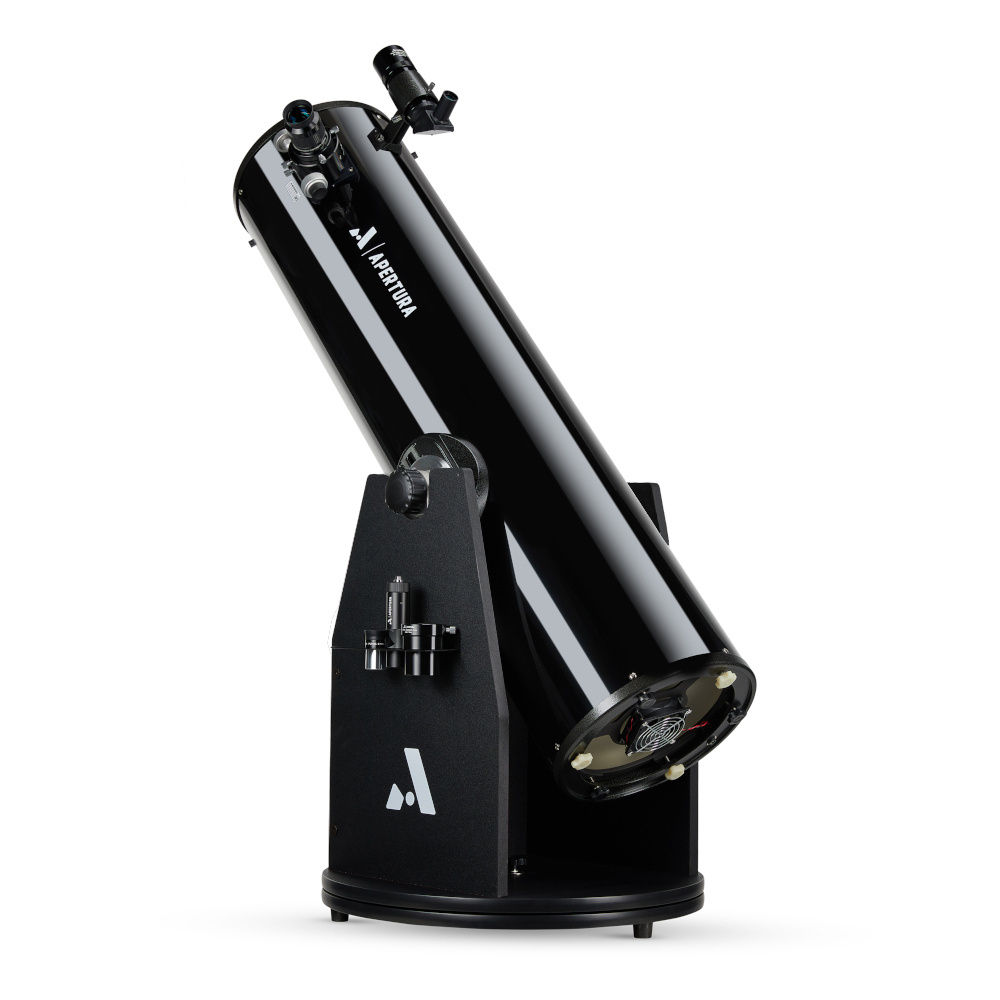
Apertura AD10 10" Dobsonian Telescope -
| Aperture | Magnification w/ Included Eyepieces |
Focal Ratio | Focal Length | Type | 10" | 42x | 139x | f/4.9 | 1250 mm | Standard |
|---|
The next telescope on this list is the Apertura AD10 Dobsonian telescope. The huge 10" primary mirror provides significantly more light gathering capability than the AD8. The AD10 opens up the Universe, providing access to thousands of celestial objects, and the "fast" f/5 focal ratio displays a pleasingly wide field of view when observing the night sky. Included with the telescope is a 35mm extension tube to ensure that you reach focus with any eyepiece, a lunar filter, a laser collimator, a primary cooling fan, two eyepieces, and significantly more. This telescope has a limiting stellar magnitude of +14.5, making it able to observe all but the faintest stars and galaxies in our universe. Fully assembled, the telescope weighs a hefty 66 lbs. This telescope is one of the best large Dobs on the market!
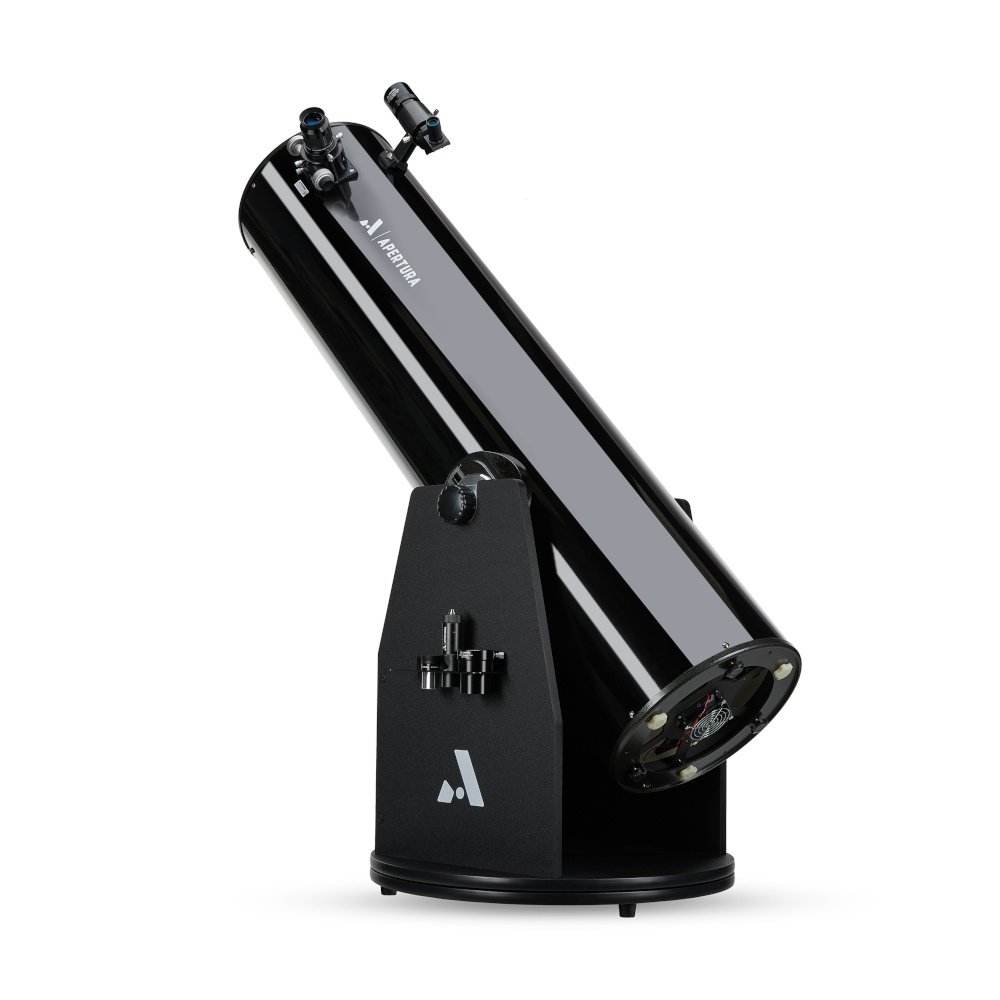
Apertura AD12 12" Dobsonian Telescope -
| Aperture | Magnification w/ Included Eyepieces |
Focal Ratio | Focal Length | Type | 12" | 51x | 169x | f/5 | 1520 mm | Standard |
|---|
Apertura's
AD12 Dobsonian 12" Telescope
features all the fantastic features of its 8" and 10" siblings, but
with even more aperture to firmly place you in 'light bucket'
territory! This enhanced light gathering ability resolves even more
detail and reveals dimmer objects for a stellar viewing experience.
This additional aperture does come with additional mass, with an
optical tube weighing in at 48 lb. and a 38 lb. base. While this is on
the heavy side and is best suited to backyard observing, the views are
well worth the weight! Included with the AD12 is Apertura's excellent
suite of Dobsonian accessories, with the same two eyepieces, cooling
fan, extension tube, laser collimator, Moon filter, and 8x50
right-angle finder of its smaller siblings. If you're looking to dive
head first into the hobby on day one, this light bucket is the choice
for you!
If maximizing your aperture on the go is your goal, check out the
Sky-Watcher 12" f/5 Flextube Dobsonian
for a compelling collapsible 12" option!
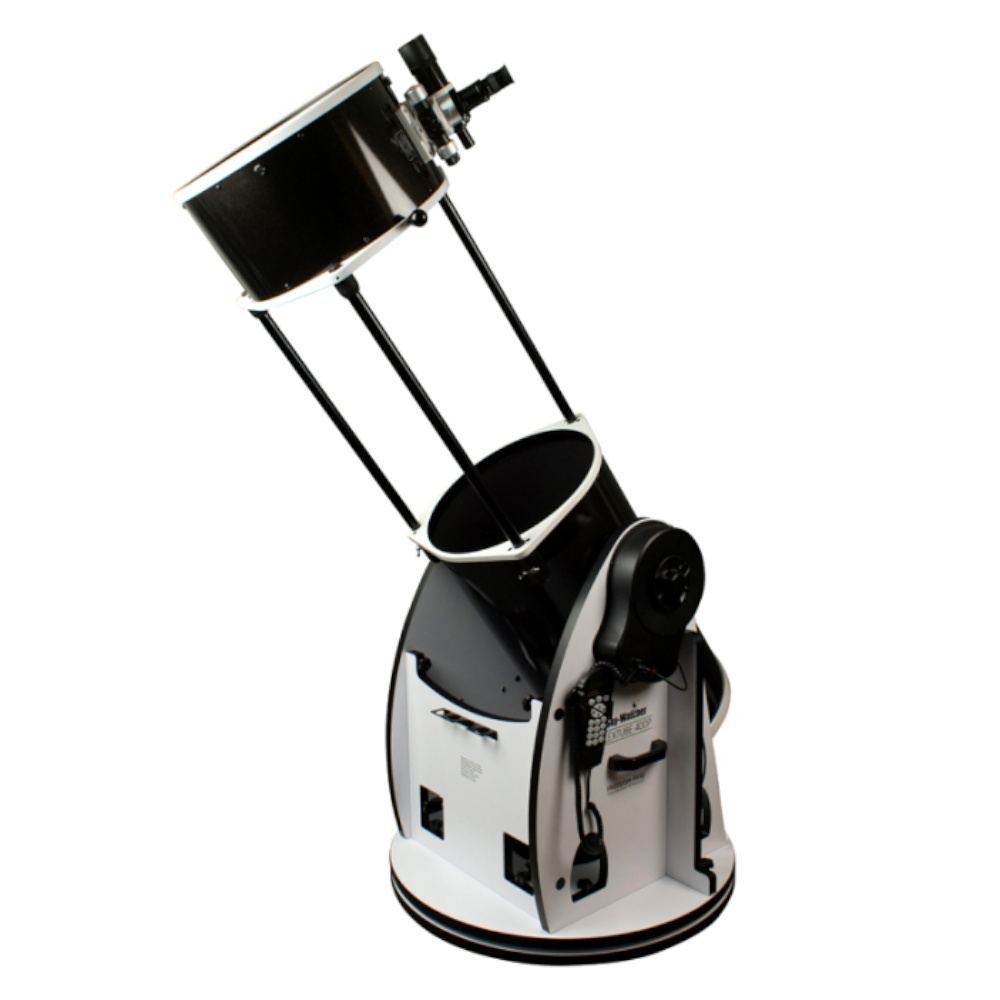
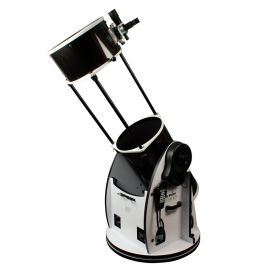
Sk-Watcher 16" Felxtube SynScan GoTo Collapsible Dobsonian -
| Aperture | Magnification w/ Included Eyepieces |
Focal Ratio | Focal Length | Type | 16" | 90x | 144x | f/4.6 | 1800 mm | Computerized (Go-To), Collapsible |
|---|
If you're looking for the Dobsonian design with Go-To capabilities,
Sky-Watcher's SynScan line delivers! While available in a number of
sizes, the
16" Felxtube SynScan GoTo Collapsible Dobsonian
makes our list as this combination of automation and aperture feels
like operating your own personal observatory. The immense aperture
gives you plenty of reach and resolution, bringing in more detail on
your favorite bright targets and putting smaller objects more front
and center. Compared to an 8" telescope, this will bring you a
staggering 300% more light gathering power and reward your aperture
obsession with absolutely striking views. While this massive scope
requires even more space investment than the already commanding 12"
options, this model does feature Sky-Watcher's FlexTube design to
assist in storing the system when not in use. Directing this optic is
not as imposing as it may seem, thanks to the SynScan Go-To system,
which moves this massive mirror on target and keeps it in sync with
intelligent encoders and motors!
If you've caught the 'aperture fever,' be sure to check out the
Apertura AD16 Truss Dobsonian 16"
for the same super-sized optics in a manual mount package at a
fantastic value!
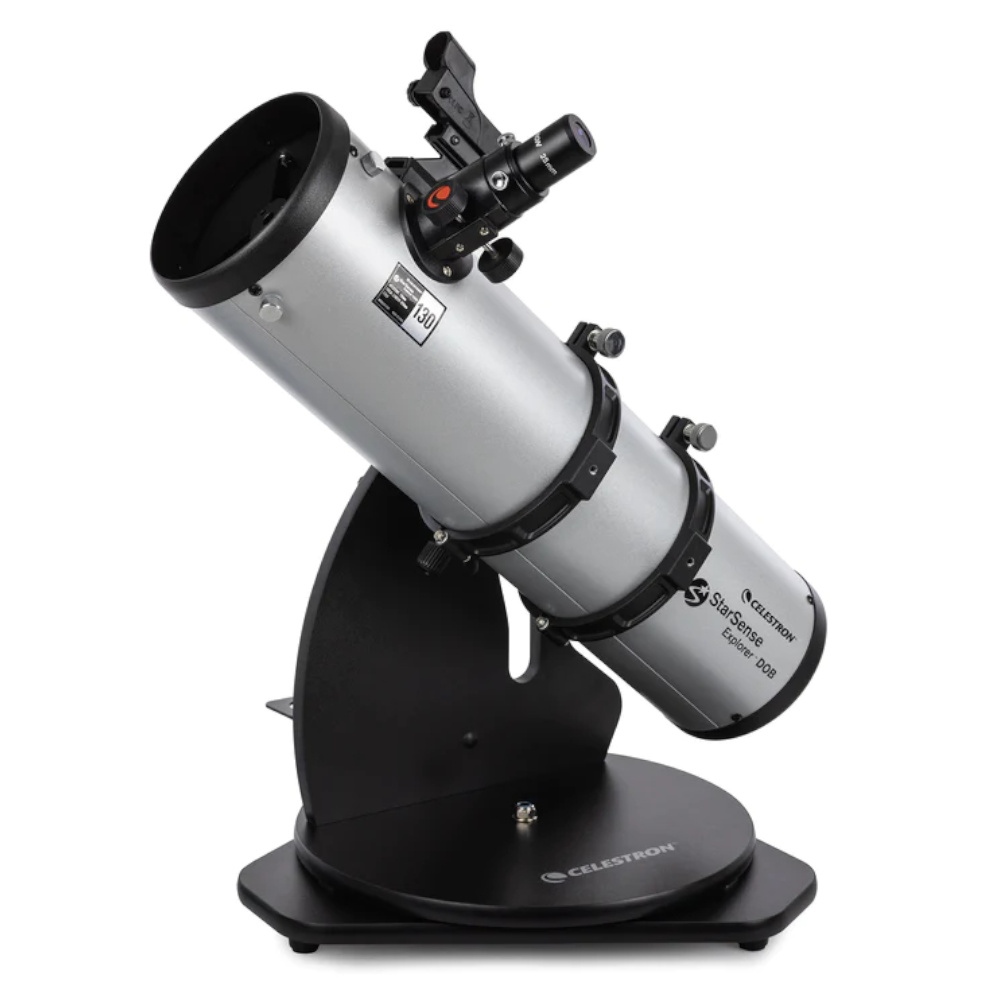
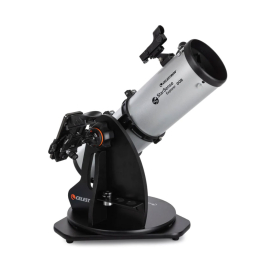
Celestron StarSense Explorer 130mm Tabletop Dobsonian -
| Aperture | Magnification w/ Included Eyepieces |
Focal Ratio | Focal Length | Type | 5" | 26x | 65x | f/5 | 650 mm | Computerized Table Top (Push-To) |
|---|
If you're looking for a more portable pick than the previous entries
in this list, consider the
Celestron StarSense Explorer 130mm Tabletop Dobsonian! This table top form factor Dob features about a 5" mirror to
maximize your aperture while remaining compact. It features
Celestron's renowned push-to StarSense system, which cleverly utilizes
your smartphone as the 'brains' and 'eye' to bring you a guided
experience at an incredible value. All core accessories are included,
allowing you to get to observing right out of the box; with tripod
support for those looking to observe even when a table isn't
available!
If you're looking for another option in the table top Dob form
factor, consider the
Apertura Library Telescope! With its educational design honed in in partnership with the Library Telescope Program, it is a great introduction to the astronomy hobby!

Contributing Writers
 Moryah
DeMott
Click the arrow above to see MLA, APA, and Chicago Manual of Style citations.
MLA:
Edward Bevan. "Dobsonian Telescopes for Beginners" AstronomyHub, High Point Scientific, 11 Dec. 2025, https://www.highpointscientific.com/astronomy-hub/post/astronomy-101/dobsonian-telescope-for-beginners.
APA:
Edward Bevan. (2025, December 11). Best telescope for beginners. High Point Scientific. https://www.highpointscientific.com/astronomy-hub/post/astronomy-101/dobsonian-telescope-for-beginners
Chicago Manual of Style:
Bibliography:
Edward Bevan. "Dobsonian Telescopes for Beginners," AstronomyHub (blog), High Point Scientific, December 11, 2025. https://www.highpointscientific.com/astronomy-hub/post/astronomy-101/dobsonian-telescope-for-beginners.
Footnote:
Edward Bevan, "Dobsonian Telescopes for Beginners," AstronomyHub, High Point Scientific, December 11, 2025, https://www.highpointscientific.com/astronomy-hub/post/astronomy-101/dobsonian-telescope-for-beginners.
This Article was Originally Posted on April 03, 2023