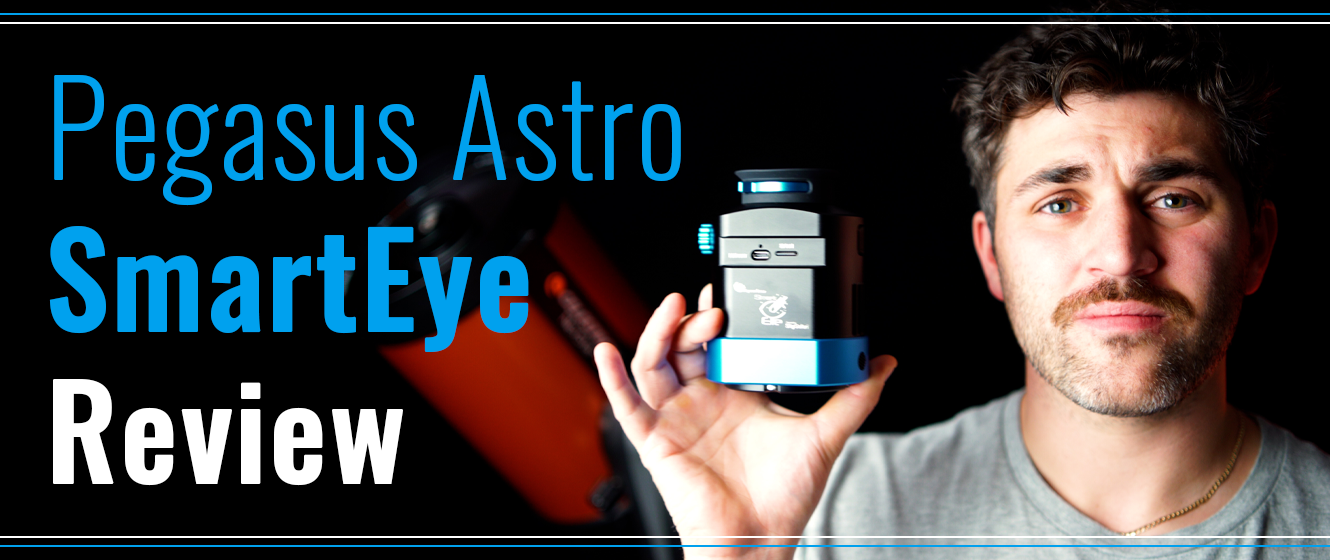
Any visual astronomer will tell you that looking through an eyepiece connects you with the night sky like nothing else. Even astrophotography, incredible as it is, can’t replicate that feeling. The difference between visual observing and astrophotography should be obvious: our eyes simply can’t capture nearly as much light as a camera. This is where the Pegasus Astro SmartEye comes in. It offers the views of an astrophoto while maintaining that tactile feel of being at your telescope under the night sky.
Below, you will find all key features and specifications about the Pegasus SmartEye, along with our attempt to pair it with one of the world's most popular telescopes, the Celestron NexStar 8SE. Can the Pegasus SmartEye turn the Celestron NexStar 8SE into a smart telescope? Let's find out.
What Exactly is the Pegasus SmartEye?
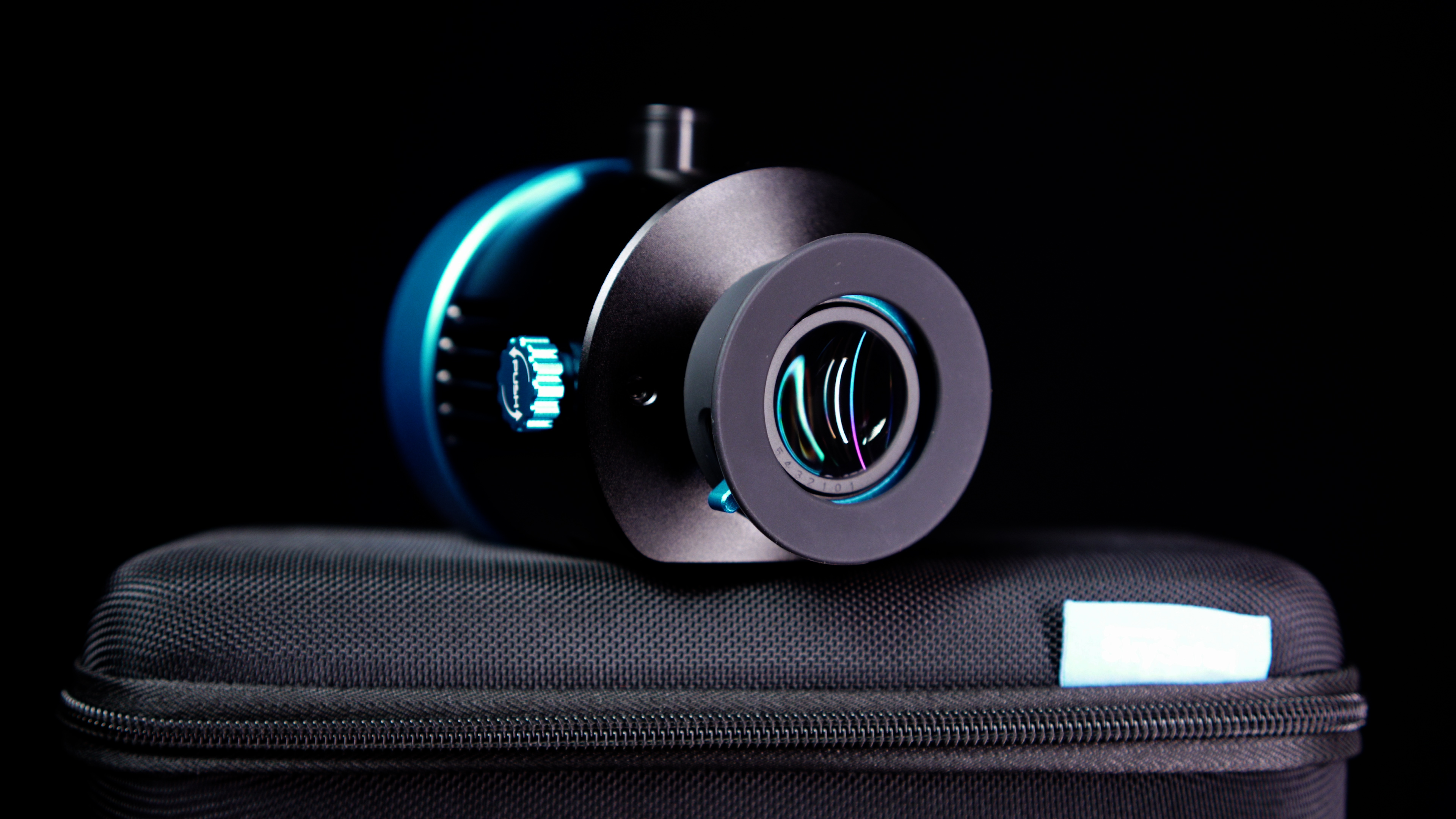
The Pegasus SmartEye is essentially a highly sensitive, cooled CMOS camera with an ultra-wide 90-degree field-of-view eyepiece attached to the top. Within that eyepiece is a high-resolution display on which the image is shown. You simply take a picture and experience the image through an eyepiece. The camera is inserted into any telescope just as a standard eyepiece would be, and is powered with a separate AC adapter. Once powered on, the camera captures several short (10 to 30-second) exposures and stacks them internally to reveal color and detail while you look through the eyepiece.
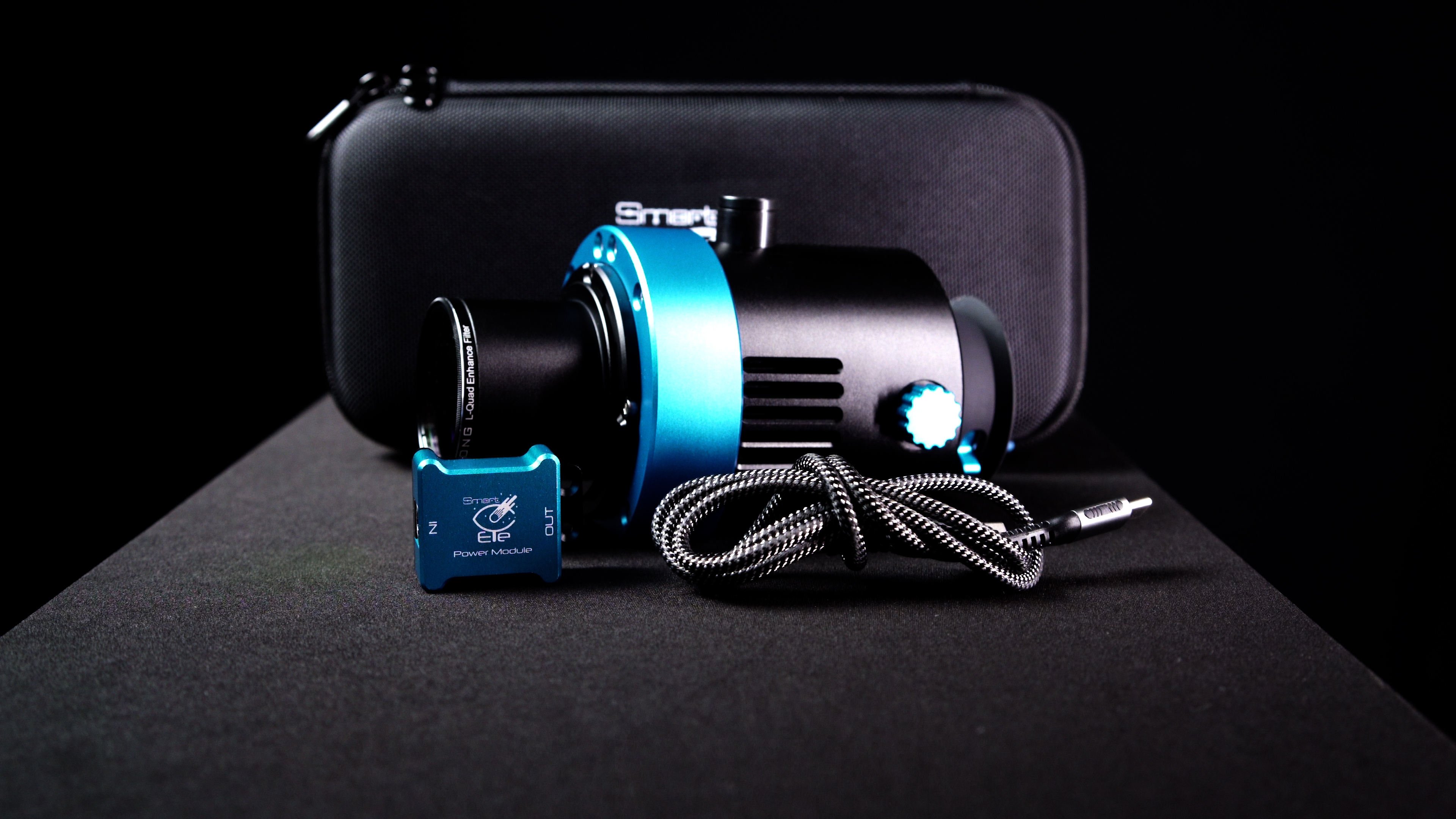
You can either integrate the SmartEye Wi-Fi with your mount’s Wi-Fi and control everything through the SkySafari Pro app for a much deeper experience, or you can simply use your telescope's native GoTo control for object location and tracking, with the SmartEye handling image capture as a separate entity. We discuss both methods later in the article, with one being the better approach.
Specifications & Design
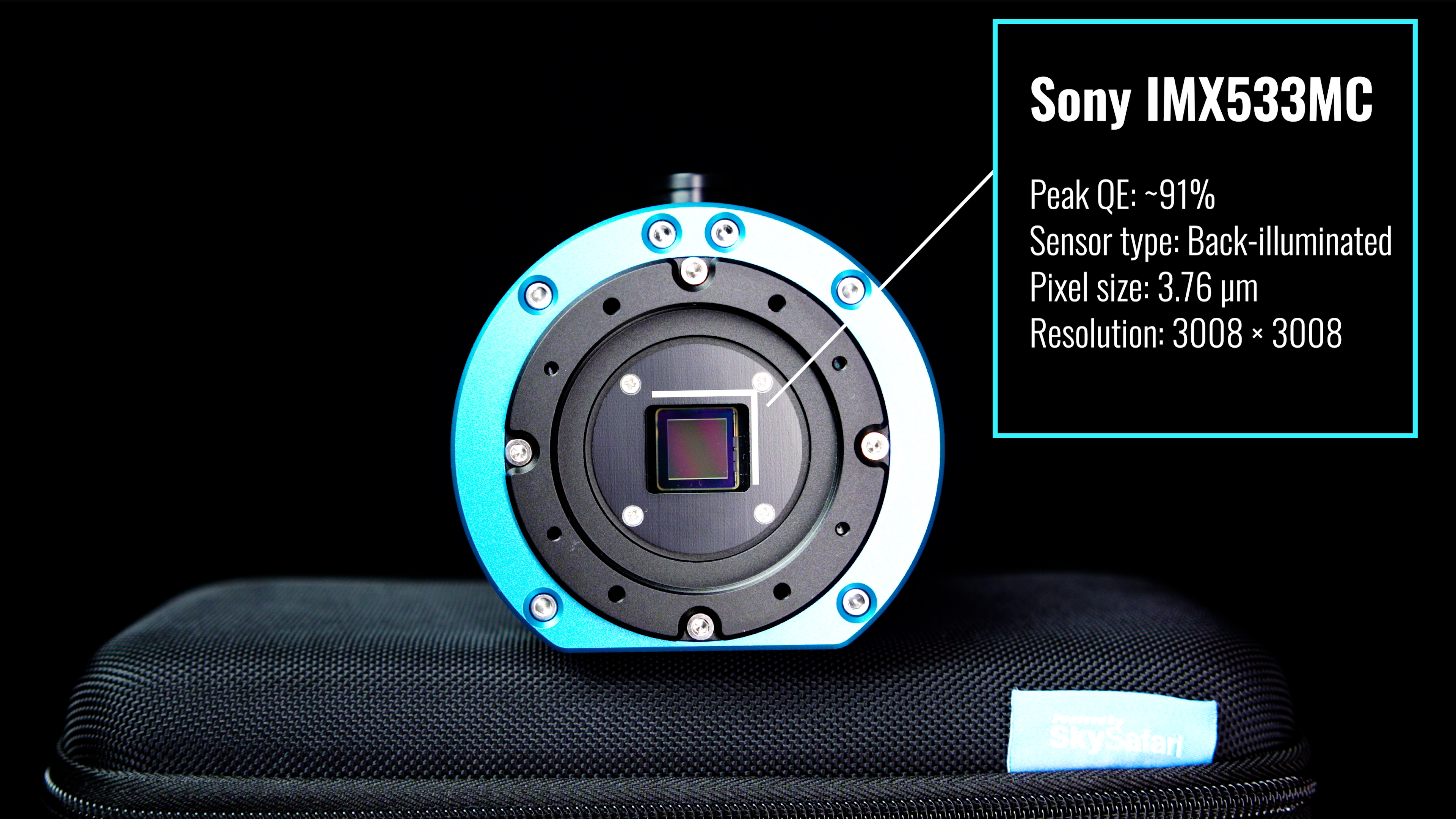
The Pegasus SmartEye is built around the familiar yet powerful Sony IMX533 CMOS sensor. This sensor has become popular in the amateur astronomy community thanks to its low noise, high sensitivity, and excellent overall performance. This, coupled with internal camera cooling and dark frame features, provides incredibly colorful and low-noise images of your favorite deep-sky objects right through the eyepiece. The camera captures exposures while the onboard processor aligns and stacks them in real time, presenting the result through the built-in OLED display.
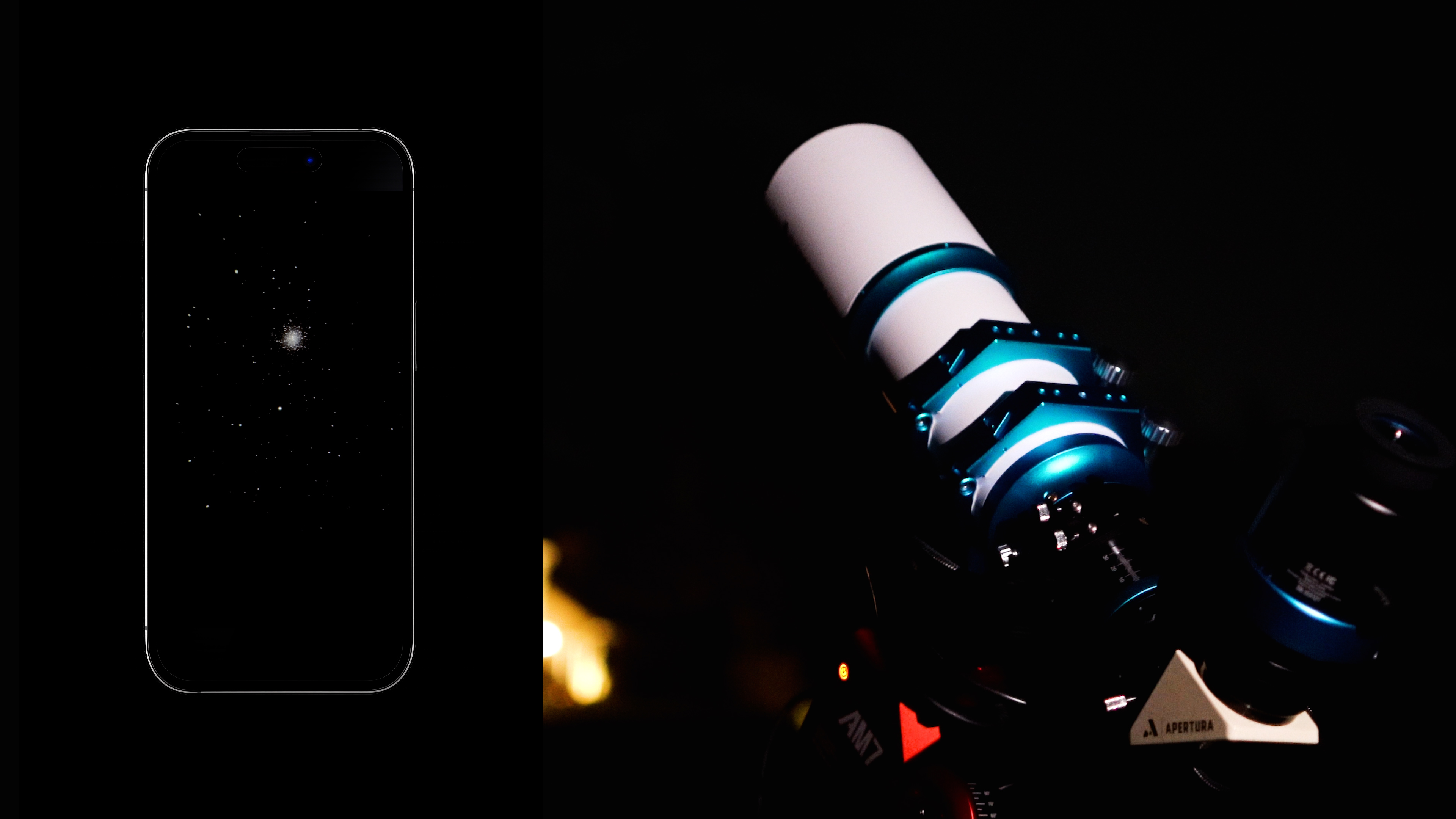
**Note: Any images shown on an iPhone in this article represent the live view through the eyepiece. These were captured directly through the eyepiece using an iPhone to accurately reflect what was seen during observation.**
Key Features of the SmartEye:
- Sensor: Sony IMX533 CMOS
- Display: 2560 × 2560 OLED
- Eyepiece: 90° ultra-wide field of view
- File Output: FITS support
- Storage: Internal memory + microSD card support
- Connectivity: Standalone operation (no external device required)
- Power: 12V USB-C
- Easy-to-use thumb knob for on screen menu selection
What is Live Stacking?
Live stacking is the process of capturing multiple short exposures and combining them in real time to improve signal, reduce noise, and reveal faint details. Instead of seeing a dim, barely visible object through an eyepiece, the image gradually builds, becoming brighter, sharper, and more colorful over time. The SmartEye starts this process once you select “New Observation” through the eyepiece menu.
Two Ways to Use the SmartEye
During testing, it became clear that the SmartEye can be used in two very different ways. The first way is how we see most astrophotographers or amateur astronomers using it. This seems to be the way to go for those who already have a dedicated astrophotography imaging rig. The second method involves using a computerized GoTo telescope… and is our recommended way of enjoying the SmartEye.
1. Dedicated Imaging Setup
The first method is pairing the SmartEye with an equatorial mount and a fast refractor, similar to a traditional astrophotography setup.
In this configuration, the SmartEye functions simultaneously as a capable deep-sky camera and an eyepiece. With precise tracking from an equatorial mount, users can take advantage of longer exposure options offered by the SmartEye (20 to 30 seconds), improving overall image quality and eliminating field rotation. If you plan to use this method, you will likely integrate your EQ mount’s Wi-Fi with the Pegasus SmartEye’s Wi-Fi and control the entire system through the highly intuitive SkySafari Pro app. Within the app, you have the ability to visit nearly any deep-space object with precision thanks to internal plate-solving capabilities. You can control the entire process through your smartphone and enjoy the views through the eyepiece. The images are not projected onto your smartphone.
2. Visual Telescope
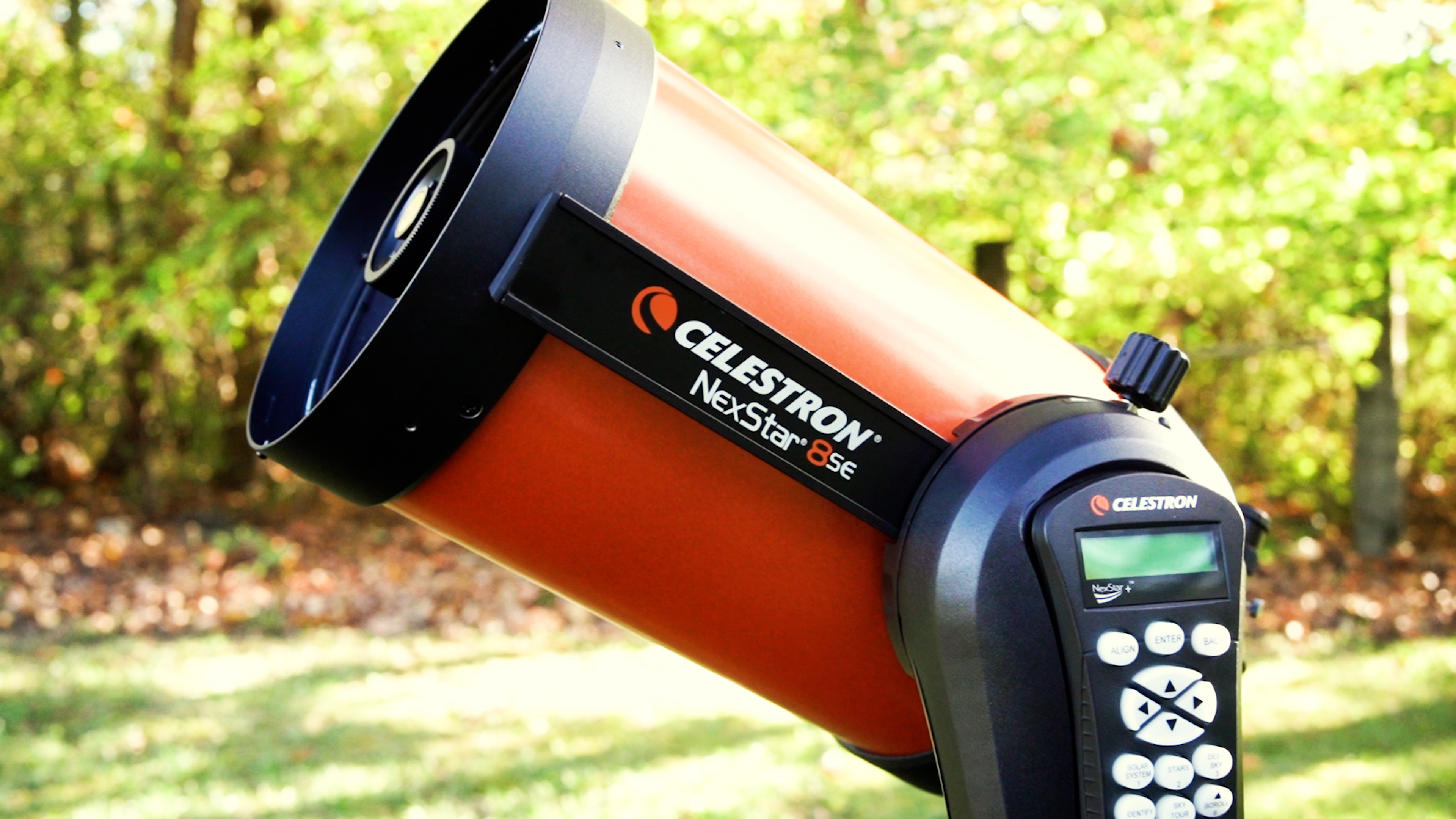
The second method, and arguably the most compelling, is pairing the SmartEye with a visual GoTo telescope like the Celestron NexStar 8SE. Telescopes like the NexStar series, Evolution, and CPC have long been known for their ease of use and excellent visual performance. However, they’ve traditionally been limited when it comes to deep-sky imaging due to their alt-azimuth design. This is where the SmartEye completely enhances your experience with this telescope.
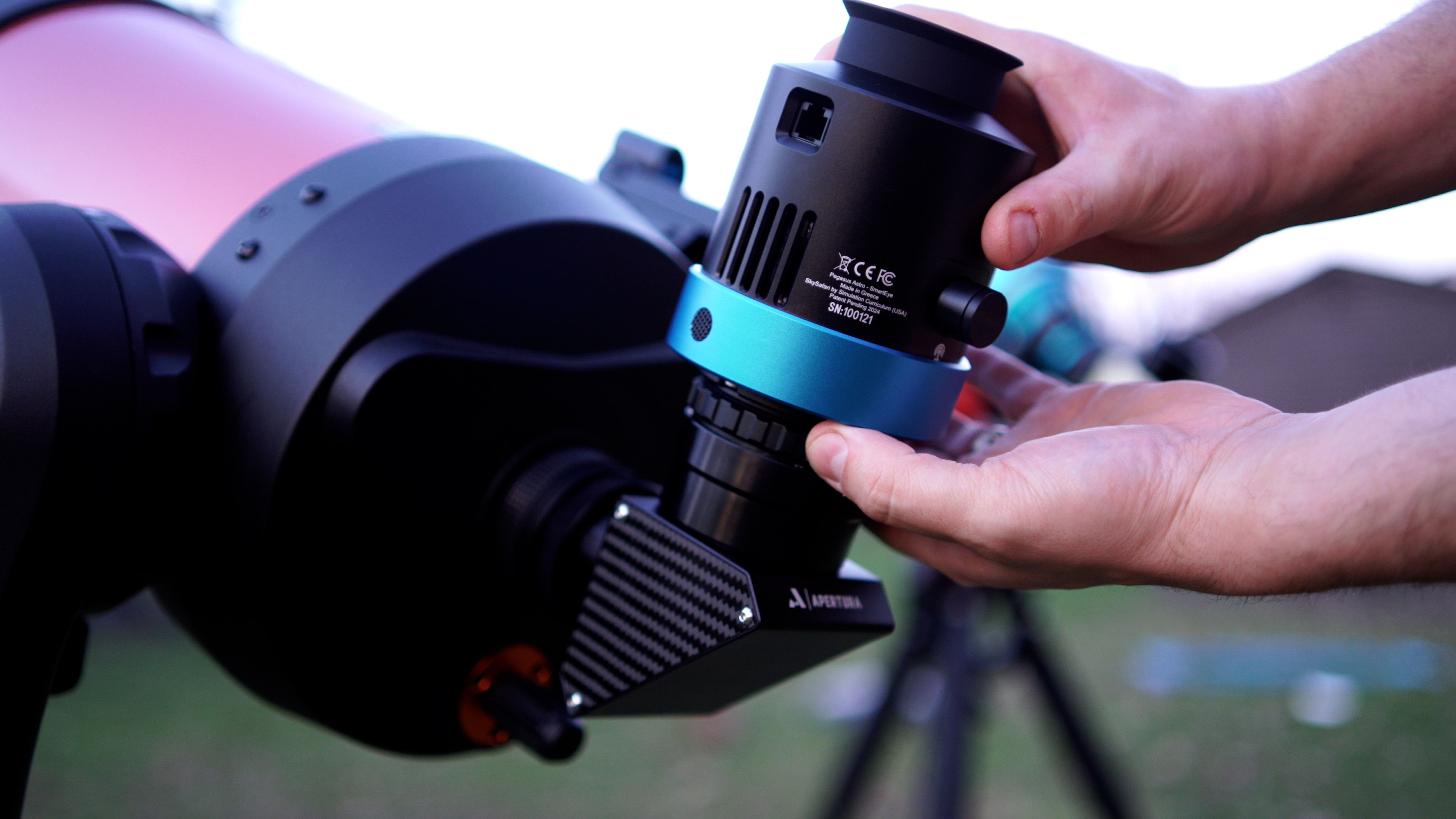
By simply inserting it into a 2” eyepiece diagonal:
- The NexStar mount handles object location and tracking
- The SmartEye handles image capture and stacking
- The result builds in real time through the eyepiece
During testing, this combination felt surprisingly natural and simple. The telescope does what it has always done best, quickly finding and tracking objects, while the SmartEye gradually reveals detail, color, and structure that would otherwise remain invisible. We recommend using a free star app like Stellarium to navigate the night sky and see what lies above you. The app is not necessary in any way, it simply acts as a guide to help you choose which object to enter into the hand controller.
When paired with a focal reducer, bringing the system closer to f/6.3, performance improves even further by allowing faster light collection and brighter stacked results. Pegasus Astro recommends a focal ratio of f/7 or faster when using the SmartEye. The Celestron 0.63 reducer brings the focal length just above 1000mm, which is a bit long but still viable.
Teagan’s In-the-Field Experience
When testing and using the SmartEye out in the field, I used two different setups. Both were mentioned above: an astrophotography setup and the Celestron NexStar 8SE. The astrophotography setup consisted of the ZWO AM5 and the Apertura APO90. This was controlled through the mount’s Wi-Fi and the SkySafari Pro app.
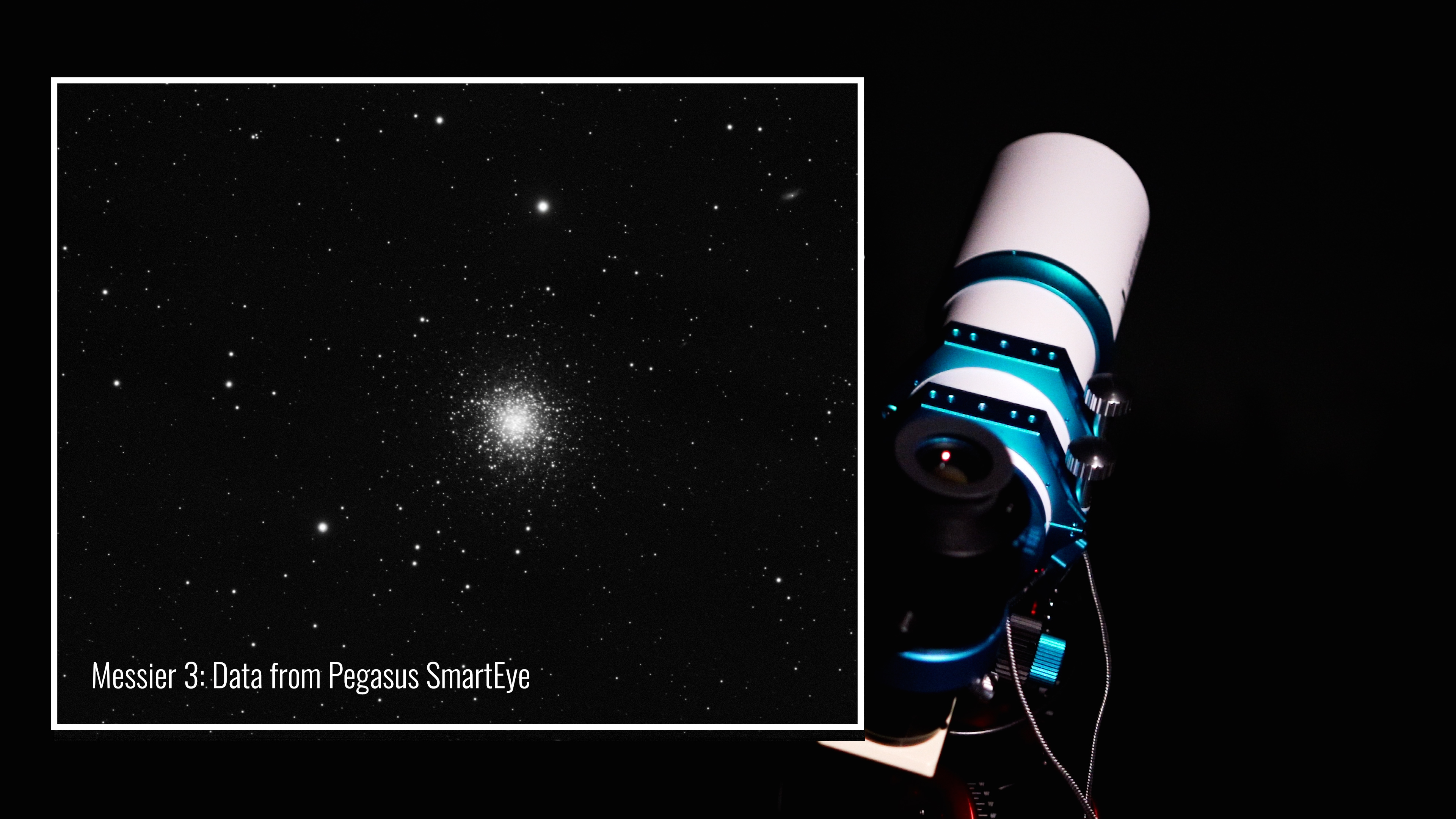
After polar alignment, I pointed the APO90 and the SmartEye toward Messier 13 in Hercules. The live view of the Hercules Cluster through the eyepiece was bright and apparent and resembled a view I would have through a much larger telescope under much darker skies. I would say the live views of all the objects I observed that night matched this description.
I chose to capture 30-second exposures within the SmartEye settings, and the star cluster really came to life. Peering through the eyepiece felt very similar and just as immersive as a standard eyepiece. The 90-degree field of view allowed me to look around the eyepiece, not just at the object in the center. The background was dark, and the stars were pinpoint. I followed up with Messier 51, the Whirlpool Galaxy, and watched as the spiral arms grew in detail as each exposure stacked over a period of 15 minutes.
While I knew that the SmartEye would pair very well with a dedicated astrophotography setup like the one above, what really excited me was how well it paired with the Celestron NexStar 8SE. The 8SE was my very first “real” telescope that I purchased back in 2014. I was able to use it during my tests with the SmartEye and had a near-flawless experience, with the standout view being the Orion Nebula. When I reflect back on my first years into amateur astronomy, back in 2014, something like the SmartEye was exactly what I was looking for. Like many beginners, I quickly learned that while the 8SE was fantastic for visual observing, it was NOT suited for astrophotography by itself, which is what I was passionate about at the time. I quickly learned that I needed an equatorial mount, guiding hardware, additional cameras… the list grew quickly. The SmartEye was exactly the type of camera I wanted back in the day.
So, out in the field, I performed my typical “2-star auto align” method with the SmartEye acting as my eyepiece in live view mode. After alignment, I selected Messier 42 in the hand controller, and the mount slewed directly to the Orion Nebula. I selected “new observation” within the SmartEye settings, and after just a few minutes, the view through the eyepiece closely resembled astrophotography images. I did not expect the image to be that clear, colorful, and detailed.
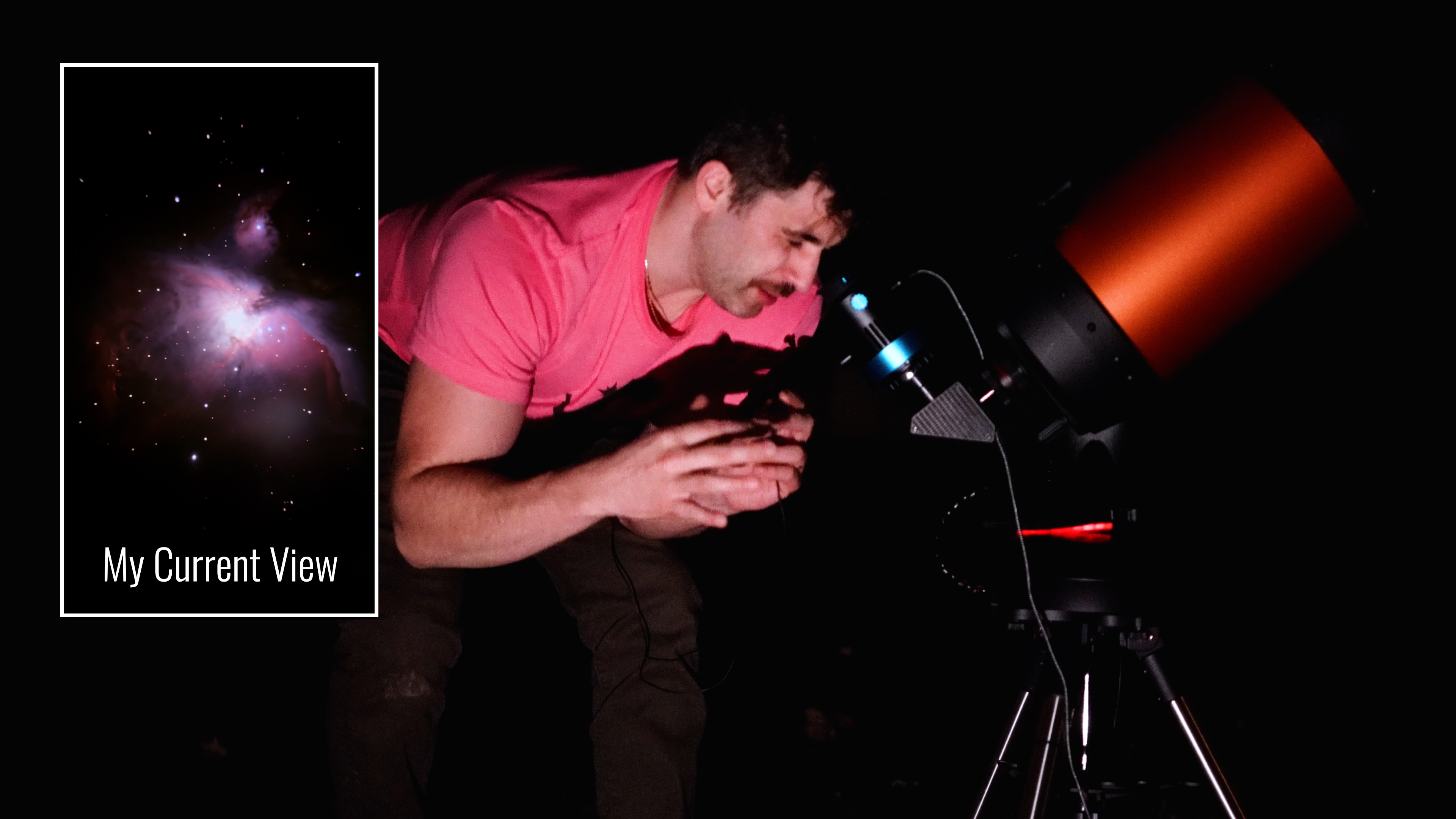
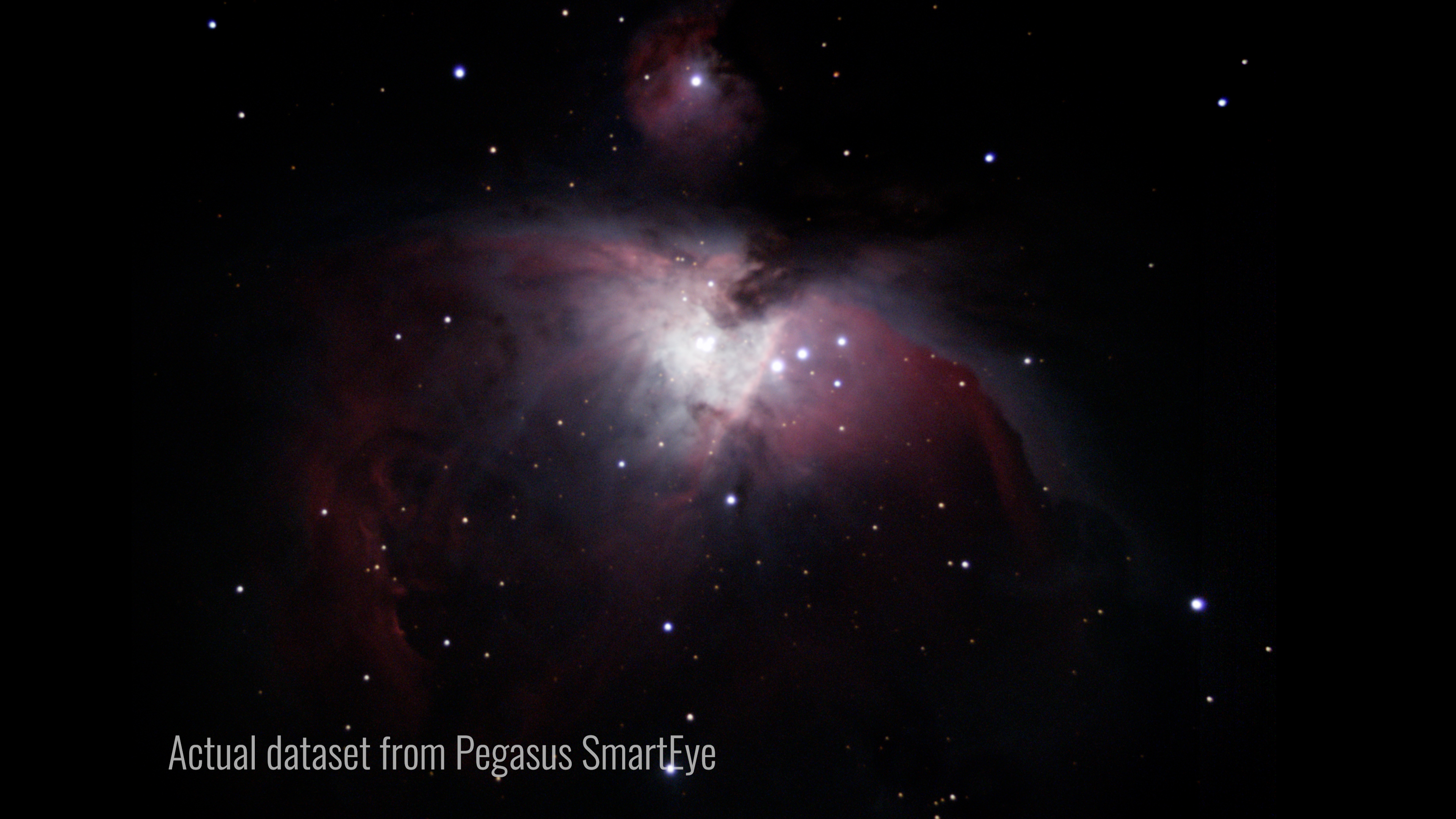
Out in my backyard, I realized how popular these telescopes are and just how much the SmartEye can transform them into a visual powerhouse.
Other Notable Features
Beyond live viewing, the SmartEye also offers flexibility for more advanced users:
- FITS file support allows you to save data for post-processing
- Adjustable exposure settings provide more control on tracking mounts
- Built-in storage and SD card support make file management easy
- M48 filter threads allow the use of 2” filters for light pollution or narrowband imaging
Final Thoughts
For those who still love being under the night sky, looking through an eyepiece, but want deeper, more detailed views, pairing the Pegasus Astro SmartEye with a GoTo telescope like the Celestron NexStar 8SE should absolutely be on your short list.
At some point, most amateur astronomers want more. Traditionally, that meant choosing between a larger telescope, a dedicated smart telescope, or a full astrophotography setup, each with its own trade-offs. The SmartEye takes a different approach. By blending live-stacked imaging with the familiar, tactile experience of visual observing, it frees you from committing to any one of these paths. It combines technology, astrophotography, and that coveted hands-on feel of being out under the night sky.
Whether or not it’s truly revolutionary is up for debate, but there’s no denying that the Pegasus Astro SmartEye offers a unique and genuinely exciting way to experience the cosmos.
Learn More
Interested in diving deeper into the world of astronomy? Not sure where to begin? Check out our Astronomy Hub!