Observatories are home to some of the biggest and most impressive telescopes in the world. As many amateur astronomers know, there are numerous ways to experience the night sky beyond looking through a telescope in your own backyard. Kansas has impressive observatories that offer a wide variety of star parties, tours, and observatory programs that will expand your knowledge of astronomy and your love of the night sky, whether you are new to astronomy or have been in the hobby for years.
For your convenience, we have compiled an alphabetical list of observatories in Kansas that offer programs for the public.
Disclaimer: This information was collected from the observatories’ websites in October 2025. Some information may be subject to change if the websites are updated. If interested in visiting one of the listed observatories, please contact the observatory for the latest information before you visit.
Banner Creek Observatory
The Banner Creek Observatory is located in Holton, Kansas and is the premier natural and physical sciences education and research facility in the area. Previously known as the Elk Creek Observatory, the Banner Creek Observatory was founded in 2000 and became the only high school owned observatory in the world. The observatory was originally built with grant funds from the Christa Grant Foundation, which was named after the teacher who passed away due to the 1986 Challenger shuttle disaster.
Telescope
The Banner Creek Observatory has a fully automated and remote-controlled 24-inch Planewave CKD telescope on L-600 mount. It is equipped with a digital CCD camera that has an internal filter wheel with LRGBHa filters.
Visiting
This observatory offers a wide variety of outreach programs for the public. Not only does it offer regular observation sessions, but it offers science classes, seminars, and special events in the learning center. The calendar of events can be found here.
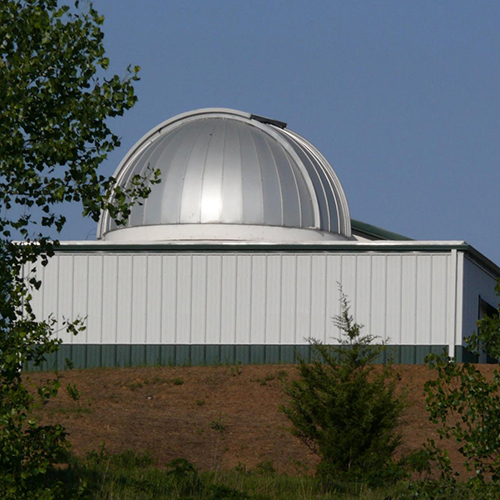
Image Credit: Banner Creek Science Center & Observatory
Crane Observatory
Washburn University’s Physics & Astronomy Department in Topeka, Kansas manages the Crane Observatory and planetarium.
Visiting
The university’s observatory is open to the public during scheduled viewing sessions. It also opens the planetarium to school groups by appointment on Thursdays, as long as school is in session. There is no cost for the school groups to participate. The Open House schedule can be found here for more information.
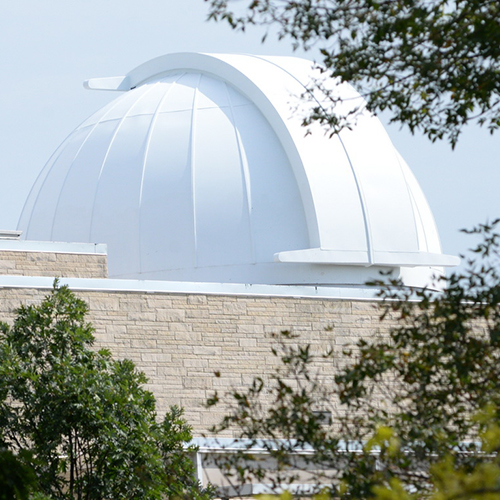
Image Credit: Washburn University
Farpoint Observatory
The Farpoint Observatory is located in Wabaunsee County, Kansas about thirty miles southwest of Topeka. The observatory was founded, designed, and built in 1996. It is maintained by the Northeast Kansas Amatuer Astronomers’ League (NEKAAL). It is internationally known as the site of the discovery of over 600 asteroids and one of the faintest comets ever discovered by an amateur.
Visiting
The Farpoint Observatory offers Public Astronomy Nights. Members of NEKAAL are available to answer questions and equipment will be provided for celestial viewing. The schedule for Public Astronomy Nights can be found here. For those who wish to have a group tour or group observing sessions, the Astronomy Program Director must be contacted in advance. The Director’s contact information can be found here.
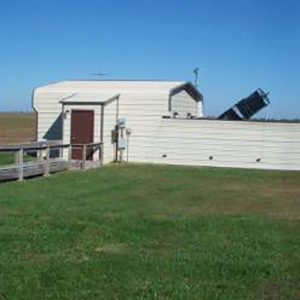
Image Credit: Northeast Kansas Amateur Astronomers’ League Inc.
Kansas Wesleyan Observatory
The Kansas Wesleyan Observatory is located on the Kansas Wesleyan University campus in Salina, Kansas.
Telescope
The main instrument of the Kansas Wesleyan Observatory is a 16” telescope.
Visiting
The observatory periodically hosts Open Observatory nights hosted by the Salina Astronomy Club. These are announced on the Kansas Wesleyan University Calendar. The calendar can be found here.
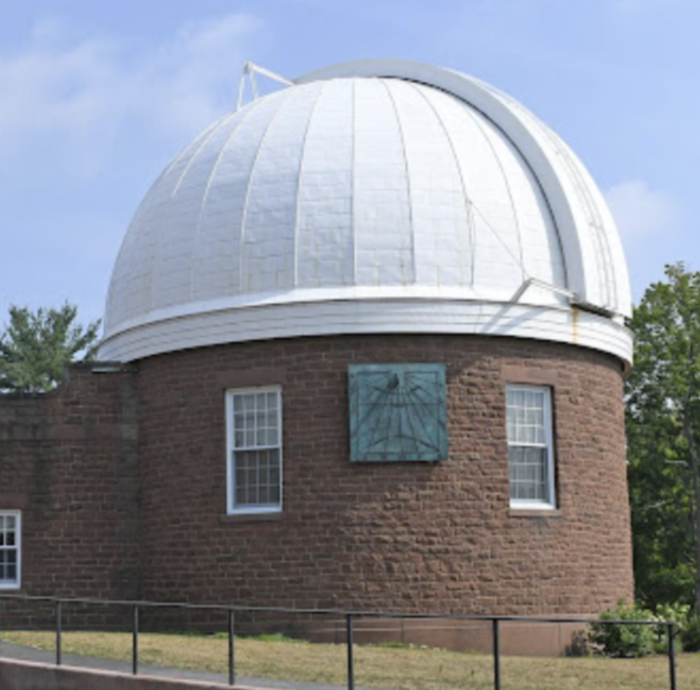
Image Credit: Wesleyan University Twitter
Lake Afton Public Observatory
The Lake Afton Public Observatory opened in 1981 in Wichita, Kansas. Wichita State University, Wichita Public Schools, Sedgwick County, and the City of Wichita participated in the project, though the University primarily managed the observatory until 2015. The observatory then closed, but was saved and reopened on September 2nd 2016.
Telescope
The main telescope at the Lake Afton Public Observatory is the 16” Ritchey-Chrétien telescope.
Visiting
The observatory is open Friday and Saturday, November - February, starting at 7:30pm and ending at 9:30pm. Hours in March - April start at 8:30pm to 10:30pm. May - August have hours starting at 9pm to 11:30pm and September - October starting at 8:30pm to 10:30pm. There are admission fees for this observatory, though children four and under are free. The calendar can be found here.
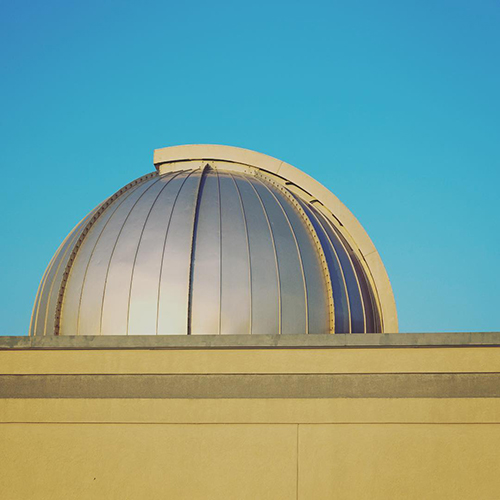
Image Credit: Lake Afton Public Observatory
Powell Observatory
Powell Observatory was built by members of the Astronomical Society of Kansas City in 1985 and is located about 25 miles South of Kansas City in Lewis-Young Park, just North of Louisburg, KS. You'll find that the skies here are much darker than in Kansas City itself, allowing for a better observing experience.
Telescope
This observatory has one of the largest telescopes open to the public in the five-state-area: The Ruisinger Telescope. This telescope is a Newtonian-style reflector with a 30” diameter mirror. It also is home to several other telescopes available to the public.
Visiting
The Powell Observatory is open to the public on Saturday nights during the months of May through October. It is also open for special astronomical events. The event calendar can be found here. There is a donation request upon entry. Private events require a reservation and fee.
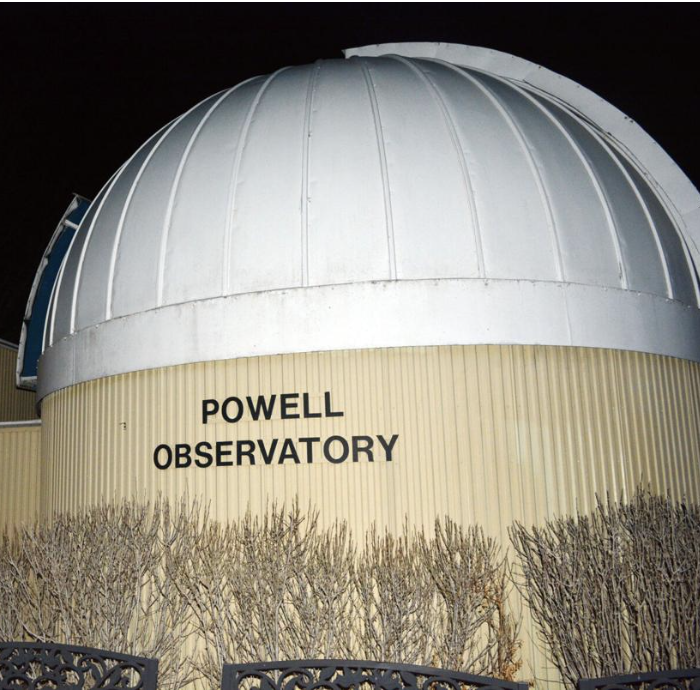
Image Credit: RepublicOnline.com
PSU-Greenbush Astrophysical Observatory
The Pittsburg State University - Greenbush Astrophysical Observatory became operational in August 1996. It is located in Pittsburg, Kansas. In September 1996, the Craw-Kan Telescope Cooperative, Pittsburg State University (PSU), Greenbush, and 30 school districts aided in the construction of the observatory, and placed it under the guidance of the PSU Physics Department.
Telescope
The observatory houses a classical Cassegrain telescope with a 24” (61cm) primary mirror and a focal ratio of f/15. It also has a Boller & Chivens spectrograph, spectrophotometer, and photoelectric photometer.
Visiting
The Greenbush Observatory offers events that are free and open to the public. The facility may be used for daytime and nighttime observations and is handicap accessible.
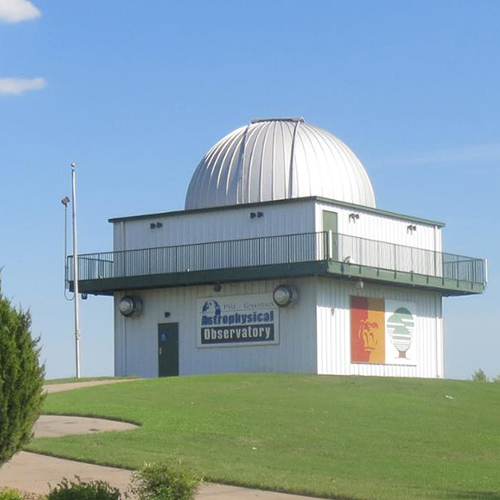
Image Credit: Pittsburgh State University
Interested in finding an observatory or planetarium in your state? Check out our Astronomy Hub!