Artemis II marked NASA’s bold return to crewed deep space exploration, sending astronauts farther from Earth than any mission since Apollo 13 in 1970. Building on the legacy of Apollo, the mission tested critical systems aboard the Orion spacecraft during a flyby around the far side of the Moon. By all metrics, the early indications were that the mission was a resounding success. But what the world is truly focused on is the imagery the mission achieved. From launch, translunar injection, flyby, and return – Artemis II was perhaps the most visually stunning mission NASA has ever seen. The imagery will undoubtedly inspire generations of new astronauts, scientists, and explorers for decades to come, as Apollo did before it. At High Point Scientific, we’d like to celebrate the success of Artemis II by highlighting some of our favorite pictures of the mission!
#5. A Fiery Ascent

This image, taken by a NASA-operated near-infrared camera on a long-range optical telescope, shows the dramatic ascent of Artemis II early on in the flight. Flames begin to engulf the bottom of the core stage. However, don’t be alarmed! This is a normal effect and is why NASA uses thermal protection on the bottom of the Space Launch System core stage. Artemis II launched on April 1st, 2026, at 6:35 pm Eastern Time from Kennedy Space Center’s historic Launch Complex-39B. During the initial ascent, the SLS performed flawlessly as the rocket climbed through the atmosphere, shedding its 5-segment solid rocket boosters and entering a highly elliptical orbit around Earth. The crew experienced the intense vibrations and G-forces of launch while the vehicle accelerated toward Earth orbit, marking the first crewed flight of the SLS-Orion system and humanity's return to lunar vicinity in over 50 years. All systems monitored nominal performance, setting the stage for the subsequent trans-lunar injection burn that would send Orion on its trajectory around the Moon.
#4. A Beautiful Blue Marble
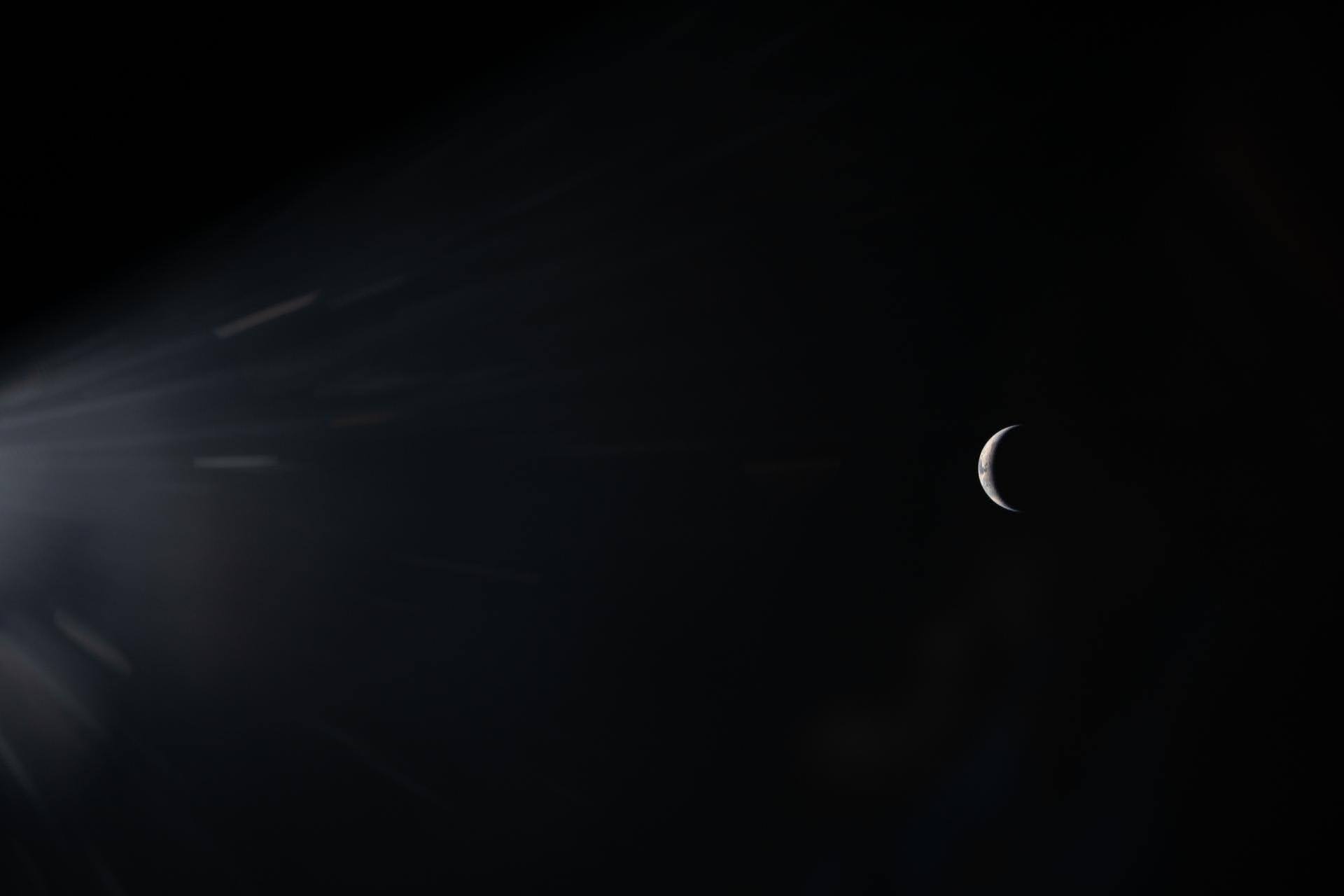
This dramatic image captured by the Artemis II crew on Flight Day 3 shows a thin crescent Earth suspended like a fragile jewel against the absolute blackness of deep space, with the planet appearing remarkably small and distant as the Orion spacecraft continues its journey toward the Moon. The illuminated sliver reveals subtle cloud patterns and a faint atmospheric glow, but it occupies only a tiny fraction of the frame, emphasizing the vast emptiness surrounding our world once we leave low Earth orbit. From this perspective, the Earth is too small to reveal any signs of our countries or significant landmasses. To quote Carl Sagan, “Look again at that dot. That's here. That's home. That's us. On it everyone you love, everyone you know, everyone you ever heard of, every human being who ever was, lived out their lives.”
#3. Moon in the Window
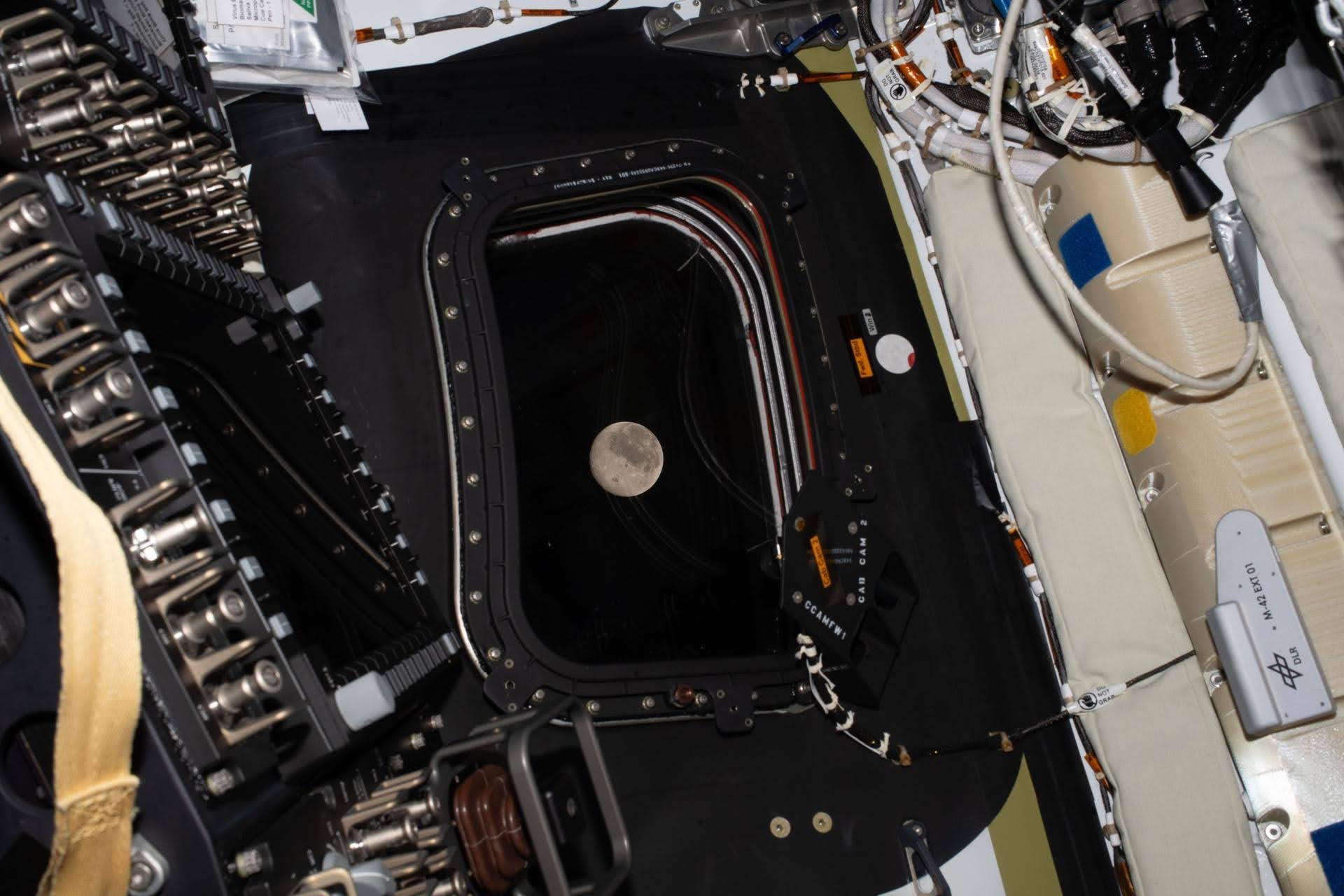
This image was captured on Flight Day 5 of the mission, just prior to the lunar flyby. At that moment, the Artemis II crew was entering the Moon’s sphere of influence, the point at which the Moon’s gravity exerts a stronger pull on the spacecraft and crew than Earth’s does. Although the Artemis II crew did not land on the Moon, they became the first humans since 1972 to enter the lunar sphere of influence. What makes this photo especially striking is the perspective it provides: the Moon is shown in scale alongside the spacecraft, creating an almost surreal sense of its immense presence just before the flyby. Built on Earth by humans!
#2. Moonshine
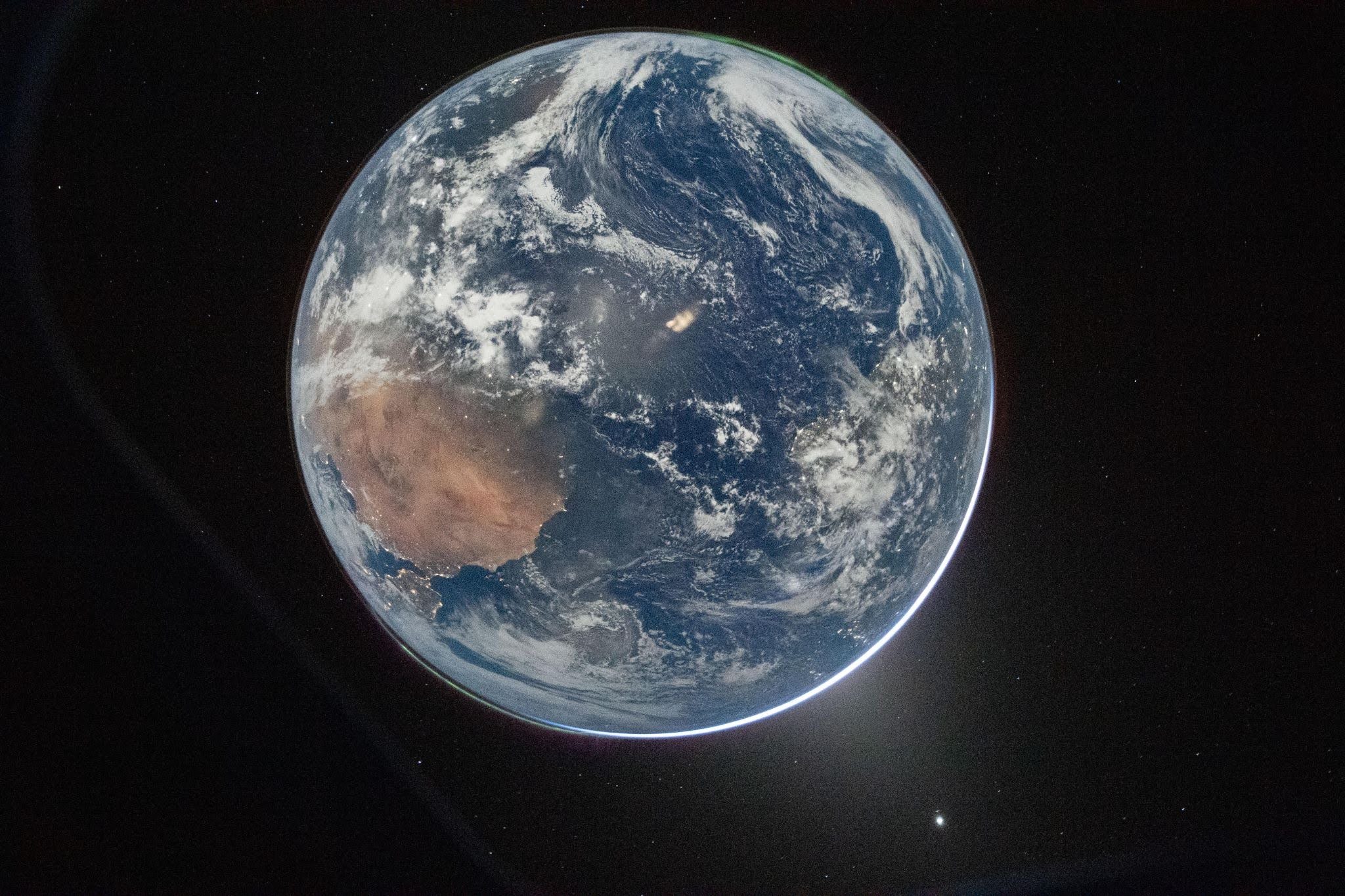
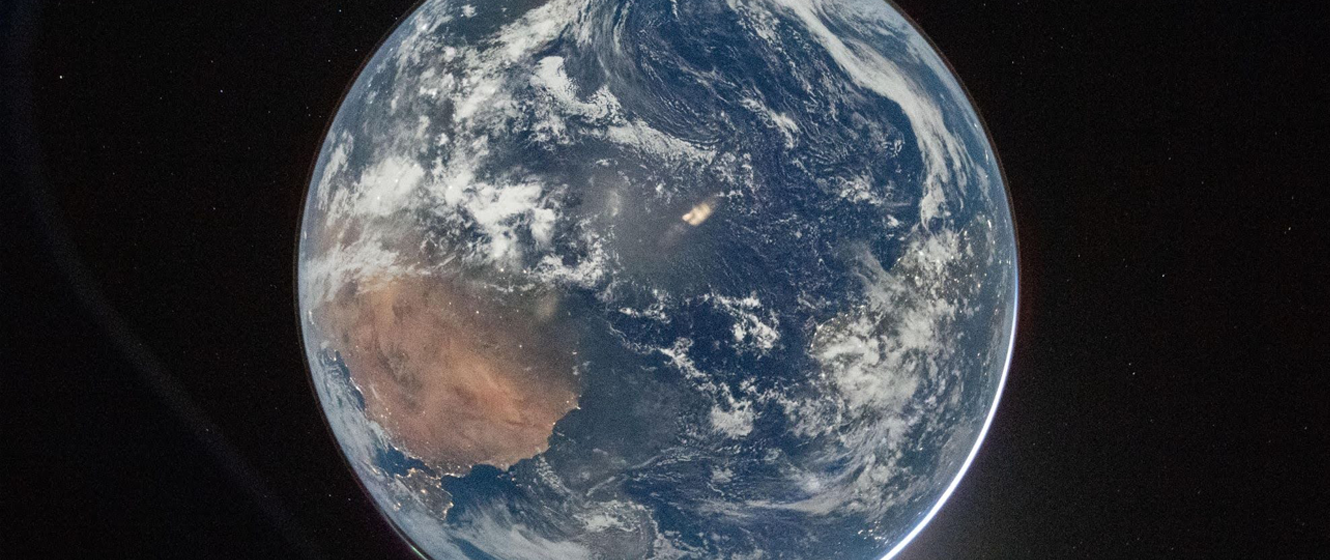
This breathtaking image was captured by Artemis II Commander Reid Wiseman from Orion’s window on April 2nd, 2026, shortly after the translunar injection burn. It shows the sunlit continent of Australia, two glowing auroras in the upper right and lower left, a faint band of zodiacal light in the lower right, and Venus shining brightly near the planet’s edge as Earth eclipses the Sun from the crew’s perspective. Unlike the iconic Apollo 17 “Blue Marble” photo from 1972, which captured a fully sunlit Earth with the Sun directly behind the camera, this view was taken while the Earth was eclipsing the Sun – thus the spacecraft was in the Earth’s shadow, with the night being lit up by the nearly-Full Moon. This required Commander Wiseman to use a high ISO and high exposure to capture all the detail of the Earth.
#1. Earthset
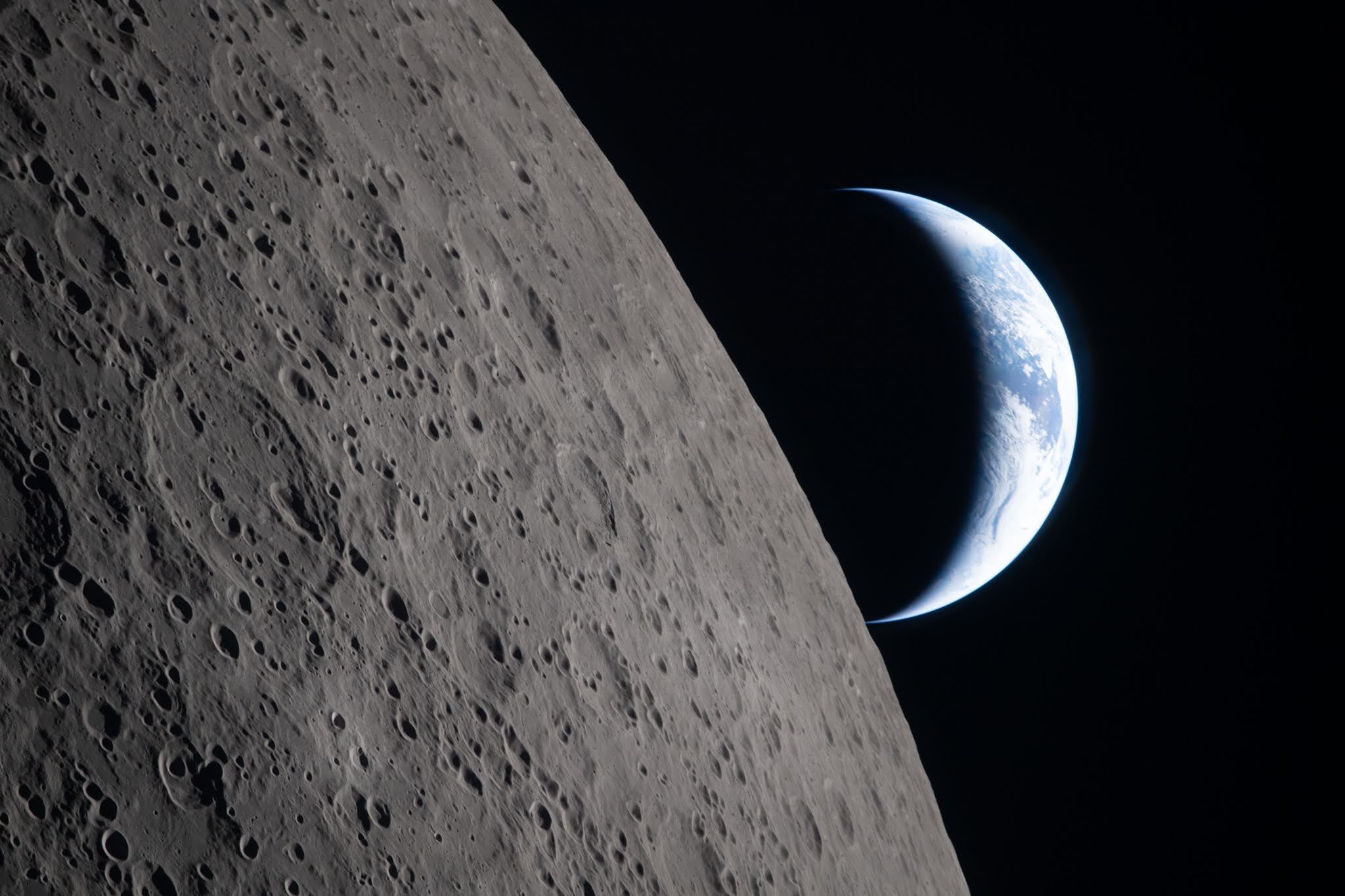
Without a doubt, the most anticipated photo of this mission, the “Earthset” as photographed by Artemis II. This image is very obviously inspired by the famous photo taken by Apollo 8 astronaut Bill Anders in 1968, but what’s unique is the perspective. Apollo 8 was in low-lunar orbit; thus, the lunar landscape did not appear as cratered as in this image. Additionally, after Apollo 8, we had to wait many weeks for this image to be published, but thanks to digital cameras and the transmission capabilities of the Orion spacecraft, we were able to see this image shortly after the flyby was completed. The official NASA Instagram page received over 8 million likes and shares alone shortly after the image was published, and undoubtedly will be one of the most famous images of the 2020s!