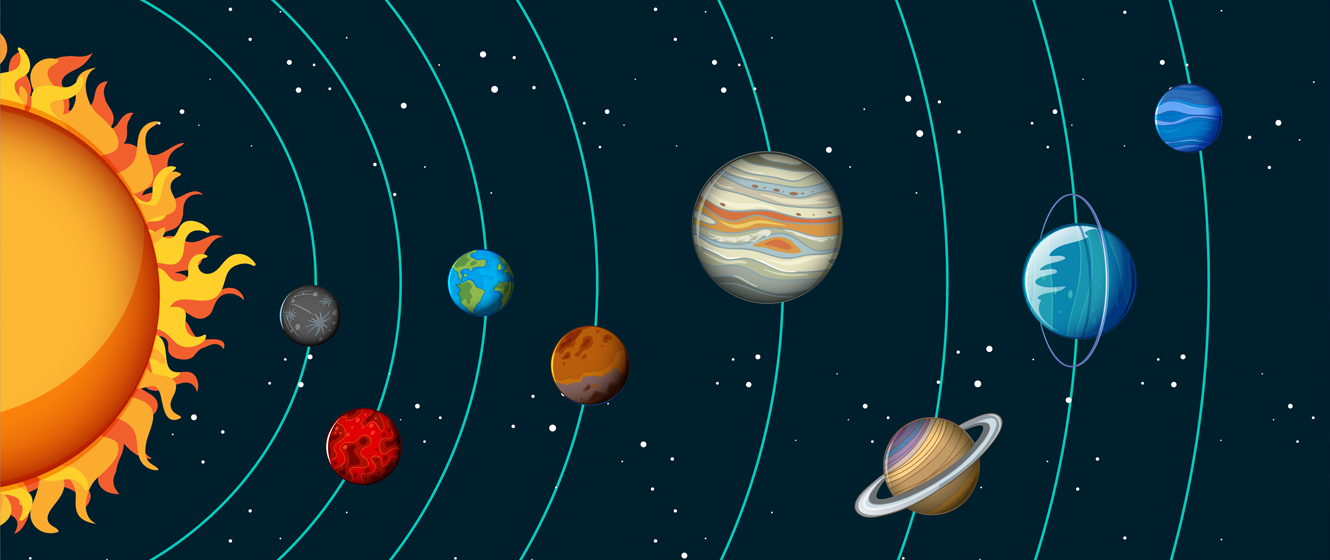
Calling all stargazers! Now is your chance to witness a rare "planetary parade" as six planets appear simultaneously in the sky about 30 minutes after sunset.
What is a planetary parade? Technically, it’s a visual effect that occurs when at least four or five planets appear to line up from our perspective on Earth. In reality, these planets are still millions of miles apart from each other, simply following their paths along the sun’s ecliptic plane, or the path that the sun appears to take in the sky.
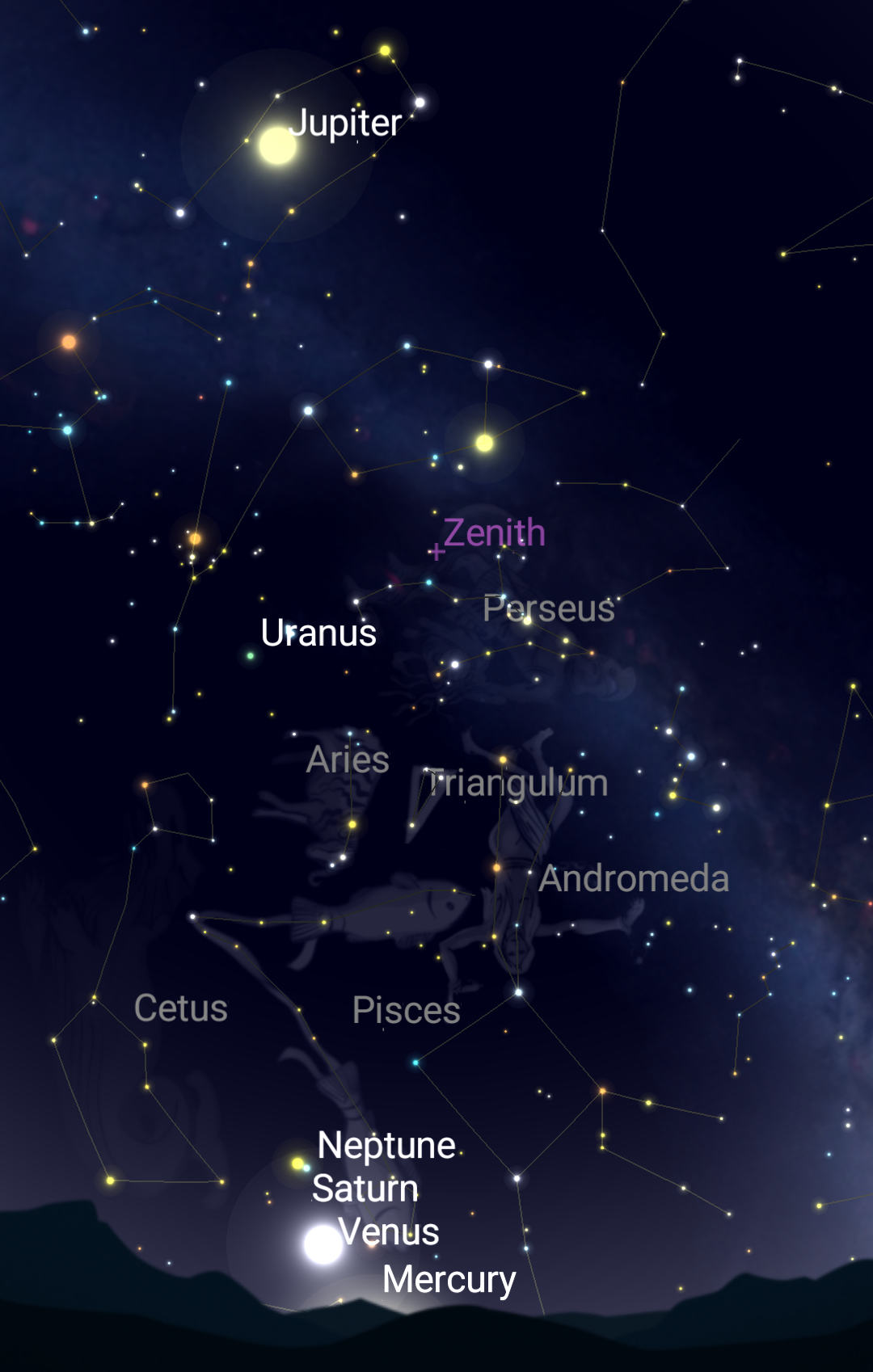 Image Credit: SkySafari
Click to Enlarge Image
Image Credit: SkySafari
Click to Enlarge Image
On the evening of Saturday, February 28th, 2026, Mercury, Venus, Jupiter, Saturn, Uranus, and Neptune will be visible together shortly after sunset. While these planets won’t be literally touching one another or forming a perfectly straight line in space, their relative positions along our line of sight will make them appear together in the night sky.
Four of these planets will be visible to the naked eye: Venus, Jupiter, Saturn, and Mercury. While Venus and Jupiter will be shining brilliantly above the horizon, you'll find Saturn a bit lower. Mercury will be the closest to the horizon, making it a bit more difficult to spot unless your view of the horizon is wide and clear.
With binoculars or a telescope, you can also reveal Uranus and Neptune as part of the parade. Uranus will appear as a faint, aqua-colored point that's best seen near the Pleiades star cluster. Neptune will also appear quite dim, but can be found close to Saturn.
Location is crucial if you want to enjoy this planetary parade to the fullest. You’ll want to find a location at a decent elevation with minimal light pollution and a clear view of the west horizon, where the planets will gather. Of course, you should also choose a viewing night with clear weather! While February 28th is the best night to view this parade, it is not the only night you can view it. The parade has already begun! Head outside any night this month and you may be able to catch a glimpse of the planets together.
The experience of viewing multiple planets at once is truly awe-inspiring, and we highly recommend making some time to see this spectacle for yourself while you still can! If your plans won’t align for you to enjoy this planetary parade before it ends, check out our 2026 Astronomy Calendar to ensure you don’t miss any future events!

Learn More
Interested in diving deeper into the world of astronomy? Not sure where to begin? Check out our Astronomy Hub!