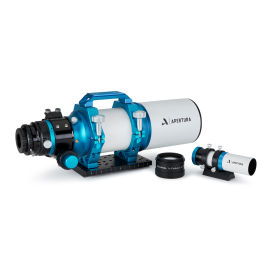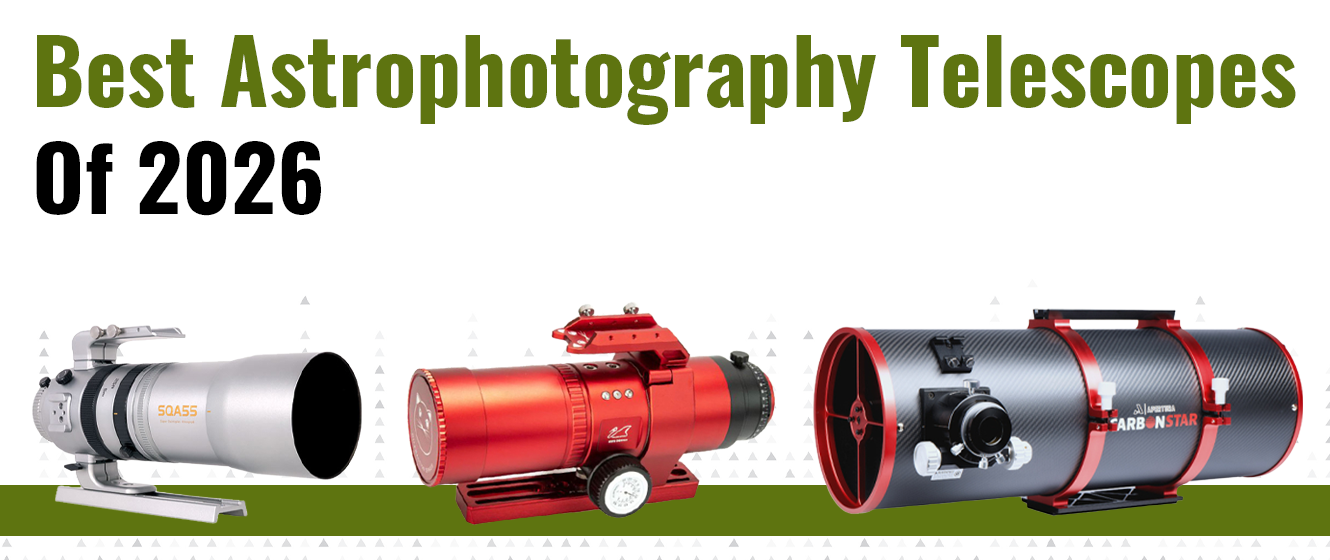
No matter your experience level, finding the right telescope for your astrophotography rig can prove to be an overwhelming task. So much rides on finding a telescope with everything you need: the ideal focal length for your favorite targets, the best aperture for the most light gathering power, and specific inclusions such as full frame compatibility, included accessories, and plenty more. Understanding this tough choice, we have done the homework for you and curated a list of the top astrophotography telescopes of 2026. Backed by years of expertise and customer support, choosing the right telescope for your astrophotography needs has never been easier!
Before we dive in, this collection of telescopes has been hand picked by our team of gear experts based on their astrophotography performance, optical specifications, the quality of the craftsmanship, and the unique features they possess. Each of these telescopes will help you achieve impressive astrophotos of your favorite celestial objects and are favored by our gear experts and customers alike. Whether you’re a beginner looking to purchase your first telescope or an avid astrophotographer ready for an upgrade, we have you covered. Now, let's jump into the recommendations!
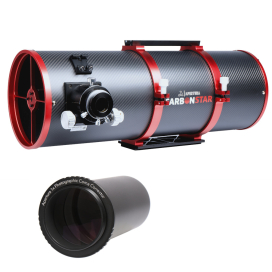
Apertura CarbonStar Imaging Newtonians
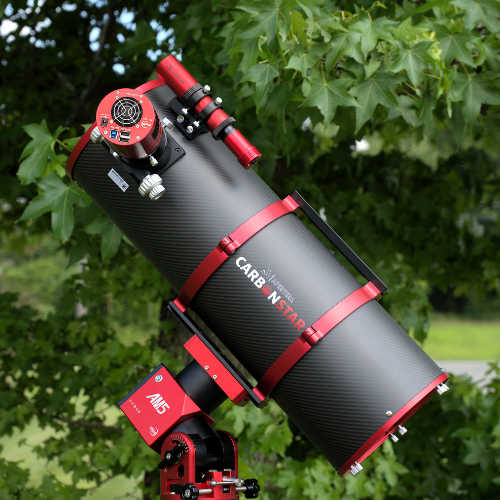
To maximize your CarbonStar experience, Apertura offers an ecosystem of accessories for add-on. Check them out below:
- Apertura CarbonStar Primary Mirror Masks
- Apertura Premium Dew Shield & Collimation Kit
- Apertura Cheshire Collimation Eyepiece
"Amazing results on a tight budget"


"Beautiful images in my first tests, I’m very impressed with the quality of the scope in general. Is my first Newtonian scope for astrophotography, easy to install and use."
CarbonStar 150 Imaging Newtonian —
CarbonStar 200 Imaging Newtonian —
| Focal Length | Aperture | Focal Ratio | |
|---|---|---|---|
| CarbonStar 150 | 600 mm | 5.9" (150 mm) | f/4 |
| CarbonStar 200 | 800 mm | 7.87" (200 mm) | f/4 |
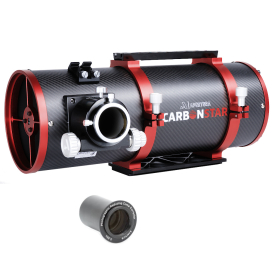
Modern, cutting-edge, and built for brilliance, the CarbonStar series is Apertura’s bold answer for a fresh entry within the world of astrographs. These redefined imaging Newtonians are specially engineered with key upgrades such as a sturdy, yet lightweight carbon fiber body, a repositioned focal plane for a wider, brighter field of view, and knife-edge interior baffling for superior stray light control. Additionally, CNC machined aluminum is incorporated all throughout the telescope design, including the tube rings, the front bezel, the primary mirror cell, and the single-piece secondary mirror hub. The quality craftsmanship doesn’t stop there, with both models featuring a rock-solid Rack & Pinion focuser that blends both high strength and fluid motion. These focusers are EAF-ready out of the box, furthering this modern design of the imaging Newtonian! With two models available, the CarbonStar 150 and the CarbonStar 200, have your pick at the scope that best suits your needs. The focal length of 600 mm and aperture of 6” of the CarbonStar 150 offers incredible light gathering power across wide perspectives, while the CarbonStar 200 provides an 800 mm focal length and 8” aperture for serious light gathering power and deep views! As a perfect choice for both beginner and advanced astroimagers, the Apertura CarbonStar series is our top pick for those seeking substantial light gathering power without breaking the bank!



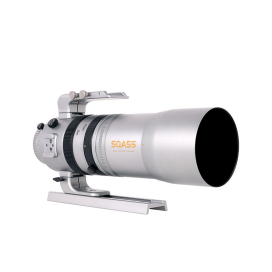
Askar SQA55
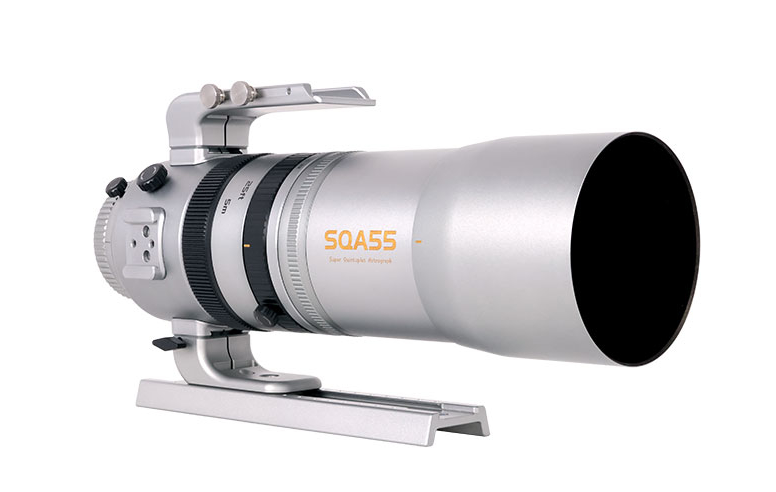
If you’d like to add even more accessories to your SQA55, you’re in luck! Take a look at the host of options to further enhance your experience:
"True multi-functional Telescope/lens"

"The quality of this telescope is excellent feels solid it feels good in the hand for daytime use. It is only manual focus and having helical focus rings (coarse and fine) makes it viable for daytime shots with a DSLR or mirrorless camera. I highly recommend this as a good addition to a collection as it fills two needs and at a very reasonable price."
Askar SQA55 Quintuplet Refractor —
| Focal Length | Aperture | Focal Ratio |
|---|---|---|
| 264 mm | 55 mm | f/4.8 |
Setting the standard for versatility, Askar presents their highly innovative SQA55 Quintuplet Refractor! This unique cross-functional lens/telescope design blends the familiarity of a lens with the light gathering power of a telescope, making it a perfect option for those who like to switch it up. The aperture of this scope can be adjusted just like a lens, offering focal ratios of f/4.8 to f/22, while the quintuplet design ensures peak astrophotography performance on the cosmos. Additionally, the dual-speed helical focuser makes it easy to achieve sharp focus on terrestrial scenes while also offering seamless focus on the stars. In between swapping from terrestrial to astrophotography, a high-precision rotator scale helps you quickly return to a previous camera position for consistent compositions and accurate framing. The versatility doesn’t stop there! Within the box you’ll find a 200 mm Vixen-style dovetail plate for effortless attachment to equatorial mounts, while the 1/4” and 3/8” screw holes at the bottom of the mounting shoe enable mounting atop photographic tripods. You can even use the SQA55 hand held thanks to its small 4 lbs. body.
While the SQA55 is the only model in the series with this interchangeable lens/telescope design, the other entries are still prime choices for detail-driven astrophotographers. This is thanks to the high precision quintuplet optics, the ergonomic design, and the numerous inclusions standard of the Askar SQA series!
Celestron RASA 8
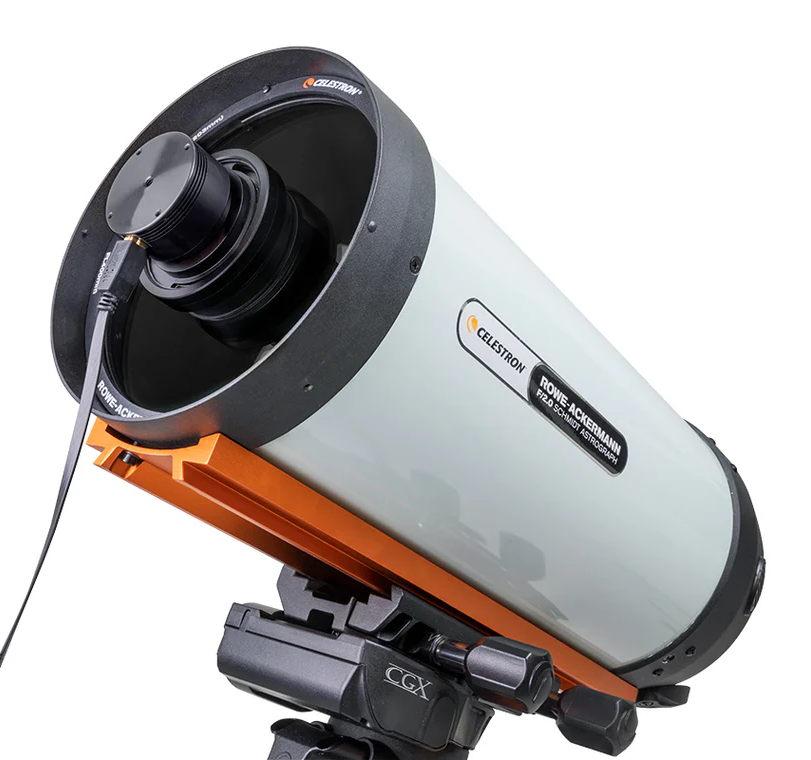
Check out these accessories we recommend pairing with your Celestron RASA 8:
"This scope is fantastic"

"This scope is fantastic, and the shorter exposures are a real game changer for my deep sky imaging! "
Celestron 8" Rowe-Ackermann Schmidt Astrograph OTA —
| Focal Length | Aperture | Focal Ratio |
|---|---|---|
| 400 mm | 7.99" (203 mm) | f/2 |
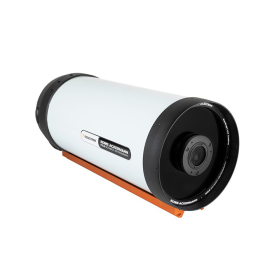
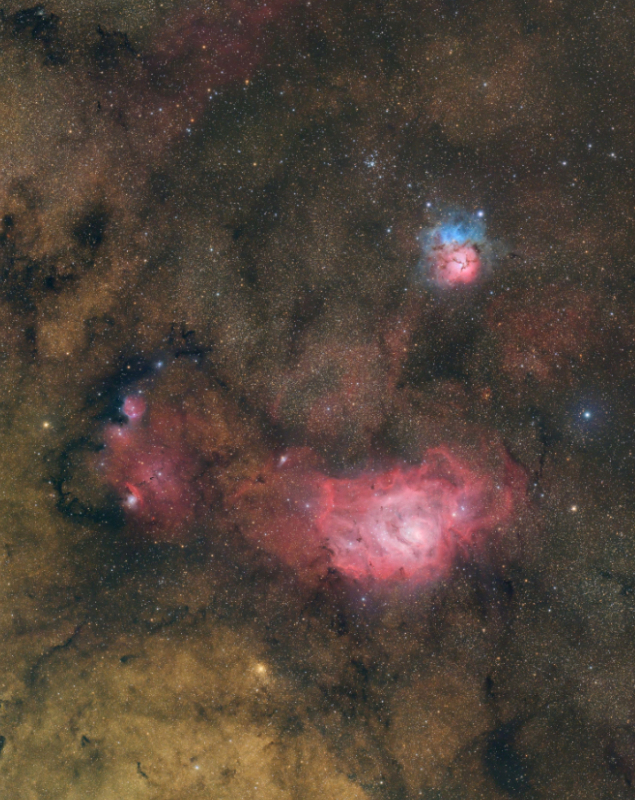
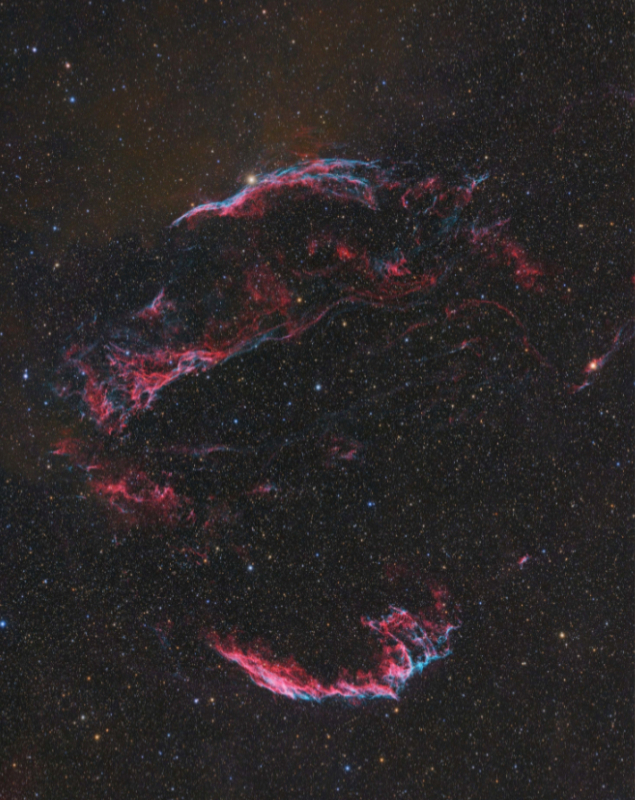
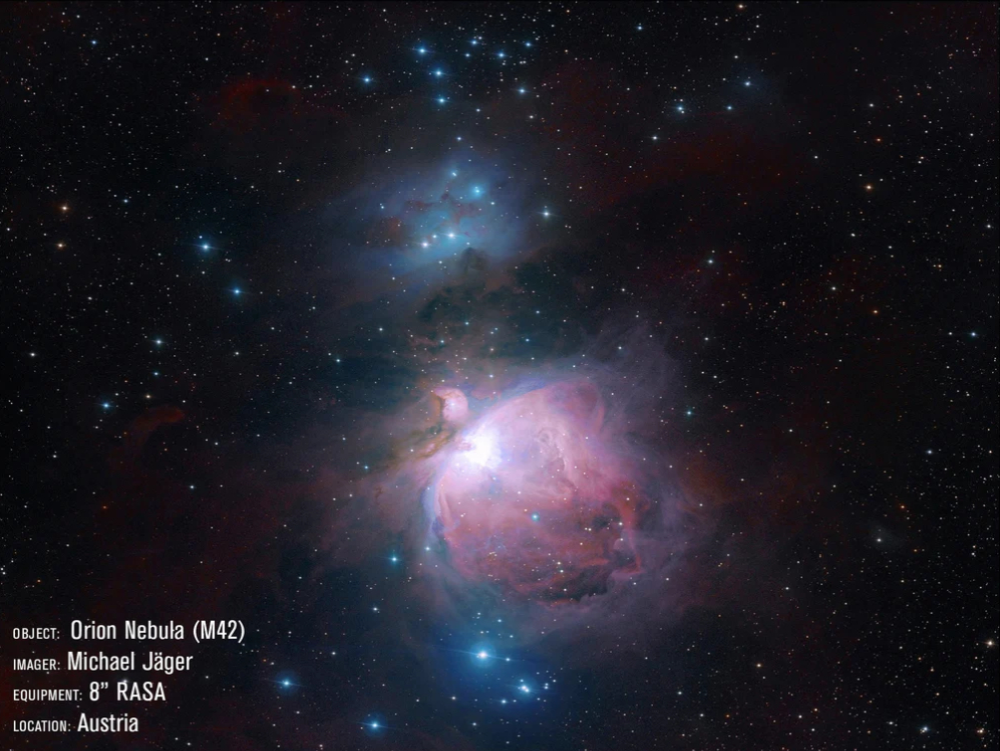
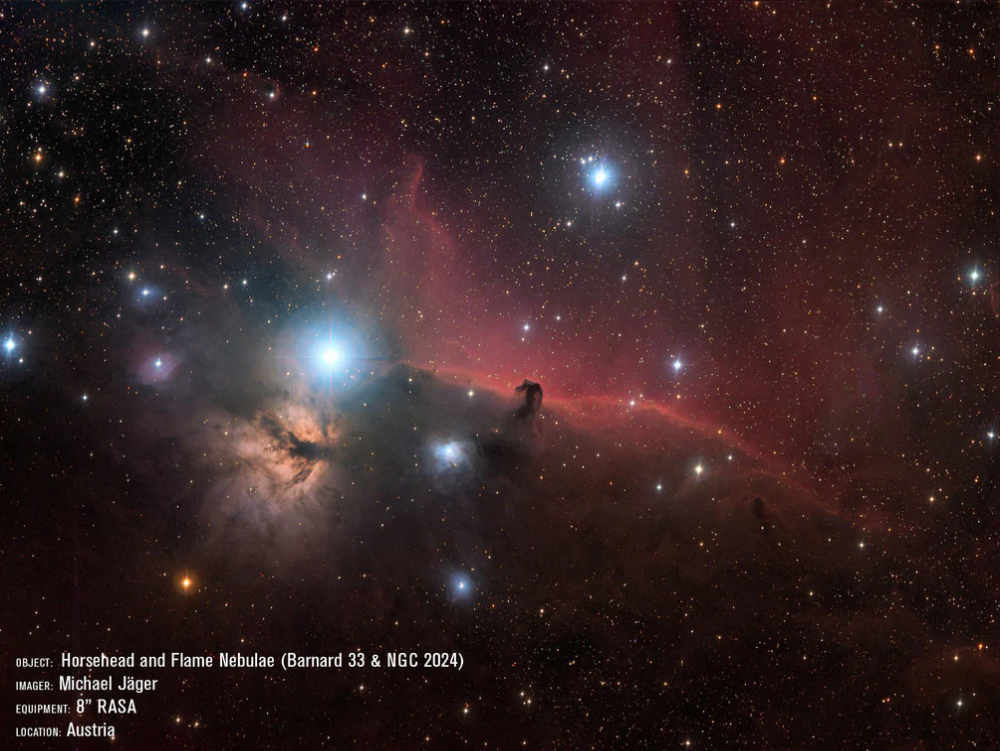
Revolutionary within the world of astrophotography, any “top astrophotography telescope” list wouldn’t be complete without a Celestron RASA! The meticulous design of this astrograph courtesy of the innovation from Celestron provides an unbeatable inherent focal ratio of f/2. This wicked fast light gathering power produces incredibly bright images in no time. To put this into perspective, an image of just 30 seconds is equivalent in brightness to a 10 minute exposure captured with a typical f/10 Schmidt-Cassegrain! While the outstanding speed is impressive as is, the high-performance optical components housed within the RASA 8 provide top-notch clarity and resolution of detail. Aberrations such as field curvature, coma, and false color are completely eradicated and vignetting is also significantly reduced. Camera attachment is a breeze with the included adapters, and the 400 mm focal length offers wide, sweeping scenes of vast celestial targets.
If you’re looking for RASA excellence with an even wider scope of vision and a more compact frame, be sure to check out the RASA 6! Specially designed for the Celestron Origin though now available as a stand alone unit, this highly compact RASA 6 is a wonderful choice for astrophotographers on the go!
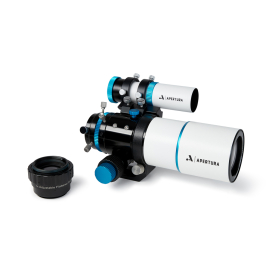
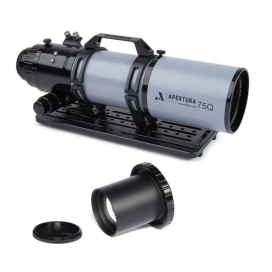
Apertura 75Q Refractor
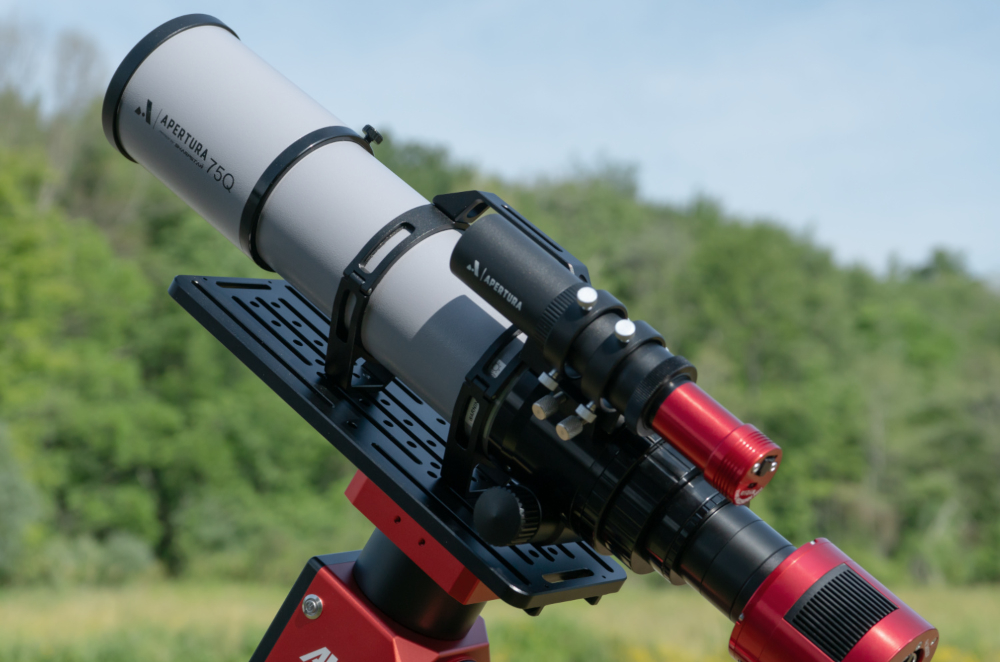
Explore these must-have add-ons from Apertura to level up your 75Q Refractor:
"The Best Little Scope That Can!"

"After a two hours on the Heart Nebula and one hour on the Horsehead Nebula, the stacked results (without any post processing) look really good. The stars are round to the edges and the contrast is fantastic. All this from my backyard, Bortle 6. 8. I have a number of telescopes (all purchased from High Point Scientific!), some much more expensive than this one, and I can honestly say that I’m ecstatic about this little giant of a telescope, the Apertura 75Q. "
Apertura 75Q Refractor with 0.75x Reducer —
| Focal Length | Aperture | Focal Ratio |
|---|---|---|
| 405 mm | 2.95" (75 mm) | f/5.4 |
Compact in design yet powerful in performance, the Apertura 75mm is a choice scope for those in search of their next portable astrograph! Five optical elements composed of high-performance HOYA FCD-100 glass are meticulously arranged to deliver superb color correction and tight stars across the entire frame. The best part of this quintuplet design? No need to fumble with back spacing calculations! So long as your camera can reach focus, the entire frame will be in focus as well. Coupling this impressive optical design with the ultra-thorough quality control from Apertura, you have yourself a rock-solid, highly reliable refractor of supreme quality. The large aperture produces bright, detailed images, and the 405 mm focal length is suitable for a copious amount of celestial objects. If you’d like an even wider field of view, tack on the included 0.75x reducer to bring the focal length down to 300 mm and the focal ratio to an incredibly fast f/4. Housing everything the William Optics RedCat series is known for though with a larger aperture, more optical elements, backed by industry leading support and documentation, and coming in at a lower price point, the Apertura 75Q refractor is a standout option for those looking to save money without sacrificing performance! With these outstanding qualities, it’s easy to see why the Apertura 75Q is a top contender within this list of the best astrophotography telescopes.

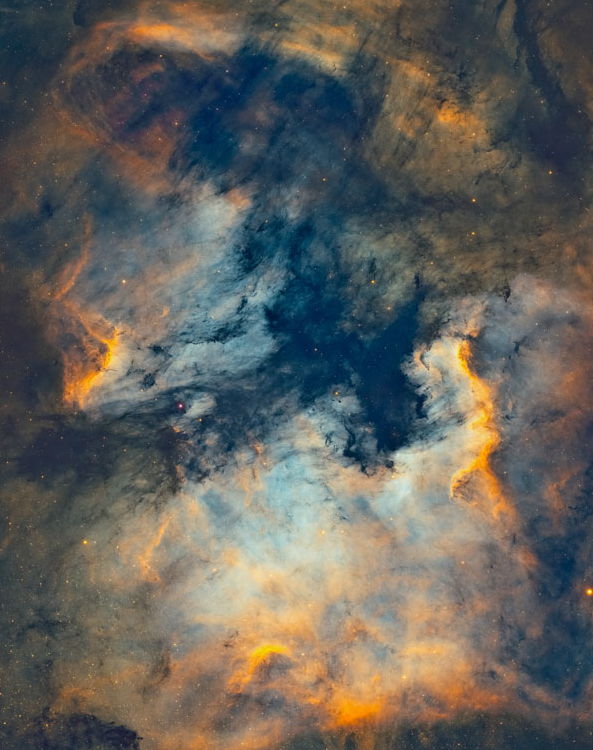
Apertura 90 mm Triplet Refractor
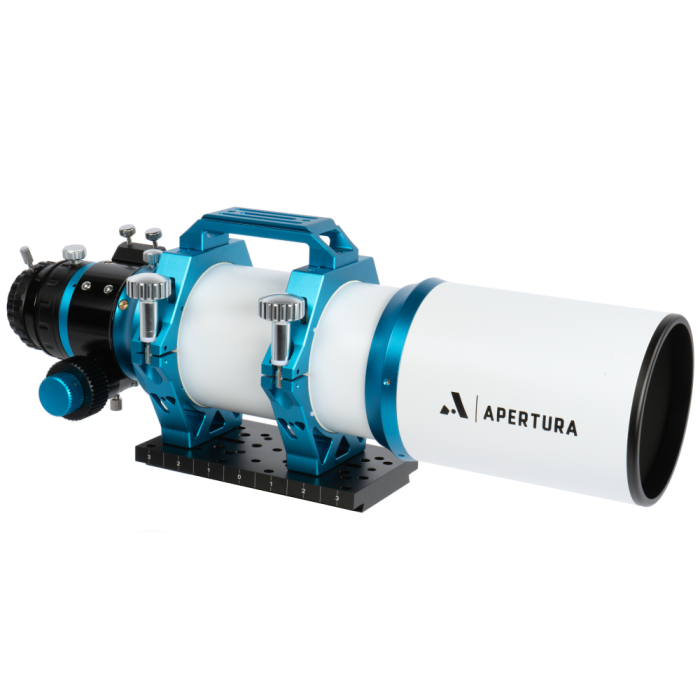
Be sure to check out these available upgrades to take your Apertura 90 mm Refractor experience to the next level:
"Beautiful, well built telescope"

"The build quality is superb. The focuser is phenomenal... The focal length gives me just enough extra reach without the scope becoming unwieldy. I am very happy so far with the images I am getting with the Apertura and a ZWO 2600MC Pro. In addition, the telescope looks beautiful!"
Apertura 90 mm Triplet Refractor with Field Flattener and Hard Case —
| Focal Length | Aperture | Focal Ratio |
|---|---|---|
| 540 mm | 3.54" (90 mm) | f/6 |
Our list continues with another high performance telescope from Apertura, the 90 mm Triplet Apochromatic Refractor! Three lenses of high quality FPL-53 glass correct the incoming light with superb accuracy while the fully multi-coated surfaces ensure maximum light throughput. Sharp, vibrant images are yours for the taking, helping you resolve beautiful detail on a host of objects with the 540 mm focal length. As the largest amongst the Apertura APO family, the sizable aperture of 90 mm collects a copious amount of light for resolution of some of the faintest objects in the night sky. Within the box is a 1x field flattener for crisp, pinpoint stars across the entirety of the 44 mm image circle, while an optional 0.8x reducer is available for add-on. Additionally, the robust 2.5” focuser provides a solid mount for your imaging equipment and includes knife-edge baffling for enhanced optical performance. With its remarkable optical design, attentive build quality, and included accessories, this Apertura 90 mm Triplet APO is a choice scope for those looking to reach new heights within their astroimaging journey!
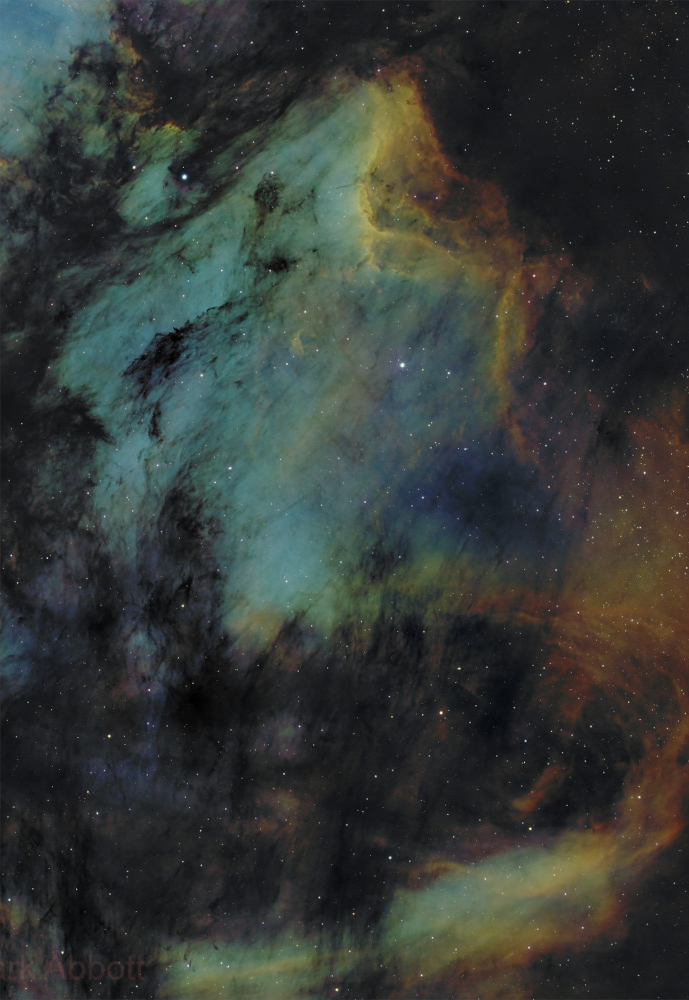
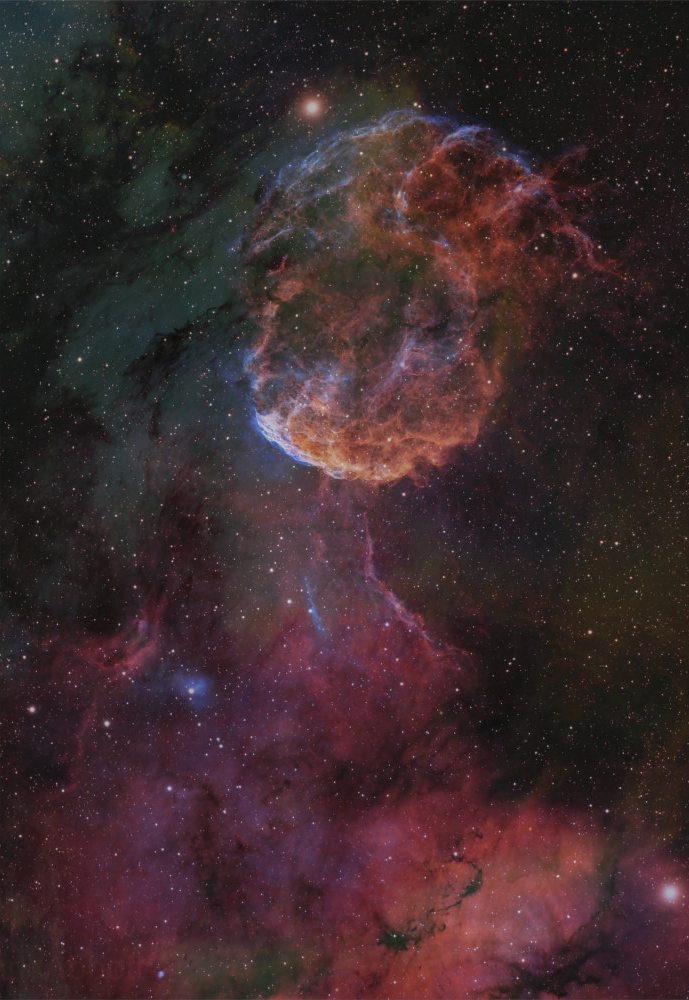
William Optics RedCat 51
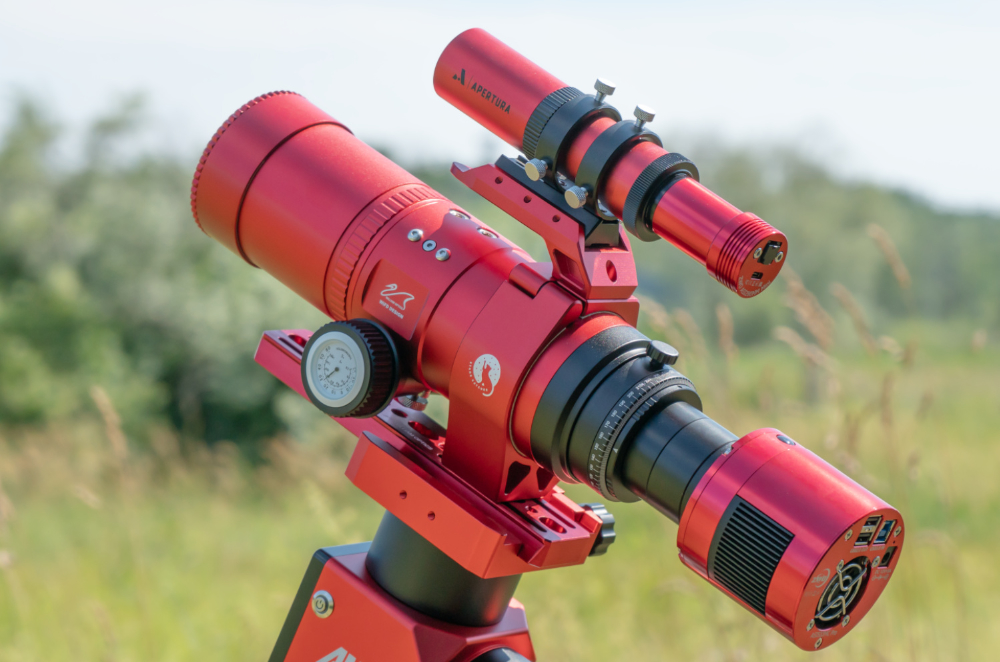
To help enhance your astrophotography experience, take a look at the accessories we recommend pairing with your William Optics RedCat 51:
- Apertura Air Blower for Lens Cleaning
- Apertura Ember Headlamp
- Apertura Red 32 mm Guide Scope
- ZWO Electronic Automatic Focuser
"Great Telescope"

"This is a great telescope, 250 mm focal length with focal ratio less than 5, did not need focal reducer, went to Bortle 1 sky with it and I’m very pleased with the results. Peripheral filled is sharp, quality is perfect!"
William Optics RedCat 51 Gen 3 APO f/4.9 Refracting Telescope with WIFD —
| Focal Length | Aperture | Focal Ratio |
|---|---|---|
| 250 mm | 2" (51 mm) | f/4.9 |
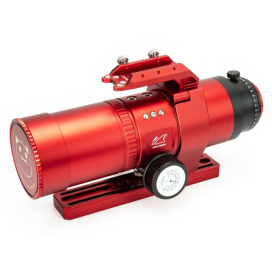
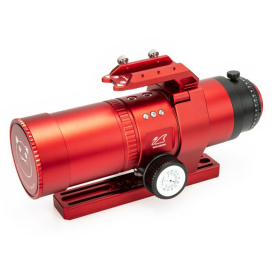
Moving on to another compact refractor, we have the William Optics RedCat 51 WIFD! This fan favorite combines style with performance with its sleek, red finish and impressive astrophotography results. Optimal for both beginners and advanced imagers alike, the easy-to-use design and compact, portable body ensure seamless integration into just about any astroimaging setup! Four internal lens elements are housed within this William Optics RedCat 51, providing pinpoint stars, an inherent flat field, and zero chromatic aberration. As a Petzval refractor, there is no need to calculate backspacing, just attach your camera, and you’re ready to image! The 250 mm focal length provides a wide field of view suitable for large, sweeping nebulae, and the 45 mm image circle means this telescope can easily accommodate full frame cameras. Something unique to this RedCat series is the inclusion of the innovative William Optics Internal Focus Design (WIFD). Instead of shifting your imaging train back and forth to reach focus, this patented focusing apparatus shifts the optics themselves, reducing any drawtube sag and providing ultra-smooth focusing.
This level of quality is evident within each model within the William Optics RedCat series. Check the entire collection by clicking here!


Apertura CarbonStar Ritchey-Chretien Telescopes
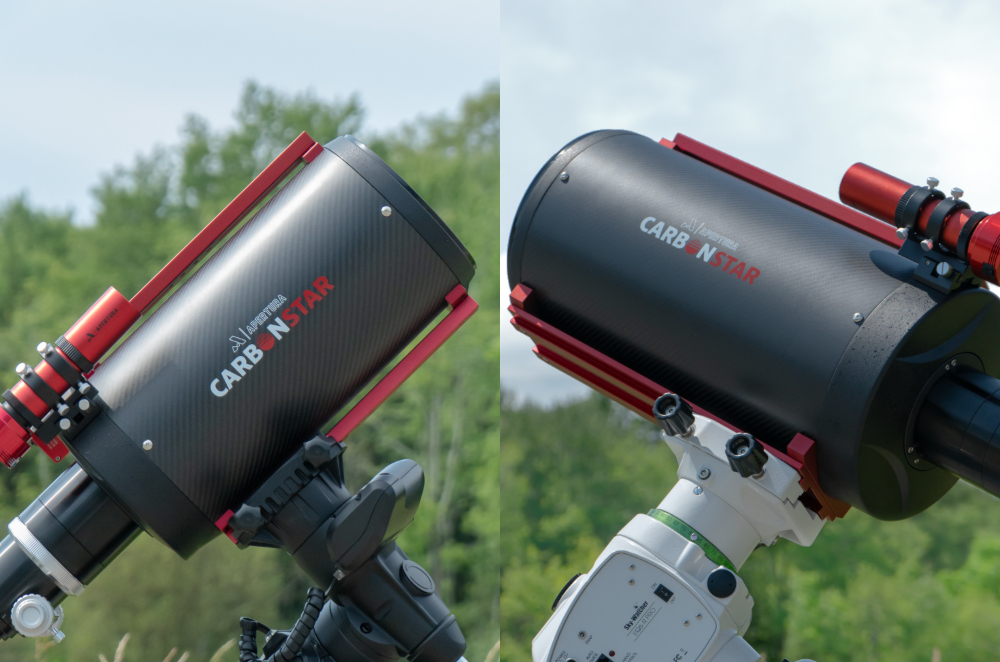
Apertura offers a host of upgrades specifically designed for these CarbonStar RCs. Check them out below!
- Apertura M56 Camera Rotator
- Apertura Focuser Tilt Adapter
- Apertura 0.67x Ritchey-Chrétien Focal Reducer
"Incredible Image Quality"

"I have had the opportunity to use my new Apertura Carbonstar RC6 for the last week now, and I do have to say, this thing is impressive. I am not sure how much I can push it just yet, but it looks like I can get some incredible resolution with it."
Apertura CarbonStar 8" Ritchey-Chretien Telescope —
Apertura CarbonStar 6" Ritchey-Chretien Telescope —
| Focal Length | Aperture | Focal Ratio | |
|---|---|---|---|
| CarbonStar 8 RC | 1600 mm | 6" (200 mm) | f/8 |
| CarbonStar 6 RC | 1377 mm | 5.9" (150 mm) | f/9 |
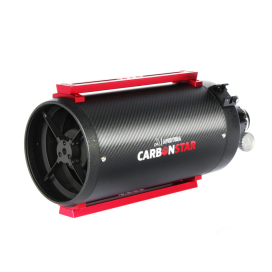
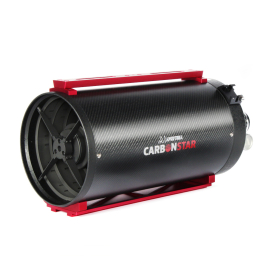
After the success of the CarbonStar Imaging Newtonians, Apertura took to revolutionize yet another optical design, delivering the CarbonStar 6 and 8" Ritchey-Chretiens! These modernized RC scopes feature carbon fiber bodies, blending high resilience with lightweight construction. Additionally, upgraded linear bearing focusers ensure smooth, precise focus with the increased contact points courtesy of the increased number of small bearings. These focusers are EAF-ready, providing easy mounting positions for popular bracket-style electronic focusers. The 6” model is wonderful for capturing bright, beautiful images, but the larger 8” CarbonStar Ritchey-Chretien takes it one step further, collecting exquisite detail and resolving faint deep sky objects. Both models offer images free from chromatic aberration, spherical aberration, and coma. This is thanks to the two quartz hyperbolic mirrors that correct the incoming light with a high degree of precision. All of this is packed within the sleek, red and black CarbonStar finish and is backed by the unrivaled customer support and warranty coverage from Apertura!
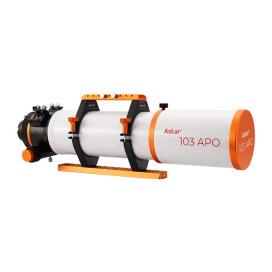
Askar 103APO Triplet Refractor
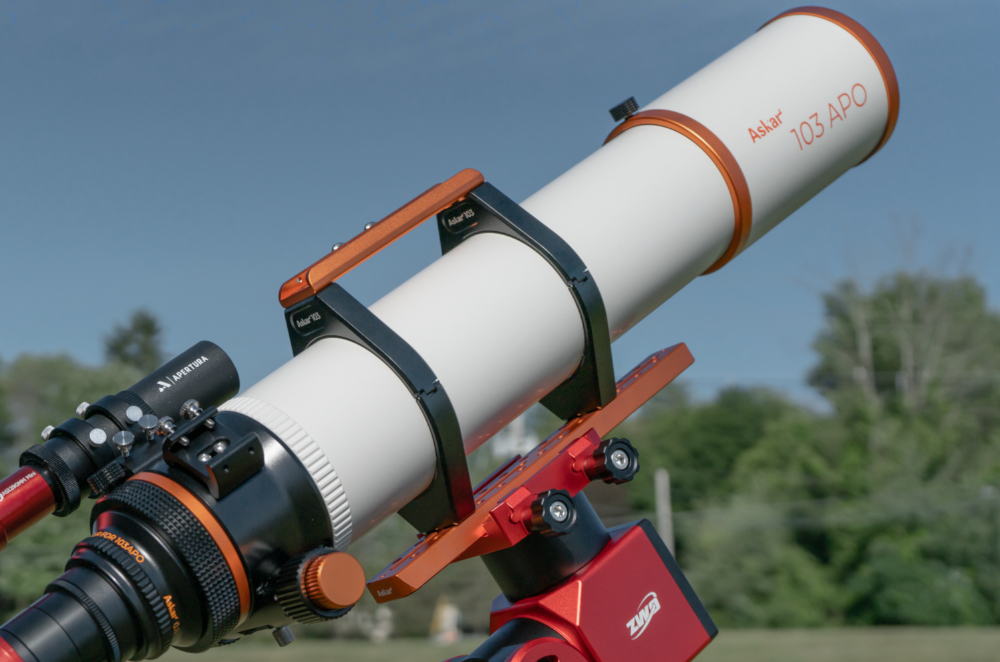
Askar offers a number of optional accessories to outfit your 103APO telescope. Be sure to check out them out to maximize your experience!
- Askar 1x Flattener for 103APO Refractor
- Askar 0.8x Reducer for 103APO Refractor
- Askar 0.6x Reducer for 103APO Refractor
"Excellent, well-built telescope"

"This is an excellent, well-built telescope with optics providing sharp, well-corrected stars throughout the image... The focuser is smooth and locks in place, so I've never had any issues with the focuser slipping due to the weight of the sensor package."
Askar 103APO Triplet Air-Spaced Refractor —
| Focal Length | Aperture | Focal Ratio |
|---|---|---|
| 700.4 mm | 4.06" (103 mm) | f/6.8 |
In the market for a high-end refractor without breaking the bank? The Askar 103APO Triplet Air-Spaced Refractor is the perfect choice! Boasting a large 4” aperture and 700 mm focal length, refractors of this caliber typically carry a steep price tag, but thanks to the innovation from Askar, you can enjoy premium quality without the hefty charge. Three lenses make up the optical design of this refractor, with one piece of high-quality extra low dispersion (ED) glass for top-notch performance. These three lenses correct the incoming light with a high degree of accuracy, eliminating chromatic aberration and delivering superb color correction and high contrast. In recent years Askar has become an industry leader in developing versatile, modular telescopes, and this 103APO is no exception. Askar offers three optional accessories: a 1x field flattener and two reducers (0.8x and 0.6x) for multiple different focal length options. With either of these optical accessories attached, enjoy sharp stars from corner to corner, even with demanding full frame cameras!
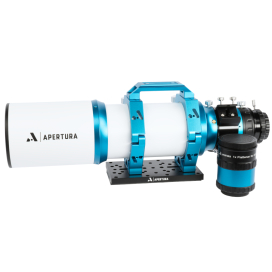
Apertura 60mm Doublet Refractor
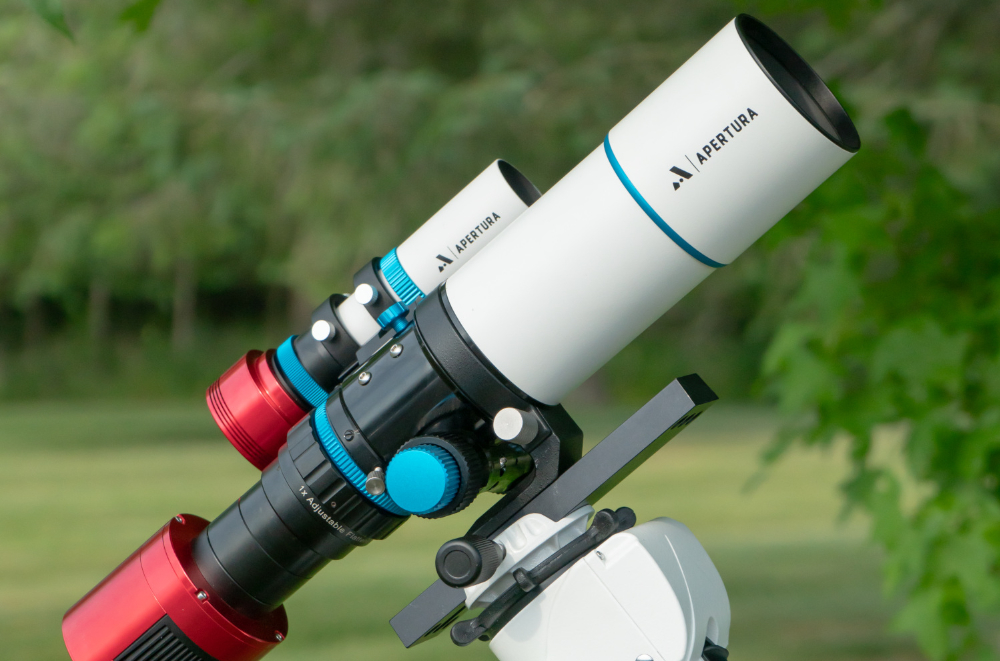
Take a look at these Apertura add-ons for enhanced nights under the stars:
- Apertura Lens Pen Optics Cleaning Tool
- Apertura Bright Focus Mask
- Apertura V Style 7" Dovetail Plate - V2
"Great little scope"

"I bought this as a travel scope but recently decided to try it on a permanent mount at my home. It was pretty impressive for such a little thing. Sharp images, good color, easy to use. Very pleased."
Apertura 60mm FPL-53 Doublet Refractor and 2" Field Flattener —
| Focal Length | Aperture | Focal Ratio |
|---|---|---|
| 360 mm | 2.36" (60 mm) | f/6 |
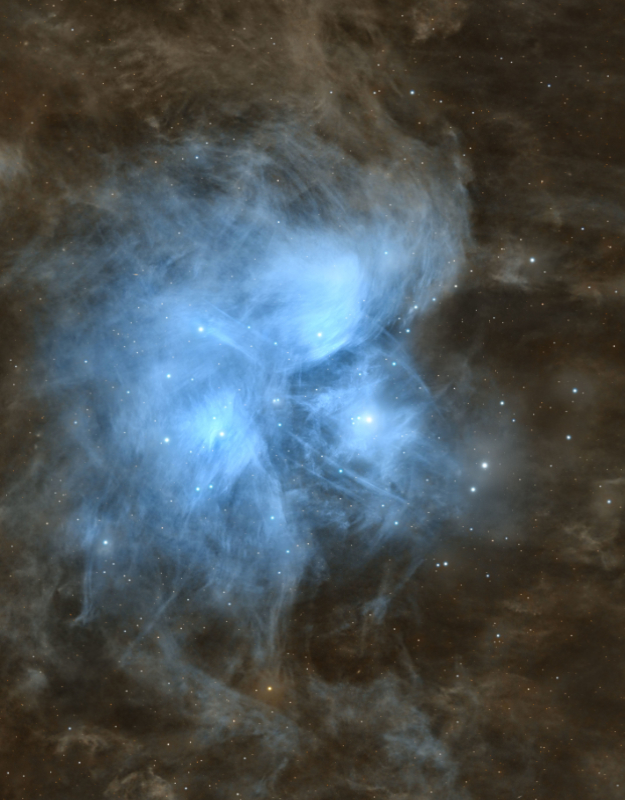
Onto a telescope that’s budget-friendly, perfect for beginners, and packs a punch, we have the Apertura 60 mm Doublet Refractor! Premium Ohara FPL-53 glass found within this Apertura refractor sets it apart from other doublets, making it a choice option for astrophotography. This high quality glass offers excellent contrast, superb color correction, and well-resolved detail within the captured frames, while the included 1x field flattener provides pinpoint stars from corner to corner. Enjoy capturing vast, sweeping nebulae with the 360 mm focal length—popular targets like the Orion Nebula, the Andromeda Galaxy, and the Pleiades Open Star Cluster included! This kit comes complete with a matching Apertura 32 mm blue guidescope to help you get out and imaging in no time. Easily pack up this little 3.25 lbs. refractor for trips to dark skies, or utilize it at home as a powerful backyard refractor.
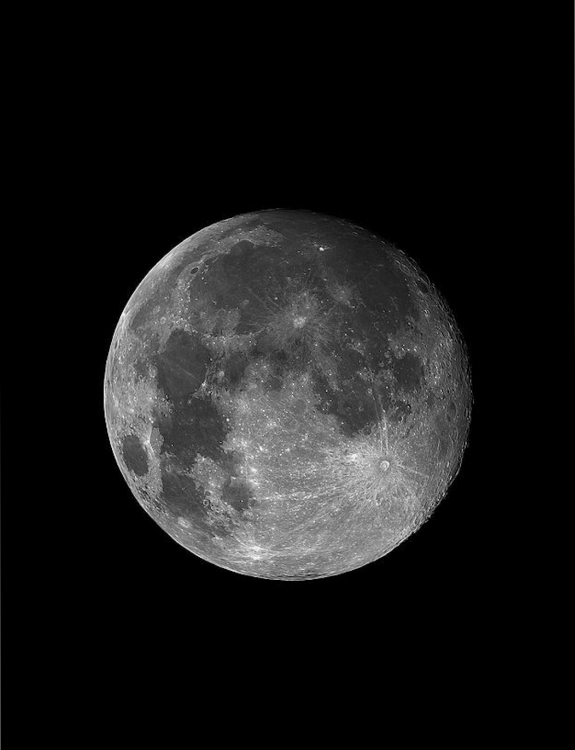
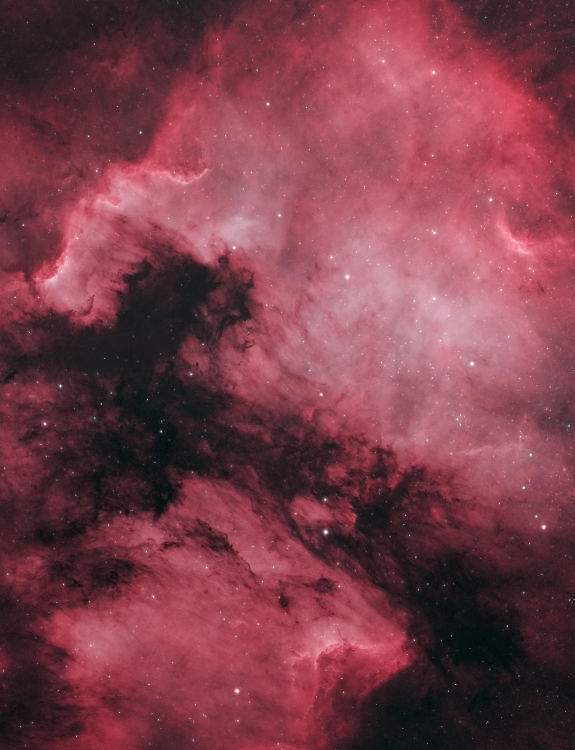
Celestron EdgeHD 8
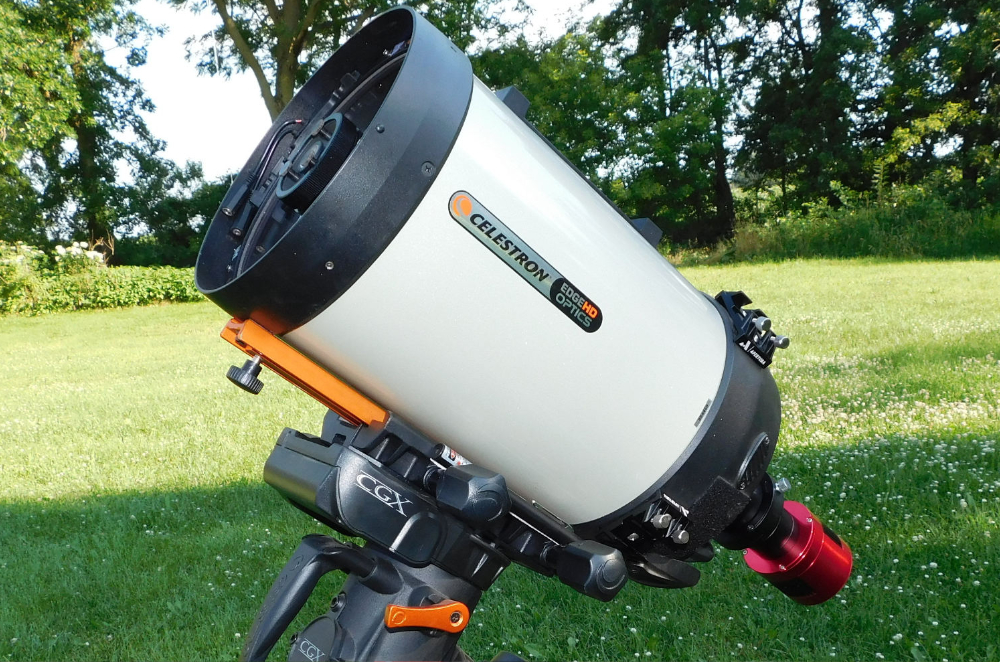
Celestron has designed a number of optional accessories to outfit your EdgeHD 8" telescope. Take a look below to maximize your EdgeHD experience!
- Apertura Bright Focus Mask for 6" to 9.25" Telescopes
- Apertura Padded Soft Case for 8" SCT and 8" EdgeHD OTA
"Great value for
versatile OTA"

"Great visual and photography optics. Good balance of focal length using optional reducer for planetary and nebula/Galaxy astrophotography."
Celestron EdgeHD 8 OTA - 8" f/10 Aplanatic SCT OTA - CGE Dovetail —
| Focal Length | Aperture | Focal Ratio |
|---|---|---|
| 2032 mm | 8" (203.2 mm) | f/10 |
Optimized for astroimaging, the Celestron EdgeHD 8 is a choice scope for capturing next-level images of the cosmos! Fitted with a set of corrector lenses, a spherical primary mirror, a spherical secondary mirror, and an aspherical front corrector, you can expect outstanding color correction and stark contrast within your captured frames. This high-performance telescope also features an inherent flat field for pinpoint stars from corner to corner. In comparison to classic Schmidt-Cassegrains, EdgeHD optics feature a focal plane that’s more than 3x flatter for sharper, higher precision images. The long 2032 mm focal length opens the doors to deep views of the night sky. This means whether you plan to capture our solar system's wonders, small deep sky targets such as the Trapezium Cluster, or extragalactic objects like the Pinwheel Galaxy, you’re set up for success. To provide even more versatility with a wider field of view, this EdgeHD can be paired with its dedicated 0.7x focal reducer for a faster f/7 focal ratio, or the Starizona Hyperstar for wildly fast f/1.9 imaging! Despite its powerful optics, this Celestron EdgeHD 8 weighs just 14 lbs., offering compatibility with portable mounts such as the ZWO AM5, Sky-Watcher Wave 150i or the Celestron AVX. Celestron offers a myriad of accessories for add on as well, making the EdgeHD 8 a timeless investment.
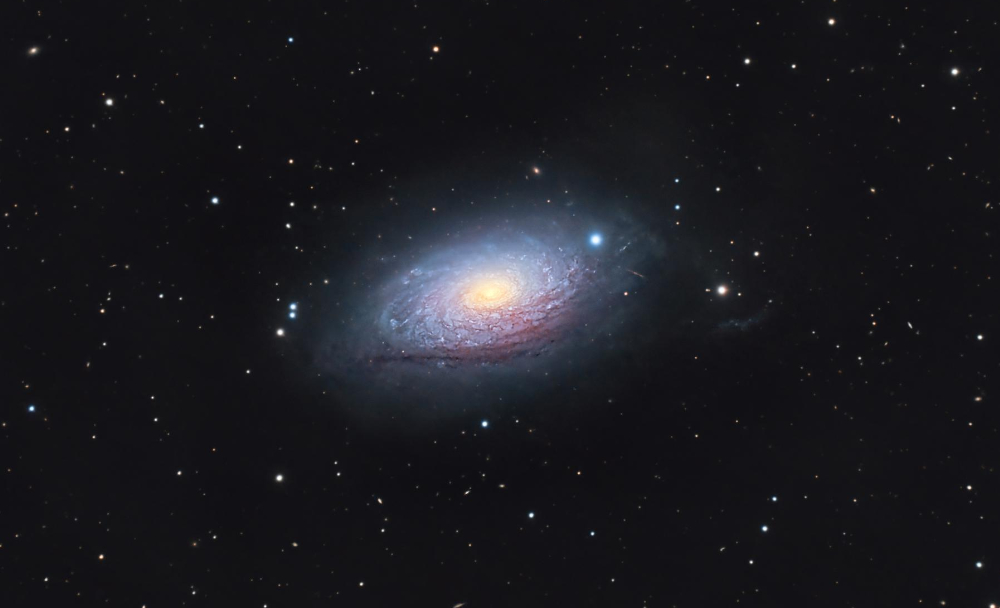

Here at High Point Scientific, we understand just how much thought goes into purchasing new equipment. As users of the gear we sell, our goal is to help you make the best decision based on your specific needs. If you still have questions, don’t hesitate to contact us; we’re here to help! For further information on all things astrophotography, be sure to check out other articles on our Astrophotography Astronomy Hub, such as our How To Connect a Camera to a Telescope guide, and our picks for the Top Cameras of 2026.
Contributing Writers
 Edward
 Daniel
 Moryah
 Vincent
Glossary
Backfocus / Backfocal Distance / Backspacing
All optical systems have a point at which an in-focus image is formed, and for astrophotography it is at this location that the camera sensor should be placed. When the telescope is used without corrective elements, this is done easily with the focuser mechanism; and so long as an image can be brought into focus, optimal optical performance will be achieved. However with corrective elements, oftentimes there is a certain distance that the camera sensor needs to be placed away from the rear of the corrector for optimal performance. This will be listed as the backspacing or backfocal distance for the corrective element.
Carbon Fiber
Carbon fiber is a material that is composed of carbon atoms within a crystalline orientation. It is known for its incredible strength comparable to steel, though weighs much less (5x less to be exact). Because of this, the use of carbon fiber is highly beneficial in the realm of astrophotography, as this material provides a strong, yet lightweight, base for telescope and tripod construction.
Camera Rotator
A camera rotator is fitted onto the back of the telescope and allows the user to rotate their imaging equipment to find the desired photographic angle. These devices can either come manually operated or electronically operated. Electronic camera rotators are extremely beneficial for creating mosaics of the night sky, as they help you achieve precise camera orientation.
Corrector Plate / Corrector Lens
A corrector plate is a lens housed within front of the optical tube assembly on Schmidt-Cassegrains, Maksutov-Cassegrains, and Celestron RASA telescopes. This lens has the important job of correcting for spherical aberration, delivering improved views and images.
Collimation
Collimation is the process in which the optical elements of a telescope are aligned to deliver the best performance possible. In refracting optical systems, lens collimation is performed by the manufacturer at the time of assembly. In contrast, reflecting telescopes contain mirrors that are often bumped out of alignment. As a result, these types of telescopes require periodic collimation from the user to ensure peak clarity and sharpness. Various tools are available for collimation, such as laser collimation, Cheshire eyepieces, and collimation caps, just to name a few.
Coma
Coma is the comet-like appearance of stars near the edges of the frame. This occurs when light entering the optics focuses at different points around the corners of the image, causing an overlap of unfocused stars that present itself in a trailing manner.
Corrective Element
This refers to an optical accessory such as a field flattener, coma corrector, or reducer. These improve some facet of a telescope’s performance, such as optical distortions that might otherwise appear on the edge of the frame; or augments it, for example by providing a wider field of view.
Chromatic Aberration
Different wavelengths of light travel at different speeds based on the medium it occupies. When white light is exposed to glass such in a telescope or lens, blue light, red light, and green light slow at varying rates. This change of speed causes each wavelength to focus at different points along the focal plane, resulting in color fringing seen within the images taken.
EdgeHD Telescope
EdgeHD is Celestron's top of the line flat field aplanatic Schmidt-Cassegrain telescope series. You can buy a variety of apertures, from 8 to 14 inches, as an OTA or as part of a telescope/mount package. EdgeHD telescopes are great for visual use but they really shine for astrophotography. With a wide field of view that is three times flatter than a standard SCT, you will see beautiful, pinpoint stars across the entire field, even if you have a full frame (35 mm) CMOS or CCD camera sensor to satisfy.
#-Element (i.e. 2-element, 3-element, etc.)
When a refractor is described as having a 2-element, 3-element, 4-element, etc. optical design, that dictates the number of lenses within the refracting telescope. The number of elements also dictates how that refractor is classified: 2-element refractors are doublets, 3-element refractors are triplets, 4-element refractors are quadruplets, and so on.
Extra-Low Dispersion (ED) Glass
ED stands for “extra-low dispersion”, and is a type of glass designed to specifically reduce the separation of wavelengths when light passes through. Coatings of magnesium fluoride, zirconium dioxide, calcium fluoride, and titanium dioxide help bridge the gap between the different wavelengths of light, providing a singular focal point for all wavelengths. This helps reduce chromatic aberration and in turn provides heightened optical performance. Also, the more coatings on the lenses, the higher the transmission rate becomes for brighter, more detailed views and images.
Field of View (FOV)
In simple terms, your field of view is the amount of sky that is witnessed by your telescope/camera combination, or telescope/eyepiece combination. This measurement is calculated in angular degrees. To calculate how much of the sky you can image with your astrophotography rig, take the width of your camera chip, multiply it by 57.3, then divide that product by the focal length of your optics. If you want to determine how much of the sky you can view through your eyepiece, take the apparent field of view of your eyepiece (provided by the manufacturer), then divide it by the quotient of your telescope’s focal length & the focal length of your eyepiece.
Focal Length
The focal length is the distance, usually measured in millimeters, between the primary mirror or lens and the point at which the image comes to focus. Generally, classic refractors have a longer focal length, Newtonian reflectors tend to have a focal length that is shorter, and Schmidt-Cassegrain fall somewhere in the middle.
Focal Ratio
The focal ratio is calculated by dividing the aperture (mm) of the primary mirror or lens into the focal length. Example: 2500 mm divided by 254 mm (10") equals an f/ratio of 9.84, which is usually rounded off, in this case to f/10. The focal ratio signifies how quickly a telescope gathers light and tells us something about the telescope's field of view, how long exposures will take during astrophotography sessions, and how much magnification the eyepiece will produce for that telescope.
Focal Reducer
A focal reducer is an optical modifier that reduces the focal length of your telescope. These accessories come in a wide variety of reducing powers, and are typically dedicated for use with one specific telescope model. They are great options for those looking to widen their field of view without having to create complicated mosaics. Also, the use of a focal reducer increases the overall speed of the telescope, allowing more light to be collected in less time.
Image Circle
This specification refers to the area where an image is formed by the optics/ corrective element. This is useful for assessing whether a certain camera sensor size will be supported by the optics, or if vignetting/ poor performance will be seen in frame.
Imaging Newtonian
An Imaging Newtonian is a Newtonian telescope that has been optimized for astrophotography equipment. Where a traditional Newtonian would have its point of focus just above the end of the draw tube (in order to best focus with eyepieces), an imaging Newtonian is designed to focus further back to provide adequate space for astrophotography cameras and accessories. A side-effect of this focal point shift is a decrease in field-illumination, which presents as vignetting in images. Accordingly, imaging Newtonians also have larger secondary mirrors than their traditionally designed counterparts, which evens out illumination. In addition to these optical changes, these scopes can (but don't always) have hardware that has been upgraded or replaced with components that make attaching supporting equipment easier. Some of these scopes can be used visually as well as for astrophotography, however the optical changes and astrophotography hardware focused design does not make them the best candidate for visual observation.
Imaging Train
Your imaging train is your telescope, camera, and any other accessories that are fixed between them, such as filters, filter wheels, off-axis guiders, focal reducers, etc.
Optical Tube Assembly (OTA)
The acronym OTA stands for Optical Tube Assembly. An OTA is simply the telescope portion of a telescope/mount/tripod package. Some telescope users prefer to buy the OTA separately so they can create a custom astrophotography set-up or use a mount they already own.
Petzval Design
The Petzval design is an orientation of lens elements within a refractor telescope. This arrangement features a doublet near the front of the optical tube, and a doublet near the back of the tube, with air-spacing in between. The second doublet corrects for aberrations that the first was unable to correct for, such as comatic aberration and field curvature. As a result, refractors of this design are well suited for astrophotography, producing exceptional clarity and contrast within the images captured.
Quadruplet Refractor
Quadruplet refractors contain a total of four internal optical elements that provide images free from chromatic, comatic, and spherical aberration. As opposed to triplet refractors, quadruplet refractors also correct for field curvature aberration, where the additional lens acts as a built-in field flattener to straighten out incoming rays of light. This flat field also means there is no need to calculate backspacing; as long as the imaging system can reach focus, stars will be sharp across the entirety of the image. The four lenses in these telescopes can be arranged in various different orientations, though most often adopts the Petzval design. This design features two lenses in the front and two in the rear, and is so often used that quadruplets are regularly referred to as Petzval refractors. Most of the quadruplets produced today are manufactured specifically for astrophotography, and do not allow visual applications.
Quintuplet Refractor
Quintuplet refractors are telescopes that include a total of five lens elements. These lenses can be combined in various different arrangements to deliver superb color correcting abilities. Common aberrations such as chromatic, comatic, spherical, and field curvature are eliminated when using telescopes of this design, making them optimal for astrophotography. The inherent flat field also eradicates the need to calculate backspacing, making them exceptionally easy to use.
Rack & Pinion Focuser
Rack & Pinion focusers utilize a gear-oriented system to bring the telescope into focus. When the focusing knob is turned, the gears of the Pinion mechanism mesh with those of the Rack mechanism to move the eyepiece or imaging equipment into the focal point of the optics. By using gears, this type of focusing design is less likely to suffer from slippage as other focusers are prone to, and are one of the most commonly used in today’s most popular telescopes.
Reflector Telescope / Reflecting Telescope
A reflector is a telescope design in which mirrors are used to gather and focus light. Reflector telescopes are commonly called Newtonian Reflectors, or simply a Newtonian in deference to their inventor, Sir Isaac Newton.
Refractor / Refracting Telescope
A refractor is a telescope design that uses lenses to gather and focus light. While there are some exceptions to the rule, achromatic refractors use two lenses in their design, and while they are economical, achromats are only capable of focusing two out of three wavelengths of light. An APO telescope, or apochromatic refractor, uses 3 lenses to bring all three wavelengths of light to a single focus to produce an image virtually free of extraneous color.
Schmidt-Cassegrain Telescope (SCT)
The acronym SCT stands for Schmidt-Cassegrain Telescope, one of the most popular telescope designs in amateur astronomy today. A Schmidt-Cassegrain, which belongs more broadly to the Catadioptric telescope type, uses a folded optical design incorporating both mirrors and lenses to gather and bring the light to focus. The folded light path allows for a short tube assembly even with relatively large apertures of 8" or more. A shorter tube length makes the SCT far more portable than a classic Newtonian or refractor of the same aperture.
Spacer
These are fairly simple components, designed to add spacing to an imaging system. While there are some sizes that have become common due to corrective element backspacing, dedicated astronomy camera native backfocus, and popular accessory thicknesses coalescing around certain spacing distances, there are still plenty of unique sizes and thickness available for unique builds/ equipment.
Spherical Aberration
As opposed to converging at a singular focal point, light rays entering the edges of a lens focus at differing points than that of light rays entering the center of the lens. This results in sharp stars in the center of the frame while blurry, unfocused stars are prevalent around the edges of the image.
Vignetting
Vignetting is seen as the darkening of the corners of the frame within an image. This happens when the camera sensor is not exposed to enough light, resulting in a shadow effect along the borders of the image. This issue presents itself for a number of reasons, though most commonly occurs when using incompatible sensor sizes and image circles, and using too small of filters for the imaging assembly.