Harmonic drive mounts have quickly become some of the most sought-after tools in astrophotography, and for good reason. Their ability to deliver impressive payload capacity in a lightweight, portable form factor has changed what’s possible for both beginners and experienced imagers alike. With the success of the ZWO AM5 and AM3N, ZWO has set a high bar for performance and user experience. Now, with the release of the ZWO AM7 Harmonic Drive Equatorial Mount Head, they’ve taken it one step further.
The AM7 introduces a significant 50% increase in payload capacity over the AM5 while only adding about 3 lbs in overall weight. On paper, that’s incredibly impressive, but it raises an important question: Is the AM7 truly worth it, or will mounts like the AM5 satisfy the majority of astrophotographers both now and in the future? To answer that, we put it to the test.
Specifications
The AM7 remains true to the design philosophy that made ZWO’s strainwave mounts so popular. It’s compact, thoughtfully designed, and built with modern astrophotography rigs in mind. Weighing in at just 15 lbs, the mount head is only slightly larger than the AM5, yet it offers a substantial increase in capability.
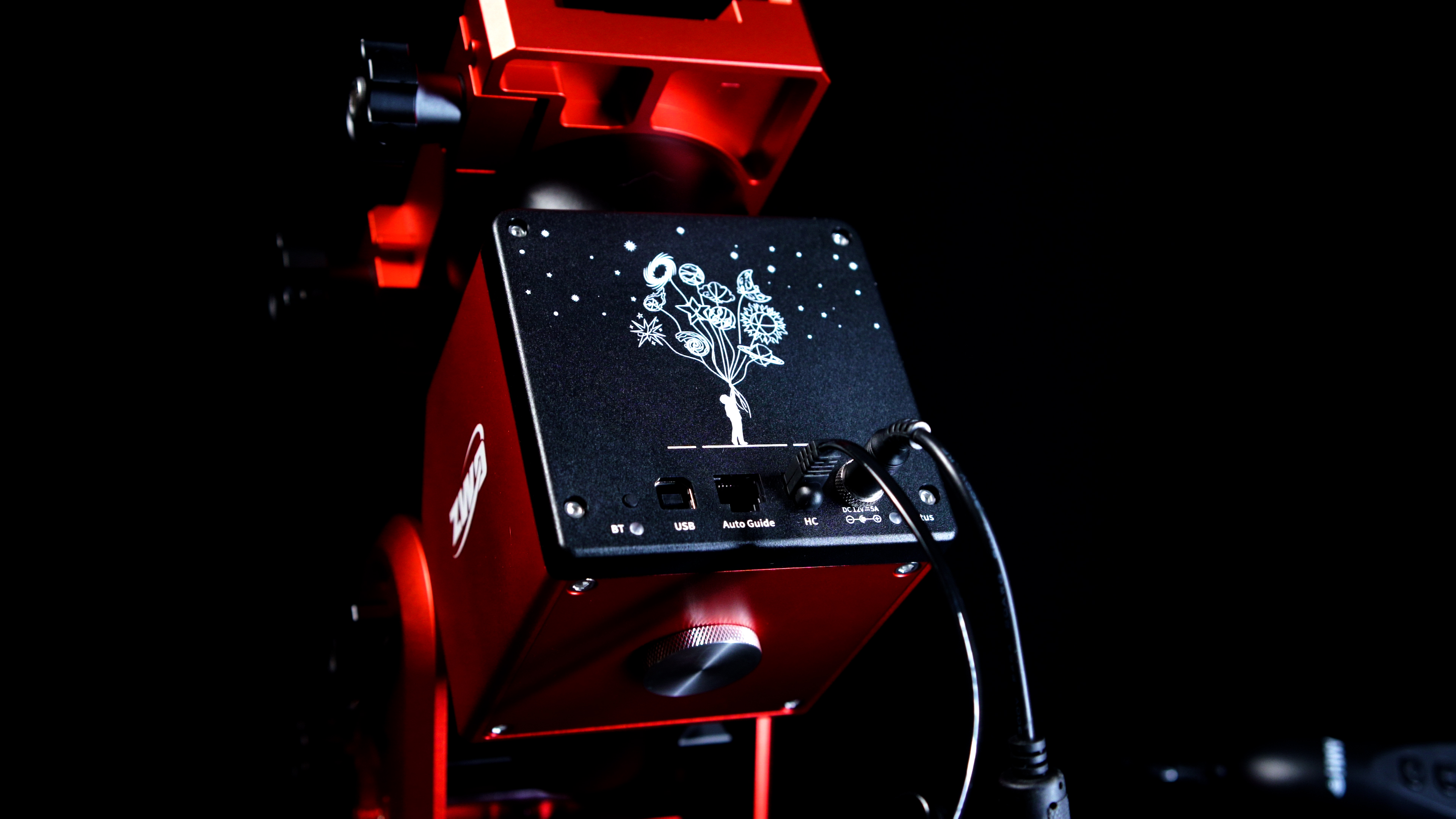
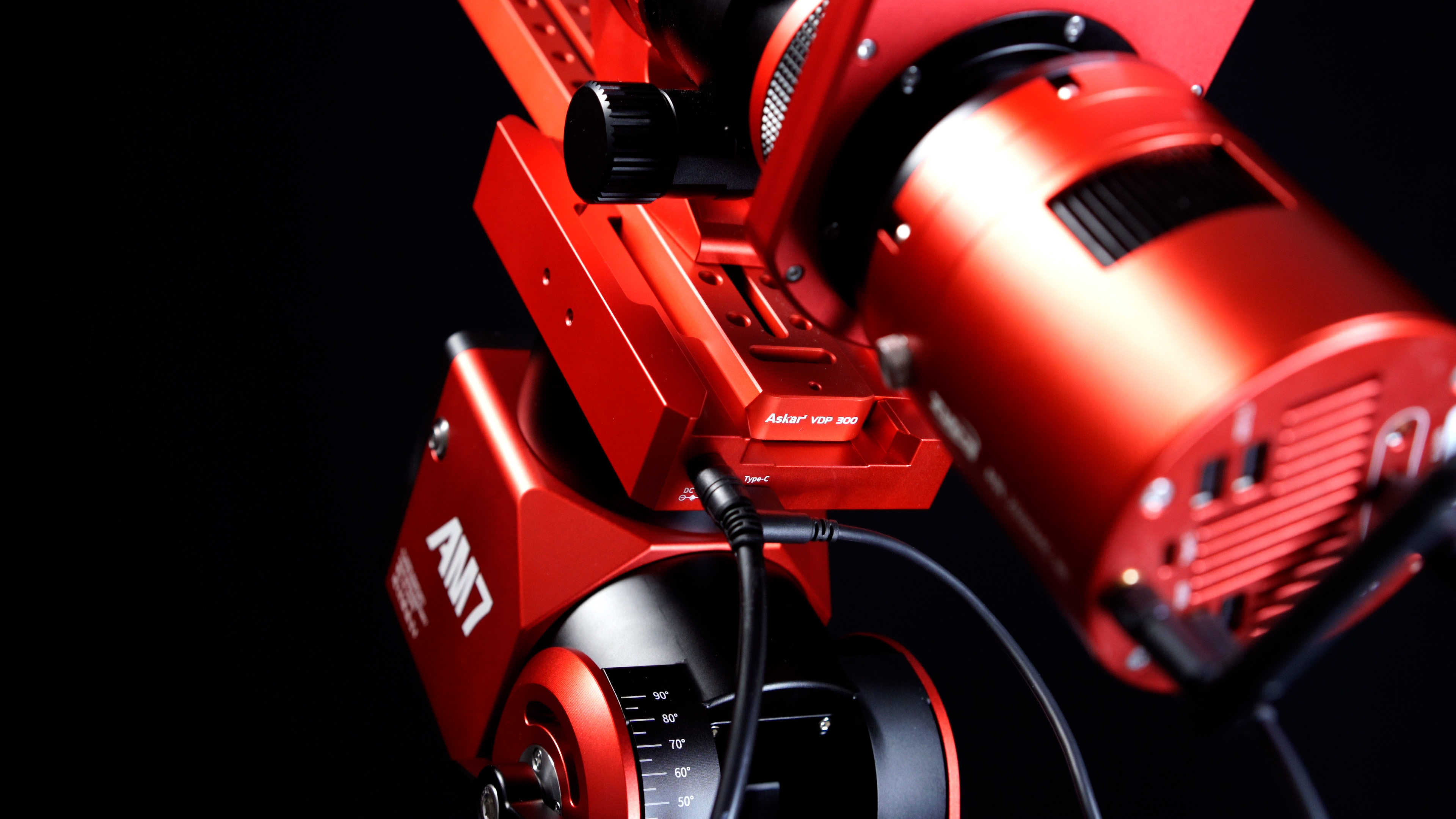
With a maximum payload capacity of 66 lbs when using a counterweight, and 44 lbs without one, the AM7 is the highest capacity mount in ZWO’s current strainwave lineup. Connectivity remains seamless, with both Wi-Fi and Bluetooth enabling full control across the ASIAIR ecosystem. The mount also features multiple input and output ports, including power, USB, and ST 4 connections, along with a powered declination saddle that helps simplify cable management.
Even with this added capability, the AM7 still maintains that portable, grab-and-go feel thanks to its included hard foam carrying case. It’s clear that ZWO wanted to scale performance without sacrificing usability, and in that regard, they’ve succeeded.
AM5 vs AM7
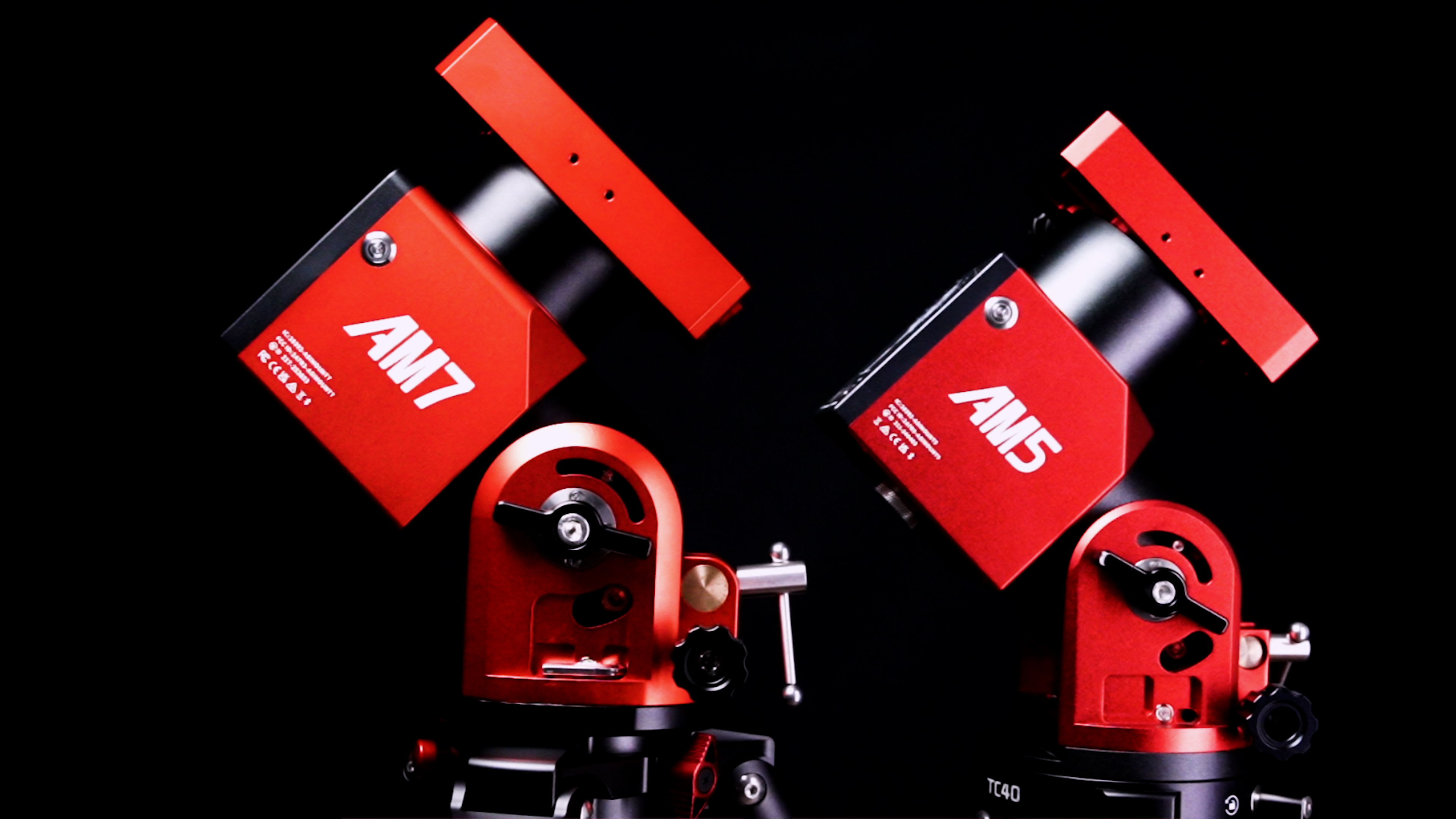
At a glance, the ZWO AM5 and the ZWO AM7 feel very similar. Both offer wireless control, clean cable management, and the ability to operate without a counterweight at lower payloads. They share the same ecosystem of cameras and accessories, as well as the same overall user experience, which is something we have come to appreciate.
The difference really comes down to capacity and long-term flexibility. The AM5 is an excellent choice for small to medium-sized imaging setups, especially for those focused on widefield imaging with refractors. It’s reliable, portable, and more than capable for the majority of setups in that category.
The AM7, on the other hand, is built for those who plan to push their imaging setup even further. If you’re interested in longer focal lengths, larger optical tubes, or want to future-proof your setup, the AM7 offers a level of growth and upgrade that the AM5 simply can’t match. It allows you to start small and scale up without needing to replace your mount down the line.
The Counterweight Solution
One important detail to consider with the AM7 is that it does not include a counterweight. While this may not matter for lighter setups, it becomes critical as you approach the mount’s maximum payload capacity.
Using a properly fitted counterweight is not just recommended, it’s essential. A poorly matched or loosely fitting counterweight can introduce instability, cause shifting during slewing, and ultimately impact tracking performance.
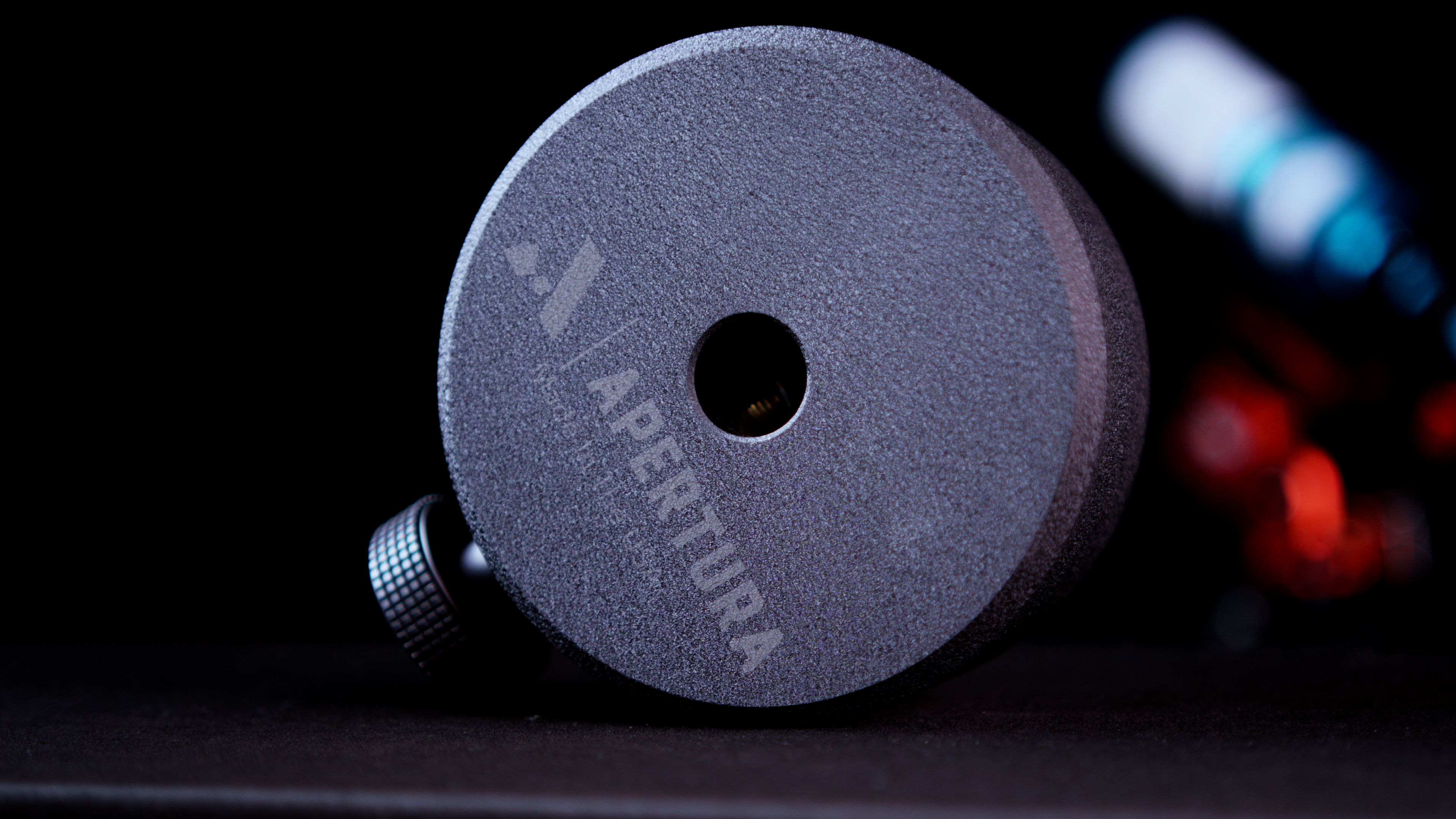
For your AM7, we recommend the Apertura 22lb Counterweight, designed specifically for the AM7. The fit was secure and precise, and it provided the confidence needed to run heavier imaging setups without concern. This is one of those areas where cutting corners isn’t worth it.
The Tripod
The foundation on which you place your mount plays an equally important role in overall performance as the mount itself! If you do not have a proper foundation for a large imaging rig, you may see it affect your guiding results and image quality. The AM7 can be paired with the standard TC40 tripod, which works well for lighter setups like many users have used with the AM5 in the past. However, once you begin pushing into heavier payloads, a more robust solution becomes necessary.
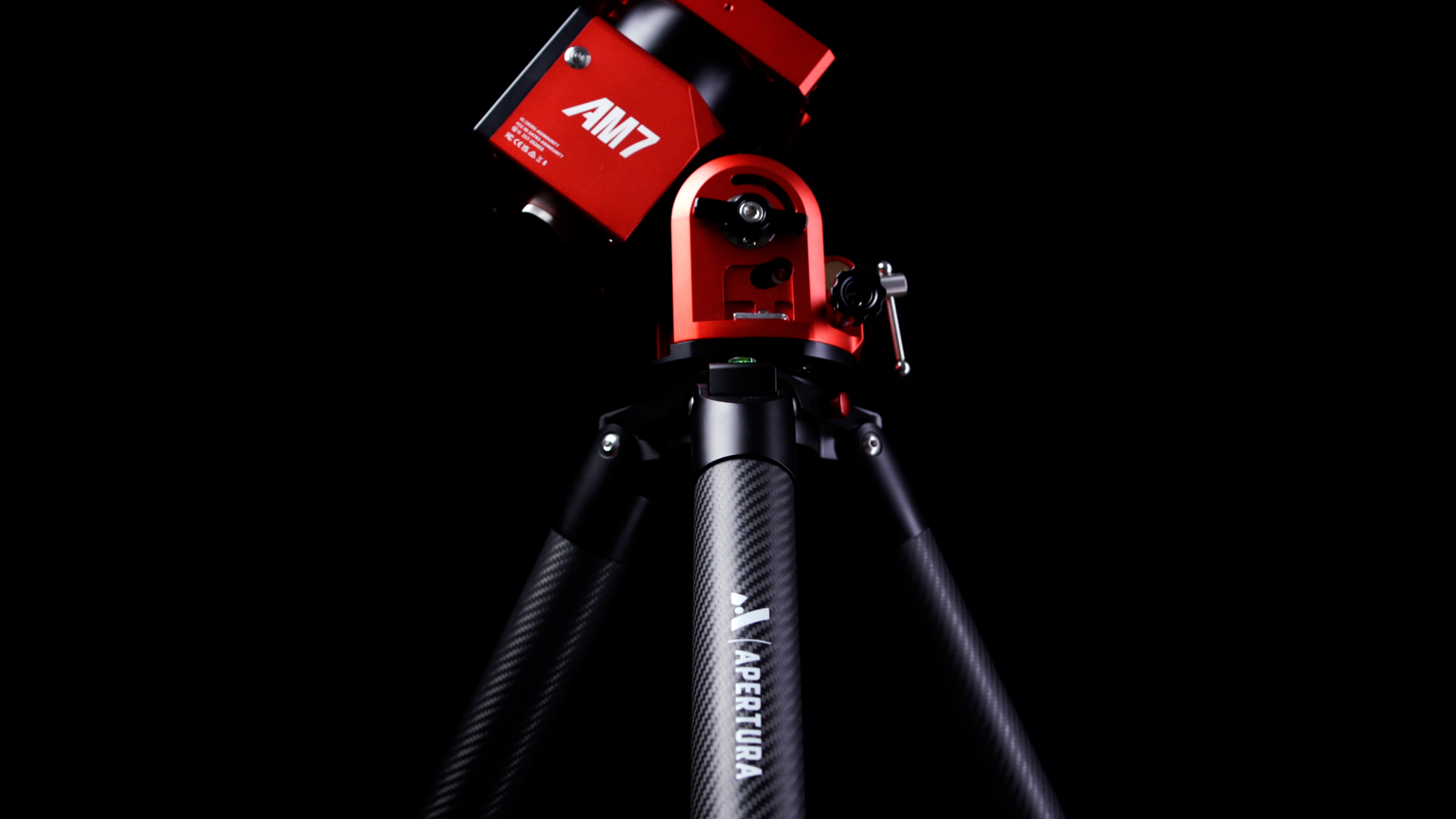
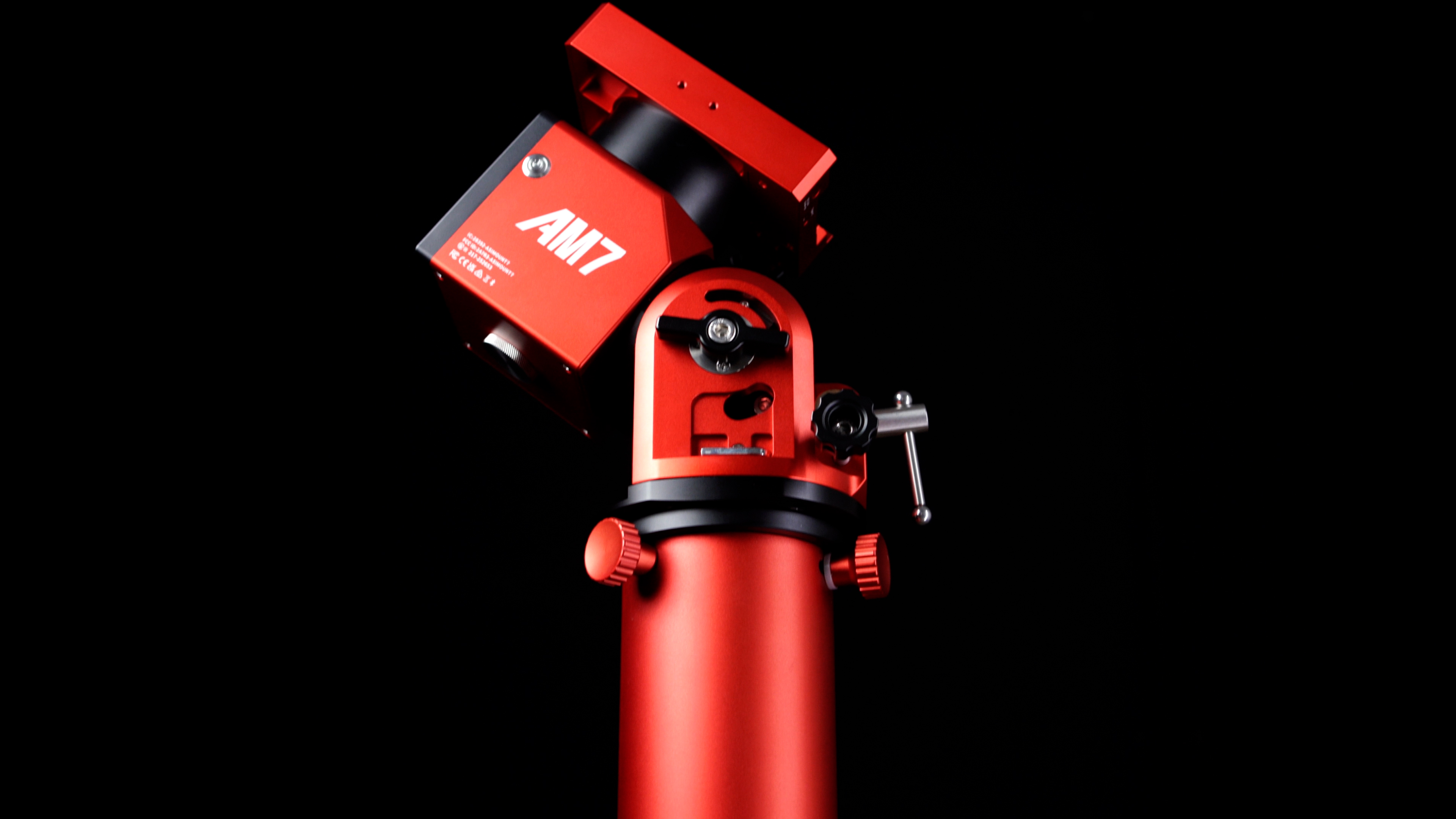
We tested the AM7 on both the Apertura Heavy Duty Carbon Fiber Tripod and the Apertura Anchor Pier, and both proved to be excellent options. Overall, these options provide the stability and confidence needed to support larger imaging rigs, especially when working with longer focal lengths. That said, I was simply not comfortable mounting the 14” Edge and the AM7 on anything smaller and less robust than that Apertura Heavy Duty Tripod. We didn't want to risk a tripod failure under such a heavy imaging rig. Now let's put this mount to the test in a real-world setting.
Testing (Teagan’s Experience)
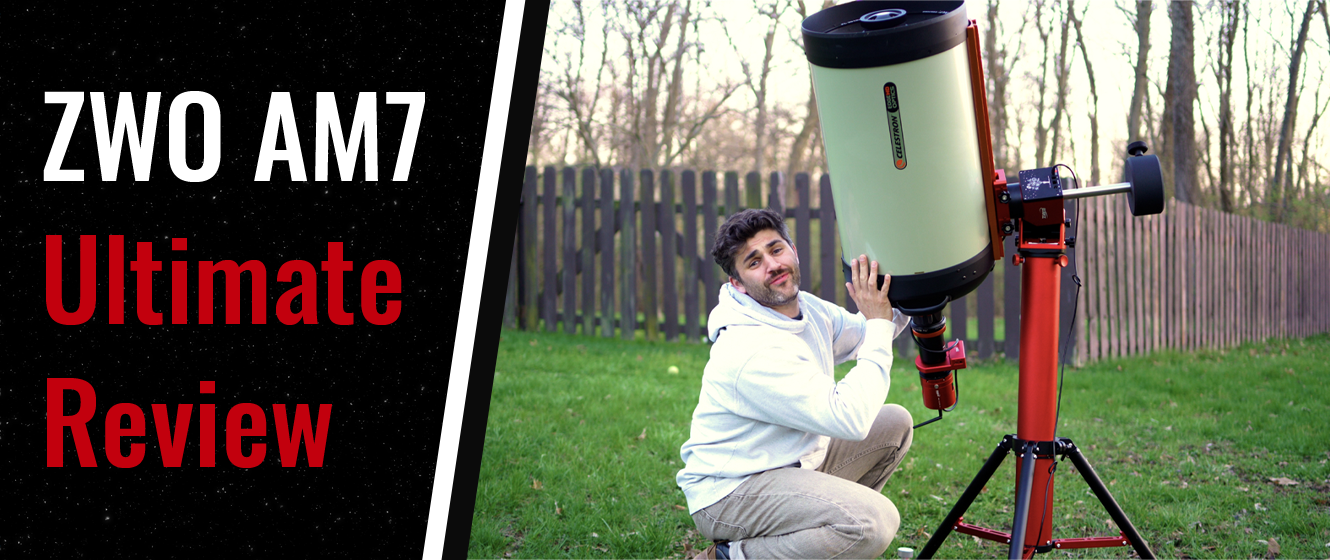
To truly push the limits of the AM7, we paired it with a Celestron EdgeHD 14 and a full imaging train. I knew that this would serve as the ultimate test of the mount’s real-world performance near its maximum weight capacity.
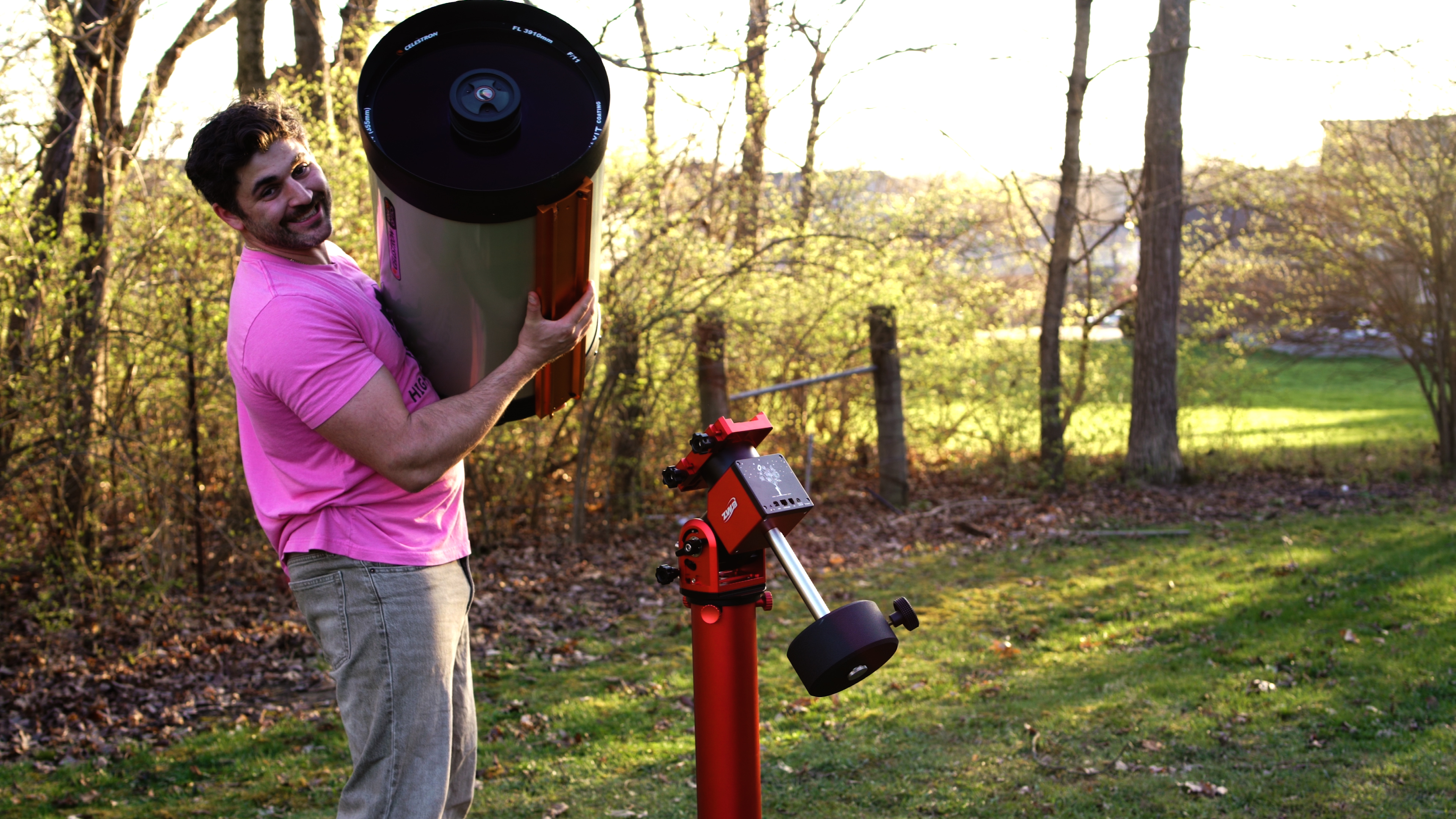
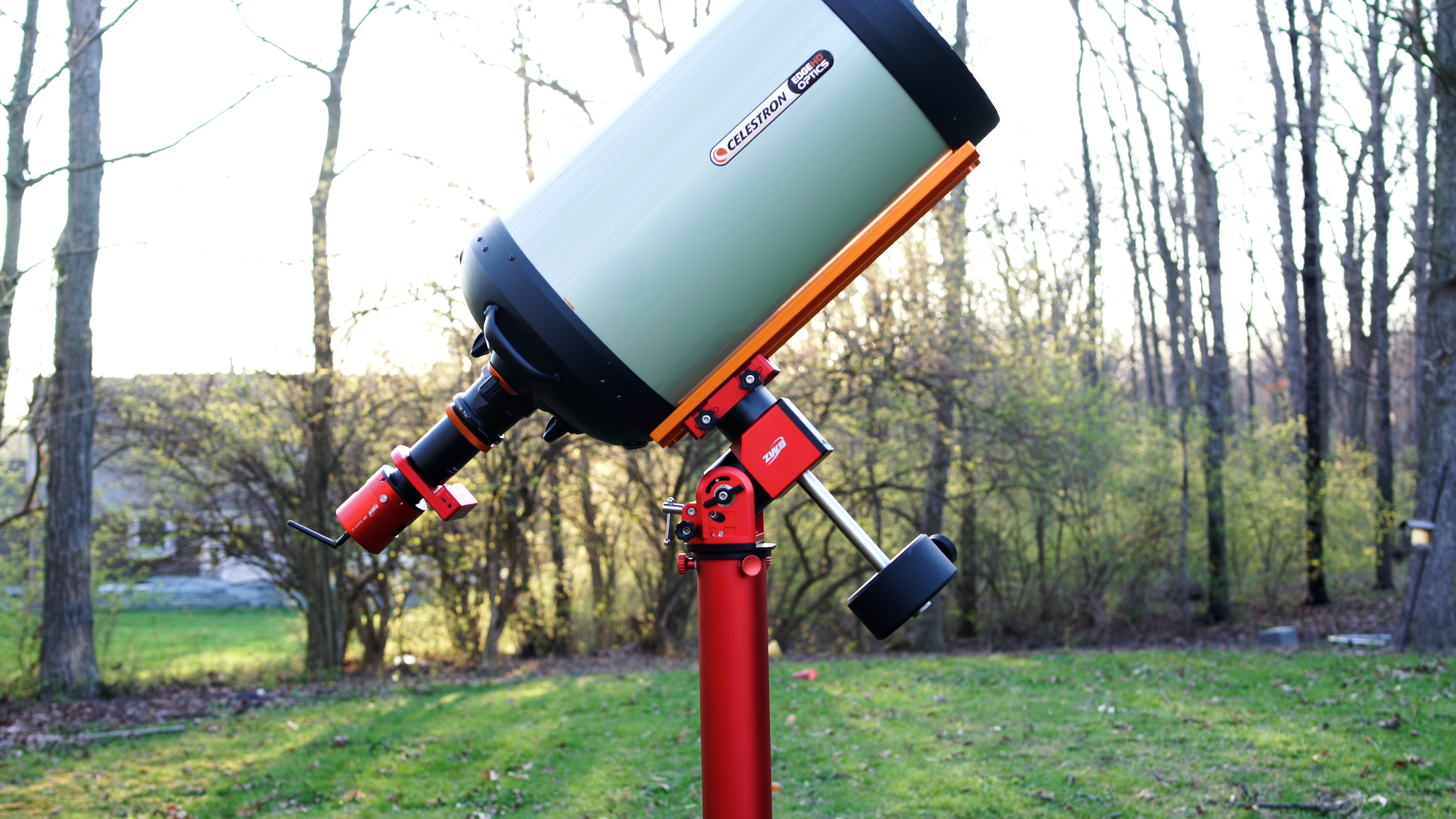
With a telescope this large, carrying it outside was one thing, lifting and mounting it securely to the AM7 was another! I powered on the mount, made sure the counterweight was properly positioned towards the end of the counterweight shaft, and did a quick slew test. I manually slewed the telescope from horizon to horizon and then back towards zenith. No issues! Mounted on both the Apertura Anchor Pier and the Heavy Duty Tripod, the system felt stable and well supported. Skies were clear that night (at first), but the humidity set in at 98%, and I had to call it a night not long after I started imaging. I used the ASI2600MC AIR as my imaging and guide camera along with the ZWO CAA. For this first night out, my goal was not to get a pretty picture (yet), but rather to make sure the mount could actually handle the size, weight, and long focal length of this telescope. After several hundred corrections, guiding performance was incredibly good with an average RMS error of .4 arc seconds (RMS .4”)
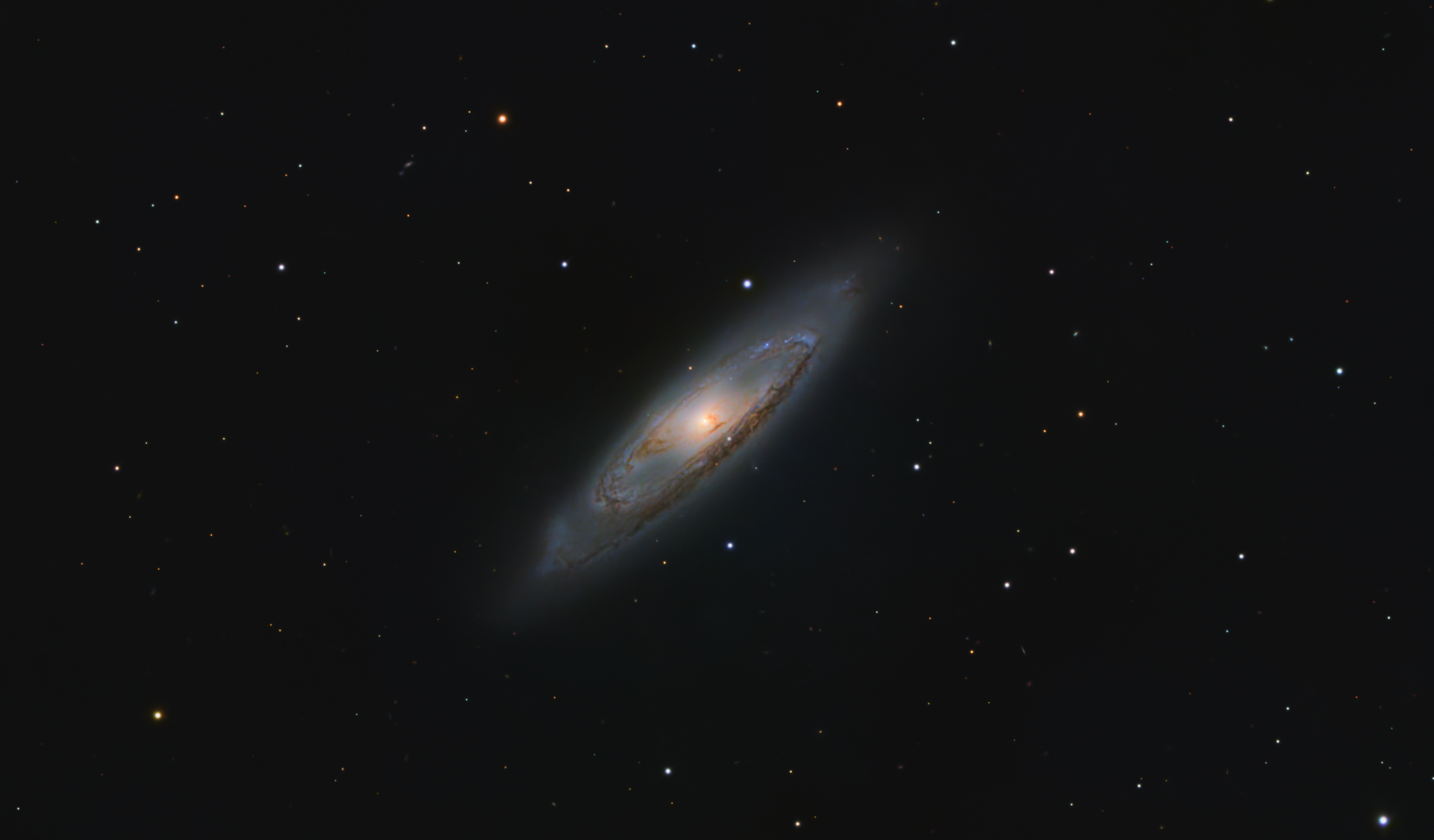
Going into this test, we knew the AM7 had the potential to handle a setup like this on paper, but seeing it perform in a real-world scenario was something else entirely. Considering the conditions and the sheer size of the system, the results were genuinely impressive. I could conclusively say that the next several clear nights could now be spent capturing some real data on a deep sky object that I have always wanted to image - Messier 65.
Final Thoughts
So, is the ZWO AM7 worth it? If you’re looking to upgrade your mount or step into your first strainwave system, the answer is yes, but with one important consideration. The mount itself is incredibly capable, offering a rare combination of high payload capacity and portability. However, to truly take advantage of what it offers, your choice of tripod or pier is critical. For lighter setups, the ZWO TC40 tripod will perform well. But if your goal is to push the AM7 to its full potential or build a system that can grow with you over time, investing in a more robust foundation is the way to go. The Apertura Heavy Duty Carbon Fiber Tripod or the Apertura Anchor Pier are the two options we recommend. At the end of the day, the AM7 delivered on its promise, and it can confidently handle something as demanding as a 14-inch EdgeHD. It’s safe to say it can handle just about anything you throw at it.
Learn More
Interested in diving deeper into the world of astronomy? Not sure where to begin? Check out our Astronomy Hub!