Astrophotography has evolved from relatively crude 19th-century experiments into one of the most powerful and wonderful tools for understanding the night sky. Beginning with early daguerreotypes of the Moon and progressing through photographic plates, electronic detectors, and modern digital imaging systems. Each major technological shift not only improved image quality and sensitivity but also expanded humanity’s understanding of the universe, enabling discoveries ranging from nebular structure to the expansion of the cosmos.
By examining key milestones, techniques, and instruments, this article shines light on how astrophotography bridges art and science, transforming faint celestial light into enduring scientific data and iconic images that shape public perception of space.
From its earliest days, astrophotography fundamentally altered how astronomers observe and understand the universe. Astrophotography enables us to extend our vision beyond just what the human eye can see by revealing more detail in different wavelengths. Early astronomers struggled with long exposure times, insensitive photographic materials, and significant (if not non-existent) tracking limitations; however, their images were able to provide permanent records of celestial phenomena, records that could be measured, compared, and revisited again and again instead of being left to documents recording what observers saw through an eyepiece.
As technology advanced, astrophotography evolved from a documentary aid to a primary engine of discovery. Additionally, as prices of modern cameras have dropped and telescopes have become more affordable and robust, the ability to capture the wonder of the universe has quickly shifted from being solely in the hands of observatories and research organizations to anyone with enough time and energy to dedicate to the night sky.
The Birth of Photography
Early photography was fundamentally a marriage of optics and chemistry. It depended on an understanding of how to capture light and then preserve it using chemicals that react to light in specific, predictable ways. Without advances in both fields, photography could not have developed beyond a theoretical concept. Thomas Wedgwood is the first person known to have seriously explored this method of image capture using light-sensitive chemicals. Although his early experiments showed promise, the process still suffered from critical flaws. Wedgwood was able to create negative images using a camera obscura and paper coated with silver nitrate. However, once the paper was exposed to light, there was no effective way to stop the chemical reaction. As a result, the entire sheet would darken over time, causing the image to fade and eventually disappear. Despite these limitations, news of Wedgwood’s work spread from England to France, where it inspired further experimentation aimed at finding a more permanent solution.
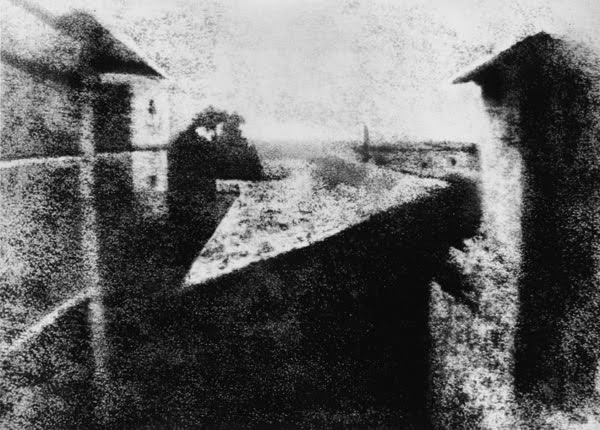
That solution would come from Nicéphore Nièpce, who secured his place in history by developing the first method capable of permanently fixing an image. Nièpce’s technique, known as heliograph photography, used a pewter plate coated with bitumen, a substance that hardens when exposed to light. By placing the plate in sunlight for an exposure lasting several days, Nièpce was able to create a stable image that did not degrade when viewed. In 1822, this process produced what is recognized as the world’s first photograph. The view from Nièpce’s window represents a profound technological leap, marking the moment when images could finally be preserved indefinitely.
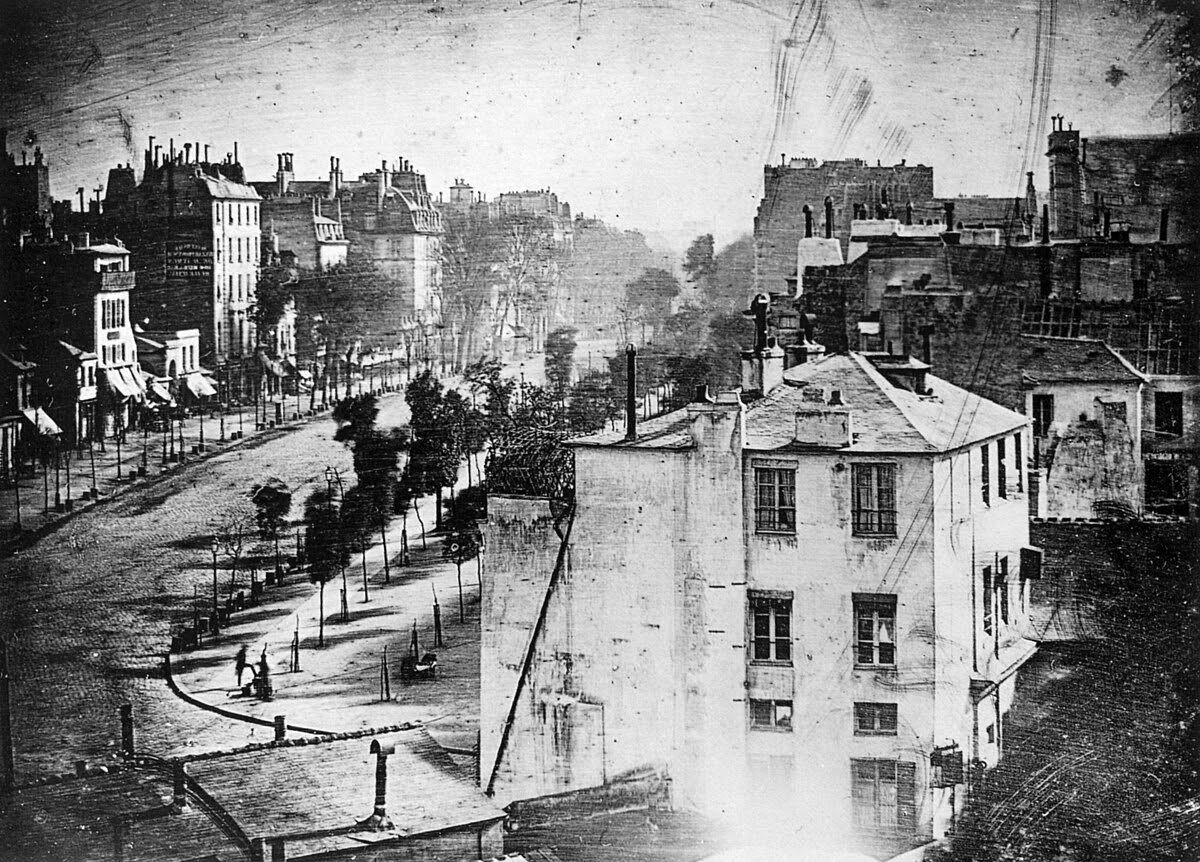
Roughly a decade later, another major advancement followed. Louis Daguerre, Nièpce’s collaborator in the development of photography, introduced a significantly improved process. Daguerre discovered that exposing silver-coated copper plates to iodine vapor created a light-sensitive surface, and that developing the plate with mercury fumes could reveal a much sharper image in a fraction of the time required by heliography. This innovation dramatically reduced exposure times and produced images with unprecedented clarity.
The Birth of Astrophotography: 19th-Century Beginnings
Humans have long since been captivated by the night sky and have taken time to document what they’ve observed. Many records, such as the supernova of 1054, were documented by Native Americans' petroglyphs in Arizona, showing a “circle” next to the crescent Moon in the Chaco Canyon. With the invention of the first telescope, Galileo was able to take what one could see through an eyepiece and make detailed sketches of the Moon’s surface, sunspots on the surface of the Sun, and the changing positions of Jupiter’s moons based on direct observations. His drawings were published in Sidereus Nuncius, and demonstrated that visual records through a telescope could serve as empirical scientific evidence. However, it was not until the 19th century that physically taking photographs of objects in the night sky could be achieved.
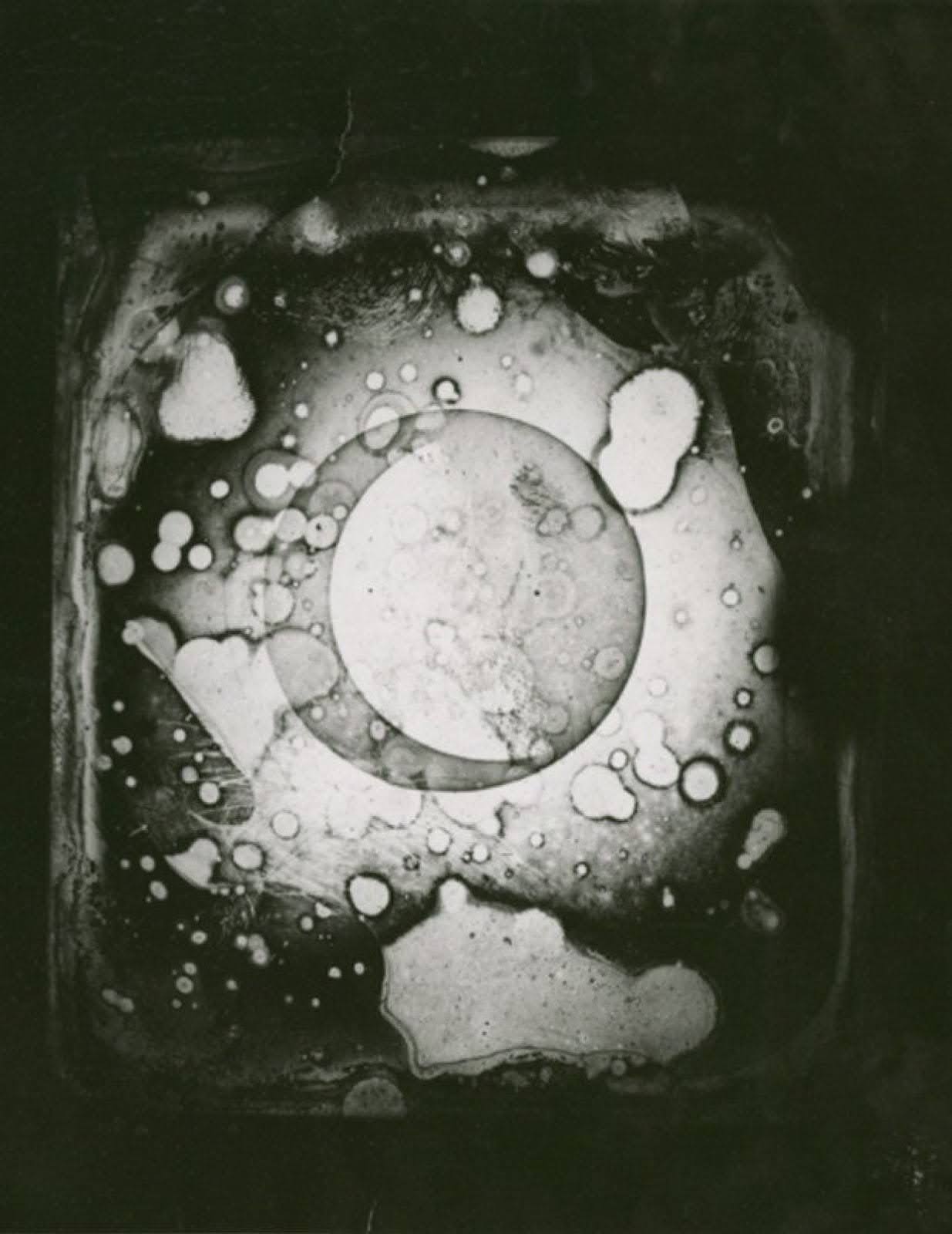
The first attempt at astrophotography was conducted by Daguerre himself, who took a photograph of the Moon on January 2nd, 1839. Unfortunately, his lab burned to the ground, and with it, the first astrophotography image was lost. A year later, John William Draper, an American chemist, took a daguerreotype of the Moon in 1840. This was the first astrophotograph to survive the 19th century. It was a 20-minute exposure taken through a 5-inch reflecting telescope. The first astrophotographers were generally amateur astronomers experimenting with new camera technology. Telescopes would sag under the weight of the heavy cameras. Tracking would be imprecise and difficult to manage. The daguerreotype process was far too slow to capture anything beyond planets, and the wet plate process limited exposure times. However, there were still some limited successes, but the image quality was undoubtedly constrained by the technologies of the time.
Two years after the Moon was first permanently captured in a photograph, astrophotography took another major step forward. In 1842, the first known image of a partial solar eclipse was produced by Giovanni Angelo Majocchi, an Austrian astronomer who employed the daguerreotype process. Astrophotography advanced further in 1850 with the first successful photograph of a star beyond the Sun. This breakthrough was achieved by John Adams Whipple and William Cranch Bond at the Harvard College Observatory. The target was Vega, one of the brightest stars in the night sky.
Using the daguerreotype method, Whipple and Bond managed to record starlight that had traveled dozens of light-years before reaching Earth. Although Vega appears brilliant to the human eye, capturing it photographically required long exposure times and careful tracking, underscoring the technical challenges early astrophotographers faced. By 1851, Whipple was able to expand upon Draper’s process and made a Moon daguerreotype through the Great Refractor Equatorial Mount Telescope at Harvard College Observatory, which brought considerable attention at the Great Exhibition of 1851.
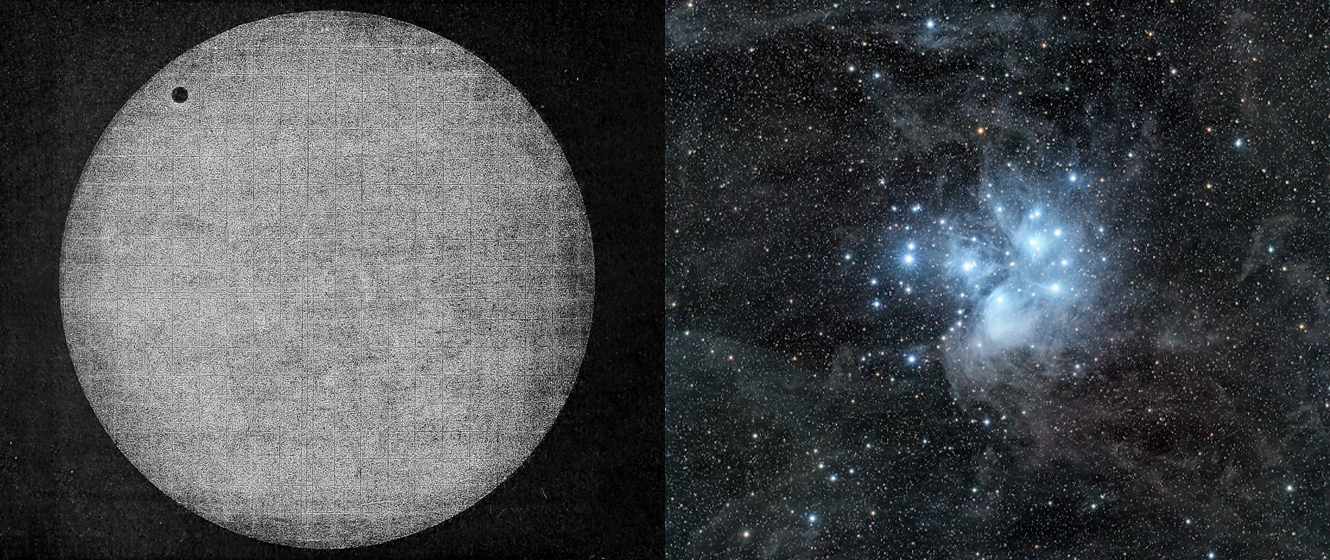
Astrophotography would see another advancement through the work of Frederick Scott Archer, who recognized the value of the imagery and sought to increase the resolution of photos. By spreading nitrating cotton dissolved in ether and alcohol on glass, also known as wet plate collodion, Archer was able to create images through a much cheaper and simpler process than the Daguerreotype. For the remainder of the 1800s, astrophotography could be categorized as a series of successes and failures, with more photos of bright objects like the Sun and the Moon emerging, as well as methods for capturing a celestial object’s spectrum. Then, in 1874, a new invention emerged: the photographic revolver. It allowed a series of images to be taken that captured movement (a technique known as chronophotography). Using the photographic revolver he invented, Pierre Jules César Janssen captured Venus as it moved across the face of the Sun.
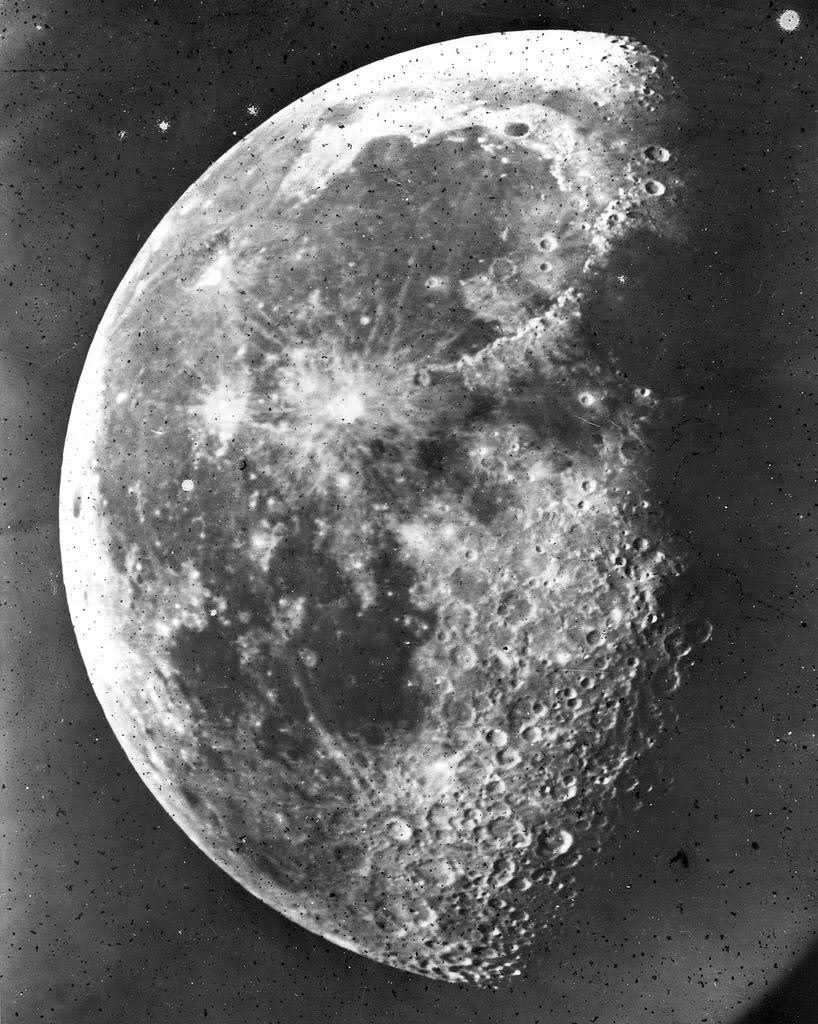 (Lunar daguerreotype taken and displayed in 1851, one of the oldest surviving images of the Moon)
Click to Enlarge Image
(Lunar daguerreotype taken and displayed in 1851, one of the oldest surviving images of the Moon)
Click to Enlarge Image
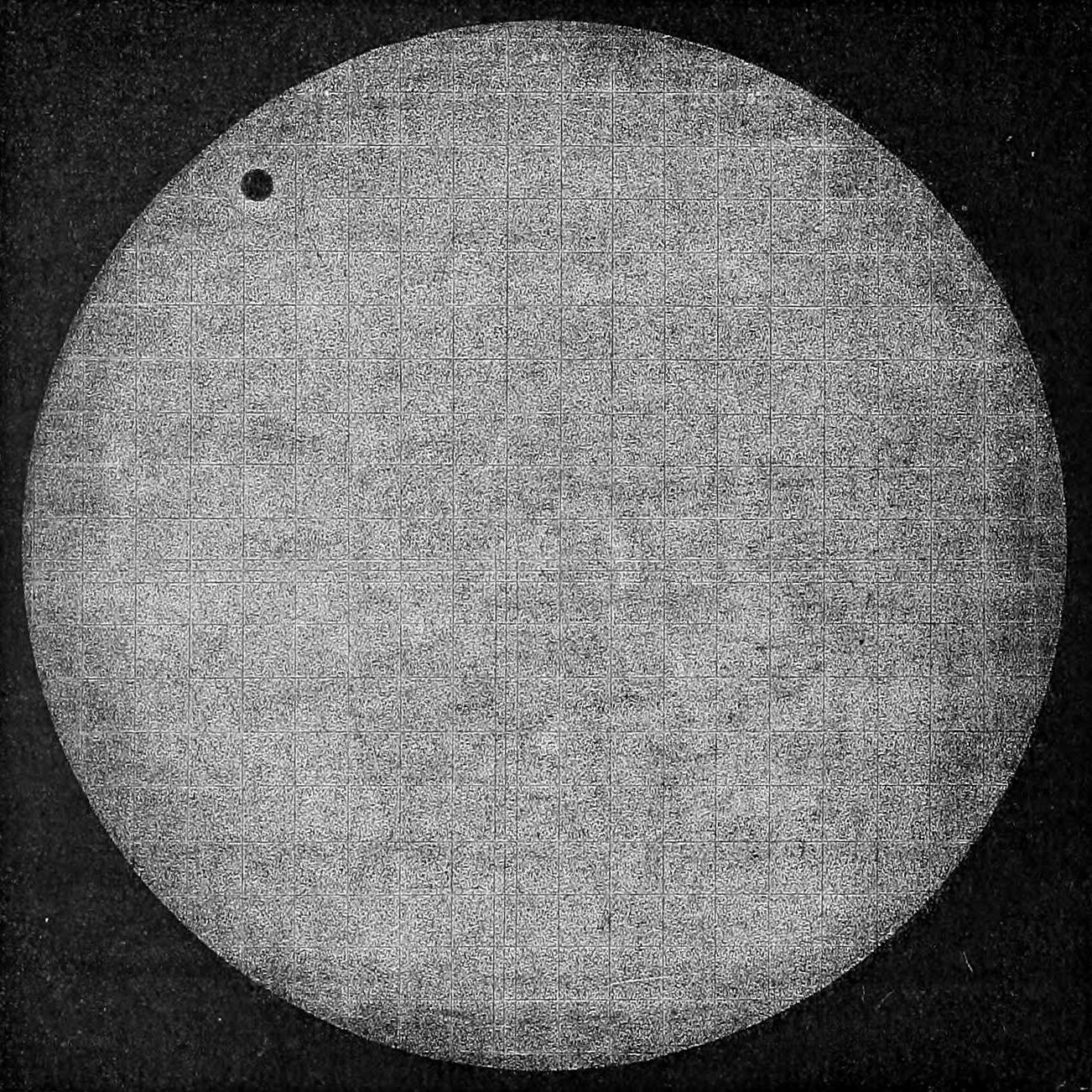 (Transit of Venus as photographed by Jules Janssen)
Click to Enlarge Image
(Transit of Venus as photographed by Jules Janssen)
Click to Enlarge Image
20th Century: Expansion and Scientific Impact
Astrophotography in the 19th century, while marking a significant milestone, remained little more than a basic curiosity and was limited in its ability to return real scientific data. Perhaps the greatest impact astrophotography would have on science in the early part of the 20th century was during the Solar Eclipse of May 29th, 1919. In 1915, Albert Einstein published his Theory of General Relativity. The theory proposed, in summary, that massive objects like the Sun curve the very fabric of spacetime, causing light passing nearby to bend. This effect, known as gravitational light deflection, was very small and difficult to measure under normal conditions, as the Sun’s brightness would overwhelm nearby faint stars. It was only during the darkness of a total solar eclipse that the Sun’s light would be blocked sufficiently to allow background stars to become visible. This created an opportunity to validate Einstein’s theory via ground-based observations.
Arthur Eddington organized an expedition in 1919 at two locations along a total eclipse’s path: the island of Principe off the west coast of Africa and Sobral in Brazil. During the eclipse, photographic plates were taken of stars appearing close to the Sun’s position in the sky. These images were later compared to reference photographs of the same star fields taken when the Sun was elsewhere. According to Newtonian physics, there would be no deflection of Starlight. However, if Einstein was right, the shifts would be larger and increasingly closer to the disk of the Sun. The measurements showed the latter, and validated Einstein’s theory of relativity through field measurements.
By 1919, it had already been recognized that photography of the sky could be valuable for scientific data collection. By the mid-20th century, refinements in chemical emulsions significantly increased sensitivity and spectral range. Panchromatic and hypersensitized films enabled astronomers to capture light across a wider range of wavelengths, including hydrogen-alpha emission from nebulae. Observatories such as Mount Wilson Observatory and Palomar Observatory used photographic plates to support foundational discoveries, including the expansion of the universe and the large-scale structure of galaxies. However, film-based astrophotography had inherent limitations: low quantum efficiency, nonlinear response to light, and the need for chemical development introduced noise, variability, and long processing times. These constraints motivated astronomers to seek electronic alternatives that could record faint signals more efficiently and reliably.
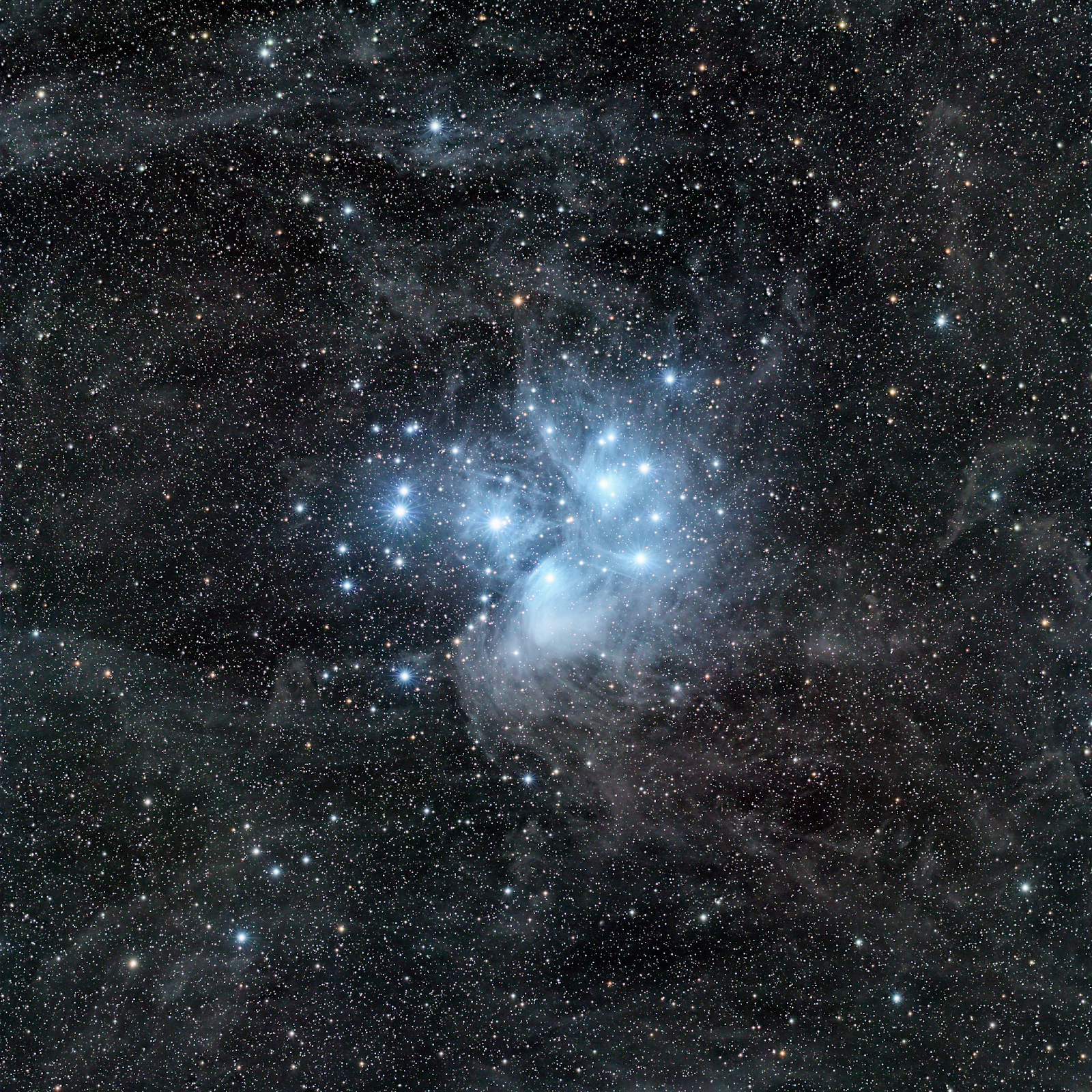
Nowadays, astrophotography has become much simpler and more accessible for the average everyday folk. No longer are fancy space telescopes and complex observatories with thousands of hours of labour required to take beautiful pictures of the night sky. In contrast to the long exposures, complex chemistry, and heavy equipment that were used throughout the 1800s and 1900s, today’s technology makes capturing stunning images of the cosmos remarkably simple. With smart telescopes, such as the ZWO Seestar S30 Pro Smart Telescope, you can leave behind the hours of rigorous setup and post-processing that can discourage beginners. These all-in-one instruments automatically locate, track, and photograph objects in the night sky. This includes everything from the Moon and planets to distant nebulae and star clusters. Using intuitive smartphone control and built-in processing software that can stack nebulae for you. Advanced features like one-touch capture, live stacking, and automatic noise reduction eliminate much of the guesswork. These telescopes allow newcomers and hobbyists to enjoy beautiful images of the night sky with minimal effort!